 Vietnamnet.vn

 Podcast



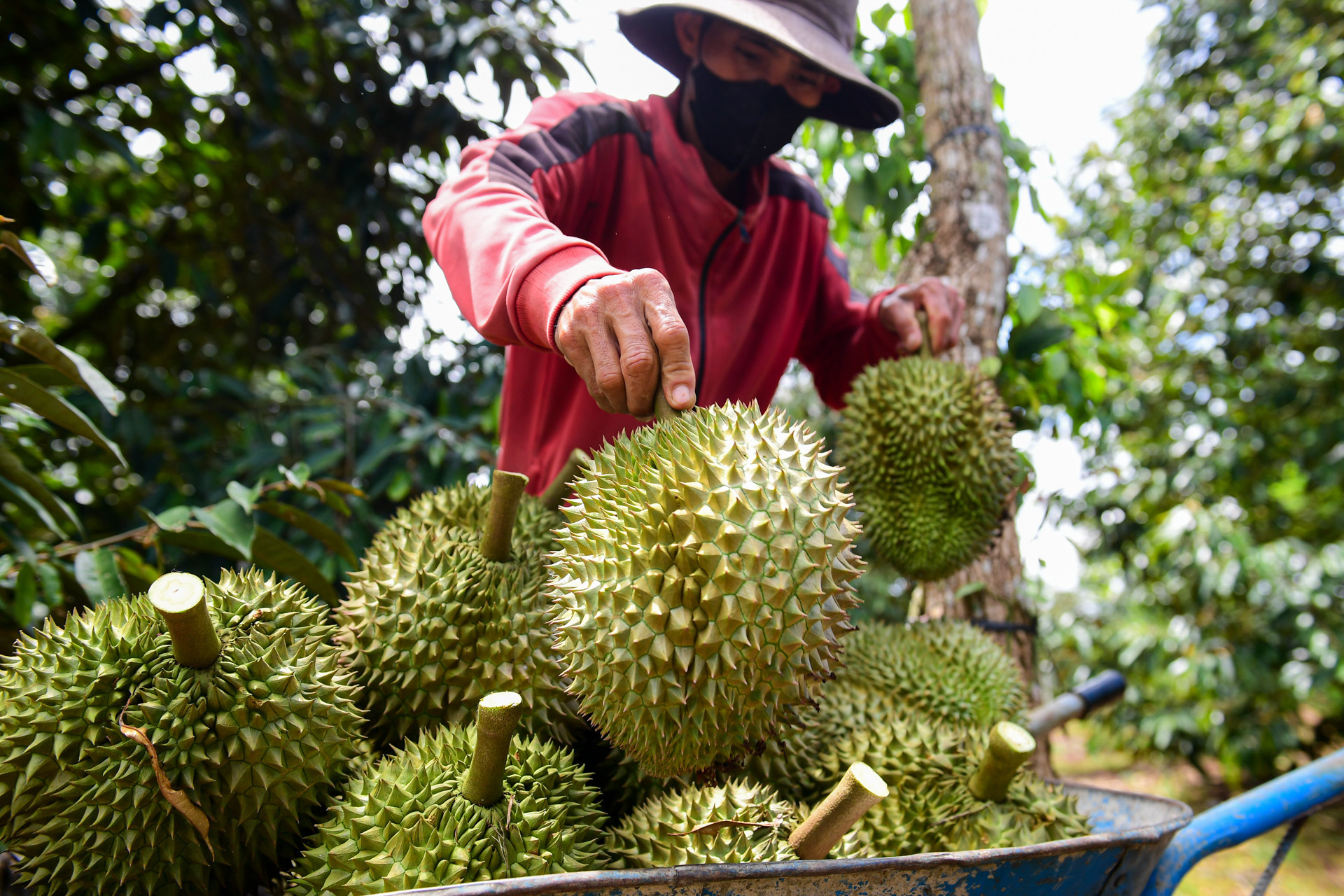
Durian is a high-value economic commodity with vast export potential, with concentrated growing regions in the Central Highlands, the Southeast, the South Central Coast, and the Mekong Delta. In 2026, the nationwide durian area is estimated at approximately 200,000 hectares, with projected output reaching 2.08 million tons.
According to the Department of Customs, in the first seven months of 2026, Vietnam's durian export turnover reached $1.77 billion, up 47.1 percent year-on-year and accounting for 36.98 percent of the country's total fruit and vegetable export turnover.
In July 2026 alone, durian exports generated $681.2 million, up 30.2 percent compared to June and surging 81 percent year-on-year.
Vietnam’s durian exports remain heavily dependent on the Chinese market, which accounts for approximately 95 percent of the product’s export value.
The billion-dollar fruit is also exported to more than 20 countries and territories. Notably, in July 2026, India officially allowed imports of fresh Vietnamese durians, creating additional room for growth and export-market diversification.
Thailand’s completion of its summer durian season is considered a favorable factor for Vietnamese durians in international markets, particularly in September and October, when durians in the Central Highlands provinces of Dak Lak, Lam Dong and Gia Lai enter their peak harvest period.
Dang Phuc Nguyen, secretary-general of the Vietnam Fruit and Vegetable Association, forecast that Vietnam’s durian exports could exceed $4 billion in 2026, an unprecedented level for the industry. He said that during the peak harvest season, monthly durian export value could reach approximately $1 billion.
However, the Ministry of Agriculture and Environment (MAE) has pointed out a series of difficulties and challenges that the billion-dollar industry must overcome.
Specifically, durian cultivation has expanded rapidly but has not yet been closely linked to the organization of value chains. In some localities, expansion has been spontaneous and insufficiently aligned with land conditions, water resources, infrastructure and the ability to organize raw-material production areas.
Meanwhile, links between production, purchasing, preliminary processing, processing and consumption remain weak. The chain lacks both a closed-loop structure and clear mechanisms for coordination and the sharing of responsibilities and benefits.
More importantly, import markets are imposing increasingly stringent technical requirements. To meet requirements on plant quarantine, food safety, chemical residues and traceability, growers, packing facilities, exporters and other stakeholders must improve their capacity, comply with technical procedures and strictly control every stage, from cultivation, harvesting, preliminary processing and storage to packaging and export.
Production organization, the management of raw-material areas and export support remain inconsistent in some localities. Their ability to adapt to changing technical requirements, market fluctuations and international competition is still limited. In some areas, the updating and standardization of data on growing areas and packing facilities, traceability and production linkages have yet to meet practical requirements.
Storage and processing technologies also remain inconsistent, with activities focused mainly on cold storage, freezing and the export of fresh fruit. Some facilities have adopted quick-freezing technology, which helps preserve product quality, but its high cost means it has not yet been widely used.
Vietnam’s durian industry is facing growing competitive pressure in international markets, particularly from regional producers such as Thailand, Malaysia, the Philippines and Cambodia.
Thailand and Malaysia are stepping up the development of frozen durians, while Malaysia has an advantage in terms of varieties. Cambodia is also expanding its growing areas and strengthening the standardization of production procedures.
Meanwhile, Vietnam’s durian exports remain heavily dependent on the Chinese market, where approximately 95 percent of exported durians are consumed. This underscores the need to further diversify markets and improve competitiveness.
In testing and inspection, sampling from some consignments has not ensured sufficient representativeness, particularly in the case of non-uniform shipments. This could affect the accuracy and reliability of test results and potentially threaten the continued accreditation of laboratories serving export activities. Therefore, sampling procedures must continue to be rectified and standardized to ensure representative samples and reliable inspection results.
MAE said the durian industry must shift from a mindset of “solving problems when they arise” to proactively preparing early and comprehensively. Quality, food safety and traceability must serve as the foundation, while markets and businesses should guide production organization.
At the same time, links among stakeholders throughout the value chain must be strengthened, markets proactively diversified and added value increased. These efforts will help build a stable, transparent and sustainable durian industry.
Tam An
.svg)
