 Vietnamnet.vn

 Podcast



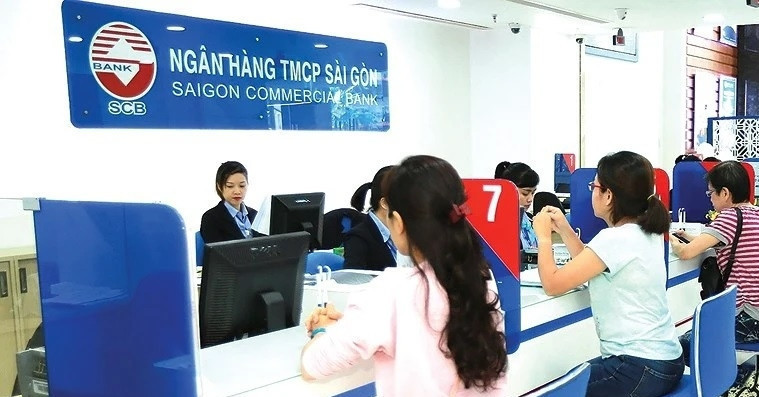
Twenty-five domestic commercial banks have announced their average lending rates and the spread between average lending and deposit rates for April 2026.
Notably, at least 15 banks increased their average lending rates compared with March 2026. Some banks did not disclose their average lending rates for the previous month, so it is not yet possible to confirm whether the April rates increased or decreased.
At least six banks recorded slight declines in average lending rates in April compared with March, including Viet A Bank, down by 0.31 percentage points to 9.27 percent per year; Vikki Bank by 0.27 to 7.71 percent per year; BaoViet Bank down by 0.18 to 7.76 percent per year; LPBank 0.05 to 8.71 percent per year; BVBank 0.04 to 10.85 percent per year; and MSB 0.01 percentage points to 7.57 percent per year.
Among the banks that raised average lending rates compared with March, OCB increased by 0.46 percentage points to 10.72 percent per year, while TPBank rose by 0.7 percentage points to 10.94 percent per year.
Among the Big4 banks, Vietcombank has not yet announced its average lending rate for April, while its average lending rate in March stood at 6.6 percent per year. The spread between average lending and deposit rates was 3.2 percent per year.
Agribank announced an average lending rate of 8.48 percent per year for April 2026, up by 0.1 percentage points compared with March. BIDV also raised its average lending rate by 0.26 percentage points compared with March.
At VietinBank, the average lending rate in April was 5.98 percent per year, with a lending-deposit spread of 2.2 percent per year.
Compared with March, VietinBank’s average lending rate increased slightly by 0.11 percentage points but had declined by 0.09 percent per year compared with the beginning of the year.
The lending rate applied to each customer depends on risk level, financial capacity, and collateral, while the interest spread must ensure profitability for banks.
One clear trend is that during the first three months of 2026, both deposit and lending rates were on the rise. However, from early April, commercial banks agreed to implement directives from the Prime Minister and SBV to reduce market interest rates in order to support businesses and individuals. Nevertheless, the slight increase in April rates is understandable due to the lag effect, as loans had previously been funded through deposits mobilized at higher interest rates.
Businesses seeking capital in bond issuance
According to SBV, the banking sector is facing numerous challenges as the global economy remains unpredictable, international interest rates stay high, and geopolitical risks increase, putting pressure on inflation control and monetary policy management. Domestically, slow deposit growth is also straining the capital balance of credit institutions.
In this context, the central bank continues to pursue goals of controlling inflation, stabilizing the macroeconomy, supporting growth, and ensuring banking system safety.
SBV is also maintaining policy interest rates to enable credit institutions to access low-cost funding from SBV, while requiring them to implement measures to stabilize interest rates and the money market.
Regarding credit, the high credit growth seen in recent years has created certain pressures on the banking system. Credit growth has significantly outpaced deposit growth across the banking sector, leading to increasing pressure on liquidity and interest rates.
Vietnam's credit-to-GDP ratio currently stands at the highest level among lower-middle-income countries, surpassing 144 percent according to March 2026 data. This highlights an economy overly dependent on bank credit.
"Continued heavy reliance on the bank credit channel harbors systemic risks and could cause negative consequences for the economy, because bank mobilization sources are predominantly short-term, whereas the capital demands of the economy are medium and long-term," SBV cautioned.
Many enterprises have actively diversified their capital sources instead of leaning solely on bank loans.
According to a report by Bao Viet Securities, the total volume of corporate bonds issued in April 2026 reached VND36,235 billion. Banking and real estate led the pack, accounting for 41.67 percent and 39.29 percent of the total issuance volume, respectively.
Cumulatively since the start of the year, total corporate bond issuance has reached VND77,874 billion, with the real estate sector holding the largest share at 51.11 percent, followed by the banking sector at 34.14 percent. The bond rates for certain real estate businesses sit around 11 to 12 percent per year.
Tuan Nguyen
.svg)
