 Vietnamnet.vn

 Podcast



Heat from the capital market
The current conditions require the SBV to operate monetary and exchange rate policies flexibly: ensuring macroeconomic stability, controlling inflation, while still supporting fast and sustainable growth.
Associate Prof Dr Tran Hoang Ngan, a National Assembly Delegate, commented that amid unpredictable fluctuations, Vietnam still has maintained macroeconomic stability for 10 consecutive years and controlled inflation well.
Notably, pursuing a multi-objective monetary policy, Vietnam has to simultaneously promote economic growth, control inflation, maintain macro stability, and ensure monetary security and the safety of the banking system. Therefore, SBV’s policy management must remain flexible and closely monitor bad debts, an approach already implemented in recent years.
According to Ngan, since the global energy crisis triggered by conflicts in the Middle East, rising global fuel prices have pushed up price levels in most countries.
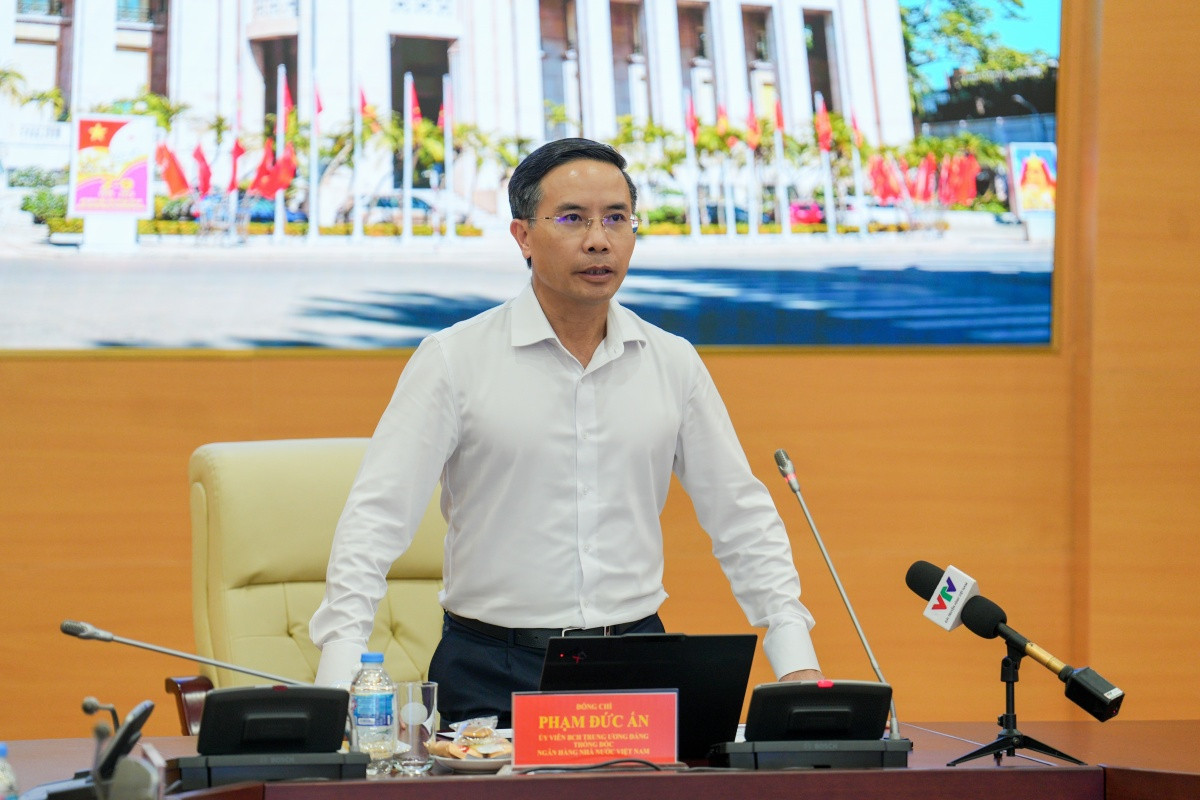
Domestically, interest rates have shown localized increases. However, shortly after taking office, An directed commercial banks to lower lending rates. To ensure that rate cuts are effective, the SBV has also supported liquidity for the banking system.
Ngan emphasized that in theory, inflation is often attributed to an increase in money supply, but this actually depends on specific circumstances.
“Currently, rising prices are not mainly driven by money supply but by cost-push factors, especially higher global fuel prices. This is often referred to as ‘imported inflation,’ rather than inflation caused by monetary expansion,” he said
In previous years, credit growth consistently reached 14–16 percent while inflation remained below 4 percent.
At present, rising global fuel prices are pushing up logistics costs, creating a domino effect on overall prices. This has led to temporary liquidity shortages in the banking system, forcing banks to raise deposit rates. Therefore, the SBV needs to support market liquidity while directing credit flows into production and business activities, limiting flows into high-risk sectors.
“It is necessary to control credit growth at some banks showing signs of weak liquidity,” Ngan noted.
He added that the banking sector must align with the spirit of the Party’s 14th National Congress: promoting economic development while adhering to core principles outlined by Party General Secretary To Lam.
Growth must be substantive, based on productivity gains and technological advancement. SBV’s credit policy should support this by prioritizing funding for science, technology, and innovation.
Growth must also rest on macroeconomic stability and inflation control.
Resources from the state, private sector, and foreign-invested sector must be effectively mobilized and utilized.
Ultimately, growth must serve the people, improving well-being and quality of life.
Lowering interest rates should be the top priority
According to D. Dinh Trong Thinh, a respected economist, reducing interest rates is the most urgent priority. With deposit rates at 8–9 percent per year and lending rates at 12–13 percent, businesses are under significant pressure.
“Lowering bank interest rates must be the top priority. The SBV needs stronger measures to reduce the cost of capital for the economy,” Thinh said. “To achieve this, the SBV can use various tools, including money supply measures, as long as the objective is met.”
Stabilizing exchange rate amid rising global oil prices
Thinh also noted that stabilizing the gold market and narrowing the gap between domestic and global gold prices is another major challenge facing the new governor.
“It is necessary to stabilize the domestic gold market and reduce the price gap with international markets to ensure stable trading conditions. If the current situation persists, where people buy gold with “appointment slips”, risks will increase,” he said.
Exchange rate management will remain a significant challenge. This is not a new issue but has consistently placed pressure on central bank leadership.
Thinh stressed that exchange rates depend heavily on the health of domestic production and business activities. When the economy performs well, exchange rate management becomes easier; otherwise, it becomes much more difficult.
“The key is to keep monetary activities within controlled limits, creating room for stable credit growth and exchange rate management. This will help stabilize banking activities and ensure more positive exchange rate movements,” he explained.
The core objective of the banking sector remains controlling inflation while supporting economic growth. The challenge is to maintain exchange rate stability to ensure smooth economic operations.
Tuan Nguyen
.svg)
