 Vietnamnet.vn

 Podcast



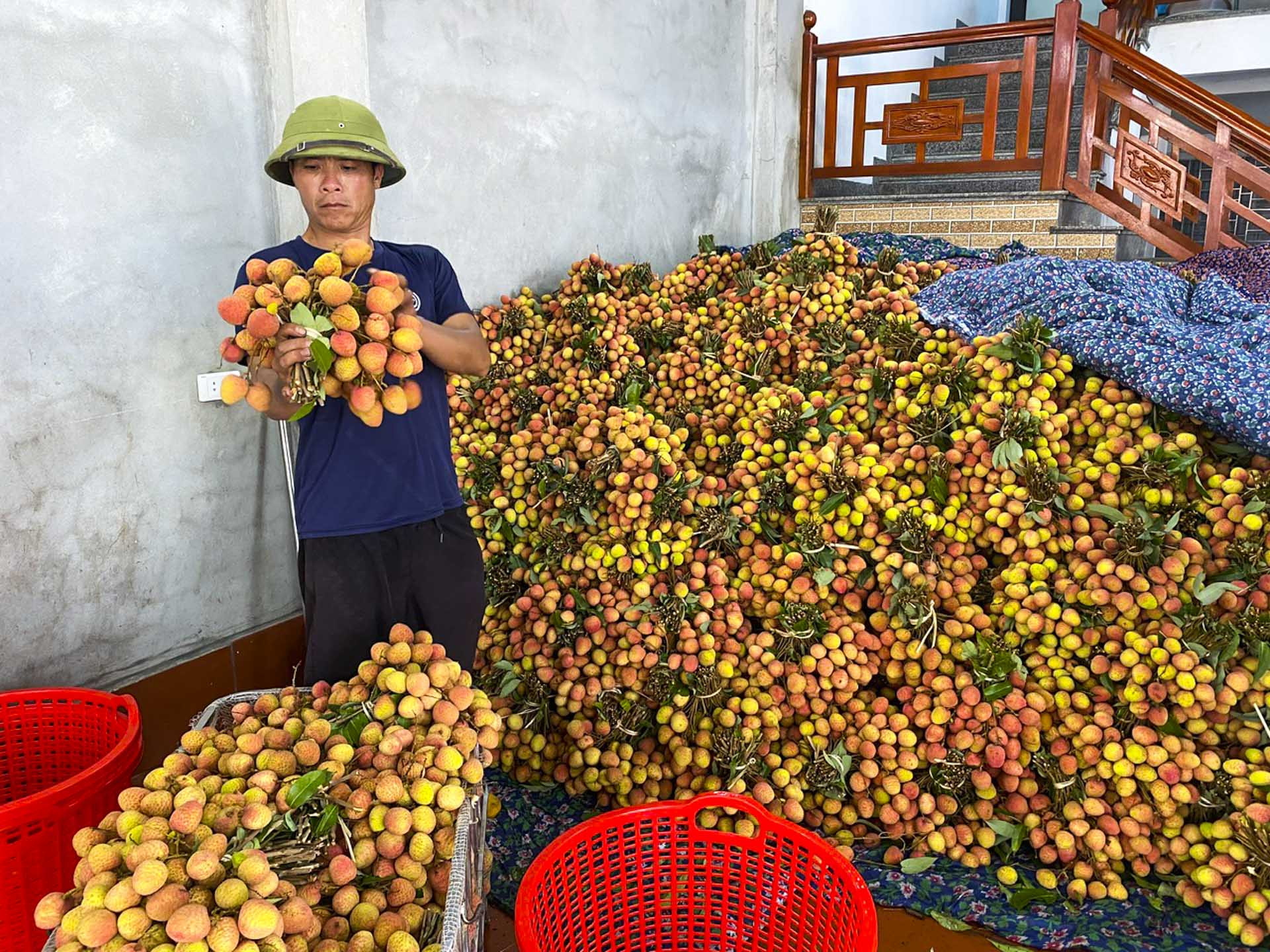
On May 28, at the Bac Ninh Provincial Convention Center, the Provincial People's Committee organized the 2026 Conference to Promote the Consumption of Lychee, Key Agricultural Products, and OCOPs (one commune, one product).
Speaking at the conference, Nguyen Sinh Nhat Tan, deputy minister of Industry and Trade, emphasized that lychee has become an iconic agricultural product of Bac Ninh, closely tied to citizens' livelihoods while driving trade and international cooperation.
Tan said Bac Ninh has advantages in developing agricultural value chains thanks to its large production scale, improved product quality, and a system of growing zones and packing facilities that satisfy export requirements. This serves as a vital foundation to shift from a "seasonal consumption" mindset toward organizing the market based on value chains backed by data, standards, and branding.
The ministry has asked Bac Ninh Province to remain steadfast in using quality, standards and traceability as the "passport" for its products. Concurrently, the province needs to expand safe production, tightly manage growing zone codes, packing facilities, pesticide residues, farming logs, and the quarantine demands of each respective market.
Bac Ninh should also gradually standardize packaging, labeling, geographical indications, product storytelling, and intellectual property rights so that its lychees can be positioned as a premium and trusted product in both domestic and international markets.
Tan also stressed the principle of using the domestic market as the foundation while treating exports as a growth driver. With about 55 percent of lychee output expected to be sold domestically, Bac Ninh should identify Hanoi, Hai Phong, Quang Ninh, HCMC, and other major urban centers as key markets.
The province should therefore strengthen connections with supermarket chains, wholesale markets, e-commerce platforms, and logistics companies to diversify sales channels and reach a broader range of consumers through modern retail methods.
For exports, the ministry encouraged Bac Ninh to further expand into high-value markets such as Japan, the US, Australia, the EU, Canada, and South Korea while maintaining its traditional market in China.
To achieve this, the province should work closely with agencies under the Ministry of Industry and Trade, Vietnam’s trade offices overseas, border authorities, and logistics companies to forecast demand, organize cargo flows, reduce costs, and prevent congestion during peak harvest periods.
The Deputy Minister also called on Bac Ninh to accelerate digital transformation in agricultural production and distribution by developing real-time seasonal databases covering output, harvest areas, purchasing enterprises, prices, packaging capacity, transportation, and inventories.
At the same time, the province should leverage KOLs, KOCs, livestreaming, e-commerce, and digital media to promote the “Bac Ninh Lychee” brand to younger consumers and international customers.
‘Green lane’
At the conference, Pham Van Thinh, vice chair of the Bac Ninh Provincial People's Committee, said Bac Ninh is not only one of Vietnam’s major industrial centers but also has substantial agricultural potential, with nearly 471,860 hectares of agricultural land.
Lychee is the province’s signature fruit crop, covering 29,800 hectares, accounting for more than 60 percent of the province’s fruit-growing area. Lychee output in 2026 is estimated at around 125,000 tons.
Currently, 17,500 hectares of lychee orchards are certified as meeting VietGAP standards, representing 58.7 percent of the total area. Another 255 hectares meet GlobalGAP standards, while 10 hectares have organic certification. Bac Ninh manages 243 growing area codes covering more than 17,000 hectares designated for export.
In addition to lychees, the province has 722 OCOP products rated three stars or higher and 56 key, distinctive, and high-potential agricultural products.
To ensure smooth logistics operations, Bac Ninh is implementing a range of measures, including QR-code applications, digital platforms, and blockchain technology for product traceability. The province is also strengthening cooperation with major distribution groups, supermarket chains, and e-commerce platforms to expand markets for agricultural products.
In particular, Bac Ninh has requested support from central ministries and agencies in advanced preservation technology and growing area code management. The province has also called on Chinese authorities to establish a “green lane” for rapid customs clearance at border gates to reduce costs for traders.
Wang Qun, Chargé d’Affaires of the Chinese Embassy in Vietnam, praised the quality of Bac Ninh lychees as well as the province’s achievements in developing OCOP products and expanding agricultural markets.
Tam An
.svg)
