 Vietnamnet.vn

 Podcast



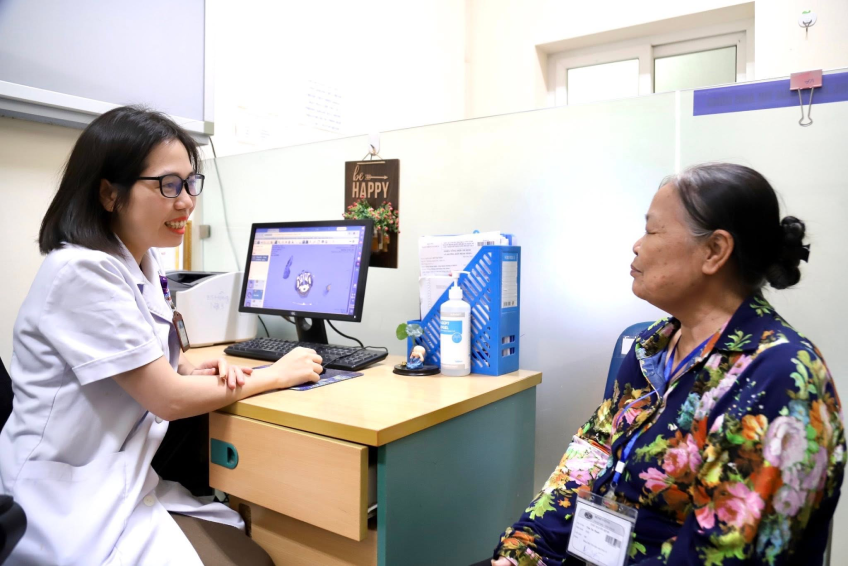
Also owing to follow-up exams executed in strict accordance with doctor guidance, she secured early detection for several other illnesses and received effective treatment.
Thirty three years ago, when she was diagnosed with breast cancer, T was nursing an infant, and within a medical context that still packed numerous restrictions, this news left her and her family intensely anxious.
Undergoing surgery, chemotherapy, and radiotherapy, she persevered in adhering to the treatment regimen, step-by-step overcoming the illness. Post-treatment, she sustained a healthy lifestyle and attended follow-up exams per her doctor's guidance.
Recalling her journey, T. shared that when she discovered the disease, her child was only 6 months old. Now, 34 years later, that child has grown up and become her companion during health checkups. The hospital discharge card from 1993 is still carefully kept by T., serving as a reminder of the health ordeal she went through.
Doctors at K Hospital say T.’s case is one of the patients with a very long healthy life span after cancer treatment.
Recently, when she developed urinary symptoms, T. did not take it lightly and proactively sought medical attention. Results showed she had early-stage bladder cancer.
After examinations and in-depth tests, doctors determined she had a high risk of Carcinoma in situ of the urinary bladder (CIS), with no lymph node or distant metastasis recorded.
Treatment required careful consideration because the patient is elderly and has multiple underlying conditions, including hypertension, bronchial asthma, hepatitis B, and a history of breast cancer.
After a comprehensive evaluation of cardiovascular function and overall health, doctors determined she was fit for surgery. Because it was detected early, doctors chose a conservative treatment approach.
At K Hospital, T. underwent endoscopic surgery to completely remove all lesions in the bladder. These included a tumor at the right bladder base about 0.5cm in size and a tumor on the left bladder wall about 1x4cm.
Doctors prescribed Gemcitabine to be instilled directly into the bladder continuously for 6 weeks to destroy any remaining cancer cells and reduce recurrence risk. This method allows the drug to act locally, limiting common side effects of systemic chemotherapy.
Currently, after the first round of treatment, T. tolerates the medication well, her health is stable, and her spirit is optimistic. The patient is expected to continue follow-up and maintenance treatment for about the next 3 years.
Citing T.’s case, K Hospital doctors affirm that regular follow-up visits, screening as guided by doctors, and close monitoring of abnormal body changes are very important.
Many cancers, if detected early, can be treated more effectively, with less intervention and better survival prognosis. Conversely, when disease is detected late, treatment is often more complex, prolonged, and costly.
Associate Professor, Dr. Le Hong Quang, Head of the Breast Surgery Department at K Hospital, said treatment outcomes for breast cancer in Vietnam are now close to global levels. The 5-year survival rate from detection reaches 85-90 percent, and many patients have lived more than 30 years.
According to Dr. Quang, real-world treatment records show many patients return to the hospital for other conditions, not because of breast cancer, indicating that breast cancer has been cured.
Dr. Quang added that an encouraging sign is the rising rate of early-stage breast cancer detection. Previously, about three-quarters of patients came to the hospital at a late stage, but now about three-quarters of cases are diagnosed at an early stage, improving treatment effectiveness and survival prognosis.
According to GLOBOCAN 2022 data, breast cancer now accounts for nearly 29 percpent of all cancer cases among Vietnamese women, surpassing liver cancer to become the most common newly diagnosed cancer nationwide. Each year, Vietnam records nearly 25,000 new cases and about 10,000 deaths from the disease.
The age of onset is trending clearly younger, posing a major challenge to the health system and community in raising awareness of early screening. In HCMC alone, from 1995 to 2015, breast cancer cases increased by 70 percent. However, the rate of patients detected at an early stage reached only about 26 percent.
Experts say although the breast cancer incidence rate in Southeast Asian countries like Vietnam is much lower than in many developed nations, the mortality rate is higher. The main reason is that regular screening habits are not yet widespread in Asian countries.
Phuong Thuy
.svg)
