 Vietnamnet.vn

 Podcast



Since opening its doors in July 2023, Ho Guom Opera House has steadily established itself as one of Vietnam's most prominent venues for both major artistic productions and high-level diplomatic events.
Its growing reputation is not defined simply by the performances presented on its stage, but by the deliberate artistic choices behind every programme - choices guided by a clear and consistent aesthetic vision.
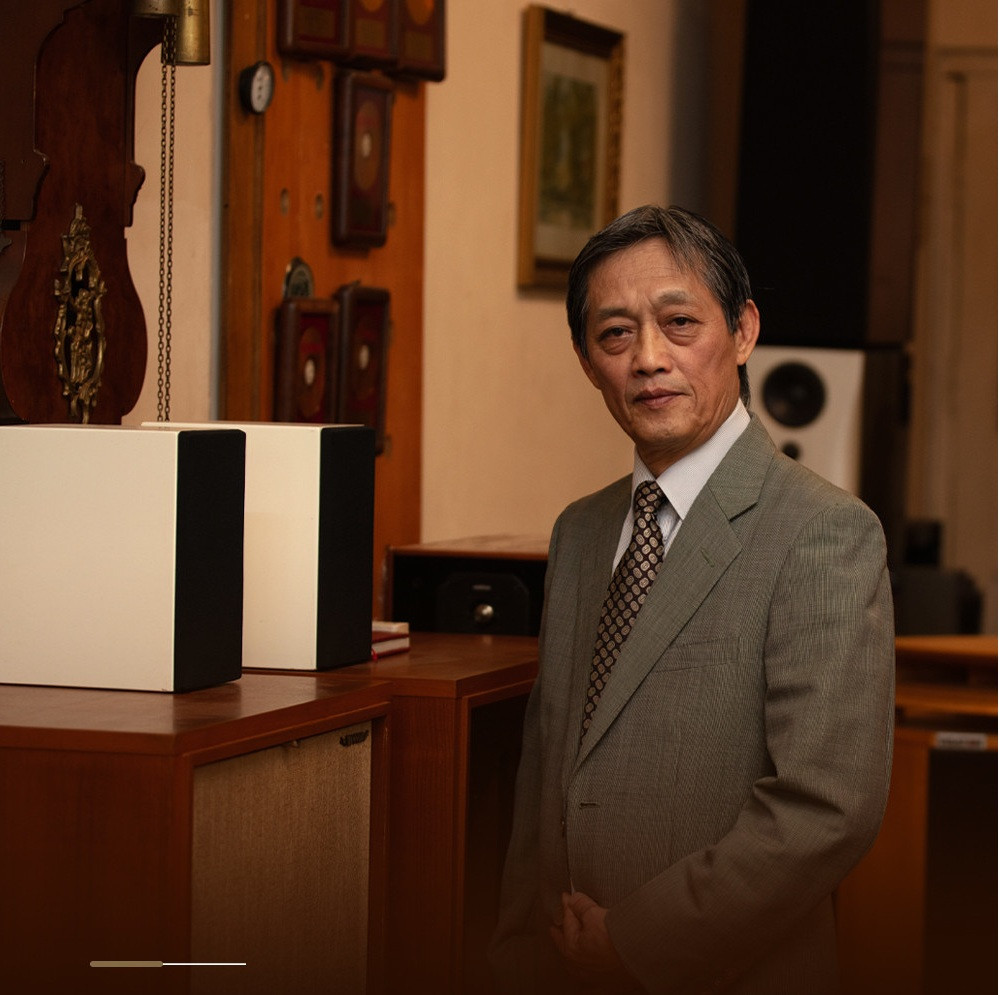
Few people know that among those shaping this vision is Tran Hai Dang, artistic and technology adviser, former Deputy Director of the Institute of Music at the Vietnam National Academy of Music.
His career has crossed remarkably different musical worlds - from performing with symphony orchestras and documenting Vietnam's traditional folk heritage in remote communities, to working in recording studios before becoming one of the key figures helping define the artistic identity of one of Vietnam's youngest yet most ambitious theatres.
Not everyone stands on stage to create a stage. Tran Hai Dang's journey has never followed a straight line.
He began with the clarinet, a Western classical instrument, performing in symphony orchestras where discipline, structure and precision governed every note. Later, however, he turned toward traditional Vietnamese music.
Field expeditions took him deep into remote regions where, as he recalls, "candy and instant noodles were considered local delicacies." There he met folk artists who had never performed on formal stages, yet carried living traditions preserved across generations.
Those journeys eventually led him to contribute to UNESCO heritage nomination dossiers for Vietnamese cultural treasures including Ca Tru, Don Ca Tai Tu, and Then singing - not simply as someone recording sounds, but as someone translating Vietnamese culture into a language the world could understand.
At the same time, he immersed himself in recording studios, where sound is captured, refined and recreated.
Few musicians possess such an unusual combination of experience: understanding how a symphony orchestra functions, how a folk melody is born within a community, and how both can be transformed into works capable of reaching international audiences.
In that sense, the first three years of Ho Guom Opera House are about far more than a newly built theatre.
They represent the gradual formation of artistic standards - built quietly through countless decisions made behind the scenes.
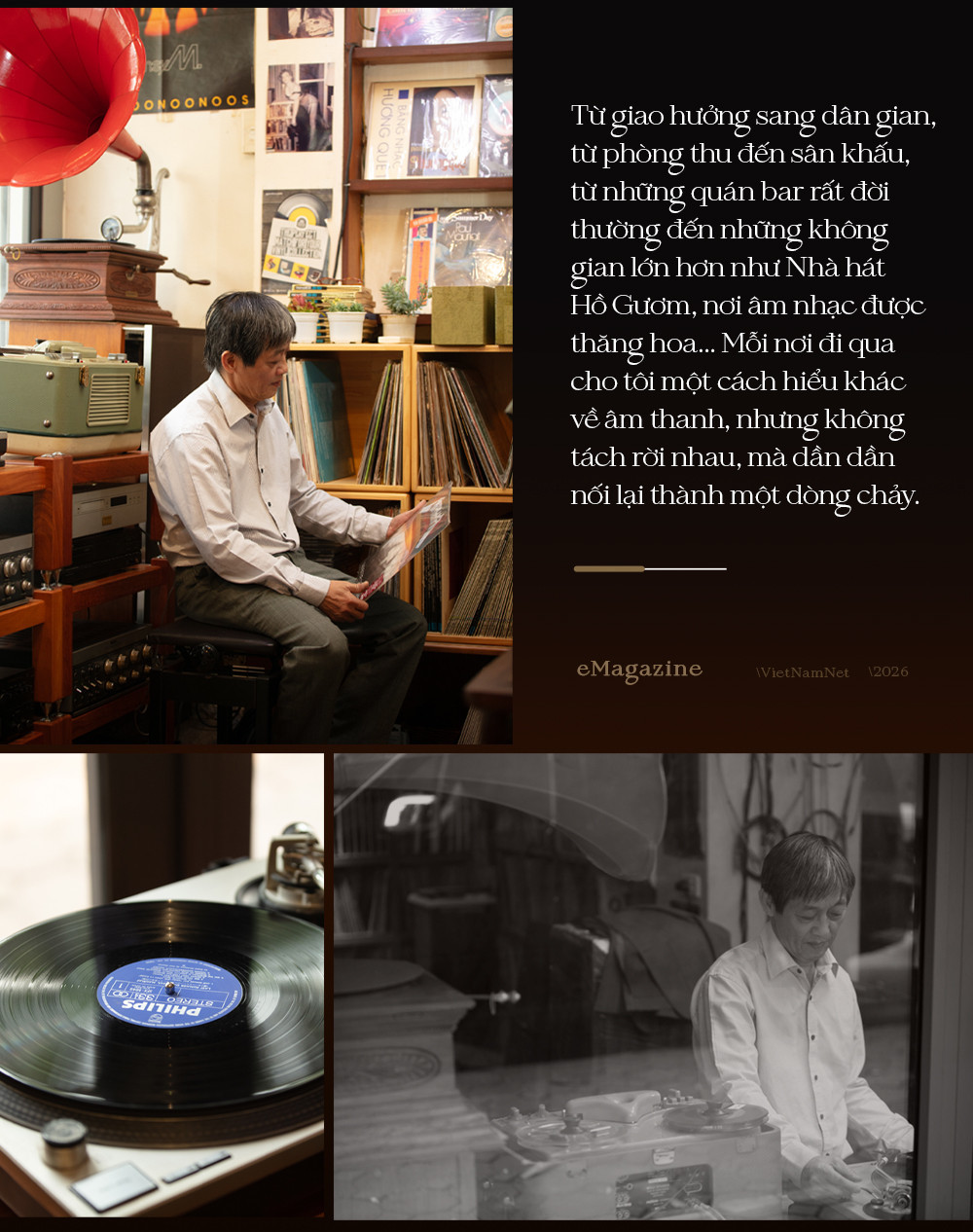
We met Tran Hai Dang inside Hanoi Vinyl, a small record space tucked away on Yen Lang Street, where music is appreciated in its most authentic form. Here, surrounded by shelves of vinyl records, he reflected on the journey of Ho Guom Opera House and his own lifelong pursuit of sound.
Looking back over the past three years, where do you think Ho Guom Opera House stands today?
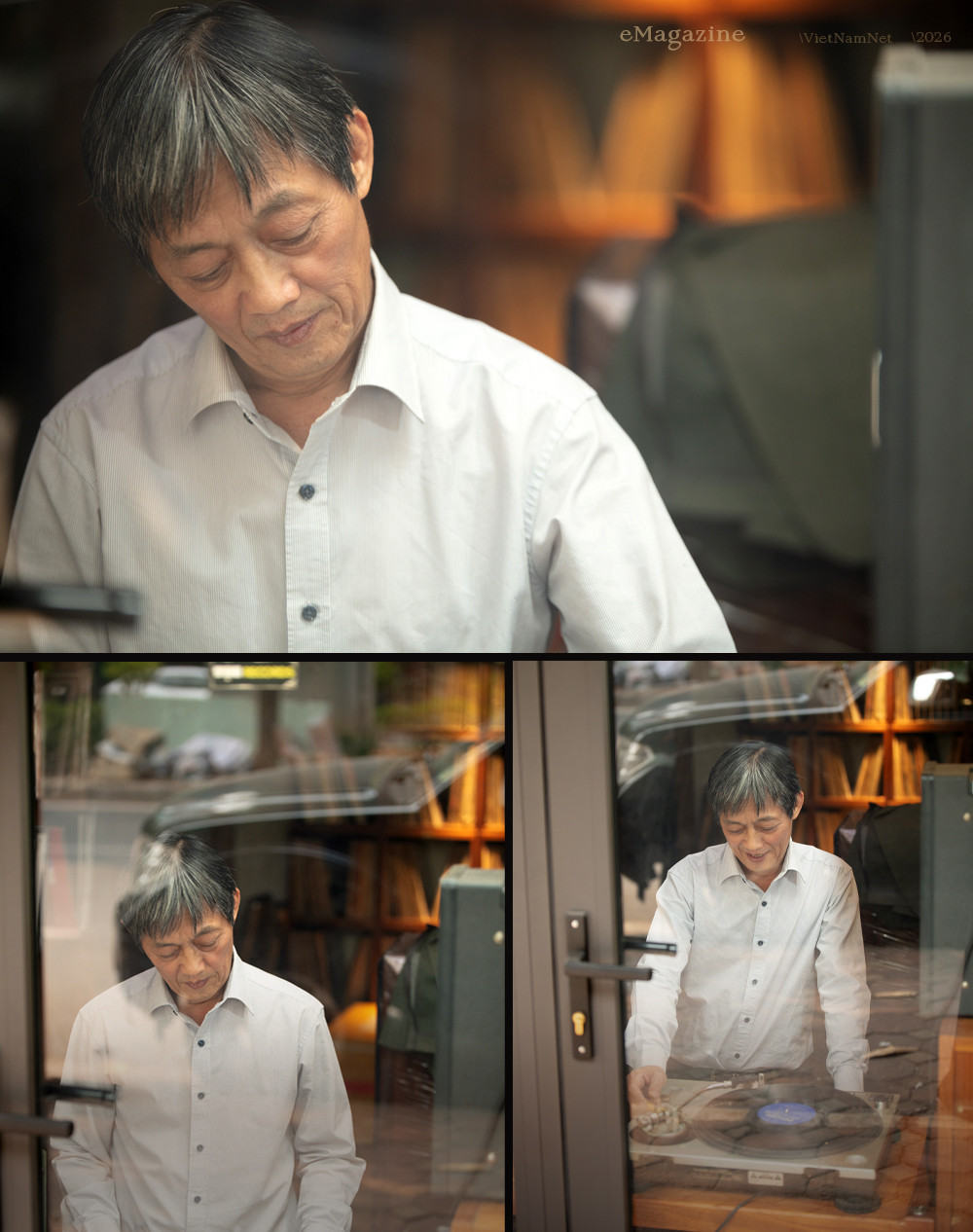
Tran Hai Dang: Three years is not a particularly long time.
But what matters more than any number is this: the theatre has begun establishing standards.
Those standards are not measured by how many internationally famous artists have performed here or how many spectacular productions have been staged.
They lie in things that are far less visible.
They are reflected in how each programme is selected, where it is positioned within the overall artistic calendar, and how every performance contributes to a broader narrative instead of standing alone.
Some productions may appear modest, yet they serve as foundation stones.
Others are much larger in scale, but their purpose is not immediate impact. Their purpose is to redefine what a theatre can aspire to become.
Anyone who has worked in this profession long enough understands that the real challenge is not producing one successful performance.
It is maintaining a coherent artistic logic season after season, year after year.
A theatre cannot survive by chasing short-term attention alone.
If it wants to endure, it must commit to values whose results may not become visible immediately.
If there is one direction Ho Guom Opera House has chosen, it is the path of gradual accumulation - quietly, patiently and sustainably.
Ho Guom Opera House is operated under Vietnam's Ministry of Public Security, yet many people now see it as a national cultural symbol. How did that transformation happen?
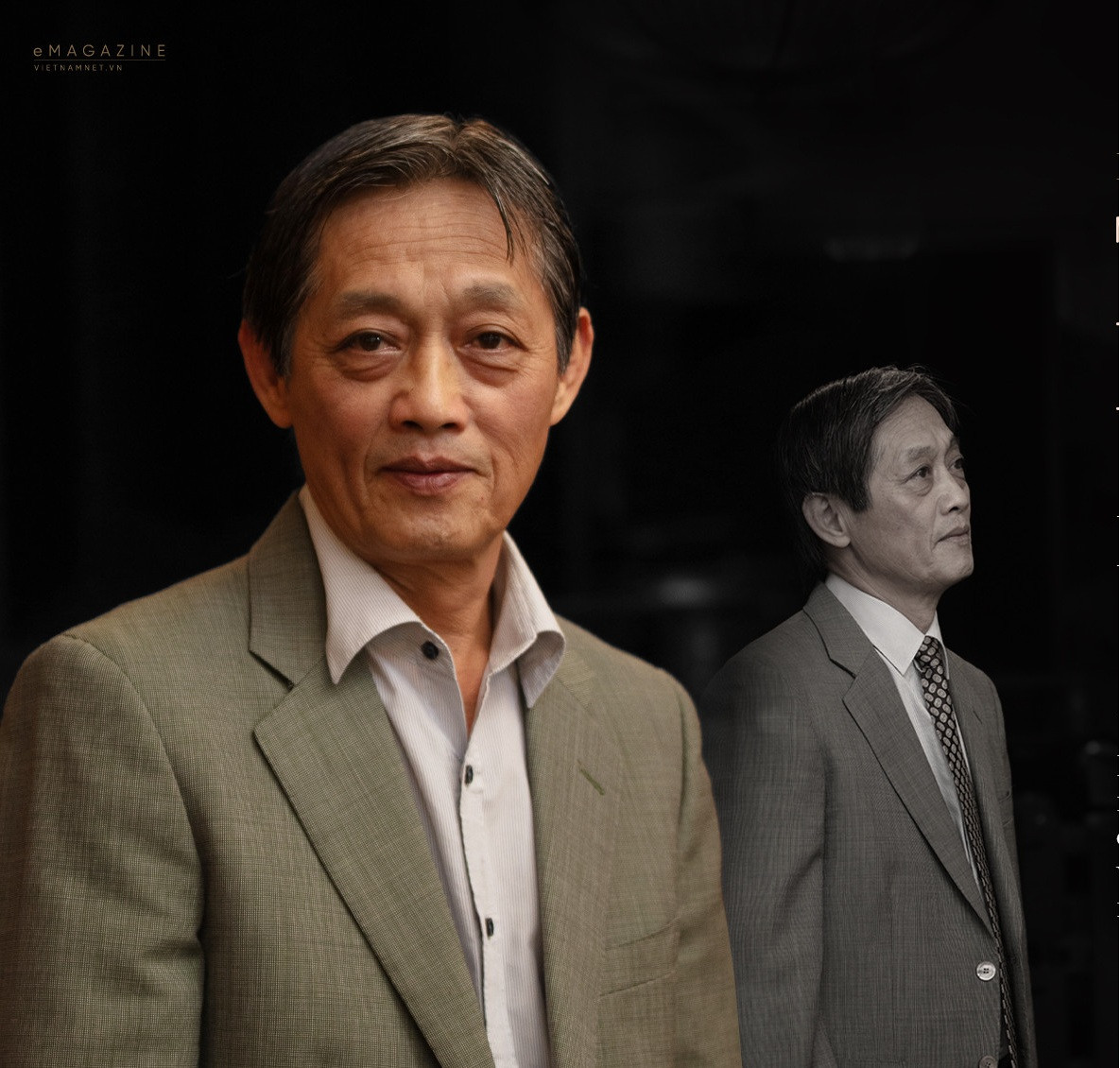
From the very beginning, there was one fundamental difference in the way Ho Guom Opera House was envisioned.
It was never intended to be an internal venue serving only a particular institution, nor simply a commercial performance space.
The ambition was for the theatre to produce its own artistic programmes and, more importantly, to sustain itself through artistic excellence.
That may sound straightforward, but in reality it is extremely challenging. It requires an entire ecosystem to function in harmony - from artistic vision and programme selection to production management and financial sustainability.
Its location also naturally gives it a broader role.
Situated in the heart of Hanoi, close to many of Vietnam's most important political and cultural landmarks, the theatre was always positioned to become something more than an ordinary performance venue.
But location alone is never enough.
What ultimately defines a theatre is how it operates.
If it limits itself to the functions of the institution that manages it, then its influence will remain equally limited.
Once you begin establishing standards - for programming, for artists, for production quality, for professional practice - its role naturally expands.
When a venue achieves professional excellence, develops a genuine relationship with its audience, and simultaneously hosts important political, diplomatic and cultural events, something interesting happens.
Introduction video to the Ho Guom Opera House – "The Opera House That Never Sleeps".
People gradually stop asking who owns the theatre.
Instead, they begin asking a much more important question:
What's happening there - and is it worth experiencing?
That simple shift changes everything.
The answer to that question is not created overnight.
It is built programme by programme, season after season.
When audiences develop the habit of returning, when a theatre becomes a place people genuinely want to visit rather than simply attend on special occasions, it naturally evolves into a true cultural institution.
Was there a particular moment when you realised Ho Guom Opera House had reached an international standard?
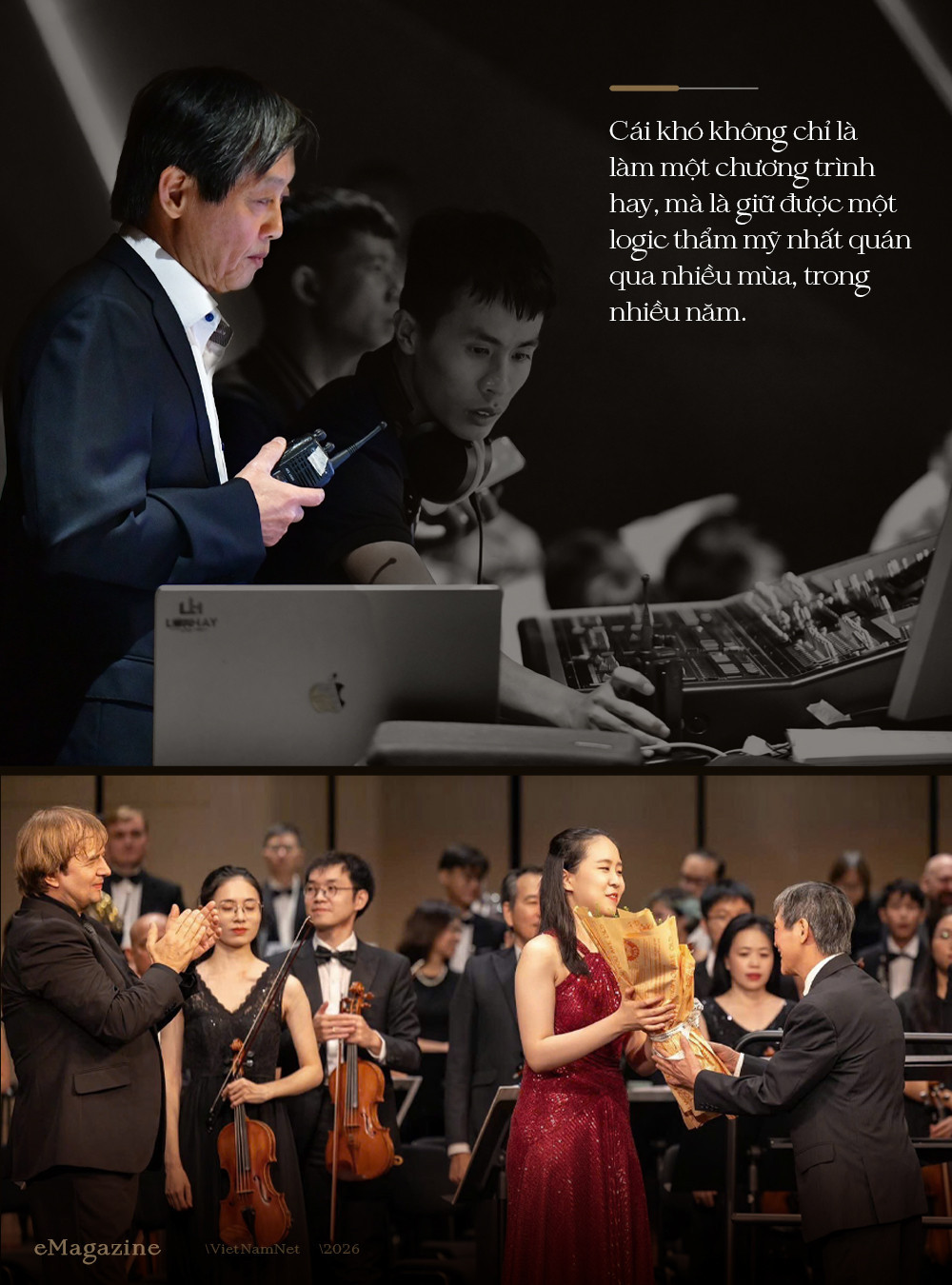
Yes. What made it especially meaningful was that the recognition did not come from audiences. It came from professionals.
Many leading European orchestras - from Versailles, Vienna and London - operate according to exceptionally rigorous standards.
Before every international performance, they send technical specialists to inspect every aspect of a venue: its acoustics, stage facilities and production systems.
If those requirements are not met, they simply decline to perform.
That is part of their professional culture.
So when these experts arrived in Hanoi, what surprised them most was not the architecture. It was the acoustics.
Several musicians openly admitted they had never expected to find a concert hall in Vietnam with acoustic quality at this level.
I still remember a conversation with the artistic director of Russia's State Ballet Theatre.
He told me he had travelled to more than seventy countries throughout his career, yet considered Ho Guom Opera House one of the finest acoustic spaces he had ever experienced.
For people outside the profession, those comments may sound like compliments.
For us, they carried much greater weight.
They represented validation from people whose standards leave very little room for compromise.
What does it mean that diplomats and international audiences are increasingly making Ho Guom Opera House part of their cultural calendar?
Foreign audiences now come to Ho Guom Opera House regularly. For many of them, attending performances has become almost a habit. Some ambassadors rarely miss a programme.
When people actively choose to return to an artistic venue, it means that venue has begun establishing a genuine place within the city's cultural life. That kind of attraction cannot be created through publicity alone. It comes from consistency. People return because they trust what they will experience.
How did you approach inviting international orchestras during the theatre's early years?
We were very clear from the outset. We never invited orchestras simply to have international names on the programme. Each ensemble had to represent the highest artistic traditions of its own country.
Take the Orchestra of the Royal Opera of Versailles, for example. Versailles is not merely a historic palace. It embodies centuries of French royal musical tradition, particularly the Baroque repertoire that forms one of the foundations of Western classical music.
When audiences encounter an orchestra like that, they are experiencing not only exceptional musicianship but also an entire cultural legacy.
What has been encouraging is that, once those standards were established seriously, other distinguished orchestras began approaching us themselves.
That, perhaps, is the strongest indication that the foundation has become credible.
Why do internationally renowned artists choose not only to perform here, but to come back?
Professional artists look beyond the building itself. More importantly, they place their trust in the institution behind it.
They trust that every production will be organised with the same level of professionalism. They trust the working environment. They trust the audience. For us, that trust is enormously meaningful.
When orchestras known for their exacting standards decide to return, it tells us the foundation is strong enough to support long-term growth.
The next challenge is something even more important.
It is to develop a distinctive artistic identity. That identity is what ultimately determines how far any theatre can go.
Do you believe Ho Guom Opera House can become an internationally recognised destination for music?
I believe it can. But it cannot happen through impatience. Our ambition has always extended beyond Vietnam.
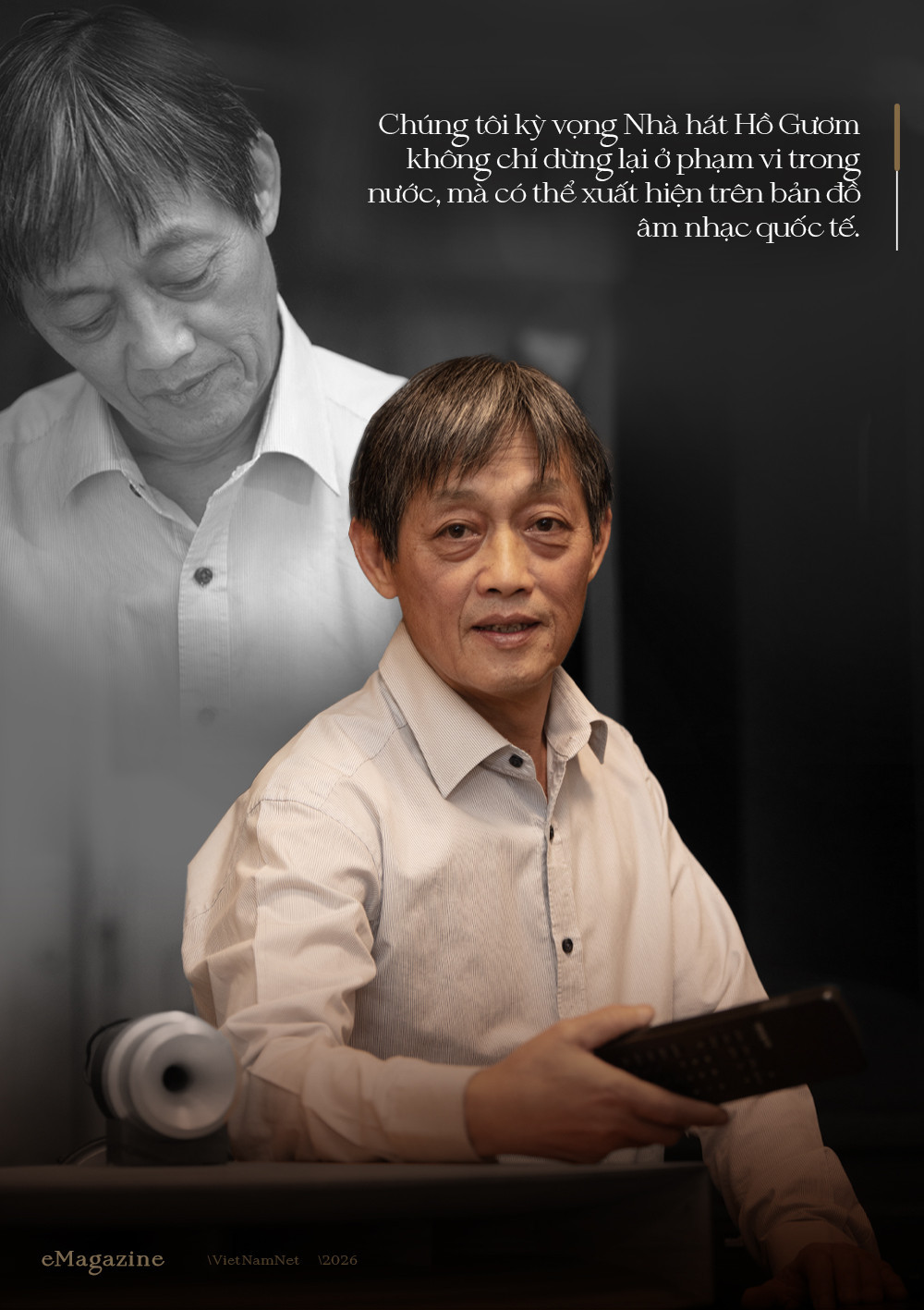
We hope Ho Guom Opera House will eventually earn its place on the international map of classical music.
That kind of recognition cannot be achieved simply by constructing a beautiful building or presenting prestigious performances.
It requires years of consistency. Reputation grows gradually. Like music itself, it is built note by note.
People's Artist Bui Cong Duy delivers a dazzling performance at the 2026 New Year Concert at the Ho Guom Opera House.
NSND Bùi Công Duy biểu diễn thăng hoa trong concert chào năm mới 2026 tại Nhà hát Hồ Gươm
In your view, how does music help people understand one another?
To me, music is not simply something we listen to. It is a language through which people come to understand each other. But before we can expect others to understand us, we first have to understand them.
Take ca Hue performed on the Perfume River, for example.
Many international visitors are captivated by the experience - not only because of the music itself, but because of everything surrounding it: the water, the lights, the movement of the boat, the atmosphere of the river at night.
Remove that context and play only an audio recording, and the emotional impact is no longer the same. So the question is not whether we should preserve tradition exactly as it is or reshape it for modern audiences. The real challenge is creating an experience. It is about finding a way to tell our cultural stories so that people from different backgrounds can genuinely feel them.
Culture is not translated word for word. It is translated through emotion.
Looking back on your own journey, what stands out most to you?
Perhaps it is the constant movement. I began in Western classical music, in an environment where everything was governed by discipline, structure and precision. Then I found myself drawn toward Vietnamese folk traditions.
I made hundreds of field trips to remote communities, often in places where conditions were extremely modest.
Yet those journeys revealed an entirely different musical universe. There were no concert halls. No written scores. Sometimes there wasn't even a stage.
But there was music deeply woven into everyday life - music that belonged to communities rather than performers.
Later, I returned to the recording studio. At first glance, it seemed like the most technical and rational side of music. Yet it was there that I came to understand something fundamental.
Sound is not simply about being technically correct. It is about how people experience it. And how it continues to live in memory long after the performance ends.
What has that constant movement meant to you personally?
Perhaps it has been both a choice and a kind of destiny. There were times when I believed I was simply searching for a new direction.
As the years passed, however, I realised that movement itself had become the way I existed within music. If I stayed in one place for too long, I would eventually become confined.
Or perhaps I would simply run out of curiosity. When I was young, many of my friends and I went through difficult years.
We earned our living playing music in bars and small live music venues, receiving only modest performance fees. After some performances, I would remain behind the stage - or simply stand alone on the pavement outside.
People lingered after the music had ended, reluctant to leave. Late at night, the city lights would gradually disappear. But inside my head, the music continued. Those moments planted a quiet desire within me.
I wanted to preserve music in a slower, deeper way. That desire eventually became Hanoi Vinyl.
Hanoi Vinyl occupies a modest old house on Yen Lang Street. Inside, thousands of vinyl records are carefully arranged like layers of time, each one preserving a different chapter of musical history. Some evenings, we simply choose an old record. The stylus touches the groove. A faint crackle fills the room. Then, slowly, the music begins to emerge.
We sit together for a long time. No one feels the need to speak. At moments like that, I sometimes feel we are not merely listening to music. We are listening to cultural memory. To history preserved inside sound. Time may have covered those memories with dust, but it has never erased them.
After everything you've experienced, how do you see yourself today?
Pham Thu Ha performs "Spring Comes to the Dakrong River" at the Ho Guom Opera House.
Who am I? (He pauses and laughs.)
That is not an easy question. I suppose everything I have experienced has shaped the person I am today. Not as one straight road, but as layers gradually built upon one another.
From symphony orchestras to folk music. From recording studios to theatre stages. From ordinary bars to places like Ho Guom Opera House, where music reaches audiences in entirely different ways.
Each stage of that journey has taught me something new about sound. Yet none of those experiences stand apart. Over time, they have merged into a single current.
Even today, I continue moving. I have always believed that music exists in many different forms and states.
Perhaps my journey has not reached its destination. Perhaps it is simply continuing in a direction that even I have not yet found the words to describe.
Misu Pham
.svg)
