 Vietnamnet.vn

 Podcast



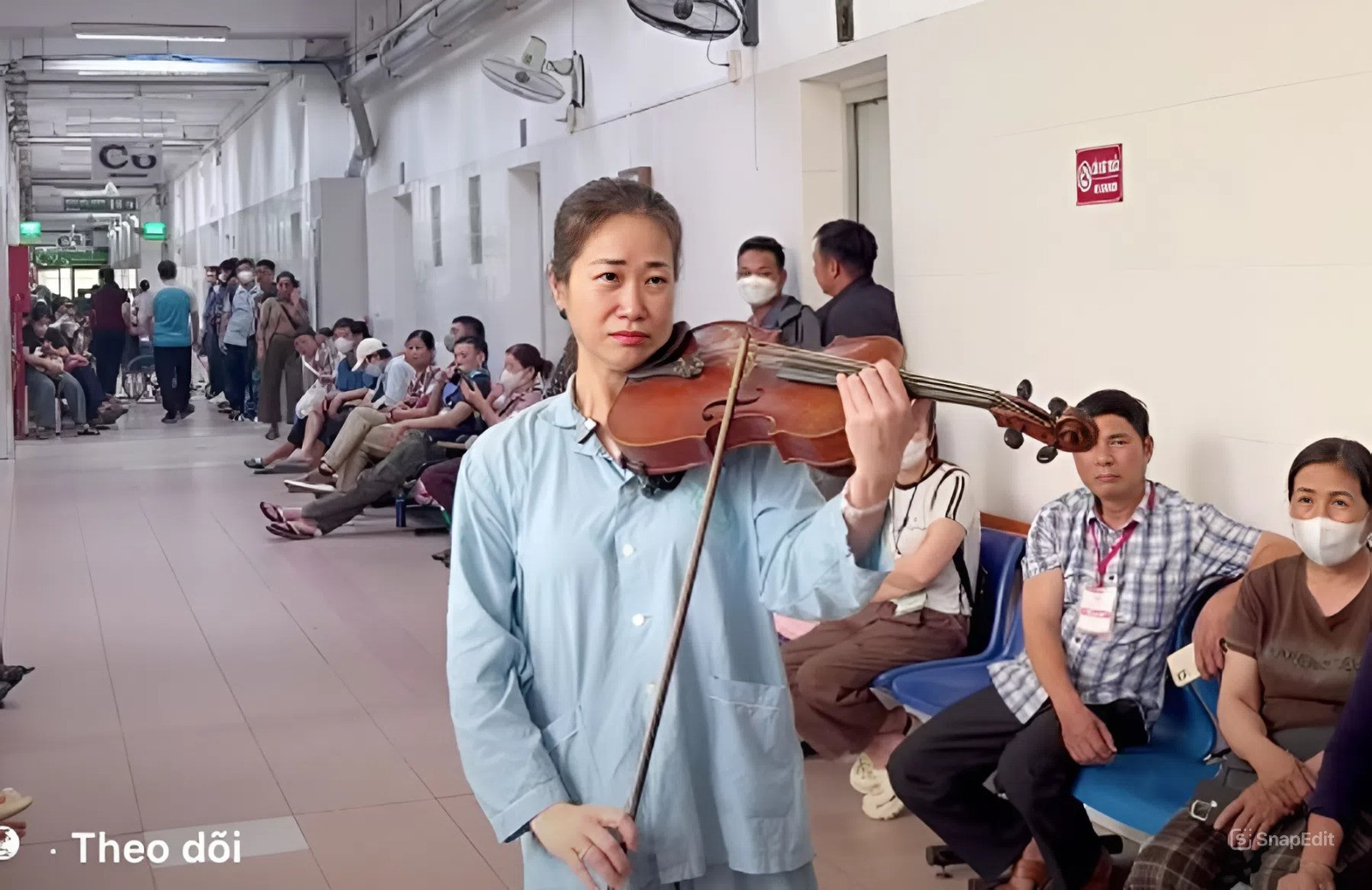
For Nguyet Thu, this was not an impulsive gesture.
Over the past two years, she has been developing a music project within hospitals, dedicated to doctors, medical staff, patients and their families. Her own experience as a patient, she said, has only deepened her belief in that mission.
“When you are in the position of a patient, just having faith in your doctors already brings a sense of healing,” she reflected.
Playing music in that corridor was, for her, both a gesture of gratitude and a personal form of recovery.
“When I play, I feel myself getting stronger again. I place my full trust in the doctors and truly feel their dedication,” she said.
A life shaped by music
Nguyet Thu was born into a family with deep musical roots. She is the daughter of People’s Artist Nguyen Van Thuong, regarded as a pioneer of viola training at what is now the Vietnam National Academy of Music.
She was also the first Vietnamese student to study viola at the Tchaikovsky Conservatory in Russia, graduating at the top of her class. She holds two master’s degrees in arts education from Russia and the Netherlands, has performed in 53 countries, and spent 26 years living and working abroad before returning to Vietnam.
Her artistic career includes international recognition, notably an award for Best J.C Bach performance at an international viola competition in the UK between 1995 and 1997.
Beyond the stage, she has also been a pioneer in applying music to support children with autism in Vietnam - a path inspired by her own journey raising a child with the condition.
A quiet message that lingers
After the video spread, Nguyet Thu expressed a hope that the public would better understand the community music work she has been pursuing. The project is currently implemented at Hanoi Oncology Hospital and Bach Mai Hospital.
“Music can bring positive energy,” she said. “It helps people feel connected, understood, and healed.”
In a place where life often hangs in fragile balance, her music did not change the medical realities. But for a few minutes, it changed how people felt - and sometimes, that is where healing begins.
Tinh Le
.svg)
