 Vietnamnet.vn

 Podcast



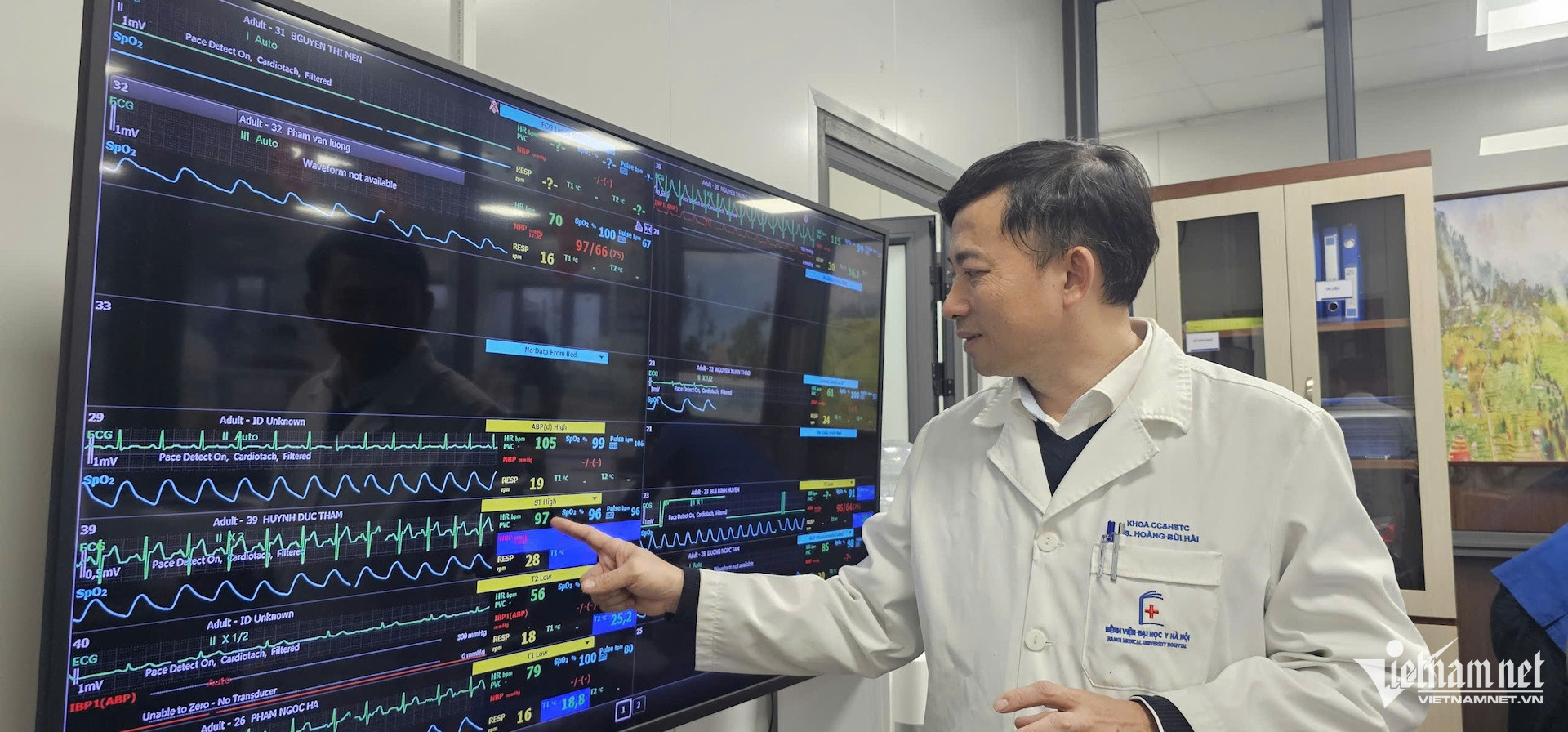
You have spoken very passionately about enhancing the role of pre-hospital care in public health. What is the core issue here?
We invest heavily in hospitals, equipping them with modern machinery and facilities. The question is: Why are hospitals always overloaded?
In my opinion, it is partly because citizens lack a family doctor system to manage their health; every time they go for an exam, they start from zero. Doctors must diagnose based on the patient's memory, often without knowing their history of drug allergies or underlying conditions. This is very risky.
The system can only operate efficiently if pre-hospital care is well-managed. Family doctors help direct patients to the right place and the right specialty, saving both time and costs.
At the same time, we need to build a professional pre-hospital emergency system. The goal is to reach the scene within 8 minutes, following international standards. We must establish official job titles and career codes for pre-hospital emergency care to attract professionals. Training community volunteers must also be a priority.
Regarding pre-hospital care, Thailand is about 20 years ahead of us. A trained young person there can support 10 neighboring families.
This requires the participation of the state, businesses, and the community for everyone's common safety. Pre-hospital emergency care is not a business service; it is a social welfare benefit for the people.
If knowledge is not passed down, the industry cannot grow
Vietnamese doctors during wartime were incredibly talented and heroic, and in peacetime, they are ready to fight epidemics, as seen with Covid-19. In your opinion, what is the greatest strength of Vietnamese doctors?
Many people sense this, and personally I feel very clearly that the greatest strength of Vietnamese doctors is resilience. Every Vietnamese family has lived through years of resistance. The resilient spirit of our ancestors and the solidarity of our nation in times of hardship made me feel "cowardly" if I didn't rush to the front lines against Covid-19. We were ready to face the pandemic without hesitation.
In addition, the spirit of sacrifice for the community, reducing the “ego” for the “common good,” is also a precious quality of Vietnamese healthcare workers. They endure hardships, actively volunteer to provide medical support in remote and disadvantaged areas, help communities recover from natural disasters, and offer charitable medical care to people in difficult conditions, the poor, and policy beneficiaries.
Do you have any memorable experiences from studying or practicing medicine abroad that became personal lessons for you?
When I was a resident in Paris, I once examined a high-ranking official. Before every procedure, I had to ask for permission very carefully. That taught me to “think seven times before speaking.” In Vietnam, I always remind my colleagues to speak in a way that patients can easily accept, to treat them as clients in a service, while still maintaining the dignity of the medical profession.
As a second-year resident in Paris, I participated directly in patient care. Whether they were ordinary citizens or "VIPs," we always asked for permission clearly and politely: "Excuse me, I am a Vietnamese resident intern here," "I am very happy to be assigned by my professor to examine you," "Would you mind if I ask a few related questions?"
Of course, I said this in French, a language that is grammatically strict and polite. I thought to myself, back home I speak Vietnamese, my mother tongue; why would it be difficult to say such things to my own patients? Speaking this way does not diminish the respect for the medical profession.
Beyond treatment, you devote much effort to medical education. Why is passing on professional knowledge so important?
One swallow does not make a summer. A strong medical industry needs many people who are "skilled in medicine and rich in ethics" walking together. Each person's knowledge is finite, but perceptions and experiences differ. If we don't share, we don't progress. If we don't pass it down, the industry cannot grow.
A teacher in medicine holds a special role, being both a physician and an educator. We wish to share the passion for the profession that our teachers and predecessors entrusted to us with our students and trainees.
Thanh Hue
.svg)
