 Vietnamnet.vn

 Podcast



Editor's note: Nearly eight years after the adoption of Resolution 36-NQ/TW on Vietnam's sustainable marine economic development, the Party Central Committee is preparing to issue a new resolution on maritime development.
As Vietnam enters a new phase of development with the goal of becoming a developed country by 2045, a new approach is required. While Resolution 36 focused primarily on developing marine economic sectors, the upcoming resolution aims to strengthen governance of Vietnam's national maritime space as a strategic engine for future growth.
This special report examines the evolution of Vietnam's development thinking - from focusing on the marine economy to building a maritime nation - and explores the role of the sea in the country's long-term development strategy through 2045.
Rather than examining individual sectors such as ports, offshore wind, fisheries, logistics or coastal tourism, these industries are used only as examples to illustrate broader strategic arguments.
What distinguishes this series is its institutional and strategic perspective. It views the sea not simply as an economic sector but as an integrated national development space. In doing so, it reflects Vietnam's evolving development philosophy: from resource extraction to creating new growth drivers; from developing marine industries to governing maritime space; and from pursuing prosperity from the sea to building a strong maritime nation for the twenty-first century.
Part 1: Why Vietnam must move beyond the traditional blue economy
Having access to the sea is a geographical advantage. Becoming a leading maritime nation, however, is a development achievement determined not simply by natural resources or the length of a country's coastline, but above all by its ability to organize and govern its entire maritime domain.
Viewed from this perspective, Resolution No. 36-NQ/TW, which sets out Vietnam's Strategy for the Sustainable Development of the Marine Economy through 2030 with a vision to 2045, represents far more than an economic development strategy. Its greatest significance lies in reshaping the country's development thinking -from exploiting marine resources to building a nation whose long-term development is driven by the sea.
Nearly eight years after its adoption, that conceptual shift has brought meaningful changes in both policy and public awareness. Yet a considerable gap remains between strategic vision and implementation capacity. Vietnam's challenge is not a lack of maritime potential but a governance model that has yet to catch up with this new way of thinking.
Understanding the intellectual shift embodied in Resolution 36 therefore also means identifying the next step in Vietnam's development: building a modern system of maritime governance capable of transforming natural advantages into lasting national strength.
Resolution 36: From a marine economy to a maritime nation
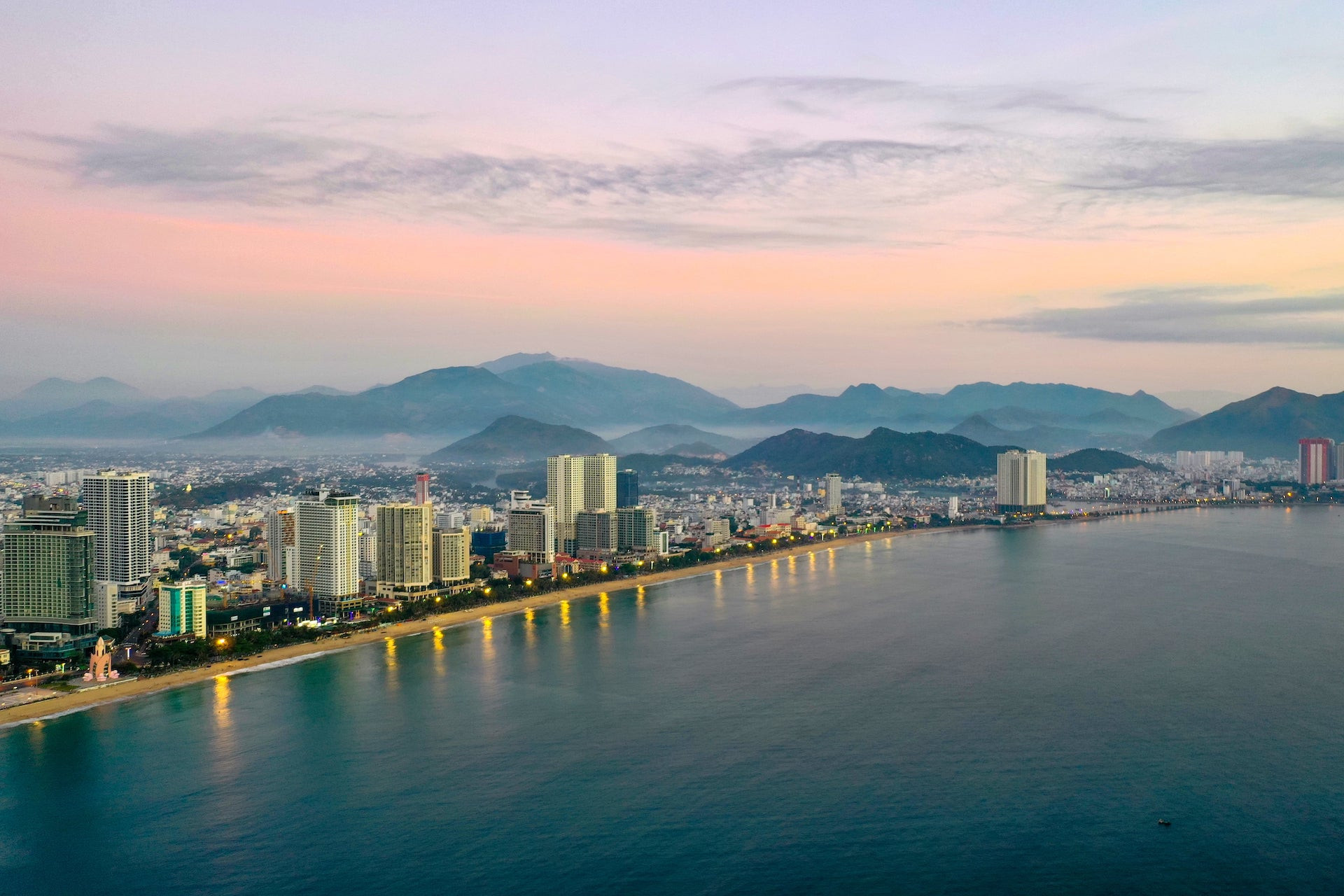
Before Resolution 36, the sea was largely viewed through the lens of natural resources and individual economic sectors such as oil and gas, fisheries, shipping, seaports and tourism. While necessary, this approach remained rooted in sector-based management and resource extraction.
Resolution 36 fundamentally broadened that perspective. The sea is no longer seen merely as a source of economic value but as a strategic space for national survival, development, international integration, and national defense and security. Maritime development has therefore become not simply the responsibility of marine industries but a comprehensive national development strategy.
This marks the essential distinction between a marine economy and a maritime nation.
If a marine economy encompasses all economic activities conducted on and from the sea, a maritime nation is one that organizes its development strategy, governance institutions, infrastructure, scientific and technological capabilities, and national defense around a comprehensive understanding of the sea's central role.
From this perspective, the value of the sea lies not in individual sectors but in the connections among them; not merely in extracting resources but in organizing maritime space effectively; and not only in achieving short-term growth but in strengthening the country's long-term competitiveness.
In many respects, Resolution 36 changed the fundamental development question. Instead of asking what Vietnam can extract from the sea, it asks a broader and more strategic question: How can the sea shape Vietnam's future development?
That is the deeper significance of the transition from a marine economy to a maritime nation.
Eight years on: The gap between vision and implementation
Nearly eight years after Resolution 36 came into effect, awareness of sustainable marine development has advanced considerably. National marine spatial planning has begun to take shape, port infrastructure, logistics and coastal economies continue to expand, while new opportunities in renewable energy, the green economy and marine technologies are gradually emerging.
Nevertheless, the gap between the Resolution's integrated vision and the current implementation model remains substantial.
First, planning and management continue to be fragmented along sectoral lines. Ports, fisheries, tourism, renewable energy, conservation and national defense all compete for the same maritime space, yet mechanisms for coordination and resolving competing interests remain insufficient.
Second, interagency coordination remains weak. Maritime governance involves numerous ministries, sectors and local authorities, but unified coordination mechanisms and ultimate decision-making responsibilities are often unclear.
Third, marine data remain fragmented. Without an integrated national data platform, forecasting, planning and policymaking cannot fully benefit from digital transformation and artificial intelligence.
Fourth, marine governance continues to be constrained by administrative boundaries, even though marine ecosystems, natural resources and environmental challenges extend far beyond provincial jurisdictions.
Taken together, Vietnam's greatest constraint is not a shortage of development resources but the mismatch between a unified maritime space and a fragmented governance system.
In other words, Resolution 36 achieved a breakthrough in strategic thinking, but that breakthrough must now be followed by equally significant advances in institutions and implementation.
Maritime development begins with institutions
The experience of implementing Resolution 36 over the past eight years demonstrates that Vietnam's principal challenge is no longer a lack of resources, capital or technology. Rather, it is the absence of a sufficiently modern governance model capable of organizing and coordinating the country's entire maritime domain.
The sea brings together numerous competing interests, including port development, fisheries, renewable energy, tourism, biodiversity conservation, national defense and security. If each sector pursues its own objectives independently without an overarching coordination mechanism, the country's overall development efficiency inevitably declines.
Maritime development is therefore, above all, an institutional challenge.
The objective should not simply be to regulate individual activities at sea but to govern maritime space as an integrated whole. Governance, in this context, extends far beyond licensing and enforcement. It involves establishing a shared strategic vision, balancing competing interests, allocating maritime space, resolving conflicts and mobilizing participation from government, businesses, researchers and local communities.
If Resolution 36 has opened the path toward becoming a maritime nation, the next stage must focus on building the governance capacity needed to achieve that vision.
Building a modern system of maritime governance
In our view, a modern maritime governance system should rest on five pillars.
First, marine spatial planning must become the principal tool for coordinating development. Planning should not only determine how maritime space is used but also reconcile economic growth with ecosystem conservation and national defense.
Second, Vietnam should establish a national marine data infrastructure. Information relating to marine resources, environmental conditions, shipping, fisheries, meteorology, energy and biodiversity should be integrated into a unified platform to support evidence-based policymaking and real-time governance.
Third, the country should accelerate the application of artificial intelligence and digital technologies. AI can improve disaster forecasting, environmental monitoring, detection of illegal activities, logistics optimization and the evaluation of planning scenarios. Maritime governance in the digital era should rely increasingly on data and evidence rather than primarily on administrative experience.
Fourth, Vietnam needs a strong national coordination mechanism. Establishing an entirely new institution may not be necessary, but an authoritative mechanism is essential to balance cross-sectoral and cross-regional interests while ensuring that major maritime decisions consistently serve national development objectives.
Fifth, investment in implementation capacity is indispensable. Institutions function effectively only when supported by officials equipped with interdisciplinary thinking and the ability to apply data, technology and modern governance methods to increasingly complex maritime challenges.
From Resolution 36 to Vietnam's 2045 vision
The 14th National Party Congress set the goal of transforming Vietnam into a developed, high-income country by 2045. In pursuing that ambition, the sea represents far more than an economic resource; it is an expanding strategic space for national development.
A modern marine economy can generate new sources of growth. A modern maritime nation can deliver even broader benefits by strengthening international integration, enhancing energy security, expanding logistics networks, promoting innovation, improving climate resilience and elevating Vietnam's international standing.
The next phase of Resolution 36 is therefore not about redefining its objectives but about strengthening implementation capacity. A sound strategy must be supported by an equally capable governance model.
Becoming a maritime nation is ultimately an institutional achievement
The experience of many successful maritime countries demonstrates that the sea becomes a true engine of prosperity only when supported by modern institutions.
The greatest legacy of Resolution 36 lies not merely in promoting sustainable marine economic development but in reshaping Vietnam's understanding of national development itself. Rather than viewing the sea simply as a resource to exploit, Vietnam now recognizes it as a strategic national space.
That transformation must now be followed by another equally important shift: from managing the sea to governing the sea, and from developing individual marine industries to building a true maritime nation.
Having a coastline is a gift of geography. Becoming a leading maritime nation is an achievement of institutions. That is the path by which the sea can truly become one of the central pillars supporting Vietnam's aspiration to become a prosperous, resilient and developed nation by 2045.
Dr. Nguyen Si Dung (Former Vice Chairman of the Office of the National Assembly)
.svg)
