 Vietnamnet.vn

 Podcast



A pristine island where electricity comes and goes, restaurants are few and homestays have no air conditioning unexpectedly became the favorite stop for Nguyen Hong Nhat and his family from Hanoi during their 10-day, nine-night journey through central Vietnam.
An untouched island
In early June, Nhat and his wife, Phuong, set off from Hanoi with their two children, aged 11 and eight, driving through central Vietnam and exploring destinations in Quang Tri, Da Nang, Gia Lai, Dak Lak and Khanh Hoa.
Throughout the journey, the family visited plenty of beautiful beaches and traveled along well-known scenic routes. Yet the place they found themselves missing most was Bich Dam Island, a small island in the Hon Tre archipelago in Khanh Hoa, around 30 minutes from the mainland by speedboat.
In recent years, Bich Dam has drawn travelers with its cinematic scenery, unspoiled landscape and peaceful atmosphere. Yet many remain hesitant about visiting because tourism services are still limited. Residents rely largely on solar power, making the electricity supply intermittent, while clean freshwater is also scarce.
For Nhat’s family, however, that was part of the appeal. They have always enjoyed discovering unspoiled, uncrowded places, and Bich Dam made them eager to experience island life for themselves.
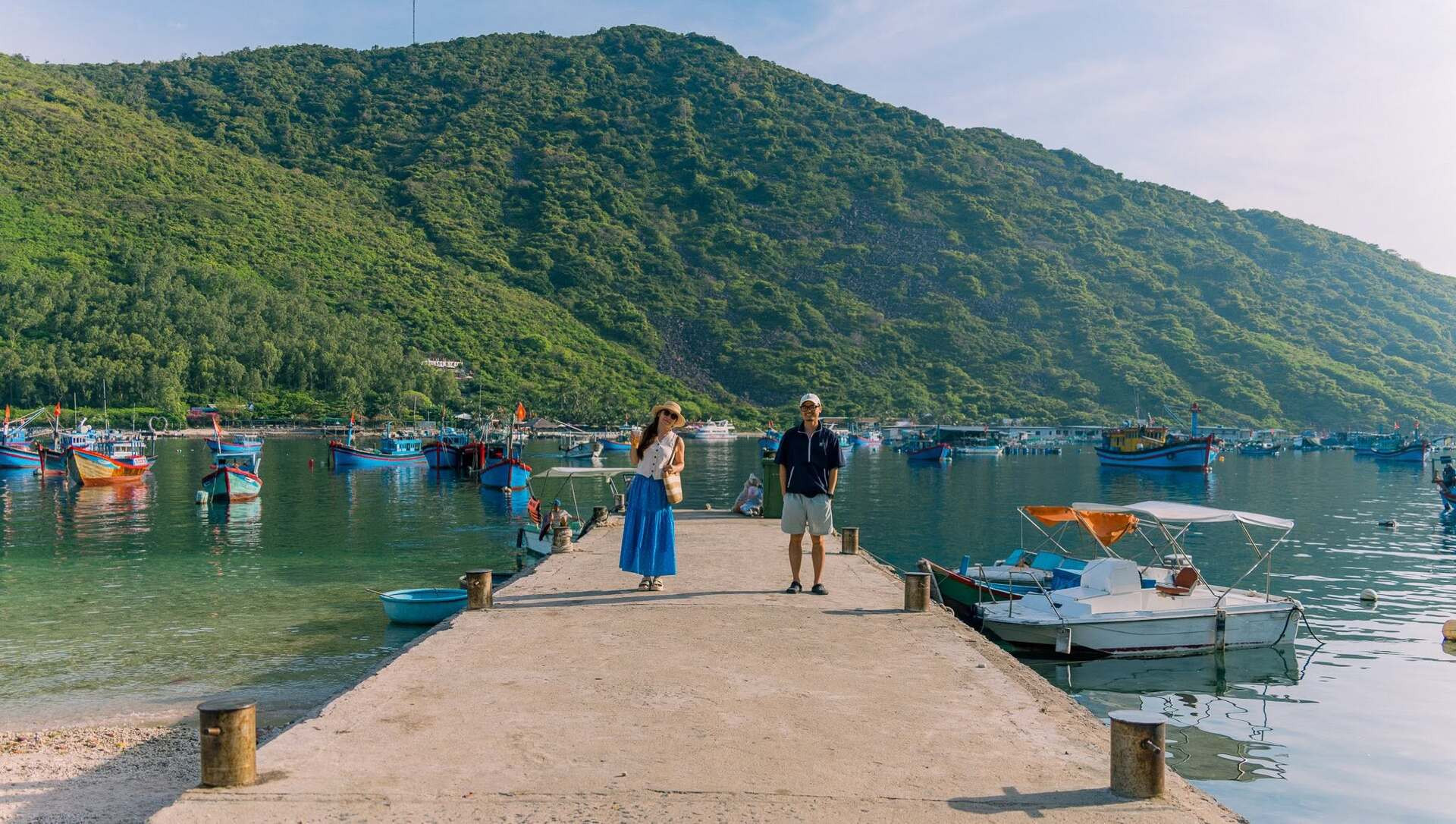
From a pier in Nha Trang, the family took a speedboat to the island for around US$4.60 per adult each way. As the boat pulled into the harbor, the visitors were greeted by crystal-clear blue water, simple fishing village homes and narrow, winding lanes shaded by leafy trees.
The island seemed almost untouched by mass tourism, preserving the slow rhythm of life in a traditional fishing village.
Nhat and his wife stayed at a local homestay. There was no air conditioning and the furnishings were basic, but the house was spacious and had a small courtyard with a hammock where guests could rest at midday. Just a few steps outside, the Hanoi family could meet local residents, hear children playing or chat with fishermen returning from a day at sea.
“The island is so small that after walking around it once, we had pretty much memorized every road in the village,” Nhat said.
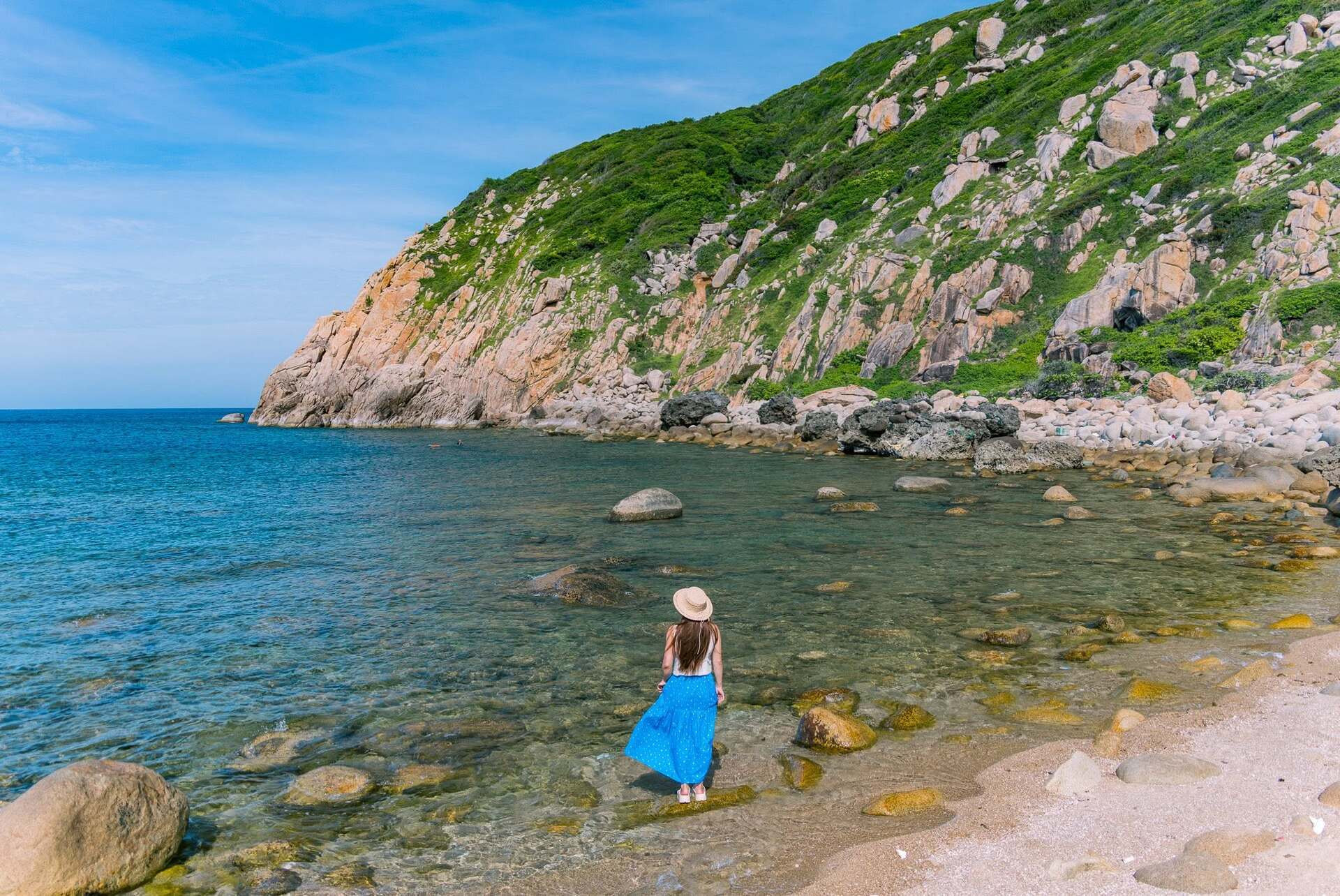
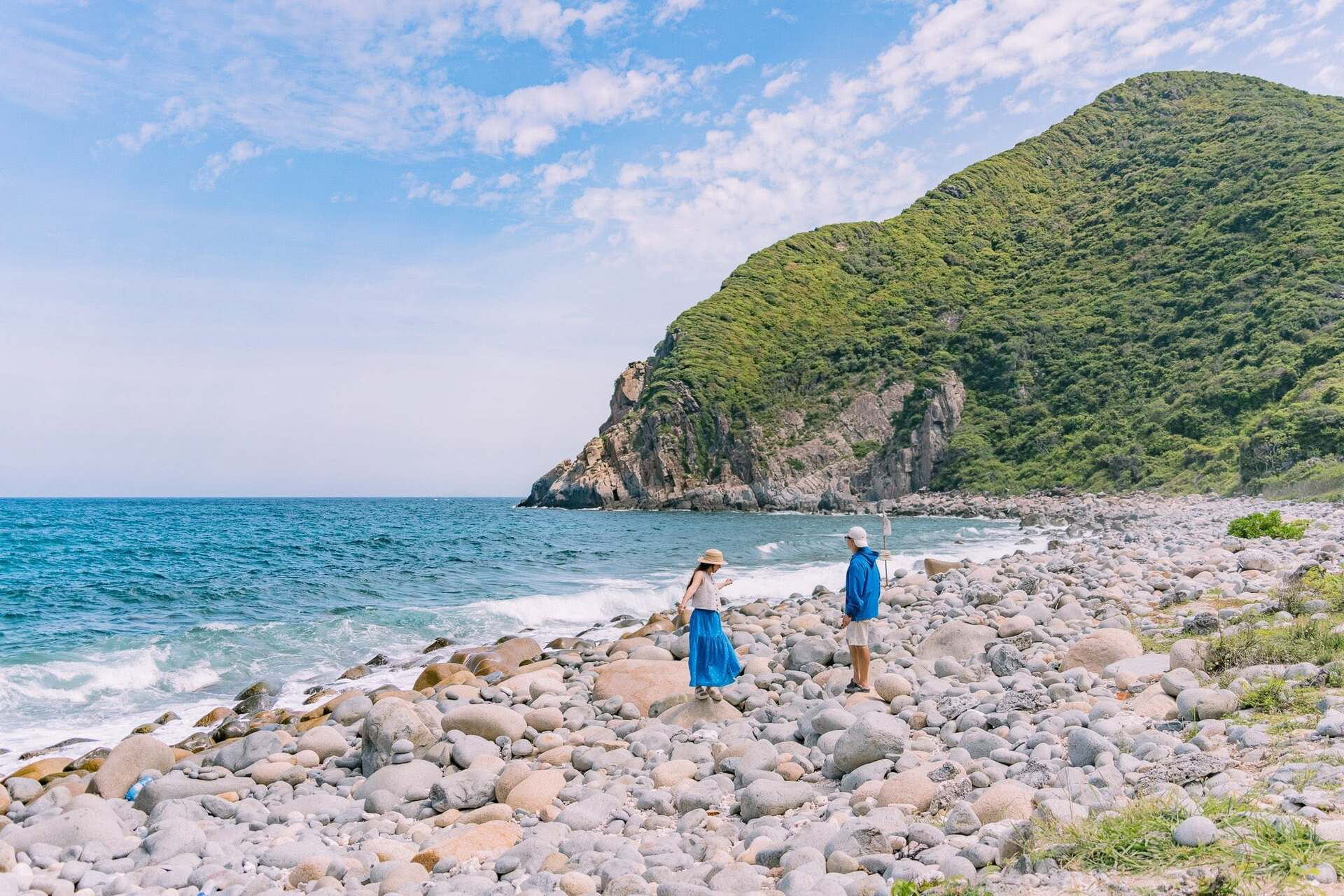
During their two days on Bich Dam, the family followed no particular itinerary, choosing instead to slow down and settle into the rhythm of local life. In the morning, they went swimming by the pier and had breakfast at modest local eateries. Later, they rented a motorbike to explore the island.
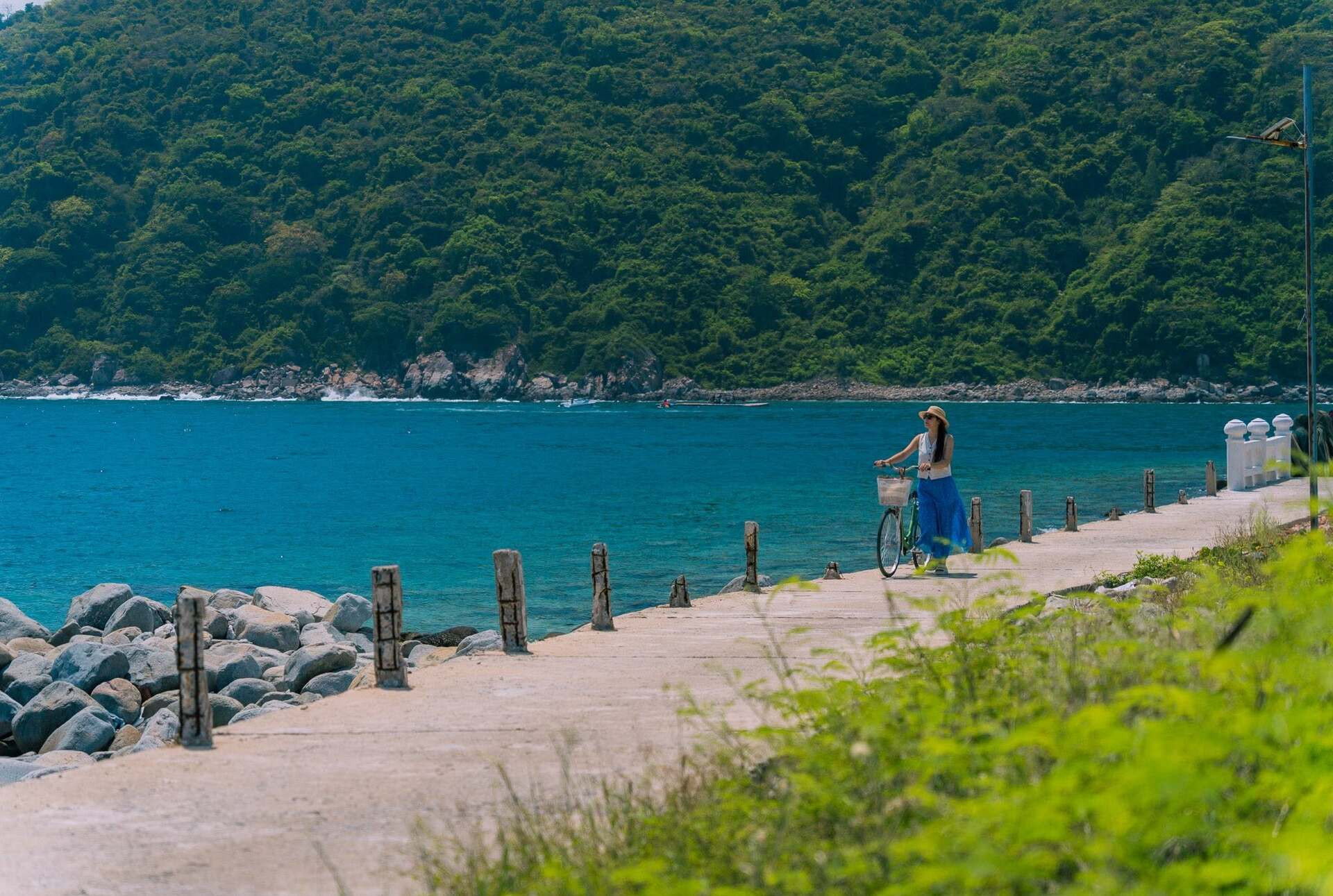
What Nhat loved most were the narrow roads winding through the natural landscape.
“Some sections run beneath cool, green canopies of trees. Others hug rugged mountainsides, opening onto sweeping views of the deep-blue sea below. Then there are wonderfully poetic stretches lined with open grassland, where cattle graze at an unhurried pace. Every time we rounded a bend, it felt like opening a mystery gift because we never knew what scenery would be waiting ahead,” he said.
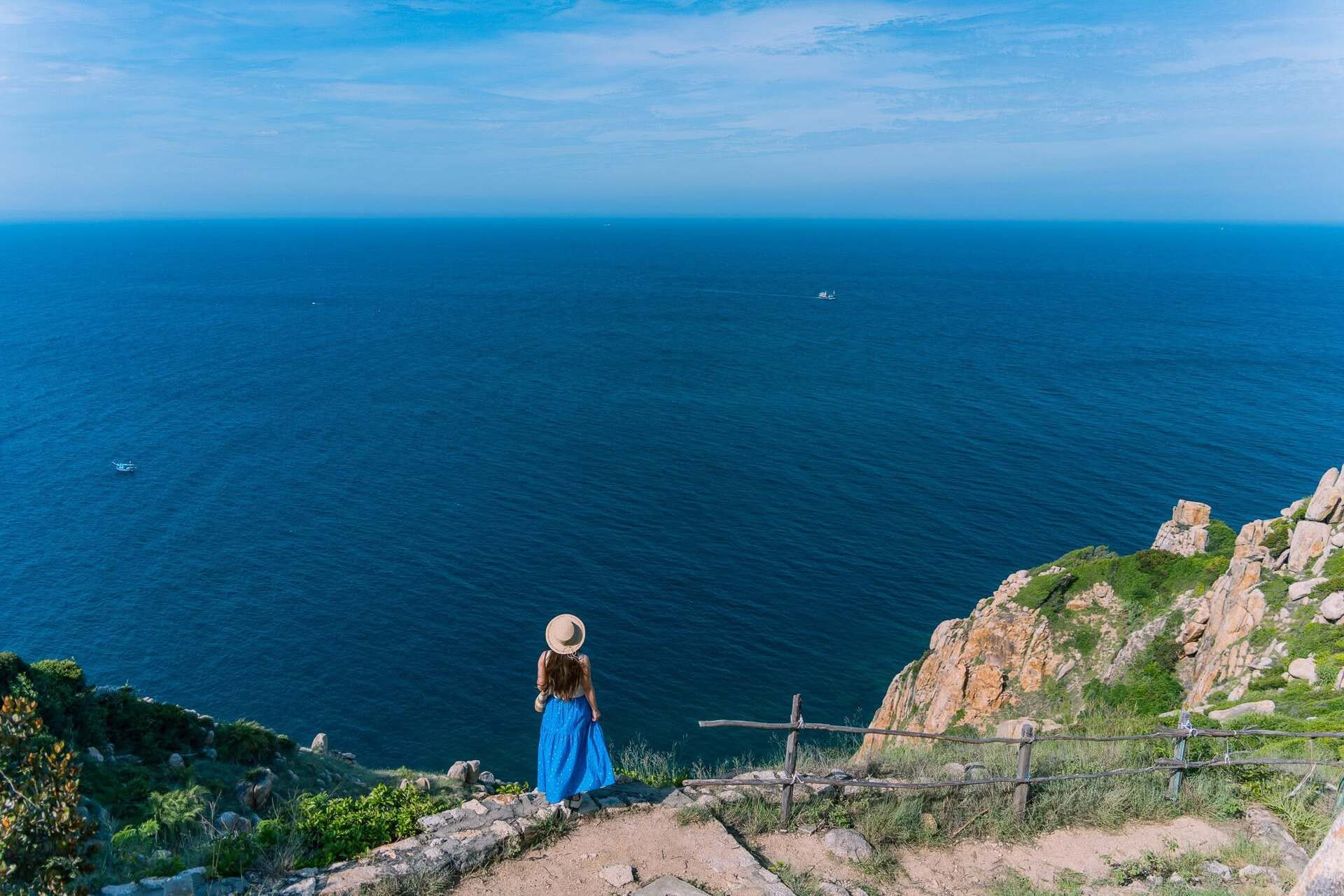
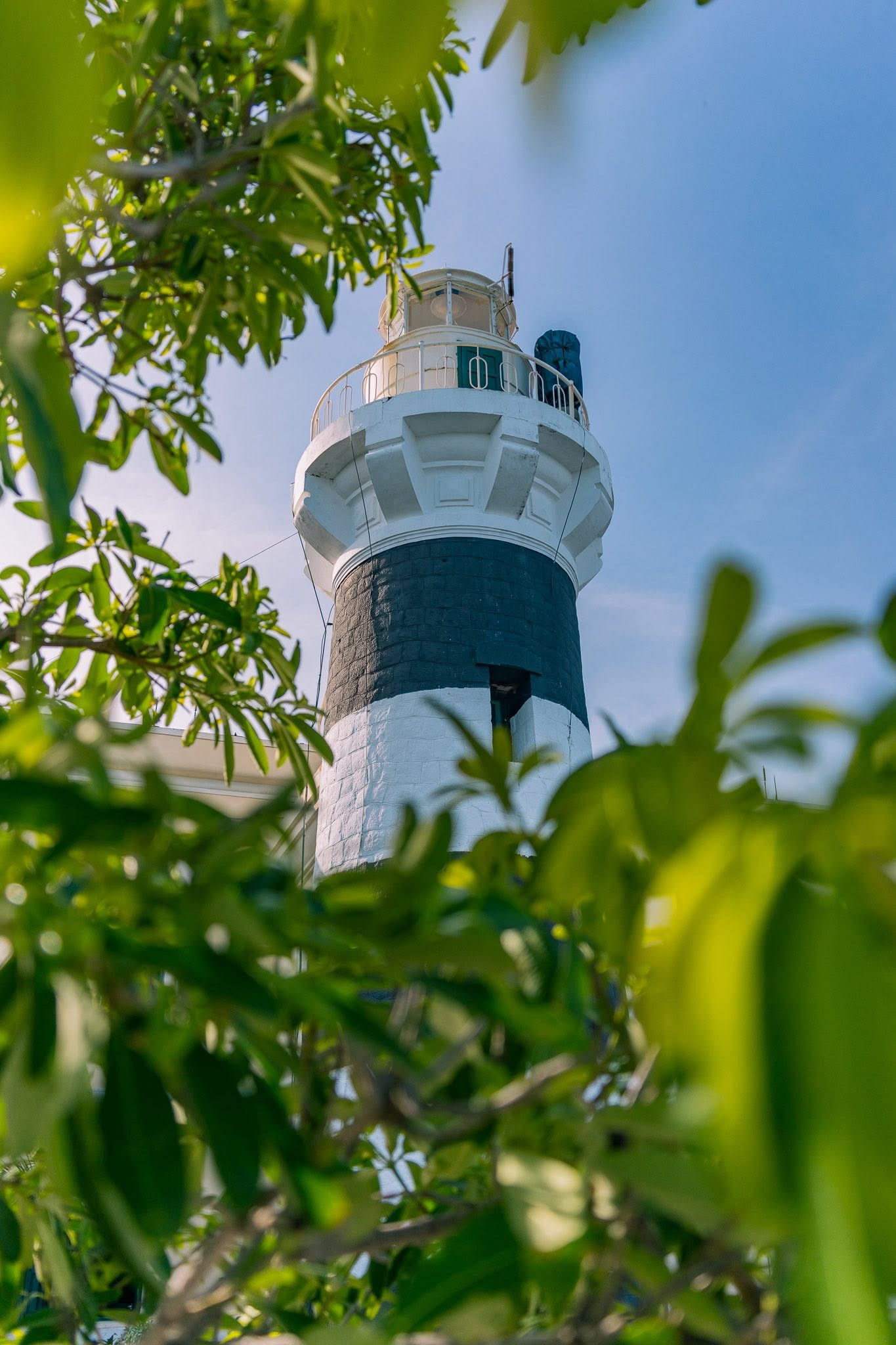
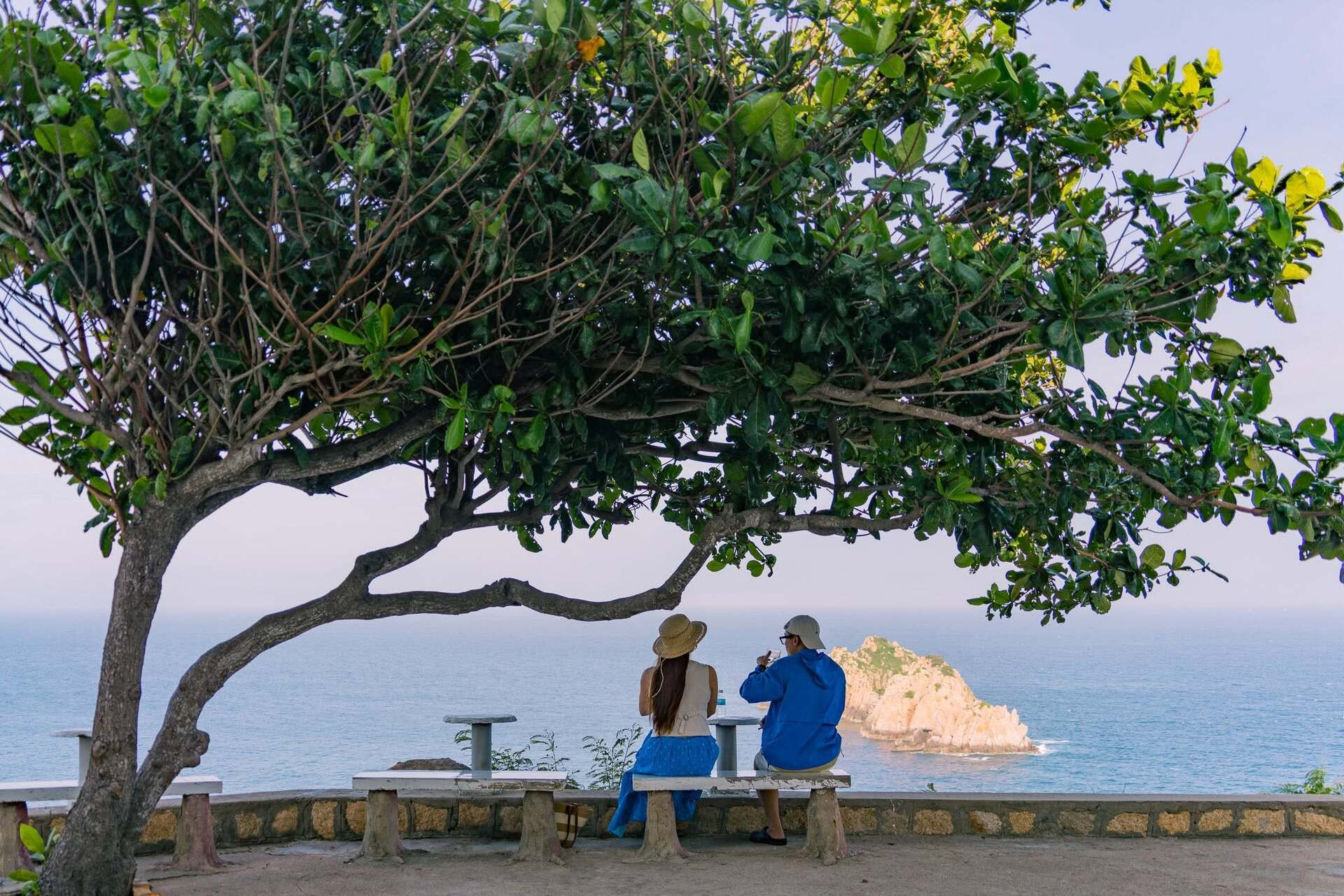
The family visited De Beach, Da Trung Beach and Hon Lon Lighthouse, among other places. In the afternoon, they sat together watching the sunset and savoring a kind of peaceful rhythm rarely found in city life.
To reach the lighthouse, visitors must hike across mountainous terrain and beneath beautiful, dense canopies of trees. Hon Lon Lighthouse stands 102 meters above sea level.
The feeling of “returning to childhood”
Nhat said power outages on the island happened suddenly and frequently - practically an everyday occurrence. At night, the island’s lights often went out early, leaving everything in silence.
Yet that was precisely what gave Bich Dam its peaceful, nostalgic charm.
At night, cool breezes swept across the island. Despite having no air conditioning, the family slept soundly to the steady hum of a fan and the gentle sound of waves rolling ashore.
Beyond its striking scenery, what touched Nhat and his family most was the warmth and simplicity of the islanders.
He still remembers a local woman asking him: “You have all the comforts you need on the mainland. Isn’t that better? Why bring the whole family out here for days and put yourselves through this when we don’t even have reliable electricity?”

Nhat simply smiled and replied: “But you have a peaceful life here that we could never have back home.”
The woman burst out laughing, thinking he was joking. Just as the two were chatting away, the island’s electricity suddenly went out.
“It was funny, but at the same time it made my wife and me feel even more for the people living here. I hope the island will soon be connected to the national power grid so that life can become a little easier for them,” he said.

Nhat was also struck by the island’s children, with their sun-browned skin and faces darkened from hours outdoors, yet unfailingly well-behaved and carefree.
Sometimes, he and his wife simply sat quietly in a corner and watched their children play with youngsters from the fishing village. The children’s bright laughter seemed to make all their worries disappear.
Food on Bich Dam is equally true to the spirit of a fishing village. Seafood such as blue swimmer crab, squid and sea urchin is caught by local fishermen during the day and simply prepared to preserve its natural sweetness. Visitors can eat at small local restaurants or buy fresh seafood and ask their homestay hosts to cook it for them at a relatively modest cost.
“Those two days on the island felt like a return ticket to our childhood,” Nhat said. “Bich Dam isn’t somewhere you go looking for modern comforts. You come here to feel close to nature again and rediscover life at its simplest and most peaceful.”
Linh Trang
.svg)
