 Vietnamnet.vn

 Podcast



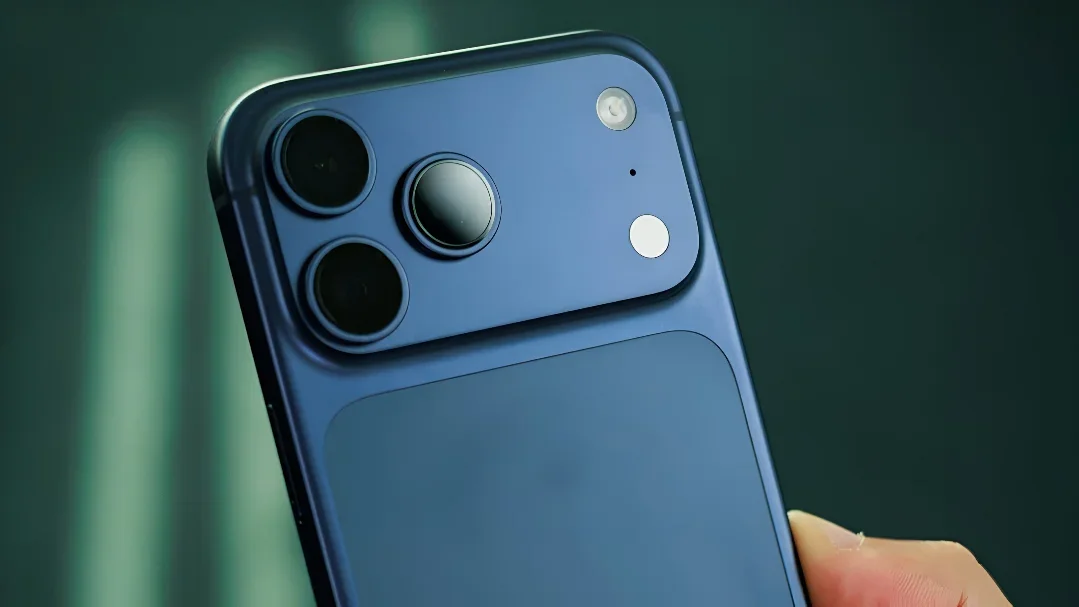
Battery life has long been one of the most common complaints among iPhone users. That is why reports suggesting Apple is preparing to equip the iPhone 18 Pro Max with its largest battery ever are likely to generate considerable excitement.
The upgrade, however, may come with a significant trade-off. According to recent leaks, the device will be thicker and heavier, potentially making it the heaviest iPhone Apple has ever produced.
The iPhone 18 Pro Max is rumored to feature a battery with a capacity of about 5,500 mAh, a substantial increase over previous generations.
To accommodate the larger battery, Apple is reportedly increasing the size of the device, resulting in a weight of around 240 g and a thickness of approximately 9 mm.
If the reports prove accurate, users will have to accept a bulkier device in exchange for supporting a new generation of AI-powered features.
Largest battery in iPhone history
According to well-known leaker Ice Universe on the Chinese social media platform Weibo, the iPhone 18 Pro Max will be equipped with a battery of roughly 5,500 mAh.
The source claims Apple's flagship model will feature "a 5,500 mAh battery, but the trade-off is a body weighing as much as 240 grams with a chassis about 9 mm thick."
That would represent a notable upgrade over the current iPhone 17 Pro Max.
Reports based on regulatory filings also suggest that the US version could have a battery capacity of approximately 5,567 mAh, while the version sold in China may have a slightly smaller 5,391 mAh battery.
The reported difference is attributed to the Chinese model retaining a physical SIM card slot, which occupies space inside the device. By contrast, US models rely entirely on eSIM technology, leaving more room for a larger battery.
If these figures are confirmed, the iPhone 18 Pro Max would have the largest battery Apple has ever fitted to an iPhone.
A heavier and thicker flagship
The increase in battery capacity would inevitably result in a heavier device.
Leaks indicate the iPhone 18 Pro Max will weigh around 240 g, compared with approximately 233 g for the iPhone 17 Pro Max, an increase of about 7 g.
While that difference may seem modest on paper, users are likely to notice it during extended periods of use.
A similar shift occurred in 2023, when Apple replaced the stainless steel frame on the iPhone 15 Pro Max with titanium. The weight dropped to around 221 g, and many users immediately noticed the lighter feel.
Although the iPhone 17 Pro Max has already adopted an aluminum frame to reduce weight, the addition of a much larger battery could offset much of that benefit.
The iPhone 18 Pro Max is also rumored to measure about 9 mm thick, making it one of Apple's thickest flagship smartphones in recent years.
The Pro Max lineup is already among Apple's largest smartphones, and additional thickness could make one-handed use more difficult, particularly for people with smaller hands.
Most users also pair their phones with protective cases. Combined with a rugged case, the total weight of the iPhone 18 Pro Max could exceed 280 g to 300 g, making the device noticeably heavier in daily use.
Even if the iPhone 18 Pro Max becomes Apple's heaviest smartphone, that distinction may not last long.
Multiple reports suggest Apple is preparing its first foldable iPhone, rumored to be called the iPhone Ultra.
With a large foldable display, dual batteries, a hinge and additional mechanical components, the foldable model could weigh even more than the iPhone 18 Pro Max.
Bigger battery may not mean longer battery life
A larger battery does not necessarily translate into proportionally longer battery life.
For years, Apple has often used additional battery capacity to support new features rather than significantly extending usage time.
In other words, if new hardware consumes more power, a larger battery may simply maintain battery life at levels similar to previous generations.
That is widely expected to be Apple's strategy with the iPhone 18 Pro Max.
The larger battery is believed to be primarily intended to support next-generation AI capabilities.
Apple continues to invest heavily in Apple Intelligence, particularly a significantly upgraded Siri AI assistant with more advanced natural language processing, contextual understanding and the ability to perform increasingly complex tasks.
Running AI models directly on the device requires considerable processing power and energy, especially when handling real-time requests.
As a result, the larger battery may not deliver substantially longer usage times. Instead, it could ensure AI features operate smoothly without compromising the overall user experience.
This reflects a broader trend across the smartphone industry, where AI is becoming one of the most power-intensive components alongside the display and processor.
Apple appears willing to sacrifice some of the iPhone's signature thinness in favor of a larger battery, stronger AI performance and more advanced software capabilities.
As AI becomes the industry's primary focus, the iPhone 18 Pro Max may illustrate Apple's evolving design philosophy: prioritizing battery capacity and computing performance over ultra-thin hardware to support increasingly sophisticated on-device AI experiences.
Hai Phong
.svg)
