 Vietnamnet.vn

 Podcast



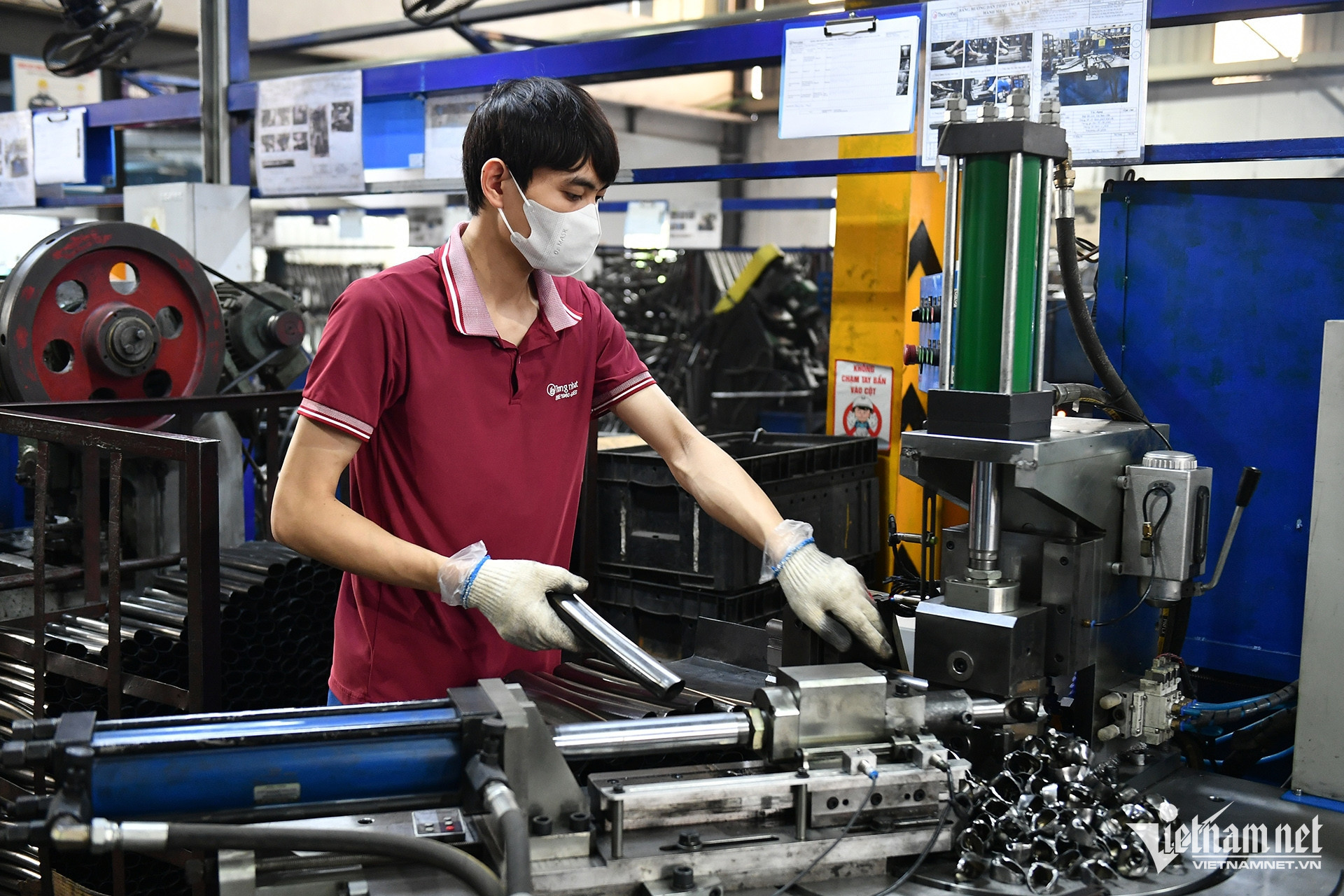
On the occasion of the 14th National Party Congress, Nguyen Dinh Khang, member of the Party Central Committee, vice chair of the Central Committee of the Vietnam Fatherland Front and president of the Vietnam General Confederation of Labour (VGCL) spoke with the press about the historical mission, role, and position of the Vietnamese working class in the new stage of development.
How do you assess the role, position, and development of the Vietnamese working class after 40 years of Doi Moi (renovation)?
Since its inception, especially during the past 40 years of Doi Moi, Vietnam’s working class has always affirmed its historical mission, role, and position as the leading class of the revolution through its vanguard, the Communist Party of Vietnam.
According to the General Statistics Office, the country currently has about 17.5 million workers in the industry-construction sector and 21.2 million workers in the service sector, accounting for 39 percent of the population and 73.6 percent of the society’s labor force. Quality and skill levels have been step-by-step improved; the rate of trained workers increased from 64.5 percent in 2020 to 70 percent in 2025, in which the number of workers with degrees or certificates increased from 24.1 percent in 2020 to 29.2 percent in 2025.
As the largest representative organization of workers, what focal solutions has the Vietnam Trade Union implemented?
As the "largest representative organization, the center for gathering and uniting the working class and laborers nationwide," the Vietnam Trade Union has implemented many solutions to participate with the entire political system in building a modern and strong Vietnamese working class, as a pioneer force in implementing the task of rapid and sustainable national development.
First, strengthening the training, education, and improvement of political and legal levels, class consciousness, and national spirit for the working class.
Second, actively participating in training, improving educational levels, vocational skills, and increasing labor productivity for workers.
Third, creating an environment for workers to practice and mature through patriotic emulation movements and nationwide campaigns.
Fourth, the Vietnam Trade Union continues to affirm its role in representing, caring for, and protecting the legal and legitimate rights and interests of workers. More than 80 percent of collective labor agreements have been signed with many terms more beneficial to workers such as wages, bonuses, labor norms, safety, occupational hygiene, working conditions, and mid-shift meals.
Fifth, the Vietnam Trade Union strengthens coordination with all levels and sectors in building a modern and strong working class; promoting the core role of the working class in alliance with the peasantry and the intelligentsia, while promoting the "intellectualization" process of workers. In 2023-2025, the VGCL awarded 1,457 Creative Labor Certificates to outstanding individuals.
What do you think are the major challenges currently facing the Trade Union organization and workers?
First, the development of the working class has not kept pace with the requirements of the growth model and the national development strategy. The quality of human resources remains limited; and the technical labor structure is unbalanced, with a shortage of skilled workers, high-tech workers, and workers capable of mastering modern technology.
Second, long-standing inadequacies in interest distribution and social security assurance reduce workers' motivation to strive. Employment is not yet sustainable; the minimum wage is not enough to live on; and income gaps between labor groups and between regions remain large.
Third, the human resource management model is slow to renovate and not suitable for sustainable development requirements. High labor intensity and long working hours are still common.
The other problems lie in the practical summary and theoretical research on the working class, the consciousness, political mettle, and legal understanding
What focal tasks and solutions will the VGCL propose to the Party Central Committee and the 14th Congress?
First, issuing a strategy for building the working class associated with the socio-economic development strategy, concretizing the orientation of building a modern and strong Vietnamese working class associated with the development of science-technology and innovation.
Second, ensuring a harmonious distribution of interests among workers, employers, and society.
Third, researching the reduction of working hours and improving the quality of life for workers.
Fourth, focusing more on theoretical research and practical summary regarding building the working class.
Fifth, innovating and strengthening the Party's leadership, the coordination and support of the State and the political system to promote the role of the Vietnam Trade Union in building a modern and strong working class.
Vu Diep
.svg)
