 Vietnamnet.vn

 Podcast



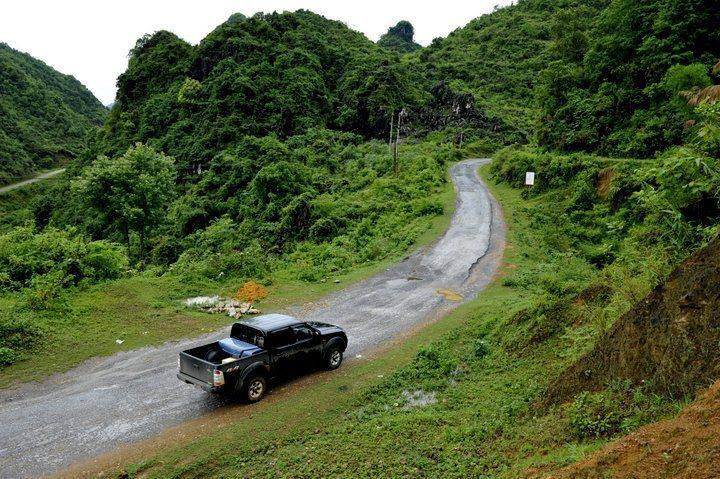
Readers note that, with their specific design and intended use, pickup trucks are not a suitable choice amid crowded urban traffic.
Hoang Linh (Hanoi) believes that one needs to look at the nature of the name “pickup truck”. A pickup truck, no matter how flexibly it is used, is still a vehicle designed with a bed to carry goods. This is not about a large or small size, but purpose of use. A vehicle created to serve transport of goods cannot be managed entirely like a passenger vehicle in an urban environment.
The next issue is space. A typical pickup truck is more than 5 meters long, significantly taller and wider than a sedan or hatchback. In the condition of already overloaded infrastructure, especially on small streets and central areas, the appearance of more and more bulky vehicles poses a real pressure.
"Urban traffic cannot be designed based on individual cases, like 'I only use a pickup to go to cafe.' Management must be based on the majority and the core purpose of use of the vehicle," Linh said.
He added that pickups cause difficulties when stopping and parking; many parking lots have even avoided this type of car for a long time.
Not a few people argue that a 7-seater SUV is similarly large, so it must be treated as a car. But a clear distinction is needed: passenger vehicles and cargo vehicles are two different types of vehicles in nature and management.
"I do not deny the value of pickup trucks. In suburban areas, construction sites, or areas with actual transport needs, this is a very useful vehicle. But in the crowded urban core, those advantages become disadvantages. In short, I like pickup trucks, but I don't want to see them in crowded streets," Linh said.
Sharing the same view, reader Mai Xuan Tong believes that restricting pickup trucks is necessary because this is still a type of vehicle with a large load capacity. It is difficult to consider it entirely like a passenger car to circulate freely in the inner city.
The size of a pickup truck is usually larger than most sedans and hatchbacks, leading to it occupying more road space, contributing to increased congestion.
Besides, there have also been many collisions recently related to pickup trucks, and there are even cases where pickup drivers had altercations or assaulted others after an accident, causing public concern.
“In the context where cities are heading towards green traffic, prioritizing electric cars and compact vehicles, continuing to let pickup trucks in the inner city is inappropriate. In my opinion, this type of vehicle should be directed to operate mainly in the suburbs, midland and mountainous areas, where it fits its function,” Tong proposed.
Another aspect that cannot be ignored is safety. Reader Bui Minh stressed that pickup trucks have a high ground clearance, a large front end, and wide blind spots, which are factors that increase risk in a crowded traffic environment where motorbikes and pedestrians account for a large proportion.
Minh said although safety technology is improving, structurally this is still a vehicle that is less urban-friendly than a passenger car.
"I know many people buy pickups not to carry goods, but to take advantage of tax and fee incentives or simply because they like the high, aggressive driving feel. The result is a vehicle that consumes a lot of space and traffic resources but is used as an ordinary personal car, even without exploiting its correct function," Minh added.
Some readers believe it is not a coincidence that many cities in the world strictly manage pickup trucks, even applying regulations similar to trucks. That is the result of the balance between usage needs and infrastructure capacity. When the number of vehicles exceeds the threshold of urban endurance, classification and restriction are inevitable.
Vu Diep
.svg)
