 Vietnamnet.vn

 Podcast



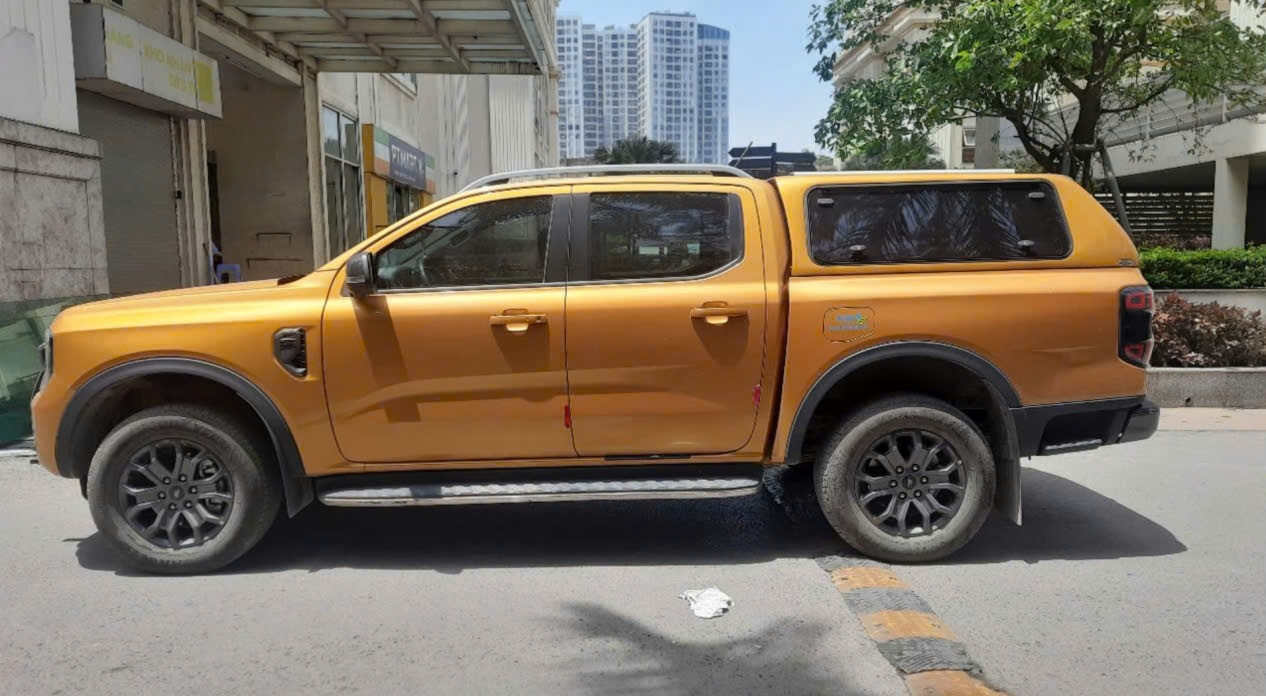
Meanwhile, under a previous circular, most current pickup models such as Ford Ranger, Mitsubishi Triton, Toyota Hilux, Isuzu D-Max, Mazda BT-50, and Nissan Navara are classified as “double-cab pickup trucks,” belonging to the “conventional truck” category. These models all have a gross vehicle weight exceeding 2 tons.
Hundreds of readers have emailed VietNamNet to discuss this issue, with many supporting the classification of pickups as passenger cars, while others argue they should be treated as trucks.
Ford ranger owner: Is perception of pickup trucks truly fair?
Sending an article to the forum "Should pickup trucks be banned from the inner city like trucks?", reader Nguyen Ha (Vinh Tuy, Hanoi), a pickup truck owner, proposed a series of policy reform solutions.
More than three years ago, he decided to switch from a 5-seater CUV to a pickup truck, a 2023 Ford Ranger Wildtrak. The reason was very simple: he needed a multipurpose vehicle that could both carry goods for work and be used for daily travel with his family, being safe enough, comfortable, and not as "rough" as a truck.
But recently, when the story of restricting pickup trucks in the inner city was raised, he started to wonder: is the perception of this type of vehicle truly fair?
In reality, pickup trucks are currently in a rather "middle" position. Regarding obligations, pickup truck owners pay many types of taxes and fees that are not low at all, with some amounts even approaching those of passenger cars. The registration process is also not simple. But regarding rights, the vehicle is at risk of being classified into the common truck group, subject to restrictions on hours, routes, and service life.
If the policy changes in that direction, what will happen?
He believes the first impact might not be reducing congestion as expected. Those currently using pickups will have to recalculate: either sell the vehicle to switch to a car, or buy another car to serve goods transportation if conditions permit. At that time, instead of needing only one vehicle, they might have to buy two to serve their needs. Traffic pressure, therefore, is not guaranteed to decrease and may even increase.
The second impact is cost. The cost of switching vehicles is not small, especially for those using the car to make a living. Transport and production costs may increase and will ultimately be reflected in the price of goods.
But what worries Ha most is the stability of policy. A quick change decision lacking a clear roadmap can create a state of anxiety for citizens and businesses. At that time, the story is no longer just about vehicles, but about trust.
Ha affirmed that he does not think pickup trucks need special privileges or favors. But clearly, this is a type of vehicle with practical utility value, especially in a context where business households still account for a large proportion. Instead of perceiving it as a "problem to be restricted," it should be considered a harmonious traffic solution if managed correctly.
From a user's perspective, he believes that if there are adjustments, at least three principles are needed: transparency, a roadmap, and a balance between obligations and rights. He proposes four options:
First, if the previous policy is maintained, treating most pickup trucks as passenger cars when participating in traffic, people will feel secure using them. If not, a sufficiently long roadmap needs to be announced so users can consider before buying a car and businesses have time to adjust their business strategies.
Second, if pickup trucks remain "cargo trucks" according to technical classification, then Hanoi city should consider them "passenger cars" when participating in traffic within the inner city, thereby not being restricted according to Decision 01 of the Hanoi People's Committee.
Third, if pickup trucks are still classified as "cargo trucks" and treated exactly like trucks, there needs to be a calculation to refund pickup truck owners the difference in tax between trucks and pickup trucks already paid.
And finally, it is possible to allow pickup truck buyers in the city to pay full taxes and fees like passenger cars to be used as passenger cars if they have the need.
Vu Diep
.svg)
