 Vietnamnet.vn

 Podcast



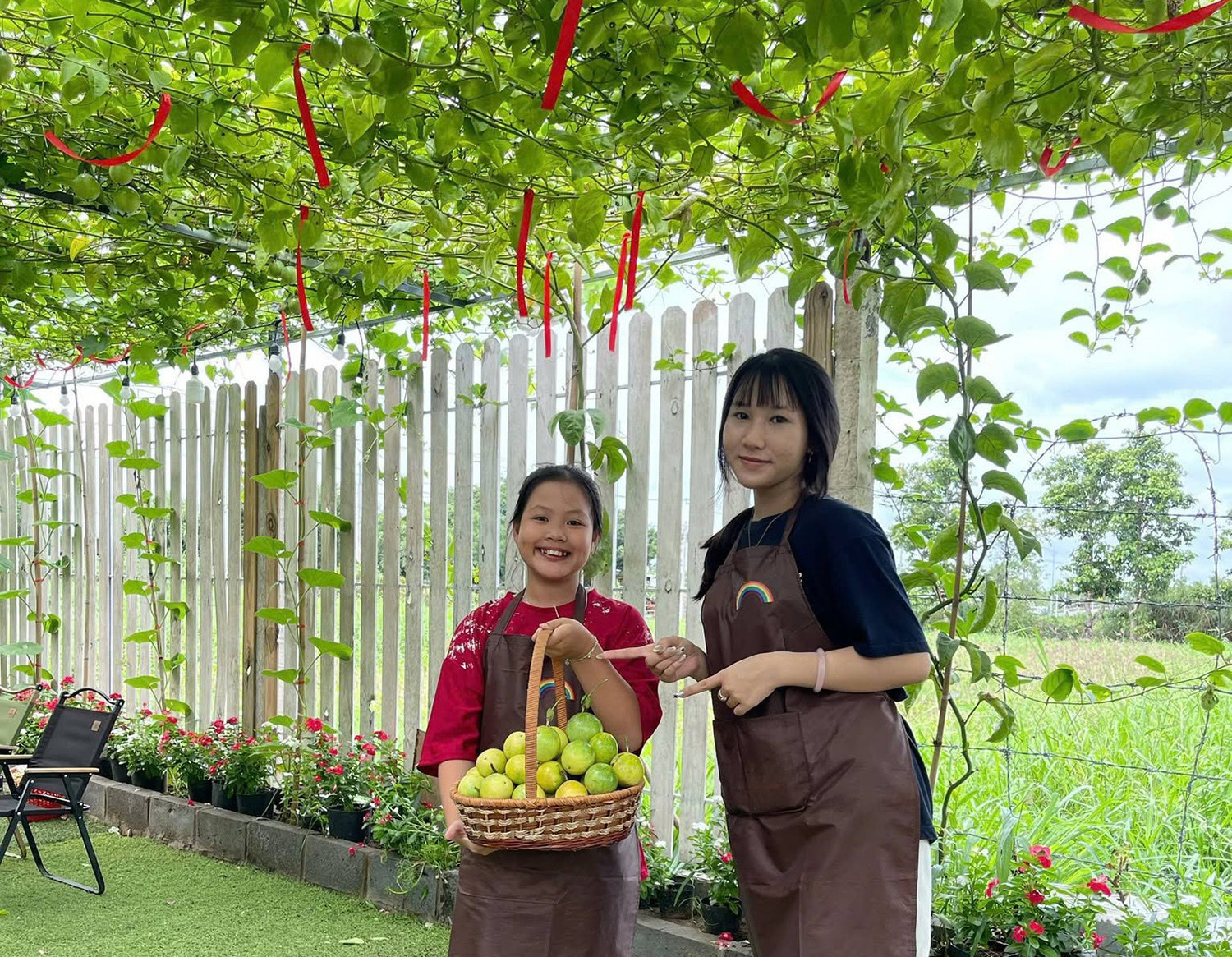
The model of a coffee shop and experiential tourism is becoming a popular hotspot drawing crowds of tourists. Right along National Highway 91B, running through Phuoc Thoi Ward in Can Tho City, vibrant green grape trellises heavy with fruit have turned into a destination attracting numerous visitors.
The owner of the vineyard is Vo Hoang Nam, 40, residing in Phuoc Thoi Ward. Prior to cultivating grapes, he worked at a pharmaceutical packaging manufacturing company in Can Tho. After getting married, he resigned from his job to return home and develop the household economy through animal husbandry.
“At that time I mainly raised animals. Later I happened to learn about grapevines and saw some orchards in Dong Thap and Vinh Long growing them successfully, so I bought seedlings for experimentation,” Nam said.
In 2022, he brought the first grapevines from the former Ninh Thuan Province to plant on about 800 square meters in his home garden. At that time, many relatives and friends were skeptical because the Mekong Delta climate has heavy rain and high humidity, not a traditional grape-growing region.
"Before starting, I surveyed and saw that some gardens in Dong Thap and Vinh Long had succeeded. I was confident that if they could do it, I could too," Nam said.
With support from the seedling seller and experienced friends, Nam learned as he went. To overcome weather challenges, he invested in a sturdy greenhouse system around the garden to block rain and minimize dangerous diseases like fungus or rust.
Once he mastered the techniques, Nam upgraded the model. His garden now has up to 13 grape varieties: candy grapes, bailey, red finger, black finger, NH01-16, red kyoho, black kyoho, American red seedless, and more.
According to Nam, the Shine Muscat is the variety carrying the highest economic and aesthetic value due to its beautiful appearance, deep sweetness, and distinctive aroma. The Red Finger and Black Finger grape varieties are also highly favored by clients for their eye-catching shapes.
Agro-tourism expansion
Following years of developing seedlings and producing commercial grapes, in early 2026, he decided to invest over VND 300 million to lease a plot of around 3,000 square meters along National Highway 91B to scale up operations.
The Mekong Delta climate has a major advantage with two distinctly visible rainy and sunny seasons, allowing him to manipulate the grapevines to yield two crops per year (the favorable crop from November to April of the following year, and an off-season crop during the rainy season).
To serve tourism, Nam applies a method of rotational pruning and fertilizing across separate zones to create consecutive harvests. This keeps the vineyard consistently lively, ensuring that tourists visiting at any juncture of the year can enjoy the sight of fruiting vines.
The idea of developing a coffee-vineyard model stemmed from the practical demands of his customers.
“When expanding the area, I thought I needed a place to receive guests. Previously, I had toured many vineyards and noticed each location had its own strengths, so I drew from those experiences to build a more suitable model. I want visitors to have a place to sit down, rest, drink coffee, and experience the garden space,” Nam stated.
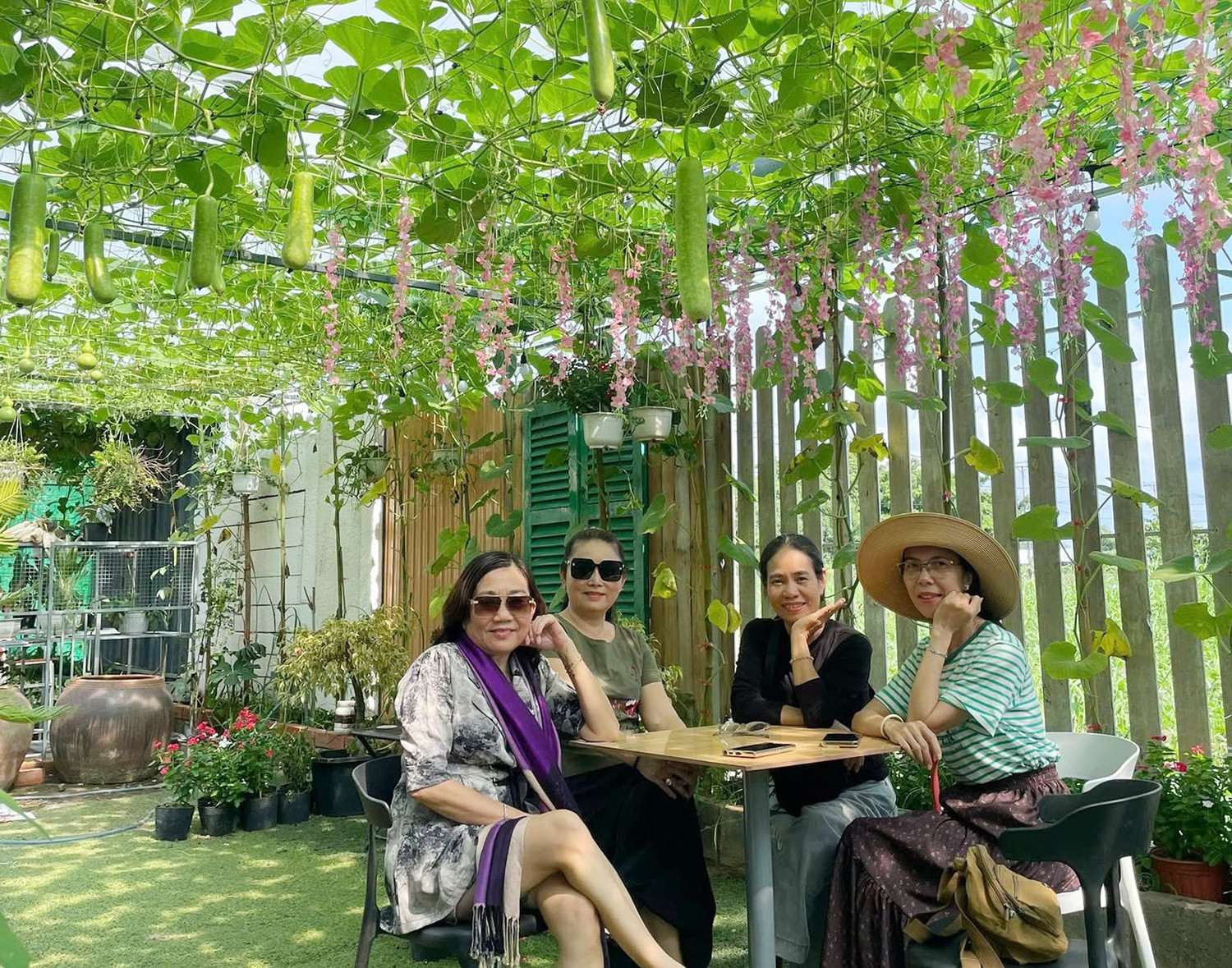
Beyond cultivating grapes, he also invested in micro-landscapes, growing bottle gourds, sweet passion fruit, and other climbing vines to forge a refreshing, green space for visitors to take photos.
A special feature of the vineyard is the arrangement of multiple grape varieties with varying growth timelines to prolong the harvest season.
“The off-season crop usually encounters higher risks due to fungal diseases and fruit cracking, resulting in a lower yield. Currently, a few varieties in the garden like Kyoho and Bailey are still bearing fruit,” he said.
During the ripe grape season, tourists visiting the site can pick grapes directly from the vines, take photos, and purchase products to take home. The admission ticket is VND30,000 per person, which includes a complimentary beverage.
During the initial opening days, the garden welcomed from 200 to 250 visitors daily. On weekdays, there are still over 100 guests coming to sightsee, drink coffee, and learn about grape-growing techniques.
Linh Trang
.svg)
