 Vietnamnet.vn

 Podcast



On special occasions such as village festivals, new communal house celebrations, weddings, and engagements, the Gie-Trieng people always prepare che giam, a humble yet elaborate dish.
Though rustic in appearance, it brings together a variety of ingredients and carries deep traditional meaning - symbolizing community bonds and the spirit of mutual support in times of hardship among the Gie-Trieng ethnic group.
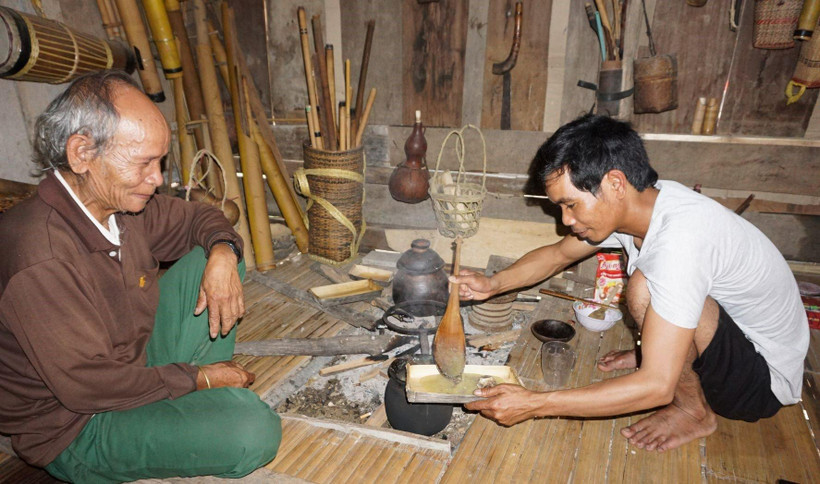
Since ancient times, rice has symbolized life and abundance to the Gie-Trieng community. It is deeply cherished, particularly in wedding customs.
During wedding preparations, the bride’s family typically pounds about 100 kilograms of rice.
The finer and smoother the rice flour, the more it reflects the bride’s dedication and skill.
After the wedding, the finely pounded rice is divided into small bags and distributed to the groom’s relatives, who then use it to cook various dishes - especially che giam, a traditional recipe passed down through generations.
The dish is mainly made from bone and rice. While the bones can be from beef, buffalo, or pork, the cook must choose only one type of animal bone per batch to preserve the purity of flavor.
The best parts are usually thigh and rib bones. The bones are thoroughly cleaned, drained, and placed in a clay pot with just enough water to cover them. The pot is then simmered gently over a low fire to draw out a rich bone broth.
Meanwhile, rice is soaked for about 30 minutes until fully bloomed, then pounded and sifted into a fine powder.
The soaking water is mixed back into the flour, creating a thick, milky-white mixture similar in texture to cassava starch. This mixture is added to the simmering clay pot along with pumpkin and squash. The cook must continuously stir the mixture while it boils to avoid clumping.
The steady heat of the clay pot and the persistent stirring help break down the ingredients, allowing the meat, rice, and vegetables to meld together. When the meat reaches the right tenderness, finely chopped lemongrass and ground pepper are added.
What makes che giam especially unique is the way the Gie-Trieng people enjoy it. Elder Brool Ve from Dak Duc commune, Ngoc Hoi district (Kon Tum), explained: “Traditionally, we eat from a single mang lo o bamboo trough. Each person takes a sip and passes it along to the next. This way, everyone - elders, children, and youth - shares equally. It’s a custom born from poverty, but it fostered unity and ensured no one went hungry.”
According to elder Brool Ve, in the early days of village life, food was scarce for the Gie-Trieng people. To fill their bellies, che giam was created.
While it began as a way to fend off hunger, its comforting flavor soon made it a cherished communal dish.
Even now, with improved living standards, che giam remains a staple on the table - not only for its taste but as a powerful reminder of the Gie-Trieng’s enduring sense of kinship and community.
PV
.svg)
