 Vietnamnet.vn

 Podcast



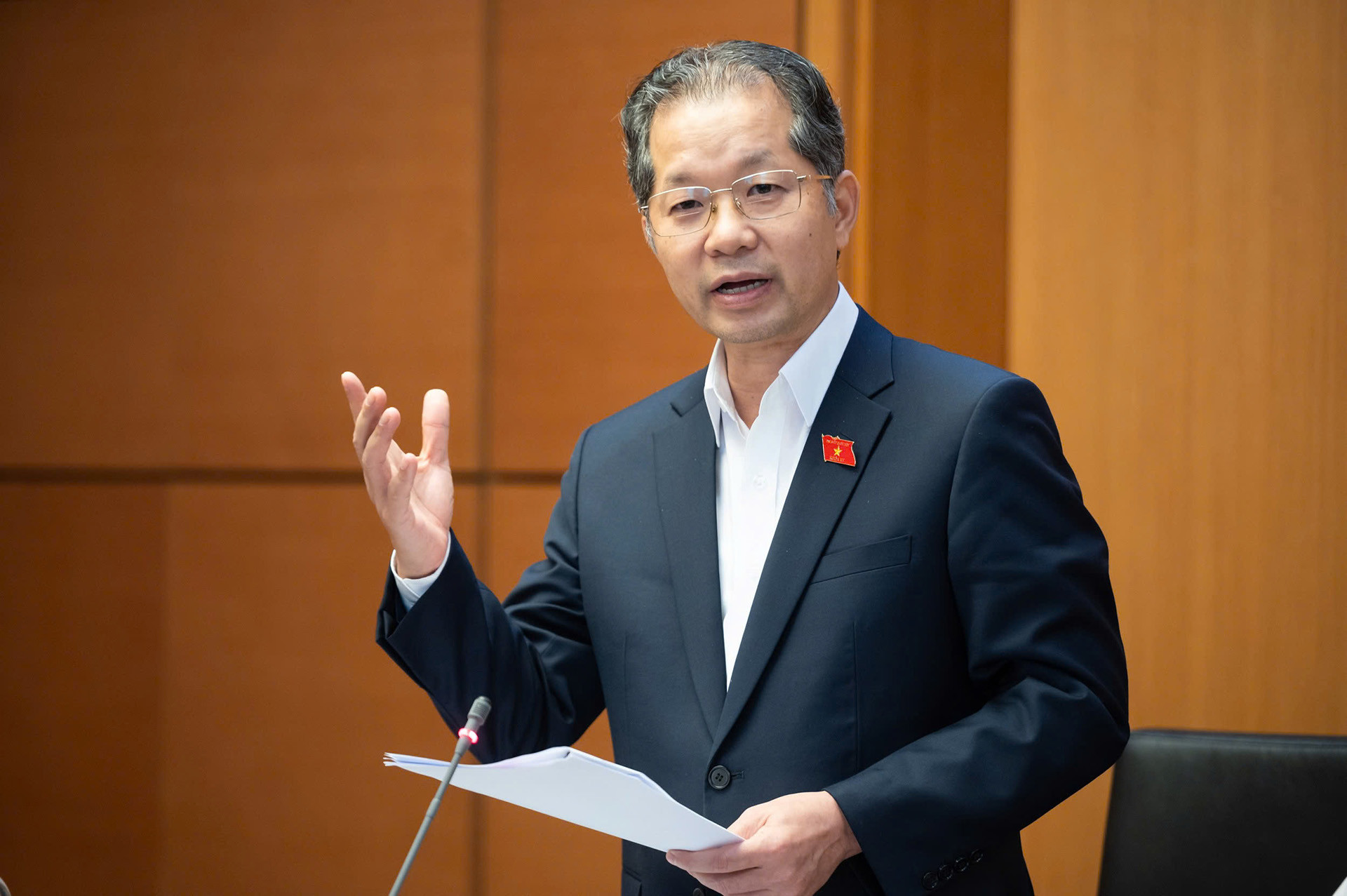
The specialized court, established by this law under the People’s Court sýtem, has the authority to resolve cases between members of the financial center, or between members and other agencies, organizations, or individuals that are not members of the center.
Chief Justice Quang said the organizational and operational principles of the Specialized Court include independence in adjudication authority; judges adjudicate independently and obey only the law; ensuring equality before the law and the court; resolving cases fairly, transparently, impartially, objectively, promptly, and effectively.
In addition, the Specialized Court operates with guaranteed first-instance and appellate procedures; adversarial proceedings in adjudication; flexible and specialized procedures following international standards and practices; and public hearings, except when closed hearings are required by law.
Quang said one Specialized Court will be established in HCMC, with authority to handle disputes and requests arising at international financial centers in both HCMC and Da Nang.
The organizational structure of the Specialized Court includes: first-instance court, appellate court, and administrative apparatus. The court includes a chief justice, deputy chief justices, heads of courts, deputy heads, judges, court clerks, other civil servants, and employees.
The President will appoint judges who may be foreigners, Vietnamese citizens who are civil servants, lawyers, arbitrators, university lecturers, scientists, experts or judges of the People’s Courts.
Foreign judges must have prestige, good ethics, and appropriate professional knowledge; have at least 10 years of experience in adjudicating or resolving cases related to investment and business activities; be proficient in English to resolve cases; and be no more than 75 years old and in good health.
Why judges can be foreigners
Speaking at the group discussion on the draft law, Quang emphasized that the authority and mechanism for dispute resolution is one of the most important factors to attract and build investor confidence. Among these, the court plays the most important role in ensuring that when disputes arise, there is a state authority to resolve them.
He also shared that Vietnam currently lacks practical experience in resolving disputes within an international financial center.
“In the early stages, our knowledge of this field is almost zero, which is very challenging. The Supreme People’s Court surveyed models in China and the UK, but could only access them from a narrow perspective,” Quang said.
According to the chief justice, this is an “international playground” that requires legal differences between Vietnam and other countries. He gave an example: courts in international financial centers usually adjudicate based on case law and common law principles.
Regarding judges, many National Assembly delegates expressed concern about allowing foreign judges, fearing it may contradict current regulations.
Quang acknowledged that under current regulations, judges must be Vietnamese citizens. However, given the special requirements of the Specialized Court, he stressed that foreign judges are essential to ensure effectiveness and investor confidence.
He presented five reasons:
First, Resolution 222 of the National Assembly on the international financial center defines English or English with Vietnamese translation as the operating language. In reality, no court staff in Vietnam currently have sufficient English proficiency to adjudicate specialized economic and international cases in English.
He noted that Da Nang recently selected 10 talented people to prepare for the international financial center, including one judge trained in the UK. Even so, upon returning, this person may only qualify as a clerk rather than a judge.
Second, regarding legal training, most judges in Vietnam were not trained under the common law system (such as Singapore, the UK, or the US), while adjudication in an international financial center must follow common law principles.
Third, the requirement for judicial experience: no one in Vietnam has experience adjudicating international financial, commercial, or investment disputes.
Fourth, credibility: “The parties look to the judge to have confidence.” A judge must have a reputation and experience that allow both parties to trust that their decision is independent and impartial.
Fifth, the chief justice cited his study trip to the international financial center in Dubai, which has two international financial centers. In the first 10 years, the Dubai international financial center hired entire courts and judges from Singapore, Hong Kong, and the UK to adjudicate.
“When I visited in early 2025, they told me only 30-45 percent of their judges were locals even after 10 years of training,” Quang said.
Quang affirmed: “This does not undermine national sovereignty, because foreign judges are still appointed by the president based on the recommendation of the chief justice of the Supreme People’s Court.”
Tran Thuong
.svg)
