 Vietnamnet.vn

 Podcast



To mark the new year, Chinese Ambassador to Vietnam He Wei offered his reflections on the evolving partnership between China and Vietnam, celebrating a transformative 2025 and looking ahead with optimism to 2026.
‘Singing loud, advancing strong’
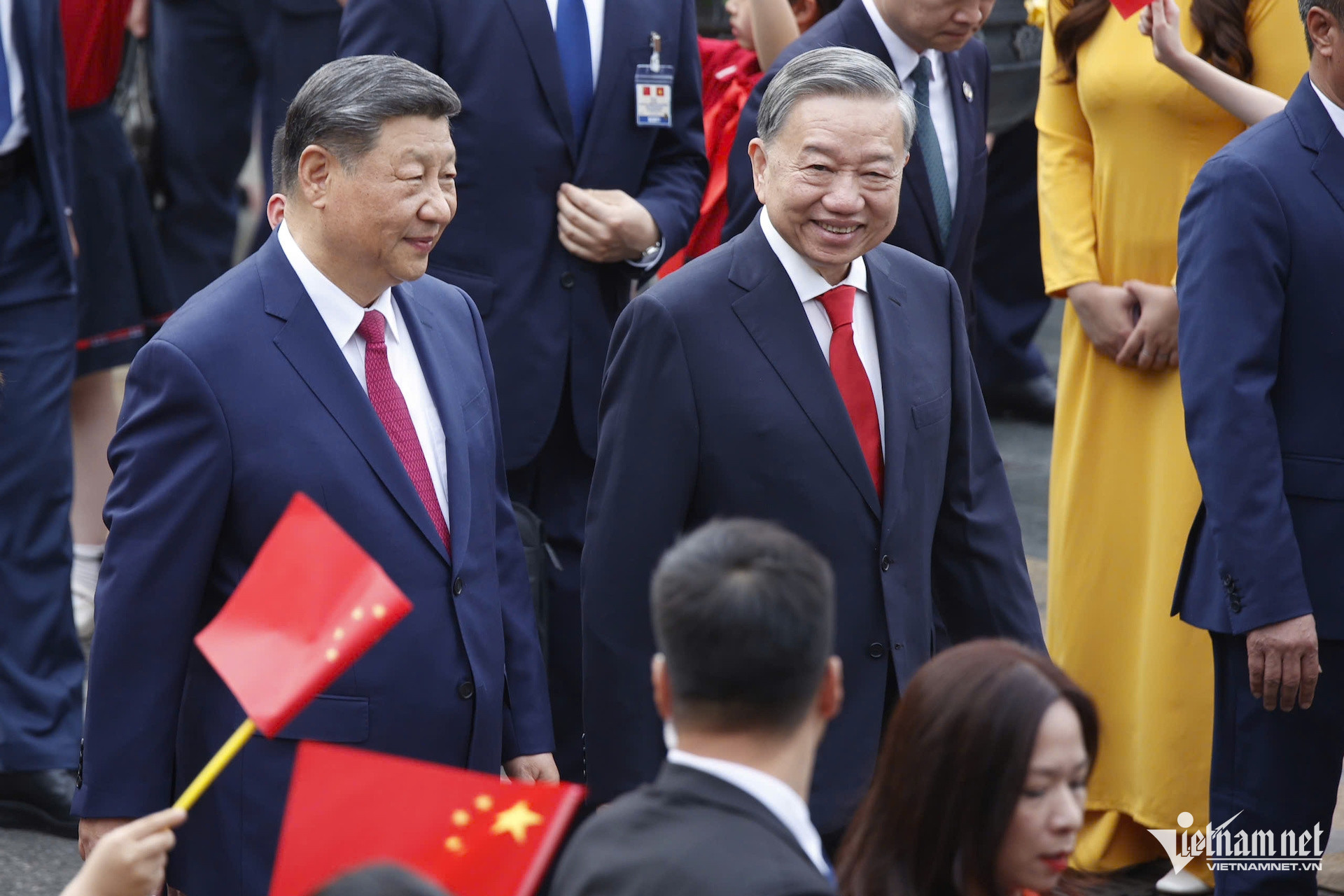
This year marks the 75th anniversary of diplomatic relations between the two countries, designated as the Year of China–Vietnam People-to-People Exchange by top leaders.
Ambassador He Wei, who assumed his post in September 2024, described the past year as deeply meaningful.
“If I were to choose a phrase to describe China–Vietnam relations in 2025, it would be: ‘singing loud, advancing strong’,” he said.
The standout highlight, he noted, was the historic state visit by General Secretary and President Xi Jinping to Vietnam in April 2025.
During this visit, the two sides signed 45 cooperation agreements, setting a new record. Because of the high volume, protocol teams proposed a creative solution: instead of signing all the documents during the ceremony, the agreements were pre-signed and displayed at the headquarters of the Communist Party of Vietnam, where both leaders praised the achievements.
From late August to early September, three high-level exchanges took place within a week - an extraordinary frequency in bilateral history.
These included a visit by Zhao Leji, Chairman of the Standing Committee of the National People’s Congress of China; a working visit to China by President Luong Cuong; and Prime Minister Pham Minh Chinh attending the SCO Summit in China.
These events, along with increasingly vibrant local and institutional exchanges, prompted many Vietnamese friends to describe 2025 as the beginning of a “second golden era” in the countries’ friendship.
A year of many firsts
In politics, for the first time, the two countries convened a joint session between the Vietnamese National Assembly and China’s NPC, and upgraded their 3+3 strategic dialogue mechanism (foreign affairs, defense, security) to the ministerial level - a unique format exclusive to Vietnam and China.
In trade, bilateral trade volume in the first 11 months of 2025 exceeded the previous year’s total, reaching a new historical high. For the first time, over 1 million vehicles passed through the Huu Nghi–Youyi Guan border gate.
The Vietnam–China Railway Cooperation Committee held its inaugural meeting in Beijing.
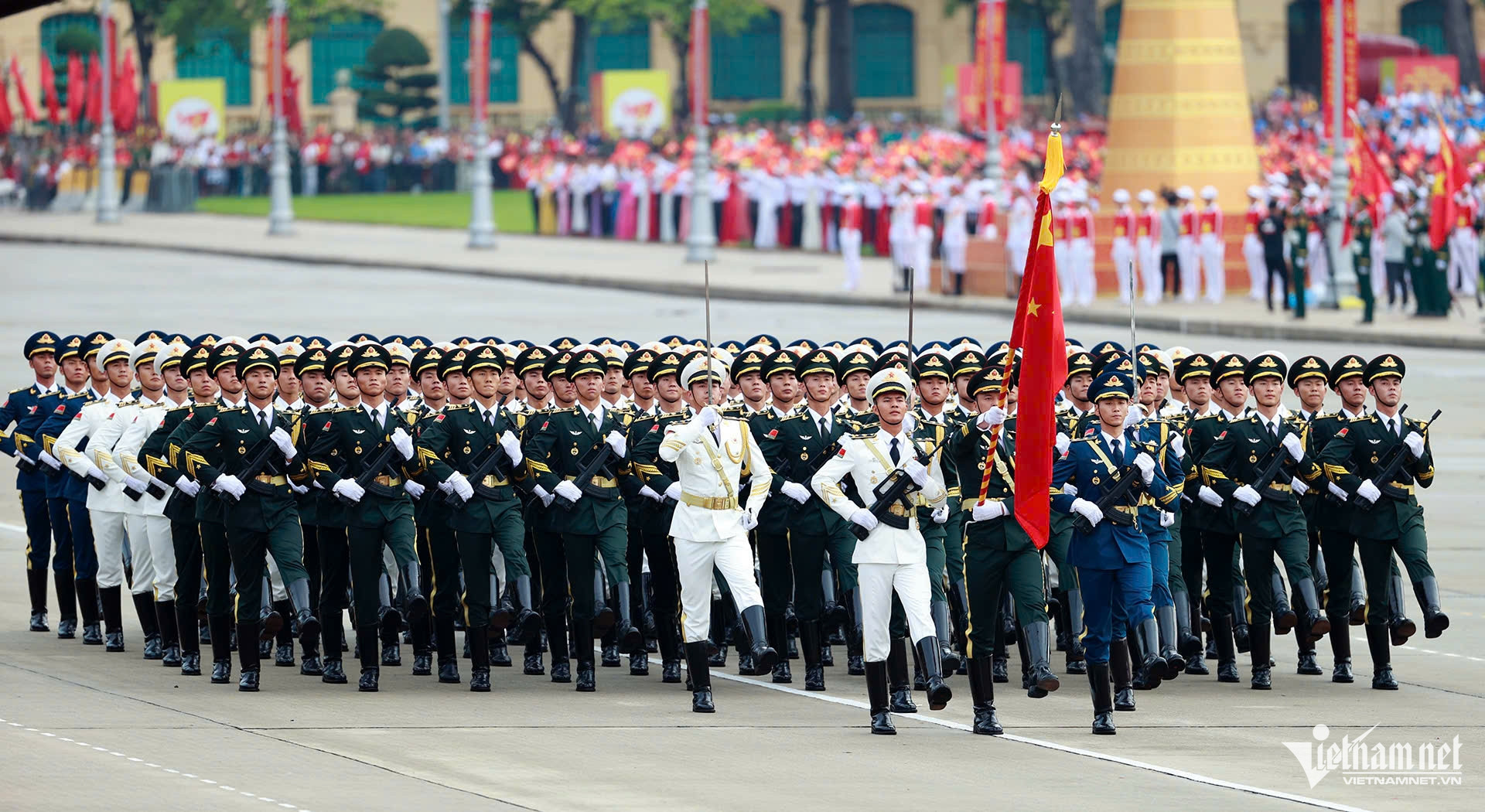
In defense and security, the two armies held their first joint land forces training. A Chinese PLA honor guard participated for the first time in Vietnam’s 80th National Day military parade.
In people-to-people exchange, 2025 also saw the debut of the “Red Journey”, where Vietnamese youth visited sites in China linked to President Ho Chi Minh’s revolutionary activities.
Scale, substance, and innovation
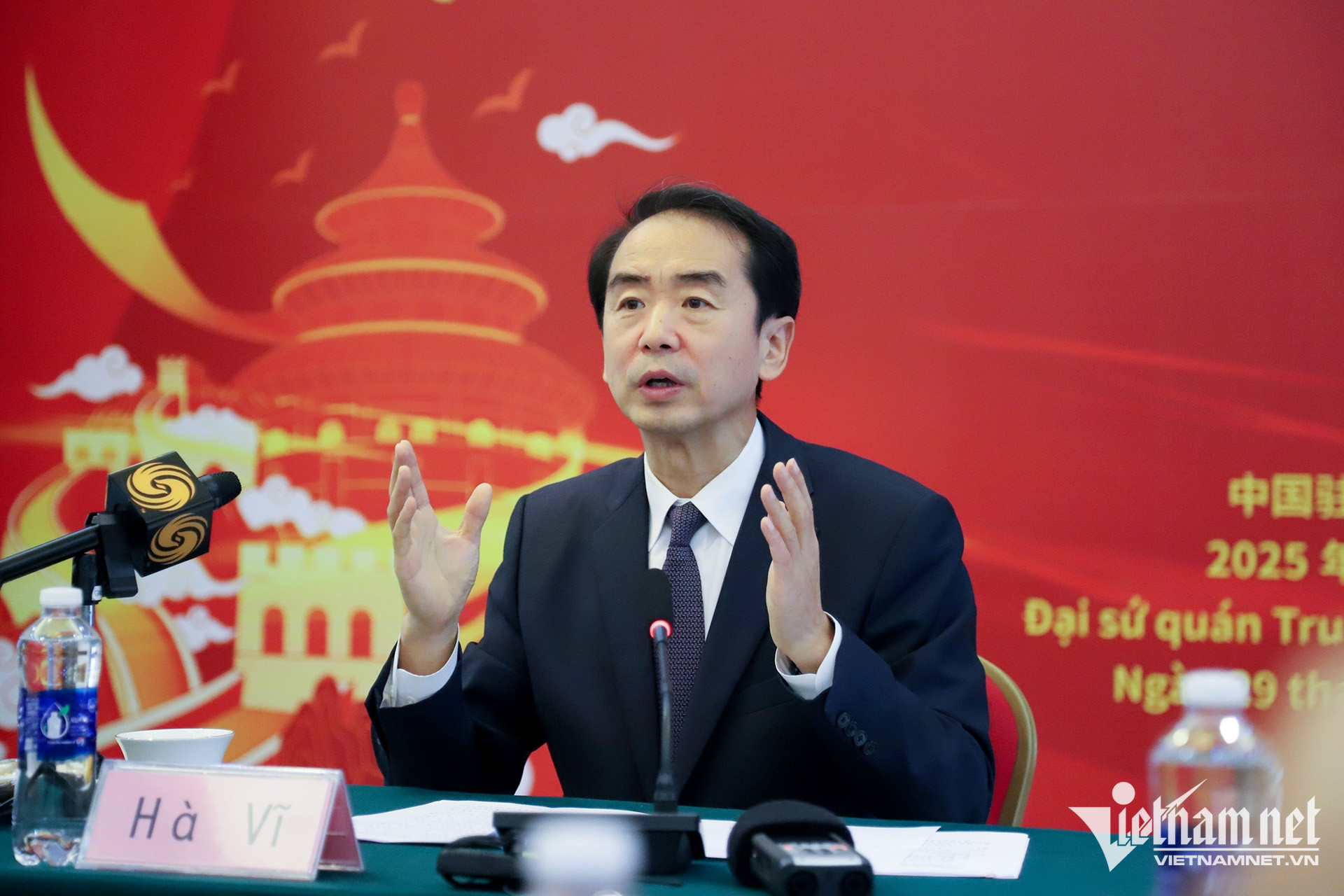
Summing up bilateral ties, Ambassador He Wei cited three pillars: “scale, substance, and innovation.”
In terms of scale, trade between the two countries surpassed USD 250 billion in the first 11 months. China remains Vietnam’s largest trading partner and top source of new investment, with many Chinese high-tech firms choosing Vietnam as their first overseas destination.
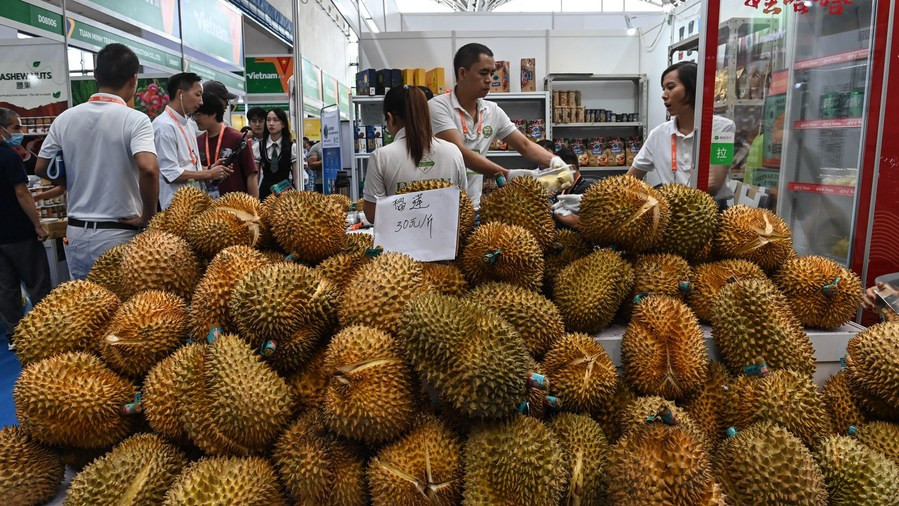
As for substance, China is Vietnam’s largest importer of agricultural and seafood products. More than 60% of Vietnam’s fruit and vegetable exports go to China, with durian alone reaching USD 3.4 billion, accounting for over 90% of Vietnam’s durian export value.
“When I returned to China for leave, I saw Vietnamese farm products everywhere in supermarkets - people in China truly love them,” the ambassador said.
Vietnam is also among the most popular international destinations for Chinese tourists. Bilateral payment issues are gradually being resolved, including the QR code payment interoperability launched in December 2025, which is expected to boost tourism further.
Key infrastructure projects such as three standard-gauge railway lines in northern Vietnam are progressing rapidly. The waste-to-energy plant in Soc Son is already operational and contributes to Vietnam’s green transformation and modernization.
More and more Chinese companies with strong financial and technological capabilities are identifying Vietnam as a priority destination for overseas investment.
Shared innovation pathways
Ambassador He Wei emphasized that China’s 15th Five-Year Plan prioritizes technological innovation and development of new productive forces, aligning with Vietnam’s strategy to transition towards an innovation-driven economy.
He noted the growing bilateral collaboration in high-tech sectors, with Chinese capital increasingly flowing into green energy, AI, and industrial modernization initiatives in Vietnam.
Under the guidance of top leaders, people-to-people ties have also flourished.
General Secretary To Lam attended a gathering of Vietnamese and Chinese students and alumni, planted a symbolic tree of friendship, and emphasized shared roots and deep bonds.
Xi Jinping, too, described China–Vietnam relations as being “like a tree with roots, like a stream with a source,” with the lifeblood of bilateral friendship residing in the people’s goodwill.
The 13th China–Vietnam People’s Forum and the 24th Youth Friendship Exchange were both successfully held in 2025. That year also saw over 20,000 Vietnamese students studying in China, and 138,000 HSK test-takers - the highest number worldwide.
Sites commemorating President Ho Chi Minh’s activities in China continue to be well preserved, and a monument honoring Chinese military experts in Vietnam was recently inaugurated at the Vietnam Military History Museum.
Looking back, Ambassador He Wei stated that Vietnam and China share mutual experiences and aspirations, aiming not only for national benefit but also to demonstrate the stability and viability of their chosen development path.
He concluded by reaffirming that China will firmly support the Communist Party and people of Vietnam in organizing a successful 14th National Party Congress in 2026, and stands ready to enhance strategic connectivity, share governance experiences, and deepen practical cooperation.
Tran Thuong
.svg)
