 Vietnamnet.vn

 Podcast



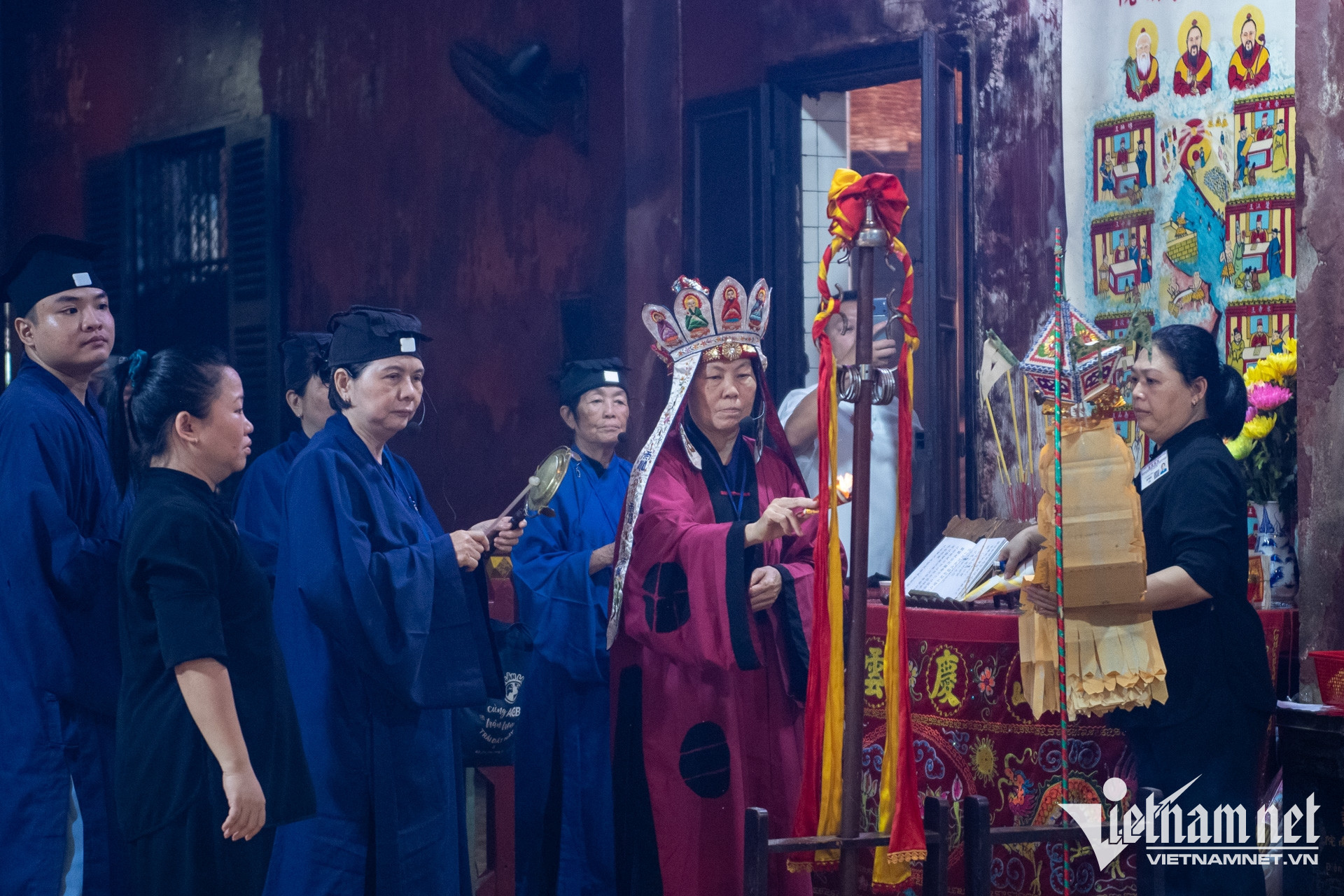
From the first to the seventh day of the seventh lunar month, Khanh Van Nam Vien Taoist temple in Minh Phung Ward holds its annual rituals for the Festival of Wandering Souls, rooted in Taoist beliefs and traditions.
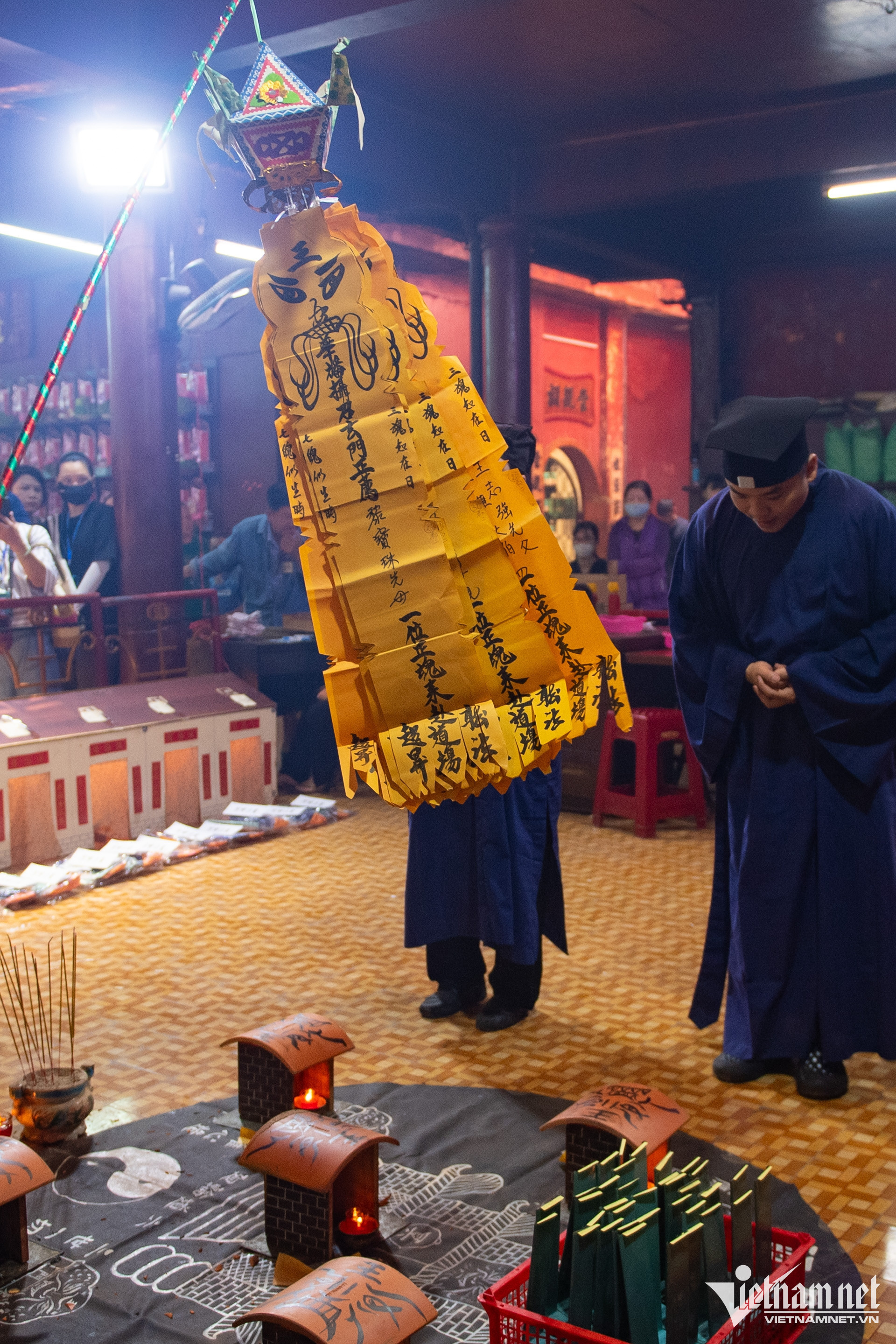
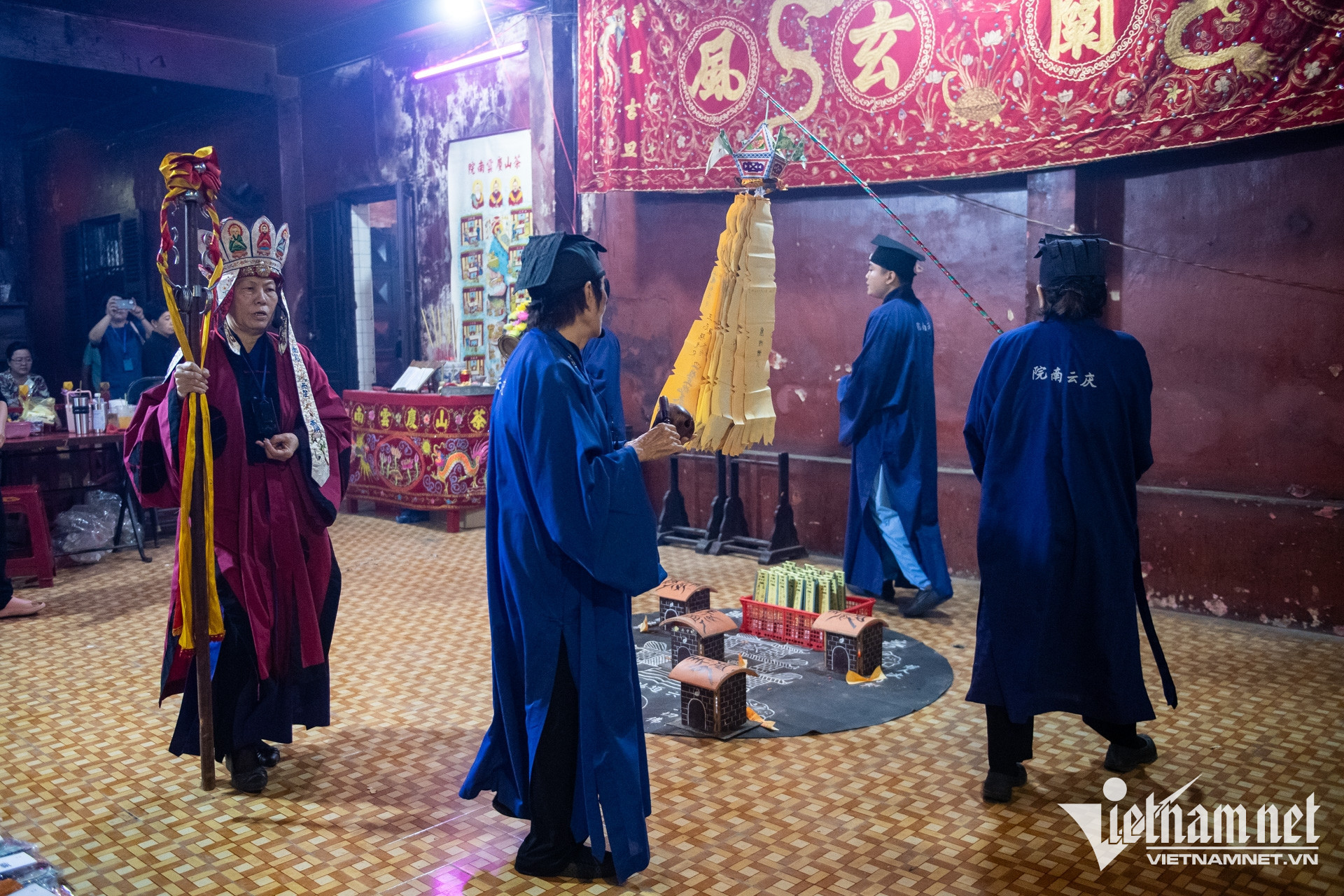
On the second and third days, the temple performs a particularly striking ceremony known as “breaking open the gates of hell,” with rituals held at 7:30 a.m., 10 a.m. and 1:30 p.m.
In Taoist belief, the ceremony symbolizes opening the gates of hell to release souls believed to be suffering there.
Taoist priests begin by chanting scriptures and conducting rituals around five structures collectively representing the “hells of the five directions.”
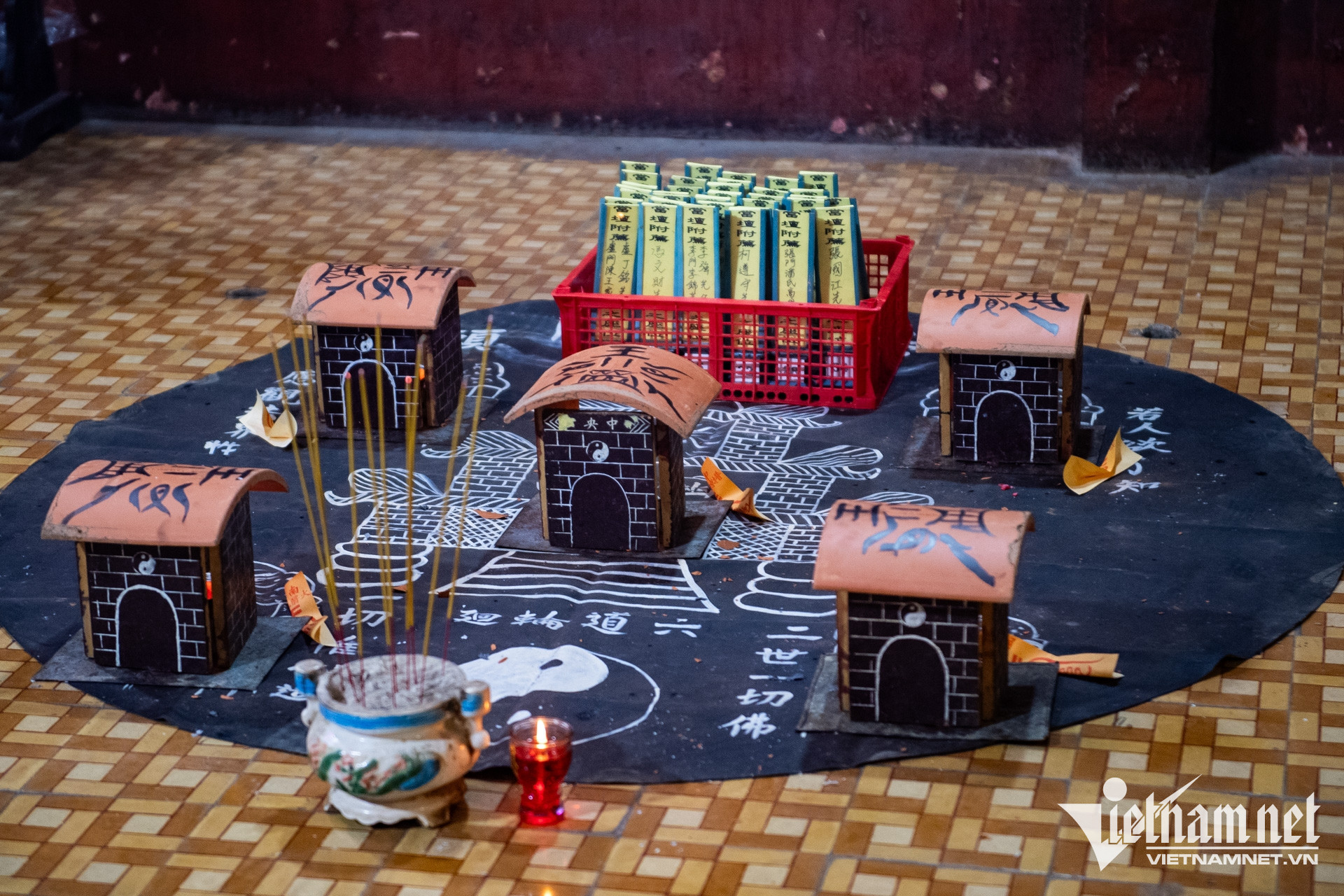
The five miniature houses correspond to the east, west, south, north and center. Their tiled roofs are decorated with demonic faces, symbolizing the gates of the underworld.
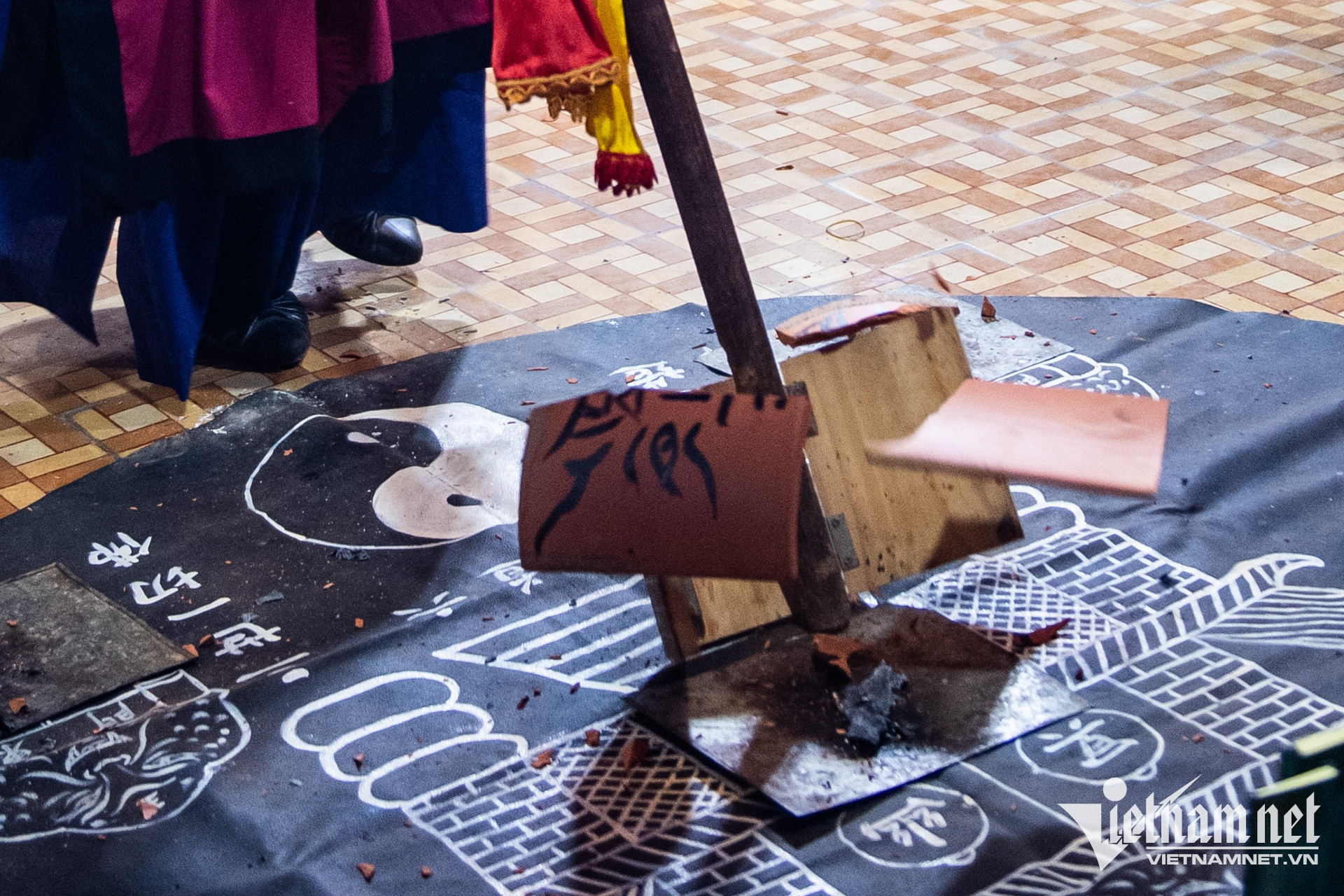
After the chanting, the Taoist master uses a ritual staff to break each structure in turn, symbolically smashing through one gate of hell at a time.
The process continues until all five “gates” have been broken.
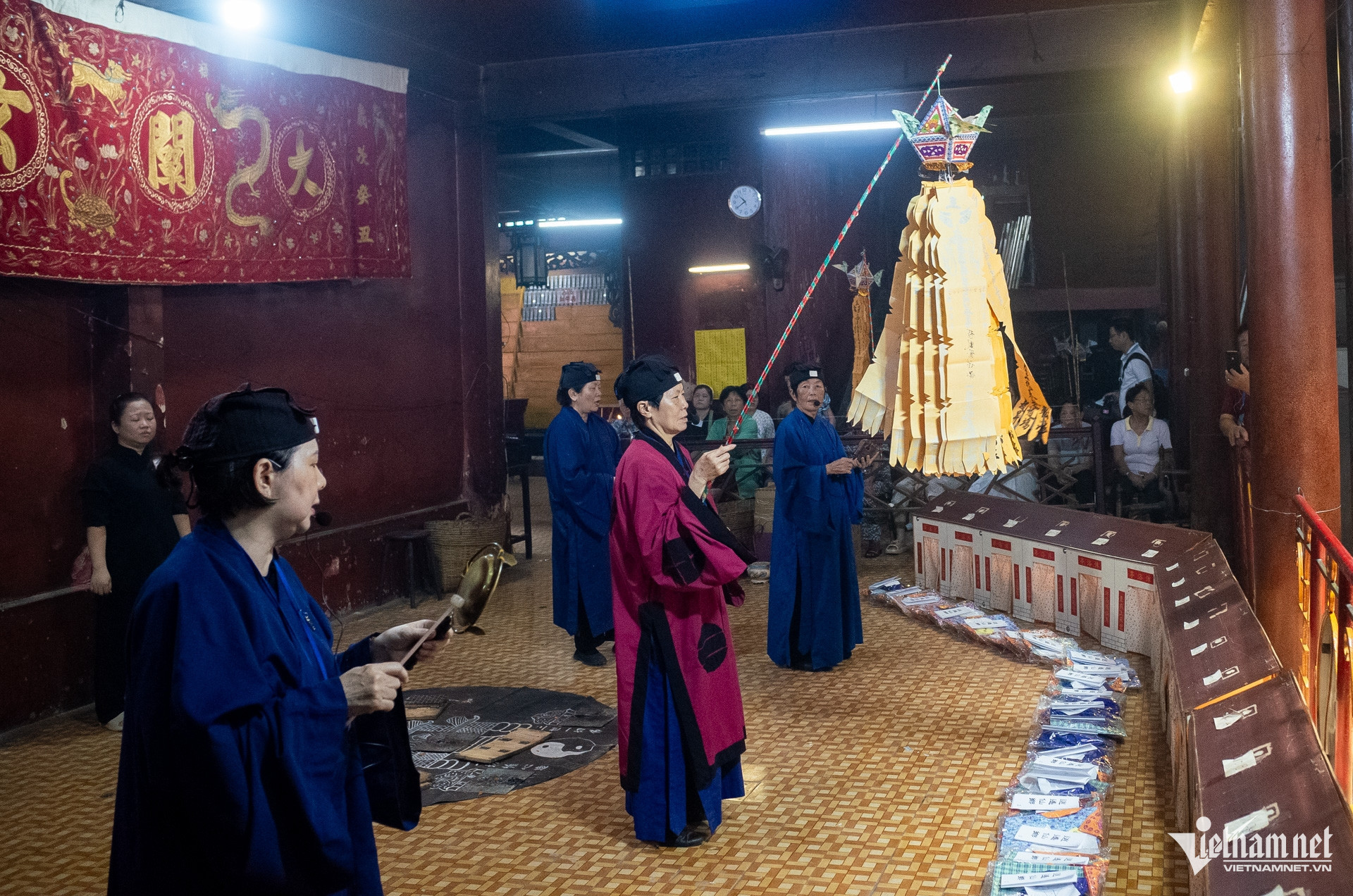
The tablets representing the souls believed to have been released are then carried by female Taoist practitioners to the Moc Duc Dinh, a paper house symbolizing a place for ritual bathing.
Each model is divided into two compartments containing a lamp, a container of water and a small towel, while a set of clothing is placed in front.
Under Taoist beliefs, these objects symbolize the souls bathing and preparing themselves before receiving offerings from the living.
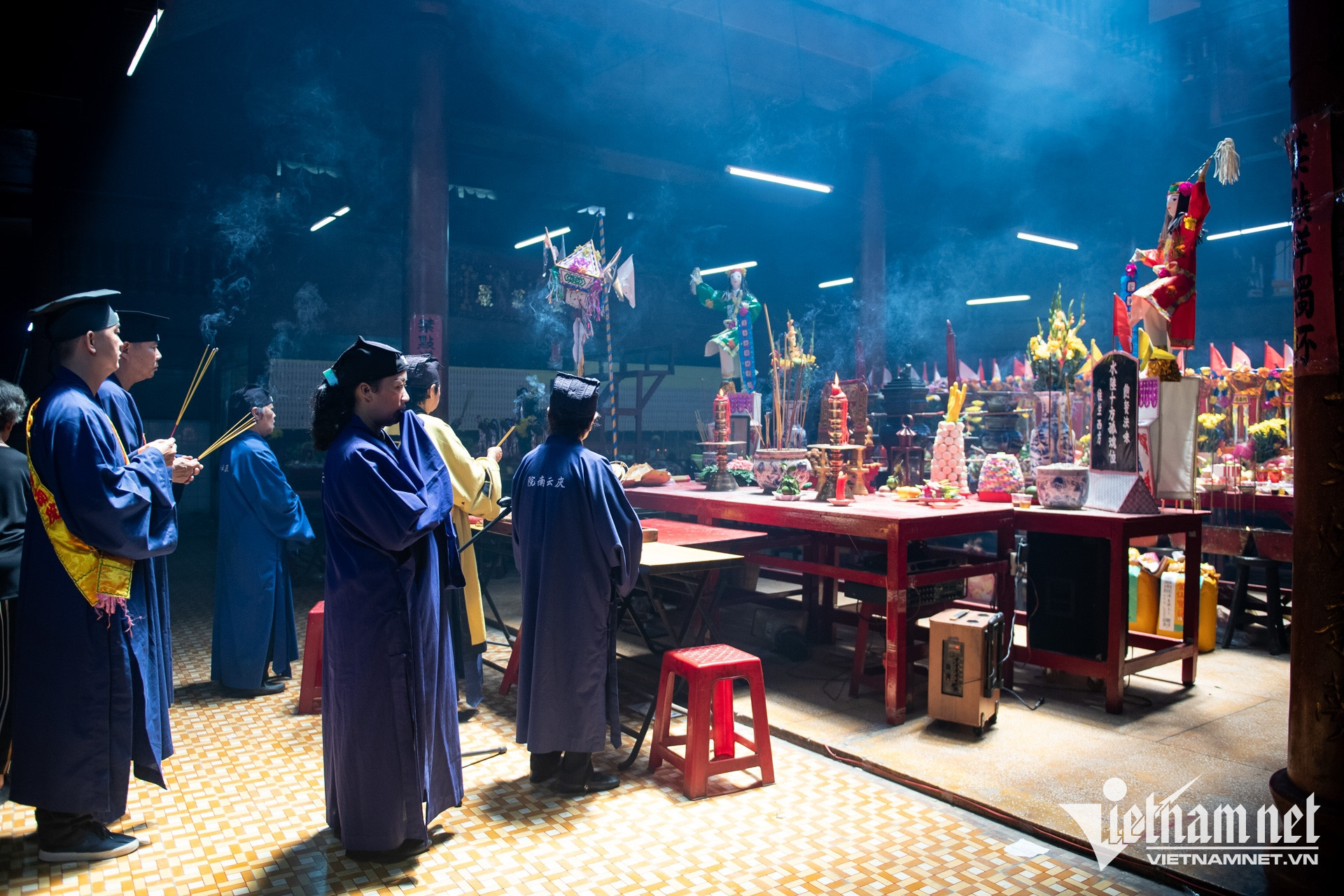
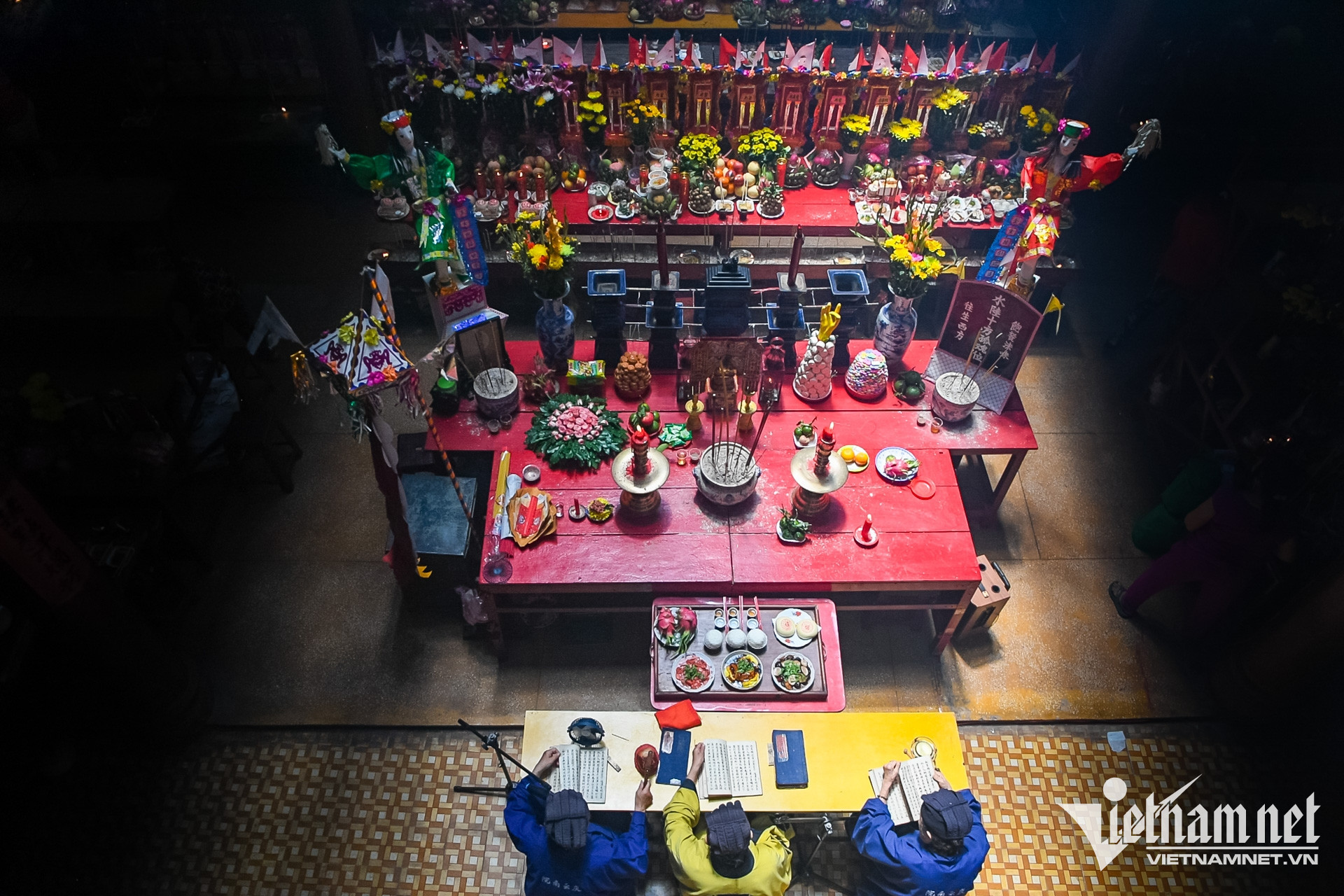
In the central ceremonial area, tablets bearing the names of the deceased are arranged while Taoist priests chant scriptures and perform traditional rites to invite and summon the spirits.
Chau Hue Bang, head of the Khanh Van Nam Vien temple association, said the temple has maintained its seventh-lunar-month ceremonies for around 80 years.
Although the temple also worships Buddhist figures, its religious practices remain primarily rooted in Taoism originating in China.
The ceremonies follow a sequence that includes breaking open the gates of hell, ritual bathing, crossing a bridge and ultimately burning the memorial tablets. Together, they reflect Taoist beliefs surrounding prayers for the dead and the liberation of departed souls.
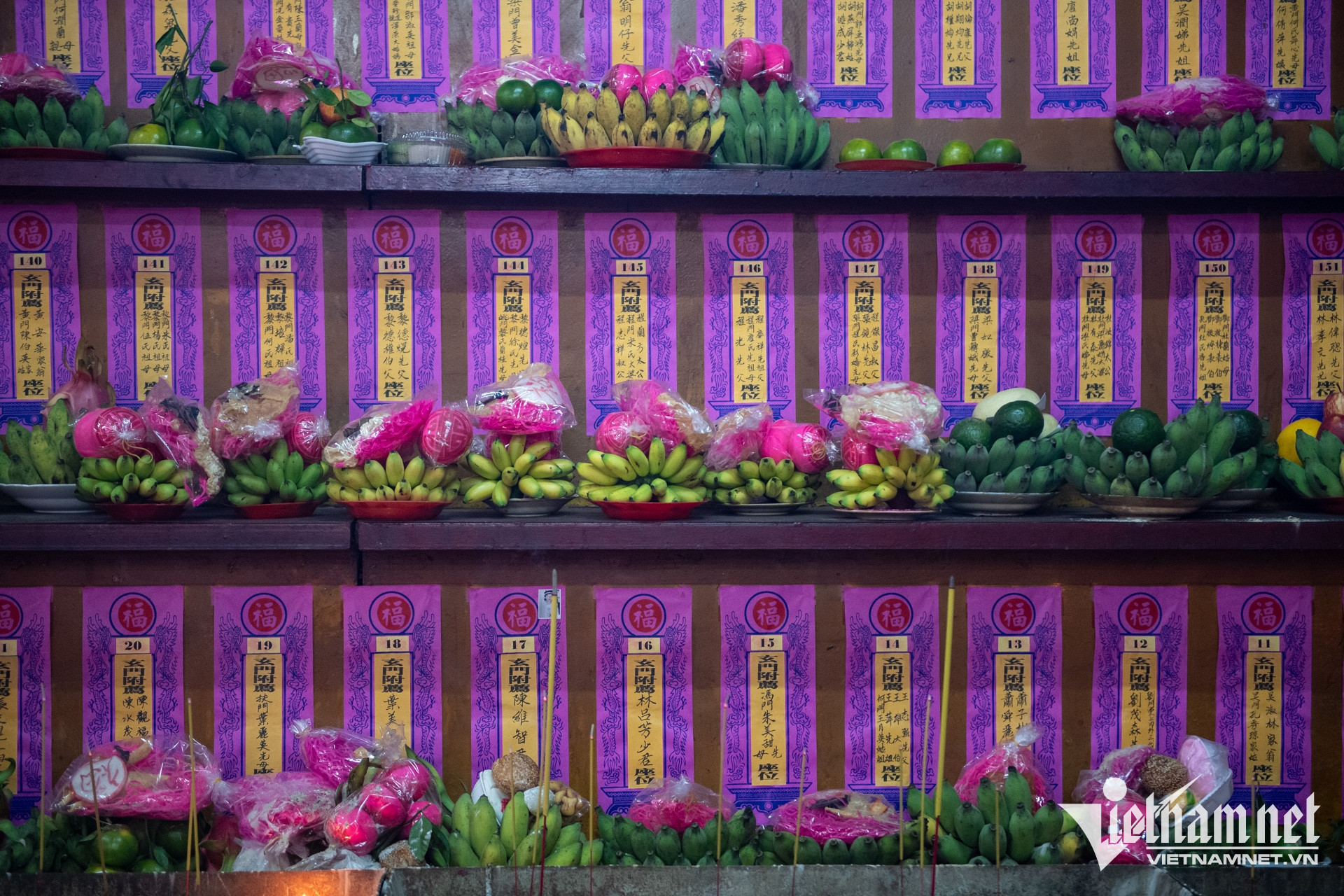
For Ho Chi Minh City’s Chinese community, the ceremonies are also an opportunity to preserve customs passed down through generations, remember departed relatives and express hopes for peace and blessings.
During the festival, families register the names of deceased relatives, prepare memorial tablets and offer incense, flowers and fruit in remembrance of their loved ones, while praying for peace and well-being for the family.
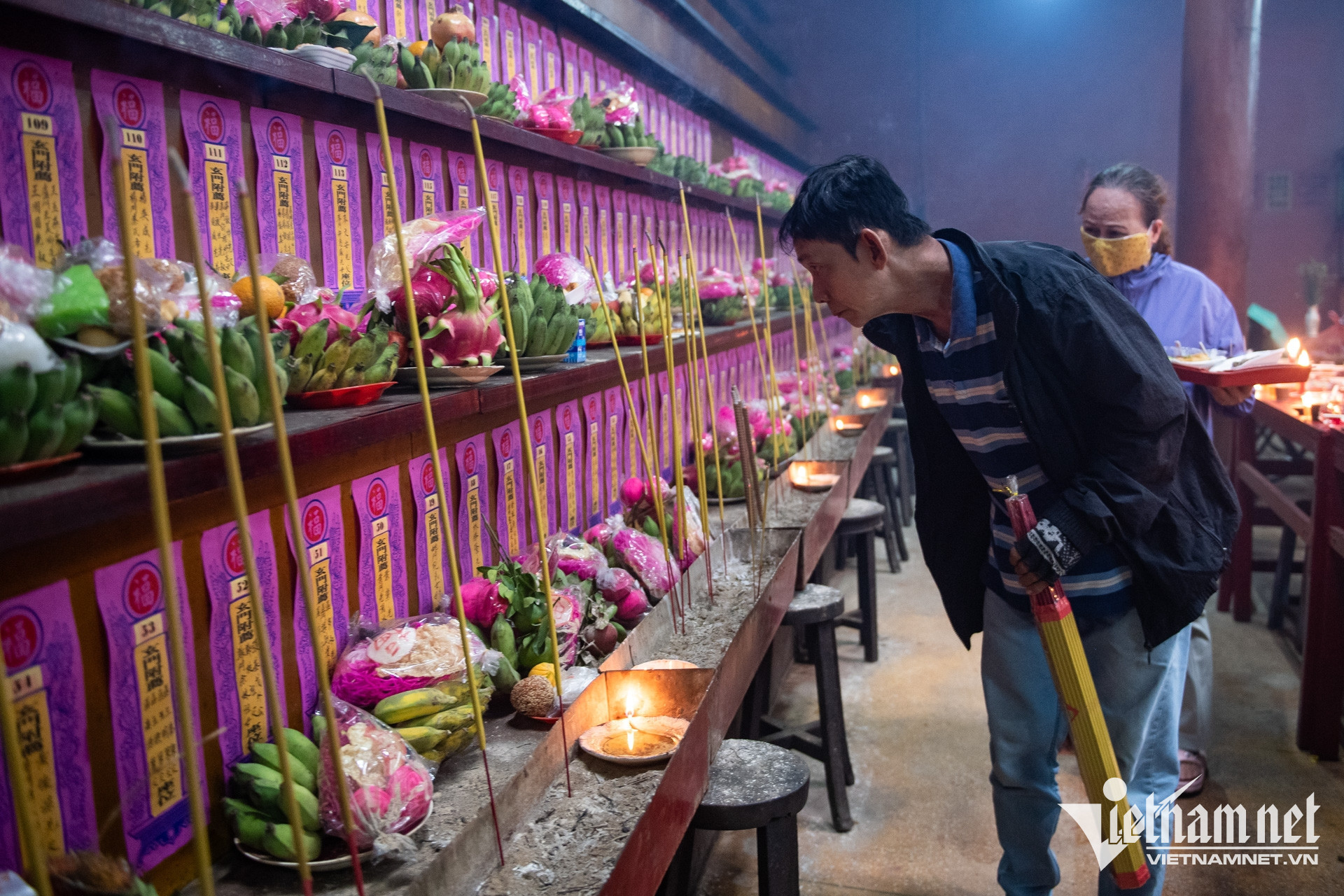
Depending on the type of offering, individual memorial tablets can be made from paper or bamboo. In simpler forms, the deceased person’s name and details are handwritten or printed on pink paper and placed in a designated area.
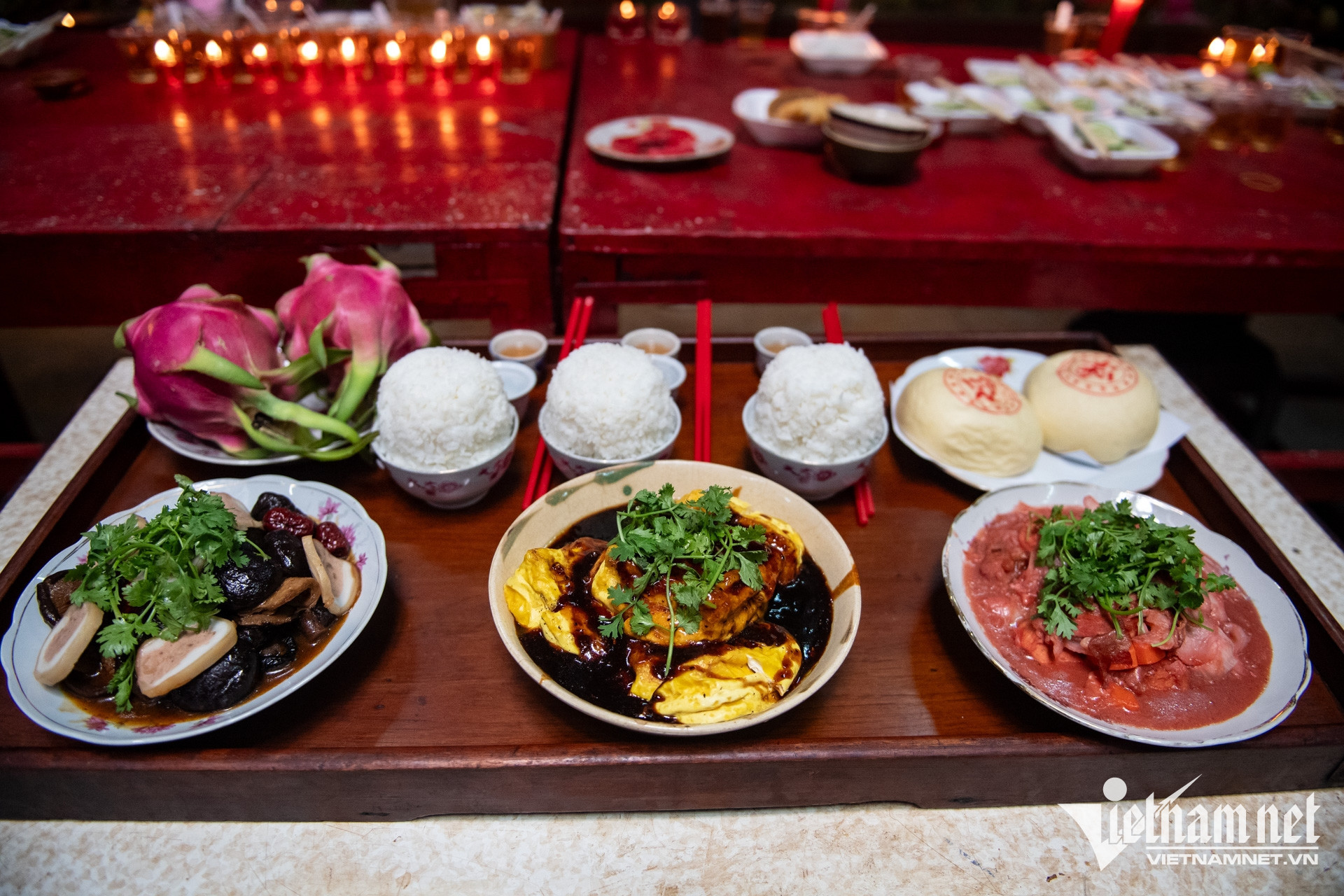
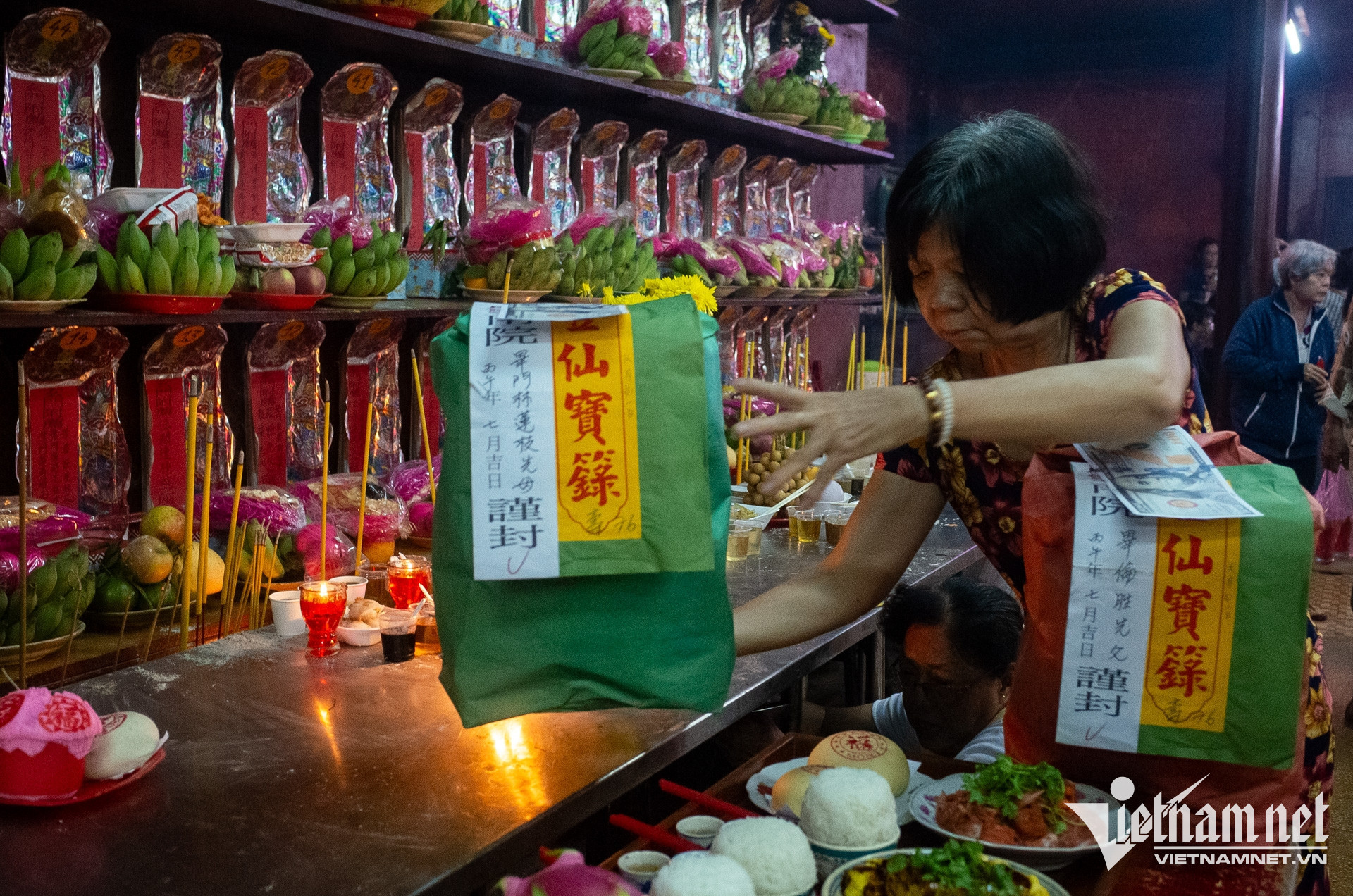
Offerings prepared by worshippers are predominantly vegetarian. Families also bring paper representations of money and clothing to be burned as offerings for deceased relatives.
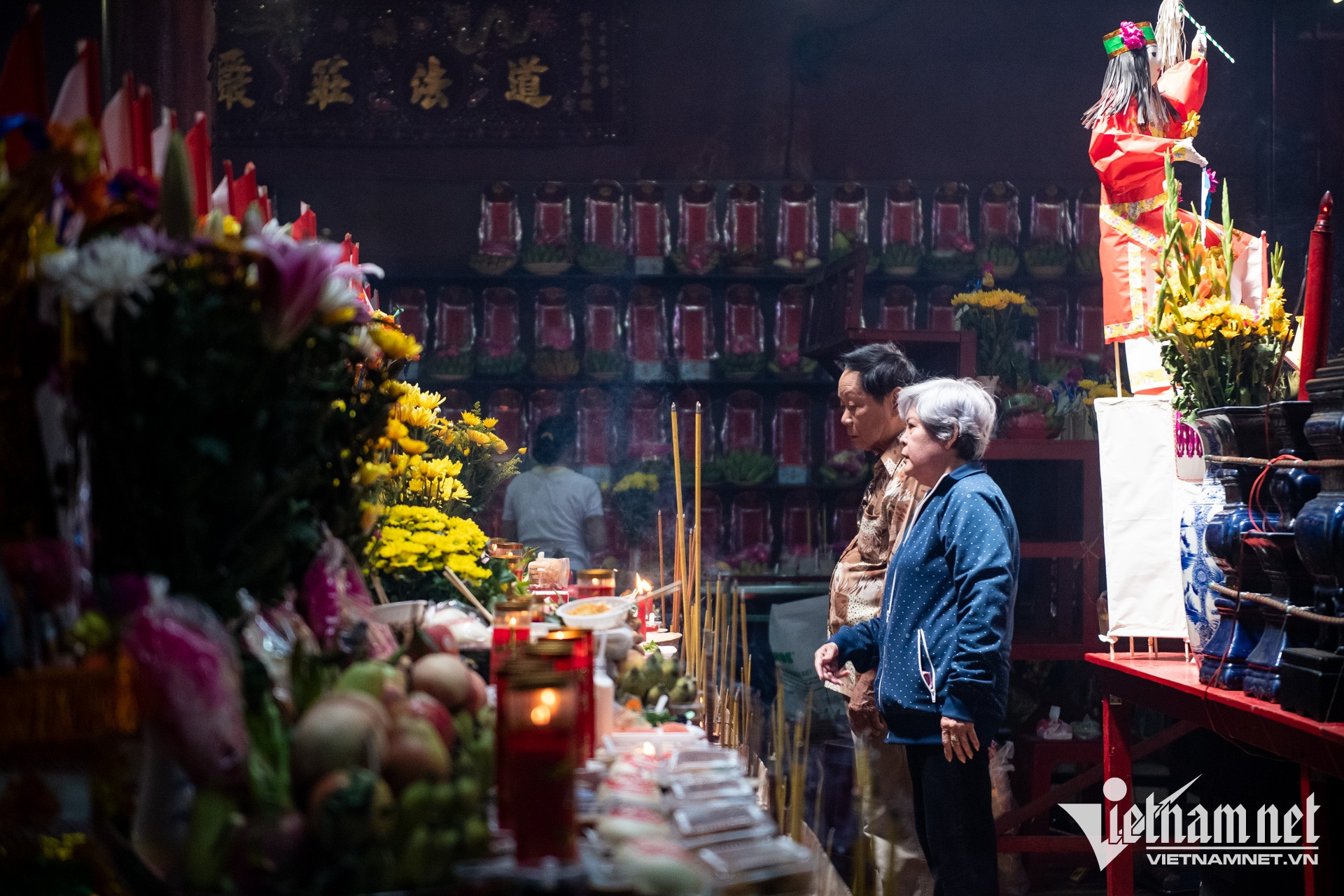
A worshipper named Lan said his family had prepared a memorial tablet for a relative on the first day of the seventh lunar month and would visit the temple throughout the week to burn incense and pray for the deceased.
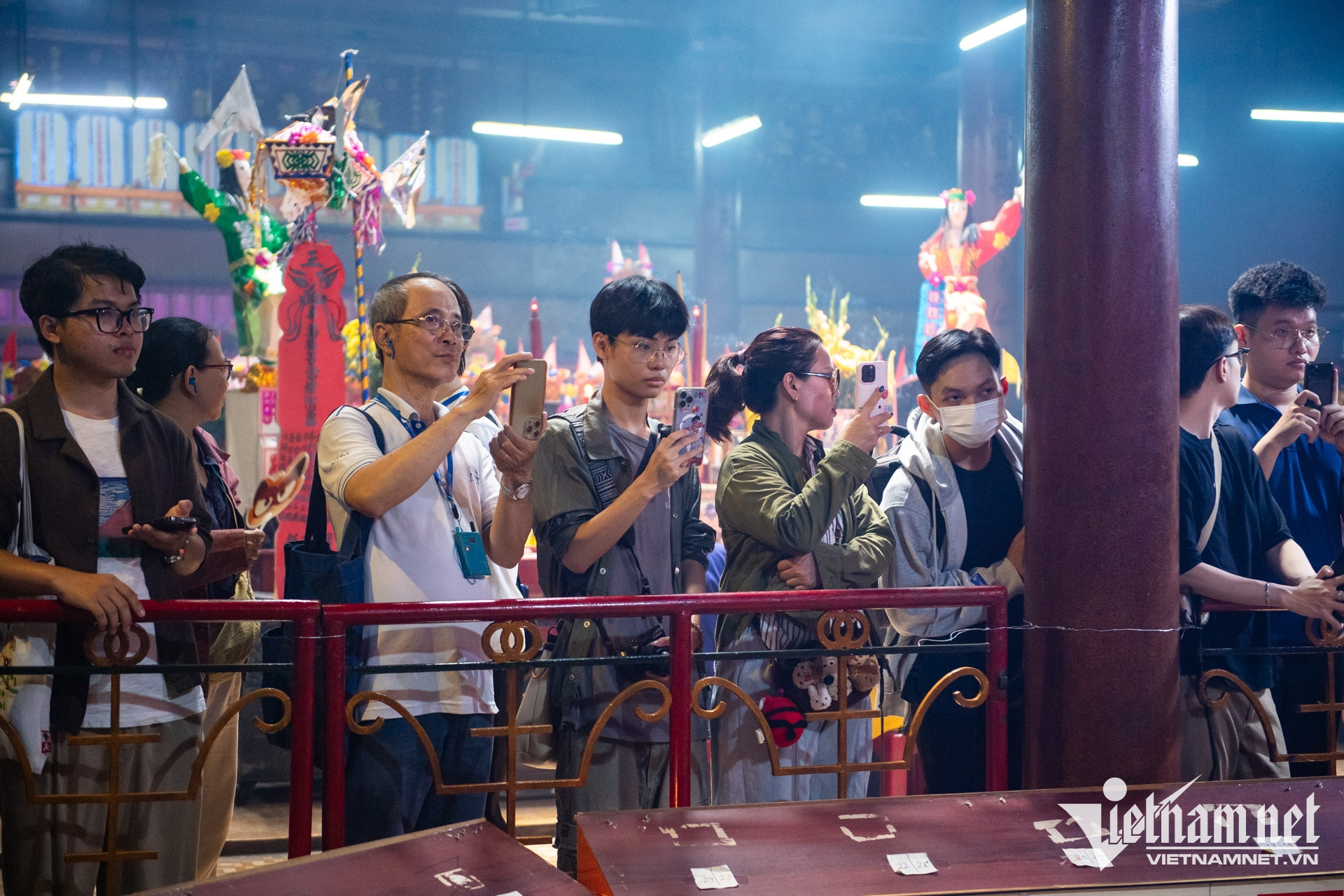
Many other residents also come to observe and participate in ceremonies during the seven-day Festival of Wandering Souls.
Over the course of the week, Khanh Van Nam Vien conducts a succession of rituals, including the opening ceremony, prayers for departed souls and the breaking open of the gates of hell.
On the final day, relatives carry the memorial tablets across a symbolic bridge before burning them in fire, bringing the ceremonies to a close.
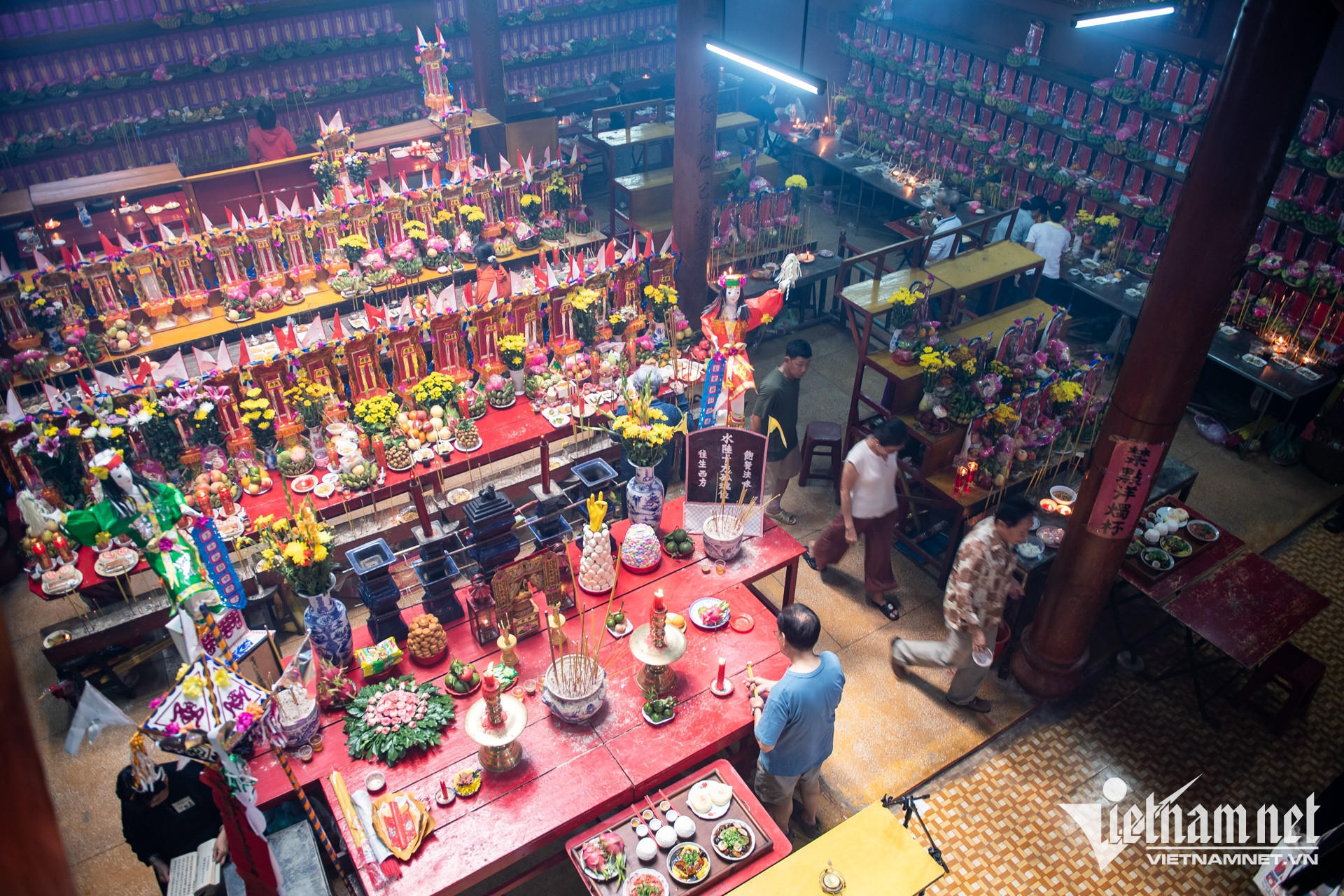
Khanh Van Nam Vien traces its origins to Nanhai in Guangdong Province, China. The tradition was introduced to the Saigon-Cho Lon area in 1936.
Today, the Taoist temple covers more than 2,000 square meters and has more than 2,000 followers.
As it developed in Vietnam, Khanh Van Nam Vien absorbed and integrated elements of the concept of the “Three Teachings in Harmony” - Confucianism, Buddhism and Taoism.
As a result, the temple includes a space dedicated to Shakyamuni Buddha while continuing to preserve many of its distinctive Taoist ceremonies and traditions.
Nguyen Hue
.svg)
