 Vietnamnet.vn

 Podcast



With Christmas around the corner, the usually tranquil workshops of Xuan Hung commune in Ninh Binh have turned into bustling hubs of activity. Orders for Catholic ceremonial garments have surged, prompting workers to operate in day-and-night shifts to meet seasonal demand.
A tradition of craftsmanship and faith
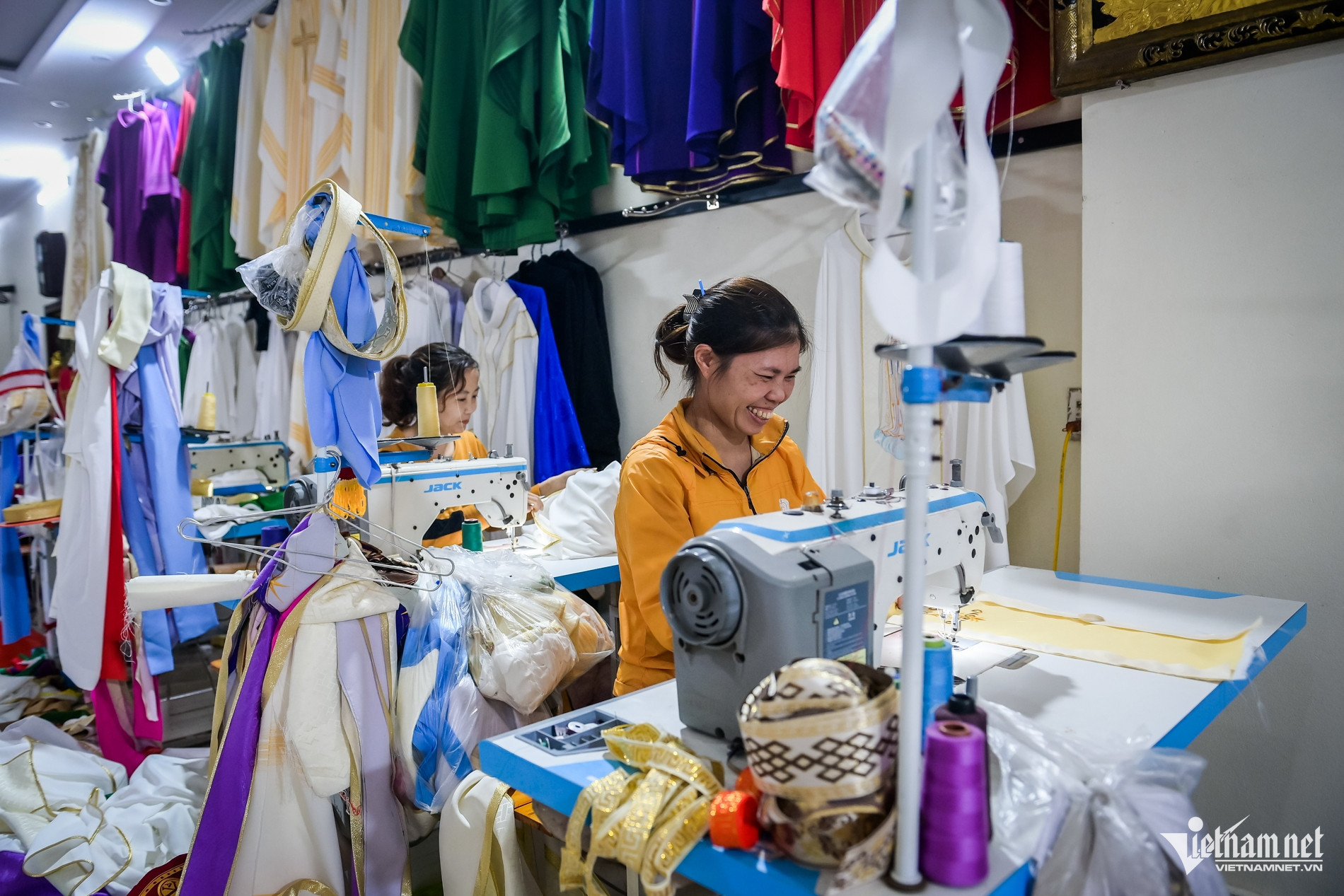
Long known as a center of Catholic tradition in Vietnam - with hundreds of churches dotting the former Nam Dinh province - this area is also renowned for its specialized craft: producing religious garments and ceremonial items.
Each year during the Christmas season, activity in vestment-making workshops in Trà Lũ village (now part of Xuan Hung commune) reaches a fever pitch. Orders rise steeply, requiring maximum output from local artisans to meet deadlines.
At the workshop of Nguyen Thi Lien’s family, over 20 skilled workers are working tirelessly in shifts to complete the flood of Christmas orders.
Lien shared that vestment making has been a traditional craft in the commune for generations. She represents the fourth generation in her family to carry on the trade.
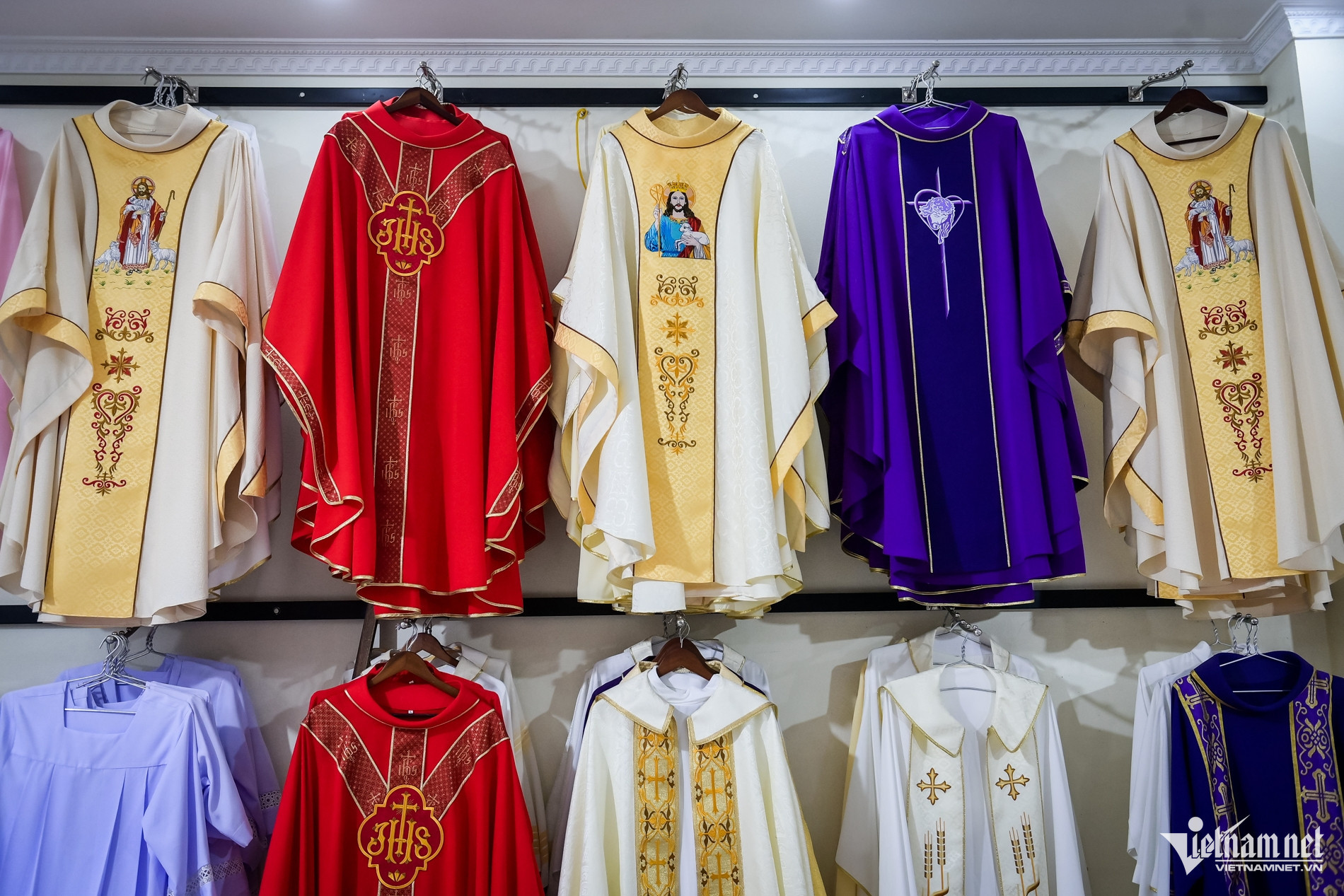
Her workshop produces a variety of items, including ceremonial robes and liturgical attire for priests, deacons, and monks, as well as choir and Catholic society garments. Most items are crafted from brocade or silk, with prices ranging from 500,000 to 5 million VND (approximately 20 to 205 USD) depending on fabric and complexity.
On average, the workshop ships about 3,000 products per month throughout the year. During the Christmas season, production increases by around 30%, requiring workers to rotate through three shifts covering both day and night.
Precision in every stitch
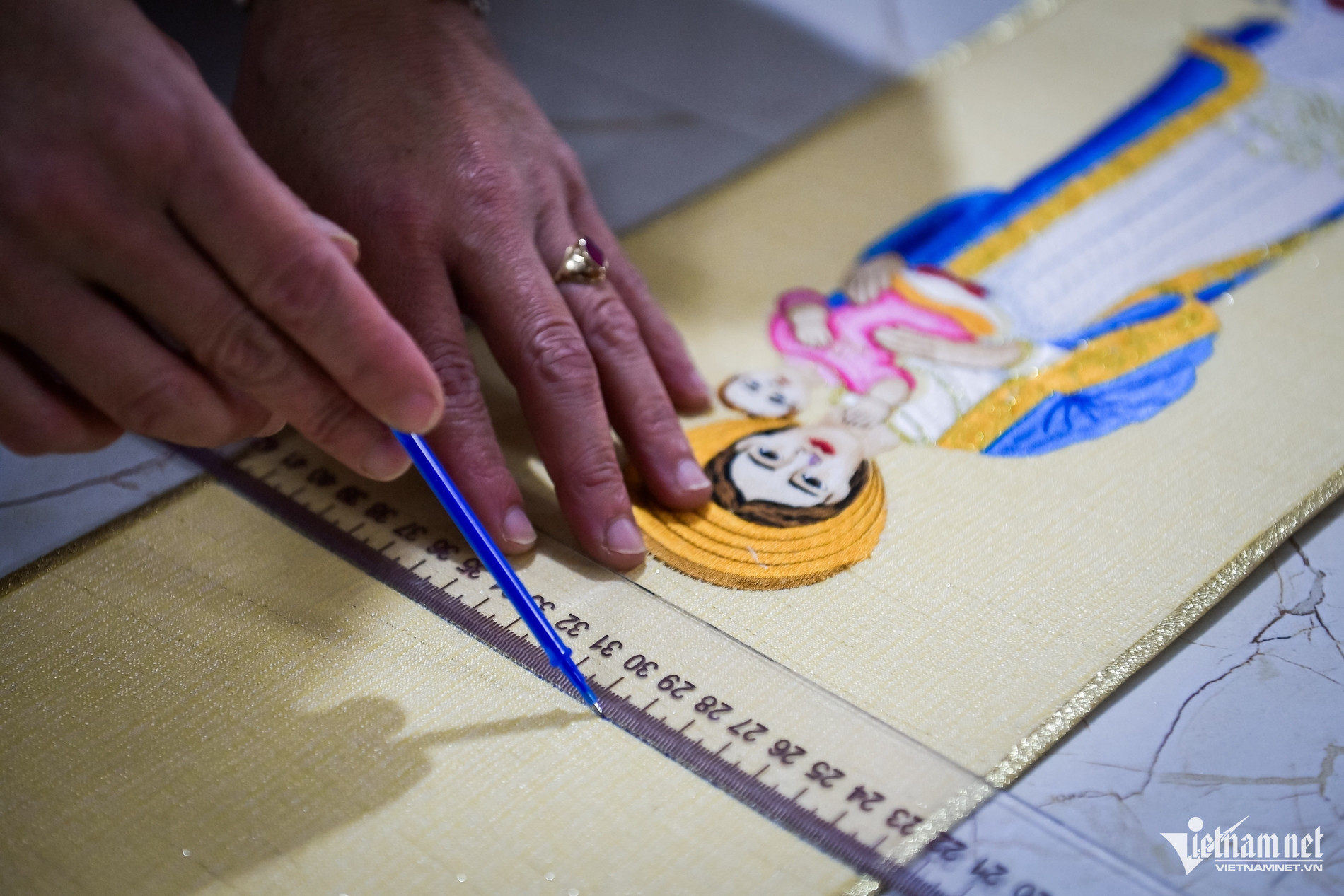
Skilled seamstresses prepare ceremonial garments for the Christmas season.
According to Lien, crafting a Catholic vestment starts with understanding customer needs to select appropriate materials and colors.
After that, workers cut the fabric, shape the garments, embroider sacred symbols and decorative patterns, and finally assemble the pieces. Every stage requires high skill, meticulous attention to detail, and deep familiarity with religious customs.
Thanks to a focus on quality and technique, her workshop not only supplies the domestic market but also exports to countries like South Korea, the Philippines, and the United States.
“Even with a flood of orders, we never chase quantity over quality. We put our hearts into each piece,” Lien said.
Artisan pride and generational skill
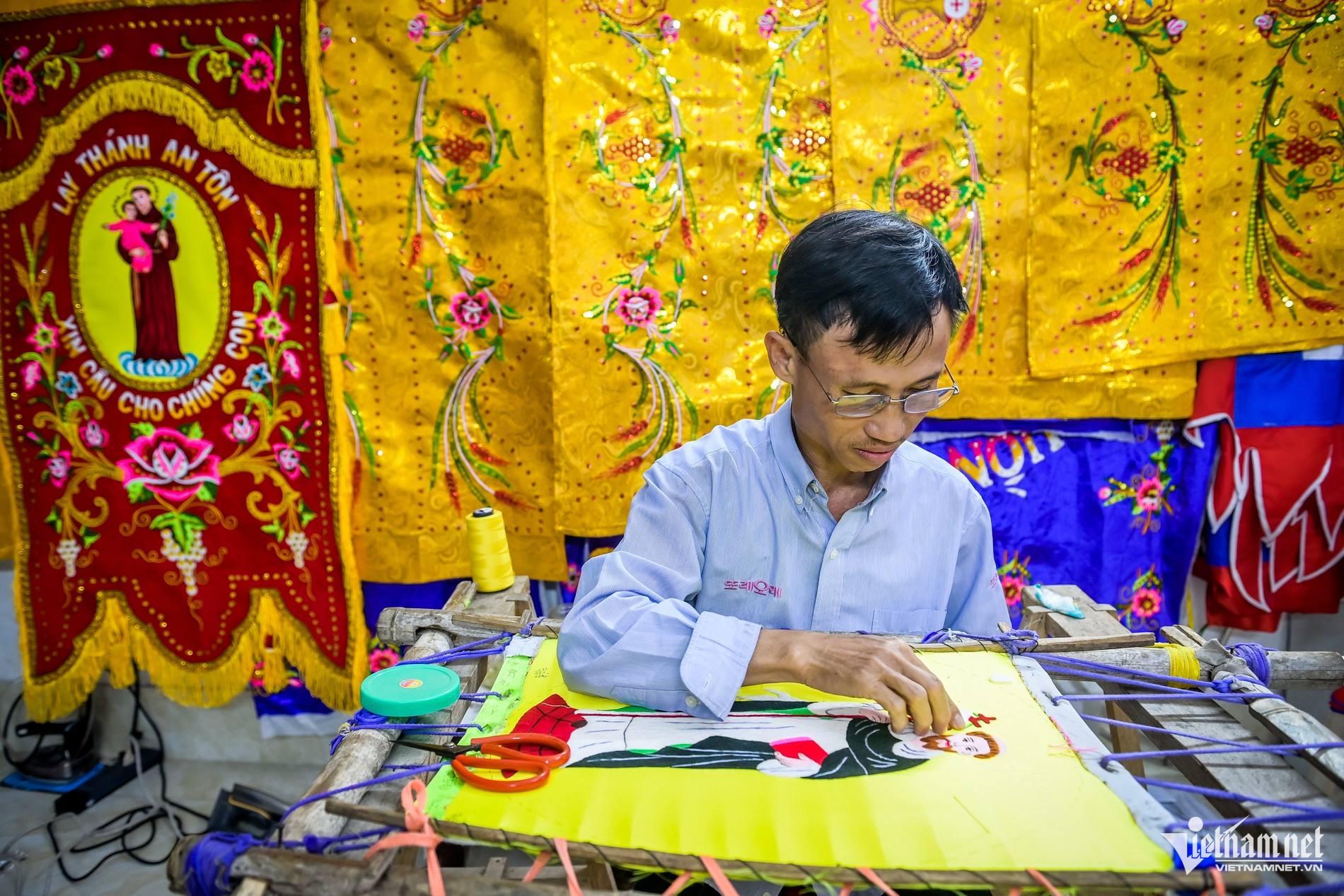
Final touches are added to a priest’s vestment before packaging.
Nearby, the workshop of Dinh Minh Long is just as busy. Each worker specializes in a specific task - cutting, sewing, embroidering, ironing, or packing - ensuring a smooth production line that maintains both pace and quality.
Long’s workshop employs over 10 highly skilled workers focused on robes, flags, religious artwork, and uniforms for Catholic associations. Since September, orders have surged, leading to frequent overtime and extra shifts to keep up.
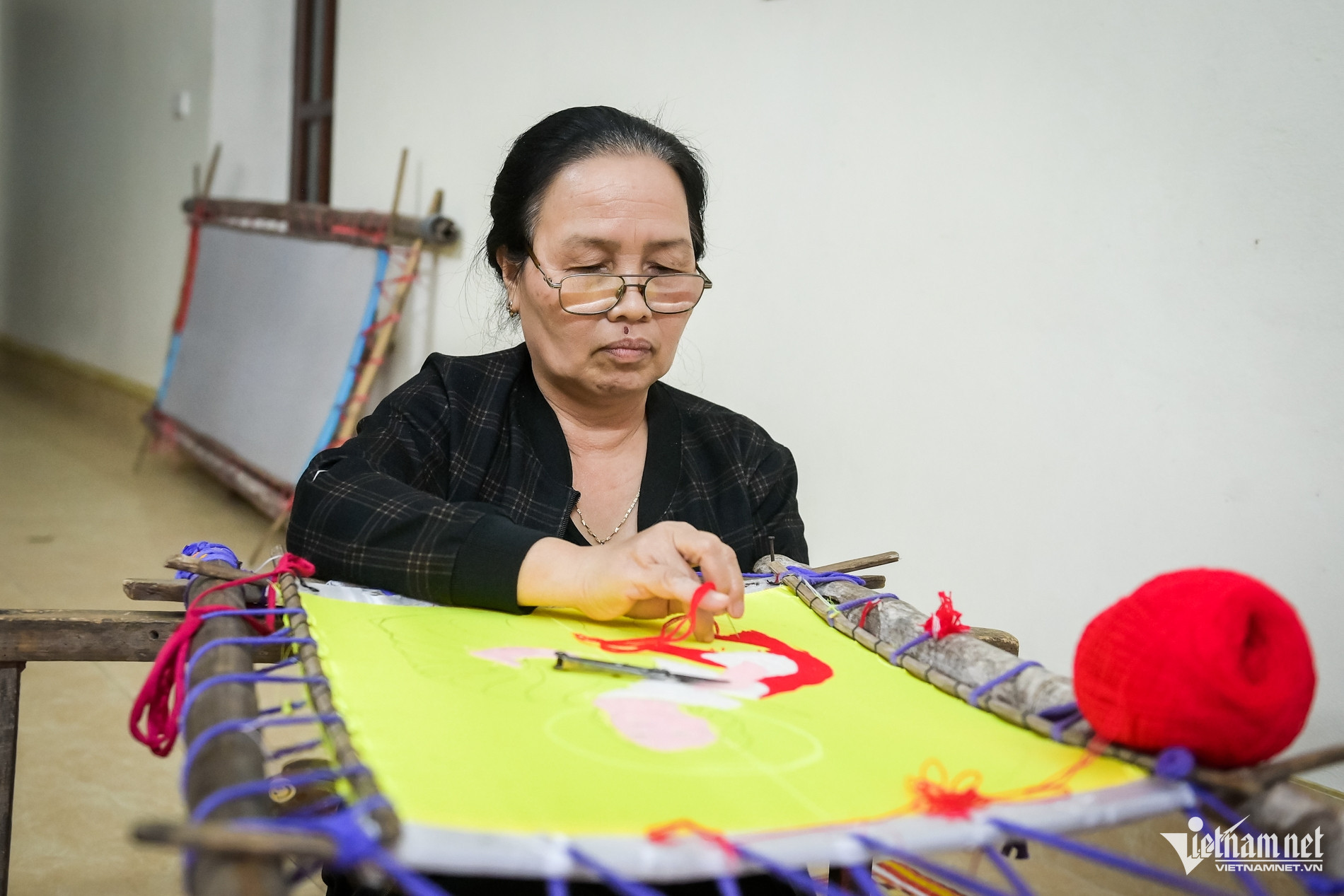
Dinh Thi Thuy, born in 1968, has worked in the craft since she was 10. She shared that making Catholic vestments requires harmony in every detail, demanding perseverance and careful needlework from the artisans.
“A single hand-embroidered religious scene can take dozens of continuous hours to finish. During peak season, we often work 12-hour days. It’s exhausting but fulfilling - this craft has given my family a stable livelihood,” she said.
Preserving tradition, creating opportunity
Vu Truong Khanh, Chairman of the People’s Committee of Xuan Hung commune, noted that the area is home to several long-standing traditional crafts, especially carpentry and lace embroidery.
To preserve and expand these trades while boosting the local economy, the commune has implemented initiatives encouraging residents to maintain their heritage. These include support for product marketing and expanding into markets beyond the province.
In addition, the commune is working to help local lace and embroidery products meet OCOP (One Commune One Product) standards, aiming to increase product value and secure stable employment and income for local residents.
Trong Tung
.svg)
