 Vietnamnet.vn

 Podcast


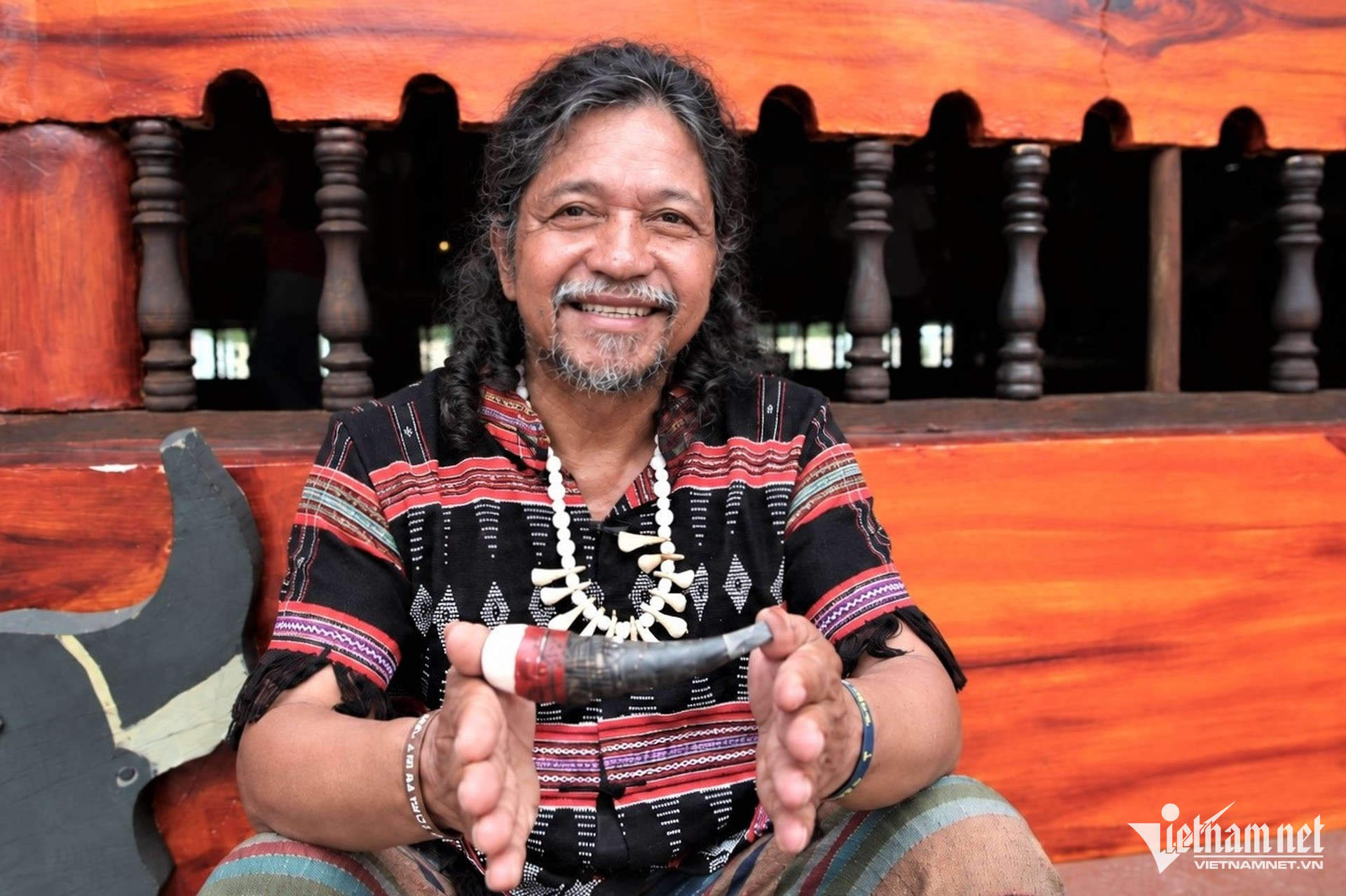
In Truong Son village, Dong Giang commune, in Da Nang City, A Lang Doi's residence has long served as a gathering place for individuals seeking to explore Co Tu culture.
His home houses gongs, Abel reed flutes, buffalo horn trumpets, bamboo flutes, wooden statues, brocade textiles, and everyday artifacts associated with Co Tu life. Local youth and students frequently visit to learn gong playing, musical instruments, traditional dance, and wood carving.
When staying in his village, Doi teaches younger generations. Whenever departing his mountain home, he brings gong rhythms, traditional dances, and Co Tu folklore to stages, festivals, and cultural tourism destinations.
A Lang Doi was born in 1964 in Gung village. At age 15, he studied traditional wood carving under his maternal uncle, village elder A Ting Neh.
Starting with basic tasks, he gradually mastered chiseling, shaping, ornamenting Guol communal houses, and carving statues. Through his hands, raw timber transformed into iconic representations of Co Tu life, spanning daily labor to ceremonial festivities.
Yet wood carving represents merely a fraction of Elder Doi's cultural knowledge. He also masters constructing Guol communal houses and Moong stilt houses, performing gong ensembles, executing ceremonial dances and rituals, and playing dozens of traditional musical instruments.
Whenever encountering unfamiliar cultural aspects, he seeks guidance from village elders and artisans across other Co Tu regions to expand his knowledge.
"If there is something I do not know, I must seek out knowledgeable people to learn. Co Tu culture possesses rich heritage, and every region offers unique elements to learn," Elder Doi said.
In this manner, his cultural repository expanded over decades. Whatever knowledge he acquires, Elder Doi strives to pass along to others.
A Lang Doi regularly participates in cultural exchange initiatives across Da Nang, Hoi An, HCMC, Hanoi, and various localities, performing musical instruments, reenacting traditional rituals, guiding youth in dance and gong playing, and promoting regional specialties.
In 2019, he collaborated with fellow artisans to construct a replica Co Tu village environment at Toom Sara in Hoa Vang district. From Guol and Moong houses to decorative carvings, every detail adhered strictly to traditional architectural styles. So Elder Doi continued performing and interacting with visitors at the site.
In mid-2020, he was invited to the Nguyen Hien Dinh Theater to instruct actors in the Tung tung Da da dance, drumming techniques, and gong rhythm control.
For years, he has contributed to cultural programs at the Dong Giang Heaven Gate Ecotourism Area, collaborating with artisans to perform gong music, traditional instruments, and folk dances while introducing traditional customs to tourists.
To Elder Doi, traveling beyond his village to perform extends past providing stage entertainment. Through gong sounds, dance movements, folk instruments, and Guol architecture, he wants to deepen public understanding of the lifestyle, customs, and heritage values preserved by generations of Co Tu people.
Transmitting heritage to younger generations
In his hometown, Elder Doi devotes his greatest efforts to passing his knowledge down to younger generations.
From local practice sessions, he established a youth troupe comprising numerous local children. Members learn gong performance, musical instruments, and the Tung tung Da da dance, regularly performing at local festivals and cultural exchanges.
A Ting Quy, a fifth-grader at Prao Primary School, is among the young members of the youth gong troupe.
"Initially, playing the gong felt very difficult because I had to memorize rhythms and listen to peers to maintain synchronization. Elder Doi guided us step by step. We feel happy when audiences watch us play gongs and dance. I want to master these skills to teach younger children later," Quy said.
According to Doi, traditional heritage is truly preserved only when young people understand, appreciate, and actively practice traditions themselves.
"I hope additional cultural transmission classes are organized for future generations. Whatever I know, I try to pass down so that gong rhythms, dance steps, and Co Tu customs endure," Doi said.
A Lang Doi's contributions to preserving, teaching, and promoting Co Tu culture have received recognition from local authorities. He stands among 26 exemplary artisans awarded certificates of merit by the former Dong Giang District People's Committee for contributions to preserving and promoting ethnic cultural identity.
Ha Nam

