 Vietnamnet.vn

 Podcast



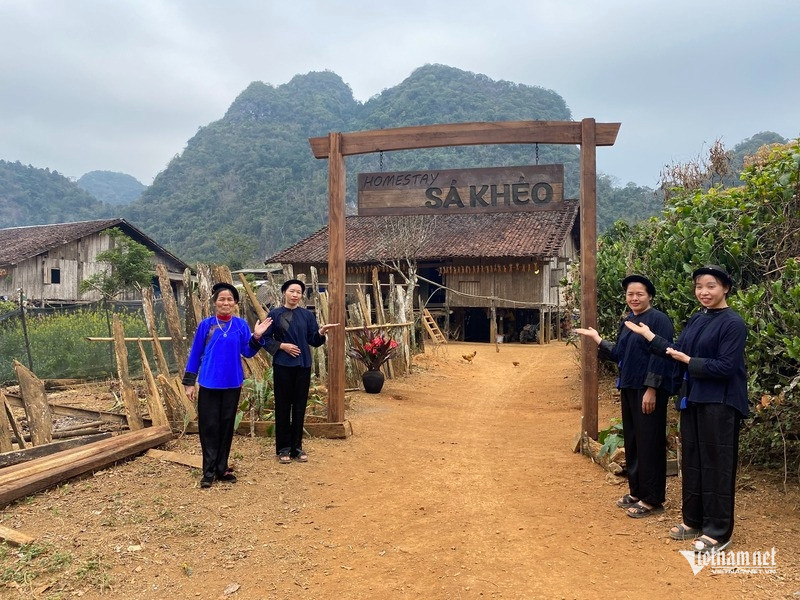
Lan Nong was selected in 2025 for a tourism initiative working toward net-zero emissions, involving 13 households. Photo: Lannong.io.vn
The community’s appeal extends beyond its scenery. Nung culture endures in its homes, clothing and traditional dishes, and especially in the Nung language, which is still spoken within each household and passed down through generations.
In early 2026, an electricity project with investment exceeding VND 2 billion, or approximately $77,000, was launched to provide the 13 households with solar power systems, battery storage and supporting equipment.
Le Thi Ly, 62, remembers the years when residents relied on oil lamps and pressurized kerosene lamps. Some families had solar panels, but these met only part of their electricity needs.
“In the past, we stayed around the house after dark, and everything was difficult. Now that we have electricity, life is completely different,” Ly said.
Electricity, road access and gradually improving telecommunications coverage are changing how residents see the place they call home.
On August 17, after five months of construction, a concrete road measuring 2.5 kilometers long and three meters wide opened to traffic. It created a new route into the settlement and strengthened Lan Nong’s connection with the outside world.
The road has shortened residents’ journeys and made the community more accessible to visitors seeking its unspoiled beauty.
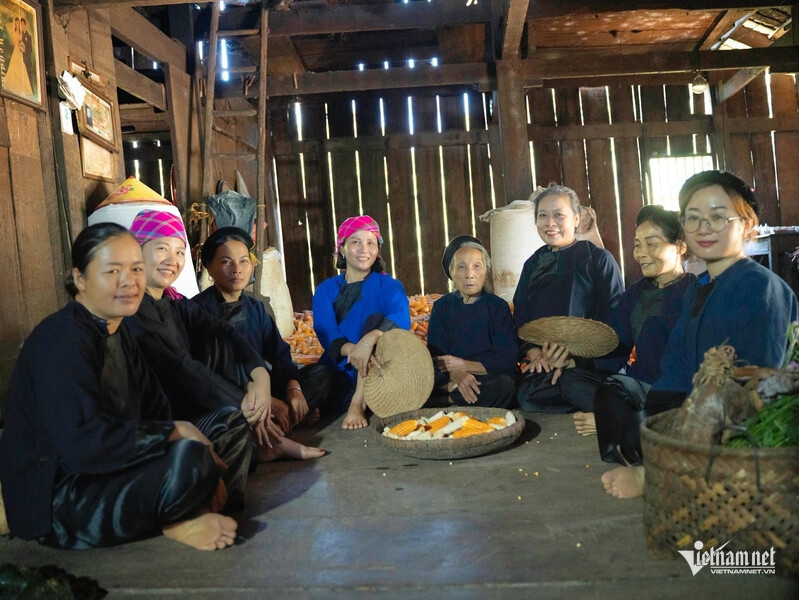
Residents preserve their stilt houses, traditional clothing, cuisine and, especially, the Nung language, passing them down within their families. Photo: Lannong.io.vn
Residents can now think beyond taking agricultural produce out of the mountains. Bringing tourists in offers another way to earn a living.
Yet as they begin developing tourism, they want to preserve the village as it is. Its stilt houses, bamboo forests, streams, cultivated slopes and the simple daily lives of its 13 households are the very things they hope will distinguish Lan Nong. While other destinations work to create “green,” “slow” and “local” experiences, Lan Nong already has much of that appeal.
In 2025, the community was selected for a tourism initiative working toward net-zero emissions, with all 13 households participating.
There is little need to draw a boundary between the space where residents live and the space visitors experience. Lan Nong’s strength lies in its relatively unspoiled surroundings and a way of life still closely tied to farming and nature.
The model aims to keep tourism within the community’s capacity, allowing each household to play a part without pursuing large visitor numbers or rapid expansion.
Ha Vu Khoi, chairman of the Cai Kinh Commune People’s Committee, said the initiative was being developed to suit local conditions and avoid abrupt changes to residents’ living environment.
Thirteen households work toward greener tourism
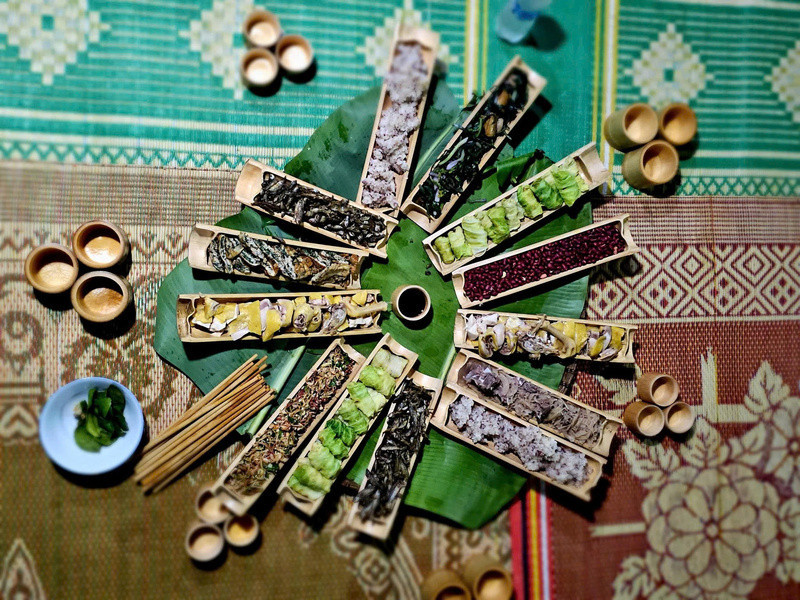
Local cuisine in Lan Nong. Photo: Lannong.io.vn
In 2026, the initiative continued to improve its physical spaces, infrastructure and operations, gradually taking shape as a model of sustainable, community-based tourism.
Pham Van Huy, head of the Lan Nong village farmers’ group specializing in agriculture and community tourism, said the village began offering community tourism services in early 2026, with five homestays. Residents received training on protecting the environment while developing tourism.
“Previously, each family did things its own way, and looking after the environment meant little more than keeping our own homes clean. Applying these net-zero standards helped us understand that, if we want visitors to stay, the space beneath a stilt house must be as clean as the living room, and plastic waste must be eliminated from the way we serve guests,” Huy said.
Some households have begun tidying and adapting their homes, using available materials to create simple spaces for visitors. Agricultural produce, household objects, courtyards, kitchens and verandas are being arranged more carefully to become part of the visitor experience.
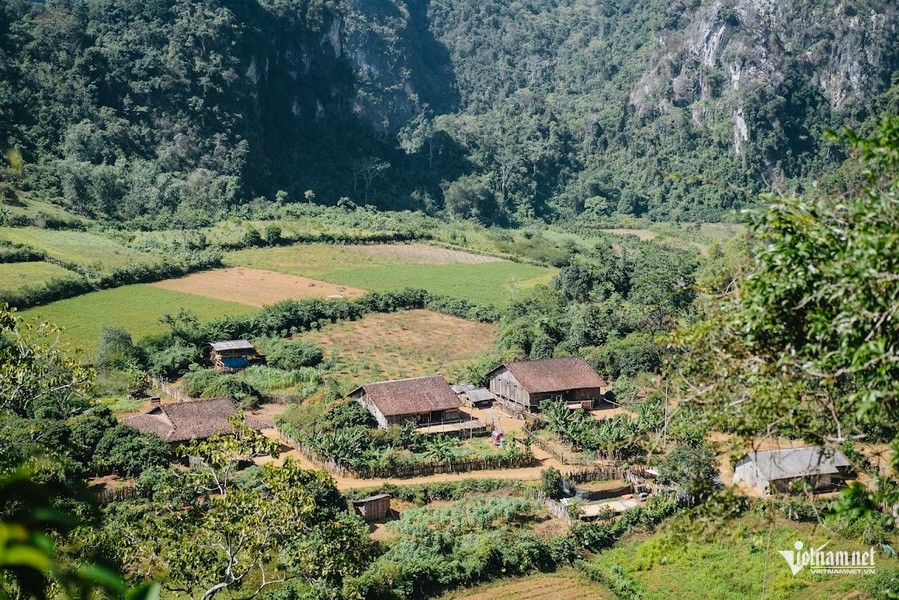
A view of Lan Nong’s community tourism village, which is working toward net-zero emissions. Photo: Lannong.io.vn
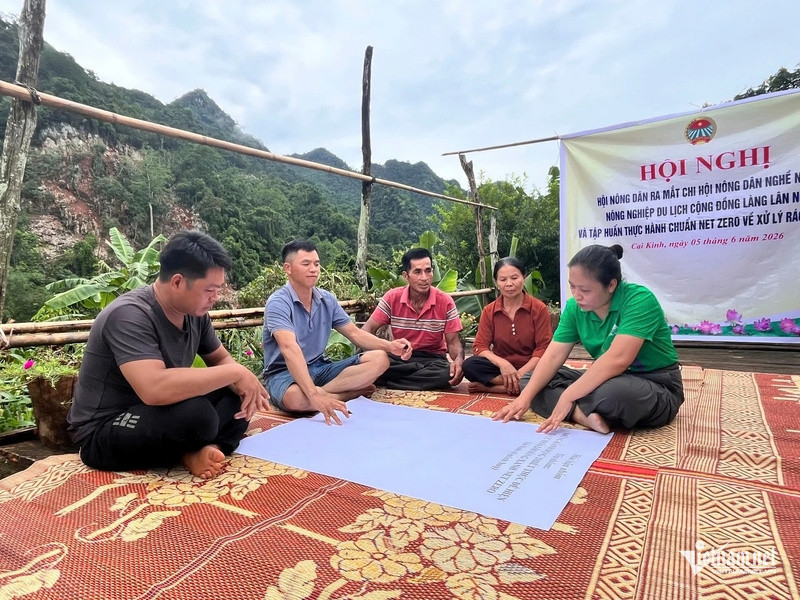
Lang Son’s UNESCO Global Geopark management and tourism promotion board helps residents develop greener community tourism.
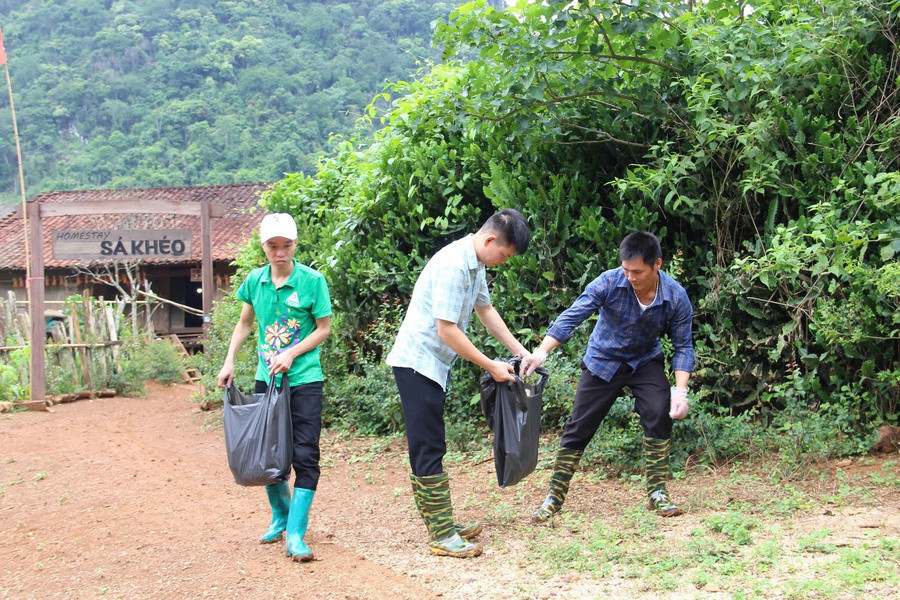
Residents strengthen their awareness of environmental protection as they develop tourism.
Guests can step into a stilt house, share a family meal, hear stories about the village and then follow a narrow path deeper into the forest.
Pham Thi Huong, deputy head of the Lang Son provincial board responsible for UNESCO Global Geopark management and tourism promotion, said Lan Nong was selected because its original character remained largely intact. Its small community also offered favorable conditions for pursuing sustainable development from the outset.
The board has worked with other organizations to conduct practical sessions on reducing plastic use, helping residents limit - and eventually stop - bringing plastic bags home from the market.
Nguyen Thi Mai, a visitor from Thai Nguyen, said reaching Lan Nong was still difficult. Once there, however, the fresh air, natural scenery and residents’ friendliness made the journey memorable.
Once isolated, Lan Nong is gradually becoming part of travel itineraries within the Lang Son UNESCO Global Geopark. The aim is not only to develop tourism but also to create additional livelihoods, improve living standards and preserve the community’s culture and natural environment.
Thuy Hong
.svg)
