 Vietnamnet.vn

 Podcast



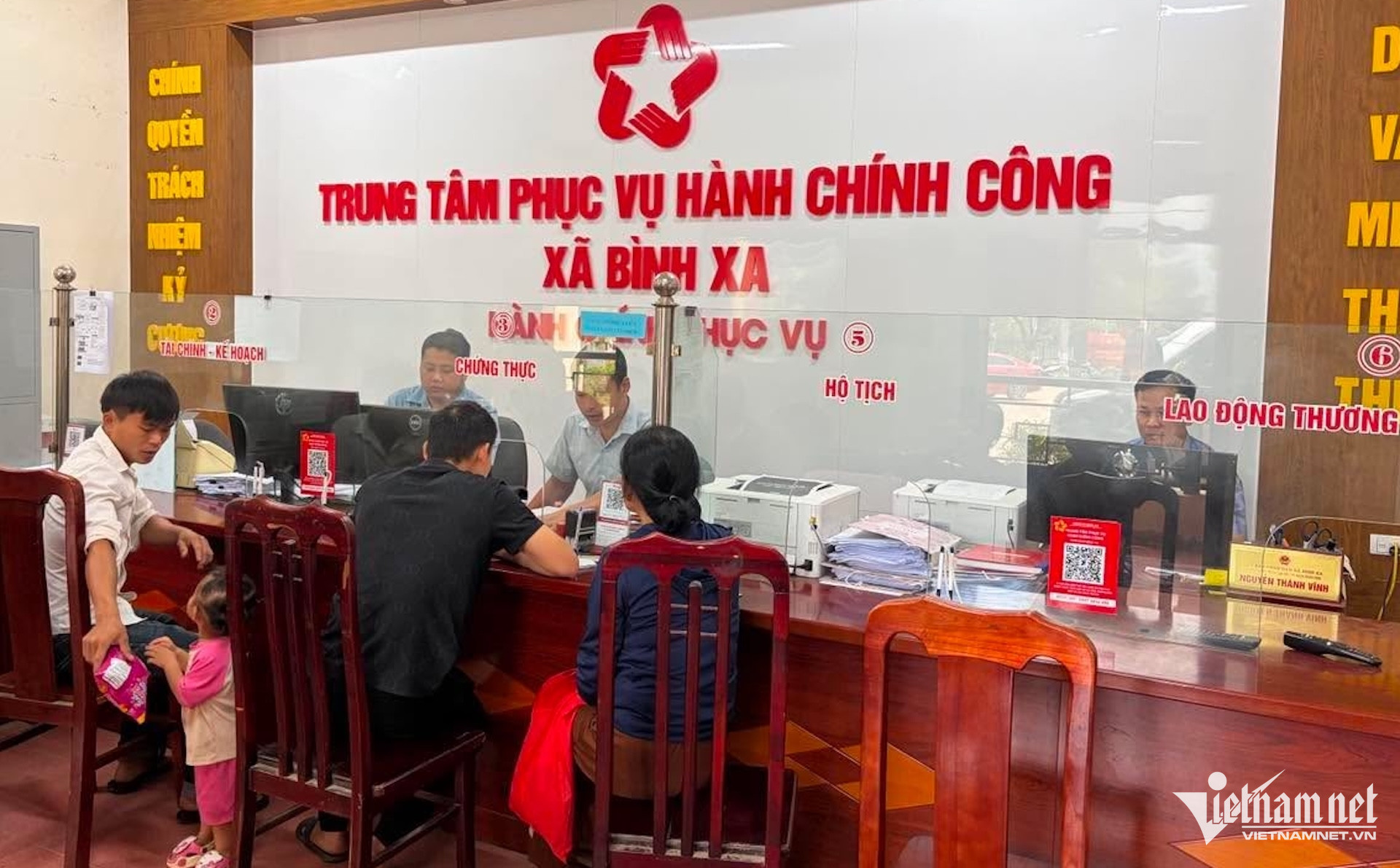
Repositioning commune governance under Vietnam's two-tier local government
Like the Economic Division, the Culture and Society Division of communes and wards currently also handles many different fields such as: home affairs, education, health, science, technology, culture, sports, tourism, ethnic affairs and religion.
Because division leaders must juggle multiple portfolios, they can hardly remain focused on directing and managing operations, leaving no room to dive deep into each professional field.
The Culture and Society Division must follow professional guidance from 6–7 departments and agencies: Home Affairs, Education and Training, Health, Science and Technology, Tourism, Culture and Sports, Ethnic Affairs and Religion.
A division head from the 8X generation in a commune in Tuyen Quang Province said that after just one year in the position, his hair has grayed significantly and he looks visibly older because there is too much work, all in new fields, creating great pressure.
“With a multi-specialty division like this, the division head is no different from a ‘superhuman,’ because they must handle too many areas. Just keeping up with all the documents in each field to serve the tasks is already difficult,” the division head said.
Many provinces and cities have split commune-level divisions. Given this reality, many localities believe that with the current workload of the commune level, having only three specialized divisions is too few.
Many communes propose splitting the Economic Division and the Culture and Society Division into four specialized divisions: a Finance Division specializing in finance and construction; an Agriculture and Natural Resources and Environment Division; one division specializing in home affairs; and one specializing in culture and society.
Some suggest splitting the Economic Division into an Economic–Finance Division and an Urban Infrastructure Division. The Culture and Society Division is also proposed to be split into two divisions: Culture–Science–Education Division, or Culture–Education Division; and Home Affairs and Health Division, or Organization–Administration and Health Division.
Other opinions suggest not splitting divisions but adding 3–5 staff to each division, especially those with in-depth expertise. Another proposal is to add a vice chairman of the commune People’s Committee. Currently, with heavy workloads, commune People’s Committee leaders need to be both comprehensive and specialized in development-oriented management.
Meanwhile, other opinions say that having only two vice chairmen of the commune People’s Committee would be insufficient. There would not be enough officials to attend meetings.
Adding one more vice chairman of the commune People’s Committee would be convenient for clearly assigning specialized tasks by field.
Former Deputy Minister of Home Affairs Tran Anh Tuan said the organizational structure should shift from “streamlined” to “rationally streamlined.” Only if it is rational can it meet practical operational requirements and ensure smooth, effective operations.
He proposed increasing the number of specialized divisions to five: Office of the People’s Council and People’s Committee; General Economic Division; Sectoral Economic Division; Culture and Society Division; Public Administration Service Center and Land Registration Office.
The Hanoi People’s Council also just passed a resolution stipulating the number, establishment, reorganization, and dissolution of specialized agencies and other administrative organizations; and the number and structure of members of the city People’s Committee and commune-level People’s Committee members under Hanoi’s management.
Accordingly, the number of administrative organizations at the commune level is regulated to increase to no more than five specialized agencies; no more than two other administrative organizations under the commune People’s Committee.
The 5 specialized agencies include: Office of the commune People’s Council and People’s Committee; 2 specialized divisions in the culture and society field; 2 specialized divisions in the economic, infrastructure and urban field. Hanoi also plans to establish a commune-level Public Administration Service Center.
Hai Phong also directed the urgent reorganization and new establishment of five specialized divisions under the People’s Committees of 46 communes, wards, and special zones that are type-1 commune-level administrative units, including: Office of the People’s Council and People’s Committee; Construction, Agriculture and Environment Division for localities with agricultural activities, or Construction and Environment Division; Economic Division; Culture and Society Division; and Public Administration Service Center.
Sixty-seven communes and wards that are type-2 commune-level administrative units in Hai Phong, not including Bach Long Vi Special Zone, have four specialized divisions: Office of the People’s Council and People’s Committee; Culture and Society Division; Economic–Infrastructure–Urban Division for wards, or Economic Division for communes; and Public Administration Service Center.
Thu Hang
.svg)
