 Vietnamnet.vn

 Podcast



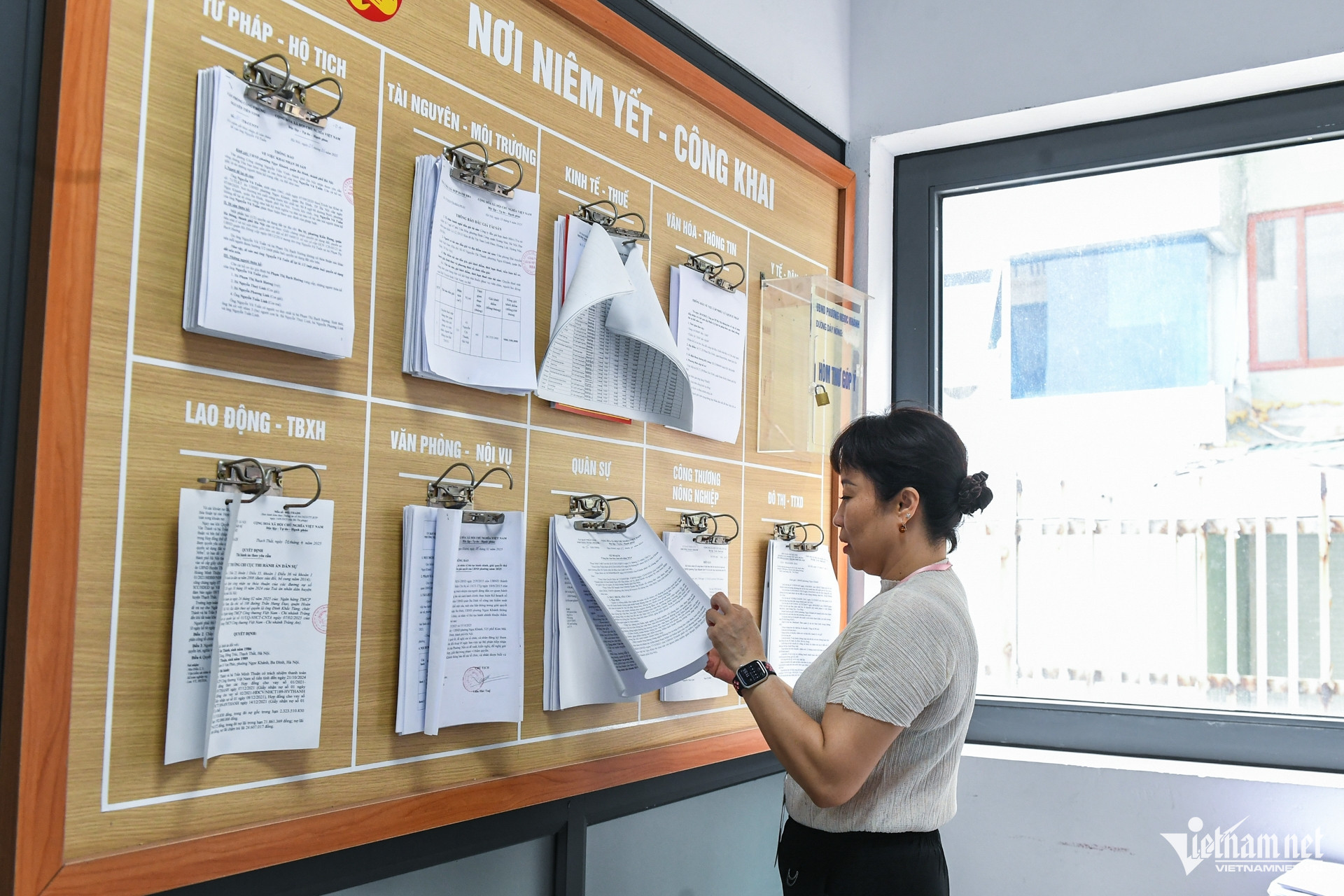
More than two decades ago, upon graduating from university, we jokingly teased a classmate from a high-mountain province that returning to his hometown commune might even get him appointed immediately as a vice chairman, because very few people in his hometown held university degrees back then.
My friend fell into deep thought: “Being a commune official is very tough, I cannot do it. It is a very difficult task…”.
The longer I have worked and the more closely I have observed life at the grassroots level, the better I have come to understand those difficulties. Back then, communes often covered vast areas, requiring officials to directly communicate with residents and handle countless local issues.
The hesitation my friend expressed back then remains a concern shared by many grassroots officials today. Since July 1, 2025, Vietnam has operated under a two-tier local government model. Under the new regulations, commune-level professional departments have been designed to be far leaner than the former district-level structure.
Today, a commune official responsible for economic affairs may oversee areas that previously belonged to several separate district-level departments, including economic development, urban management, technical infrastructure, transport, construction, environmental protection, agricultural production, or land administration, while also responding to guidance, inspections and reporting requirements from provincial departments.
The Culture and Social Affairs Department faces similar pressure, covering home affairs, education, healthcare, science and technology, religion, ethnic affairs, labor and social welfare, even though each field has its own legal framework, professional procedures and responsibilities.
Looking abroad for lessons
No governance model can simply be transplanted from one country to another, as nations differ in history, territory, social culture and administrative capacity.
In several North American and Oceania countries, including the US, Canada and New Zealand, grassroots local governments generally do not manage every public service related to people's daily lives.
Many local authorities focus primarily on services associated with property, infrastructure and communities, such as roads, urban planning, waste management, firefighting and public spaces, while education, healthcare and social welfare are often managed by higher levels of government, specialized boards or independent institutions.
In Europe, as of early 2025, France had nearly 35,000 communes. The country has developed intercommunal cooperation bodies, commonly known as EPCIs, allowing neighboring communes to share certain powers, jointly provide public services and implement projects beyond the capacity of individual communes.
India also devolved numerous responsibilities to grassroots self-governing institutions. However, for many years it struggled with the "3Fs" — finance, functions and functionaries. When local governments received extensive responsibilities without sufficient funding or qualified personnel, decentralization could become more of a burden than a driver of development.
Which direction to take?
In larger localities with sizable populations, broad territories or heavy administrative workloads, authorities should be given greater flexibility to establish additional specialized departments within permitted limits, rather than requiring every locality to operate under the same rigid organizational model.
In rural areas, clearer separation of finance and planning, agriculture, natural resources, environmental management and land administration is particularly necessary, as these fields involve complex legal regulations and have direct impacts on people's livelihoods.
Second, Vietnam should institutionalize intercommunal cooperation mechanisms. The Law on Local Government Organization and related regulations should allow neighboring communes to pool budgets, share experts and jointly operate technical services involving planning, environmental management, digital transformation, infrastructure and community development.
Such arrangements would not increase overall staffing levels but could significantly improve professional capacity while reducing the burden on commune officials handling large numbers of cases, including highly complex ones.
Third, decentralization should follow an asymmetric approach, assigning different tasks to different localities. Vietnam should not impose the same workload on an urban ward, a rapidly urbanizing suburban commune and a sparsely populated mountainous commune with difficult transport conditions.
Public services requiring highly specialized expertise, such as preventive healthcare, education and certain social welfare programs, should be organized through provincial, regional or specialized networks, while commune governments focus on receiving citizens' requests, connecting them with services and handling issues closest to local communities.
Fourth, technology should genuinely reduce workloads rather than simply shifting paperwork from paper documents to computer screens.
Fifth, greater efforts should be made to strengthen community self-governance. No matter how much commune governments are reinforced, they cannot perform every task on behalf of residents, particularly in areas involving community life, environmental protection, public security, social solidarity and the preservation of local identity.
Nguyen Phuoc Thang (Hoa Binh University)
.svg)
