 Vietnamnet.vn

 Podcast



The directive to “soon develop a national strategy for long-term supply and reserves of raw materials and fuels” in Conclusion No. 14-KL/TW by the Politburo sends a clear policy signal about risks that are drawing closer.
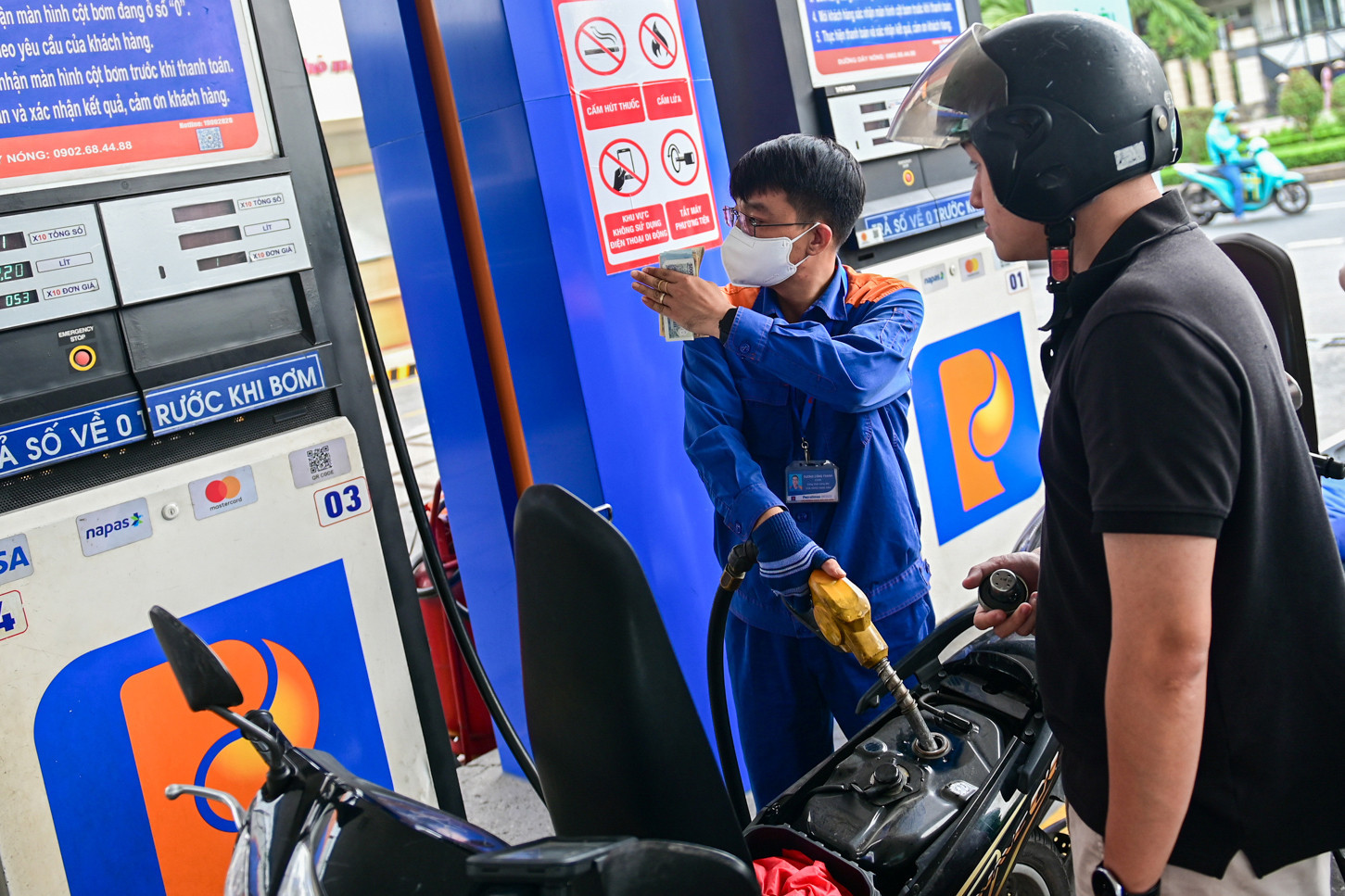
The need to develop a long-term strategy for fuel supply and reserves has become essential to strengthening the economy’s resilience. Photo: Nguyen Hue
As global energy supply chains grow increasingly fragile under geopolitical shocks - from the Covid-19 pandemic to the Russia-Ukraine conflict and emerging tensions in the Middle East - having supply alone is no longer sufficient. The real question is whether the economy has adequate reserves and a flexible enough system to avoid being swept along by external disruptions.
For that reason, building a long-term strategy for fuel supply and reserves has become a necessary condition for strengthening economic resilience.
Vietnam’s petroleum supply currently comes from two main sources - domestic production and imports - but in practice, these channels are closely interdependent.
The resilience of the supply system
On the domestic side, the Nghi Son and Dung Quat refineries supply around 70-80% of market demand, with Nghi Son accounting for roughly 35-40% and Dung Quat about 30%.
However, this supply is not fully self-reliant. Both refineries still depend on imported crude oil - Dung Quat, for instance, imports around 30-35% of its input - as well as various feedstocks for production. At the same time, the system often operates at very high capacity, at times exceeding 120-125% of design levels to meet demand.
The remaining 20-30% of demand is covered by imports of refined petroleum products, amounting to about 9.9 million tonnes in 2025, valued at US$6.8 billion. In addition, Vietnam imported 14.1 million tonnes of crude oil (US$7.7 billion) and 3.6 million tonnes of LPG (US$2.1 billion), bringing total spending on these energy commodities to around US$17 billion.
In other words, Vietnam does not simply import what it lacks. It depends on external sources at both ends of the supply chain - from input materials to finished products - while imports also function as a balancing valve to stabilize the market when domestic supply fluctuates or demand rises.
This structure helps maintain overall supply stability, but it also tightly links the domestic market to external variables, including oil prices, transport and insurance costs, and geopolitical risks along supply routes such as the Strait of Hormuz.
In fact, the system has shown signs of strain before. During the Covid-19 period and the subsequent energy shock triggered by the Russia-Ukraine conflict, Vietnam’s fuel market experienced moments of disruption.
At times, supply was locally interrupted, with some stations forced to close and people searching for fuel. These episodes did not last long, but they revealed a critical point: when global supply chains are disrupted, internal vulnerabilities surface quickly.
A new vision for energy security
Decision No. 861/QD-TTg on the planning of national fuel and gas storage and supply infrastructure reflects a clear shift in the approach to energy security. The goal is to build a sufficiently robust reserve system so the economy can withstand external shocks.
At the core of this plan is increasing total reserves of crude oil and petroleum products to around 75-80 days of net imports, with a target of reaching 90 days - not just a marginal increase, but a fundamental rebuilding of the system’s buffer.
To achieve this, the reserve system is being redesigned across three layers: production reserves linked to refineries, commercial reserves held by businesses, and national reserves consisting of large-scale storage facilities for crude oil and fuel products near refining hubs such as Dung Quat, Nghi Son, and Long Son.
The plan also extends beyond petroleum to include gas. It aims to raise LPG storage capacity to around 800,000 tonnes in the 2021-2030 period and 900,000 tonnes thereafter, while developing LNG infrastructure capable of importing up to 20 million tonnes annually, with a long-term target of 40 million tonnes after 2030.
Alongside this is the expansion and restructuring of the commercial storage network - from existing facilities to dozens of new depots nationwide - as well as the development of supply infrastructure, including pipeline systems connecting refineries and major storage hubs to key consumption centers.
With total investment estimated at around VND270 trillion (approximately US$11 billion), in which the State focuses on strategic reserves, Decision 861 represents an effort to build a system that has largely not existed before: a buffer capable of absorbing energy shocks.
A gap between ambition and reality
When comparing current conditions with the targets outlined in Decision 861, a clear gap emerges - not in production capacity, but in the depth of reserves.
In terms of production, Vietnam has built a relatively solid foundation. The two refineries can meet most demand under normal conditions and even operate beyond capacity to stabilize supply. Yet this does not equate to true self-reliance, as the system still depends heavily on imported inputs and external markets, with little room for contingency during disruptions.
The most significant weakness lies in reserves. According to an official from the Ministry of Industry and Trade, current fuel reserves typically cover about 20 days.
Compared to the 75-90 day target, this gap is not merely a matter of time - it reflects the absence of a fully developed strategic reserve system.
The contrast becomes even clearer when viewed alongside regional and global benchmarks. Some ASEAN countries, such as Singapore and Thailand, have built large-scale storage and transshipment systems, while developed economies like Japan and South Korea maintain strategic reserves of around 90 days or more, enabling active market intervention when needed.
In these economies, reserves are not just stockpiles - they are instruments of policy.
A timely and necessary directive
Against this backdrop, the directive to “soon develop a national strategy for long-term supply and reserves of raw materials and fuels” in Conclusion No. 14-KL/TW is not only appropriate but timely.
As Vietnam’s energy supply chain remains closely tied to global markets and vulnerable to geopolitical disruptions, shifting from a mindset of “ensuring supply” to one of “building reserves and redesigning the system” marks a fundamental step.
In a world where energy shocks are increasingly unpredictable - from Covid-19 to the Russia-Ukraine conflict and new tensions in the Middle East - proactively building a sufficiently deep reserve system will help ensure the economy is no longer reactive to external volatility.
At that point, the issue extends beyond fuel itself. It becomes a matter of strengthening Vietnam’s resilience - so that external shocks are no longer crises, but challenges that can be managed.
Tu Giang
.svg)
