 Vietnamnet.vn

 Podcast



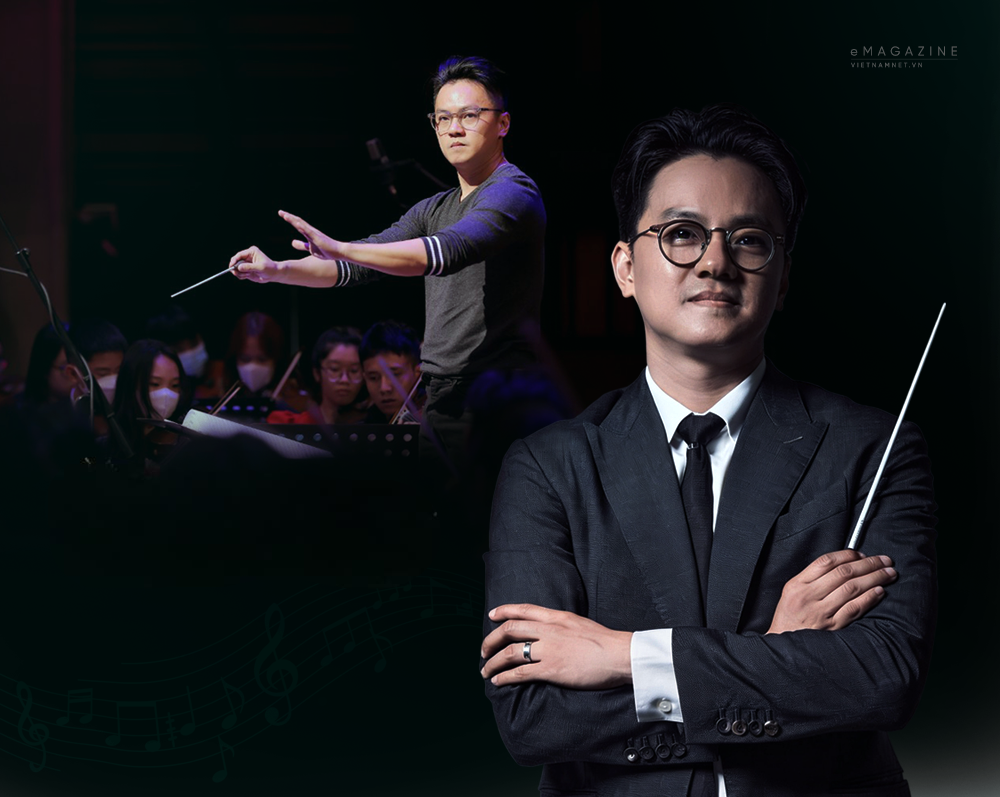
Since the inauguration of the Ho Guom Opera House in July 2023, it seems classical music concerts are held more frequently and conductors like you have become much busier?
That is true. The cultural and artistic life, especially classical music in Hanoi, is becoming livelier.
Every month, I have a few concerts in HCMC and Hanoi. Additionally, I am a visiting lecturer in choral conducting at the HCMC Conservatory of Music. This current schedule is exactly what I dreamed of 20 years ago when I first returned to the country.
I am the type who pursues pure art, completely detached from business. Aside from my main job, I also take on independent projects, such as a series of seven concerts for students at Vietnam National University, HCMC last year. My only slight regret is that I still have not finished my doctoral thesis.
Every conductor has a different definition of their profession. How do you view the role of a conductor from your perspective?
A conductor can be compared to a CEO. You have to know a bit about accounting, sales, PR, etc. You do not execute those tasks directly, but you decide the company's concept. That is the first general visualization of the conducting profession.
You have to ensure the piece stays as close as possible to the composer’s original spirit. At a higher level, the conductor gets creative, putting a bit of their own personality into the work.
At the highest level, for me, a conductor isn’t just someone who shows up with a baton to work a gig, they must truly act as the orchestra’s guiding compass.
A conductor doesn’t need to gesture beautifully, but for the movements to really have soul, they must come from the heart, the mind, and knowledge.
I’m glad that more and more young people are pursuing this career, but to become truly skilled, they need to keep pushing themselves.
Training an artist for an orchestra is very hard. Twenty years ago, for a family to let their child become a professional classical musician was a huge challenge: few jobs, low pay, an uncertain future, etc.
Those who stuck with it back then did so so out of passion.
Conductors in any country need talent, expertise, and discipline, but in Vietnam there may be an additional demand for interpersonal skills, being more tactful compared to the artistic environment in capitalist countries.
Today’s conductors also have to double as MCs to some extent, able to connect with the audience and explain or introduce pieces themselves, helping those unfamiliar with classical music feel closer to it.
You also have to understand the market and the audience, and from there build a sensible musical strategy.
Do you believe in a shift in Vietnamese audiences’ tastes?
I often compare making a change to pushing a giant boulder that has stood still for decades.
Western classical music entered East Asia around the same time, but where are China, Japan, and South Korea now? They’ve become classical music powerhouses, on par with Europe. Their governments have placed absolute trust in classical art.
But it’s not just Vietnamese audiences. Even in European countries, people are struggling with the issue of young audiences and classical music. In concert halls today, most heads are still gray. Art always requires patience and stillness, a luxury in today’s society.
I once lost faith. About 15 years ago, the HCMC Ballet Symphony Orchestra and Opera worked with the Youth Union to run a concert series for students. At the time, I felt like what we were doing was like throwing a pinch of salt into the ocean.
It wasn’t until last year, when I did seven concerts for students at Vietnam National University, HCMC, that some lecturers told me they were once students who had watched me perform, and now they insisted on bringing their own students to the program.
And currently, there are very young people coming to my concerts because they adore a female cellist, asking lengthy questions about minor details in the performance.
That was the moment I knew my grains of salt had landed in the right place. Out of 1,000 new audience members, if only 10 percent maintain their love for classical music, that is already a success to me.
Tinh Le
.svg)
