 Vietnamnet.vn

 Podcast



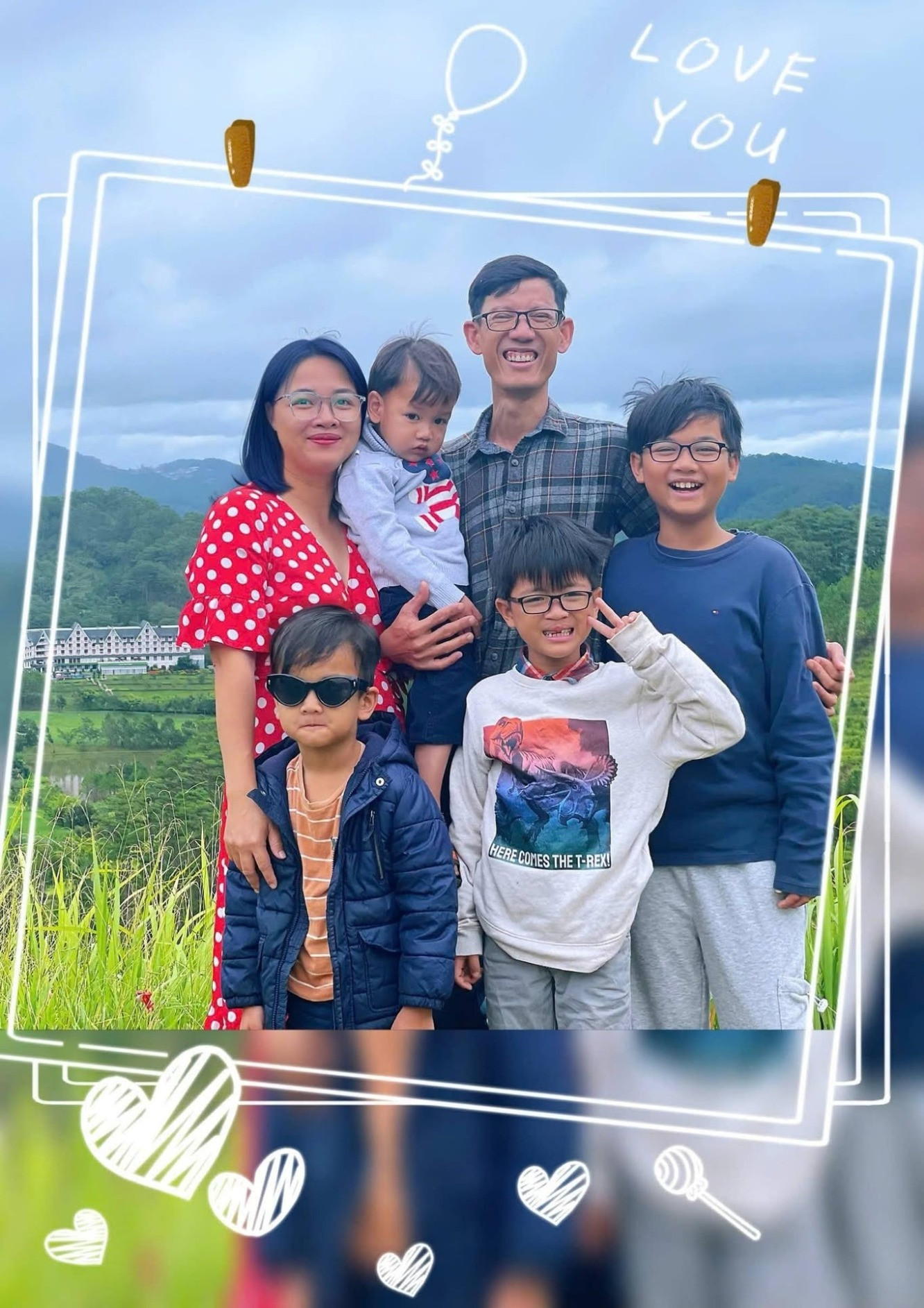
After more than two years, their family of six has adapted well to life in the mountain forests, with marked improvements in their overall health.
Duong Thi Ngoc Anh, 37, and her husband, Pham Nhat Truong, 42, once enjoyed a life many envied in Da Nang. Truong worked as an architect with over 15 years of experience in project design and construction, while Ngoc Anh operated as a freelance fashion designer.
Despite having stable jobs and sufficient income to raise four children in "Vietnam's most livable city," the couple began feeling suffocated by the urban living environment.
In 2024, the couple decided to change their residence, seeking a new direction for their careers while prioritizing a living environment with fresher air. More importantly, at their new location, they could produce a portion of their own food, securing a safe food supply while reducing living costs.
"When hearing about this decision, our relatives voiced strong opposition, offering endless advice against it out of fear that our children would not endure the hardships.
“However, we stood firm in our decision and accepted having to trade away many things, including living far from parents, relatives, and friends, as well as lacking familiar amenities like hospitals, amusement centers, or talent classes for the children," Ngoc Anh recalled.
In May of that same year, the family of six officially packed their belongings and left the city. At the time, their eldest child was only 9, while the youngest was just 1.
They selected Lam Ha (Lam Dong Province), located roughly 700 kilometers from Da Nang, as their new home. The area features a mild, cool climate, fertile soil, and favorable water resources for agricultural development.
"The reason we chose Lam Ha was that we once visited an organic vegetable farm here. Upon our first arrival, both of us were captivated by the mild climate, neither too cold, nor humidly freezing, with no harsh sun or heavy rain like our Central Vietnam homeland," Ngoc Anh shared.
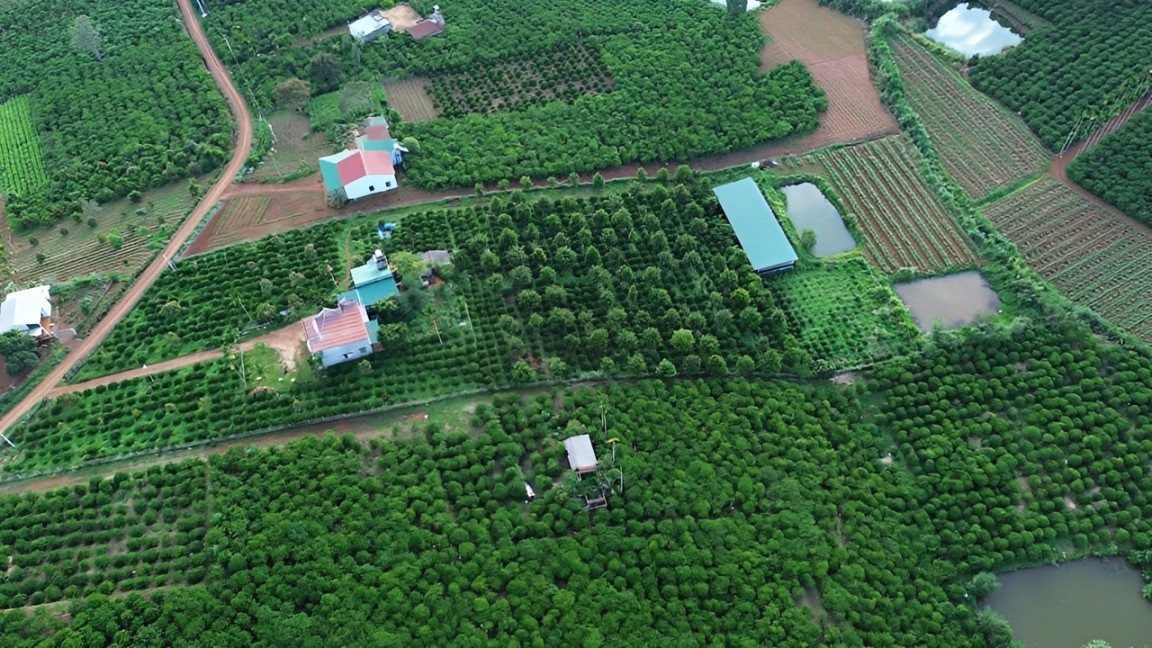
In Lam Ha, Ngoc Anh and her husband purchased a 12,000-square-meter plot of land to establish a farm. The property already contained coffee trees, macadamia trees, and an old house measuring 100 square meters.
Because the house had fallen into disrepair, the couple renovated it to optimize functionality for a family of six. The living room connects to the kitchen, creating an open common living area, while bedrooms are arranged thoughtfully to suit a lifestyle lived close to nature.
The ‘have-it-all’ farm
To run the farm efficiently, Ngoc Anh and her husband divided the land into four primary functional zones: a residential area and packaging workshop; a garden dedicated to coffee, macadamia, avocado, and durian; a layer chicken farm; and a medicinal herb garden alongside a fish pond.
The farm's primary crops include coffee (1,500 trees), macadamia (100 trees), and betel palms (200 trees). Additionally, the farm features medicinal herbs, fruit trees, and 20 durian trees.
During the initial phase, under the guidance of Ngoc Anh's experienced father, the couple invested in raising free-range layer chickens supplemented with herbal feed, starting with a flock size under 1,000 birds.
The family adopted an antibiotic-free farming method, utilizing seasonal feed sources such as avocados and macadamia nuts, resulting in high-quality egg production.
"Initially, my husband and I cared for the flock ourselves to save on expenses while making it easy to supervise operations and accumulate hands-on experience. Later, as the farm expanded to 3,000 birds and financial resources stabilized, we hired additional labor," she said.
She noted that building the farm presented numerous challenges. The area where the family lives frequently faced power shortages. Dug wells also gradually ran dry, failing to meet daily household needs.
Furthermore, newly planted crops require roughly three years to produce harvests, leaving cultivation heavily dependent on weather conditions.
"Everything truly started from zero," she reflected.
However, two years after leaving the city for the forest, Ngoc Anh observed that her entire family's life has transformed in a positive direction.
Beyond the farm operating smoothly and generating a steady stream of income, all family members have adapted well to the local living environment.
"Looking back at past hardships, I feel the greatest gift is the transformation in our four children. They have grown accustomed to their new life, learned independence, come to value labor, and developed a deeper love for nature,” Anh said.
Thao Trinh
.svg)
