 Vietnamnet.vn

 Podcast



In the days leading up to Tet, the last remaining sugar kiln in the once-famous sugar-cane hub of Da Nang burns through the night.
Thousands of handmade sugar bowls are produced here each day, not only for sale but to preserve a ritual offering to the Kitchen Gods that has survived for generations.
For many families in Da Nang, the altar prepared to send the Kitchen Gods to heaven on the 23rd day of the last lunar month cannot be complete without a bowl of dark cane sugar.
The ingredient also defines the flavor of traditional Tet cakes such as banh to, banh no and banh it gai.
Though the craft operates year-round on special orders, the weeks before Tet are its busiest and most demanding.
From the 15th day of the twelfth lunar month, the fire at the traditional sugar kiln run by Nguyen Van Nhan, 67, in Quế Sơn ward of Da Nang, is lit at 2 a.m. each day.
His facility produces more than 1,000 sugar bowls daily to meet Tet demand.
Nhan’s family has practiced sugar making for three generations, passing the craft from parent to child.
Yet in his lifetime, he has watched the number of practitioners dwindle.
“All three of my children chose not to follow the craft,” he said.
“Perhaps my wife and I will be the last in the family to keep this kiln burning.”
He recalls a time when the village glowed with the red fires of sugar kilns every spring.
But when sugar prices collapsed and farmers abandoned their cane fields, the traditional kilns faded one by one.
Now, only his family continues to make Tet sugar in the village.
“If I give up the craft, I fear Da Nang will lose the flavor of its offering to the Kitchen Gods,” Nhan said.
According to local belief, the dark sugar bowl sweetens the words of the Kitchen Gods as they report to the Jade Emperor, helping to lessen misfortune and wish for a peaceful, prosperous year ahead.
It is this belief that has carried the craft through decades of hardship.
Each day, Nhan’s family presses around seven tons of sugarcane.
The juice is filtered and transferred to a cast-iron pot to simmer for hours.
In the past, pressing was entirely manual, requiring intense labor - even buffalo were used to turn the press.
Recent years brought some relief when Nhan invested around 150 million VND (about 6,000 USD) in a mechanical press, though the cooking process remains fully traditional.
Standing by the roaring kiln, enveloped in heat and steam, Nhan stirs the bubbling cane juice, watching its color carefully to determine the exact moment it thickens into syrup.
Once it reaches the right consistency, the syrup is poured swiftly into an old jackfruit-wood vat - a tool he fondly calls his “family treasure.”
The sugar is beaten continuously for about twenty minutes until it thickens into a pliable paste.
It is then ladled into aluminum bowls brushed lightly with oil.
According to Nhan, this pouring step is the most critical.
Each bowl must be poured three times for the correct shape, especially the raised mound on top - a signature mark of the traditional offering.
“A sugar bowl for the Kitchen Gods without that mound is considered incomplete,” he explained.
Thai Quang Hai, 52, who has spent more than twenty years mastering the pouring technique, said the sugar must be poured while still extremely hot.
“Even a slight delay and the whole batch solidifies,” he said.
“Getting each bowl to match in weight and shape requires long familiarity.”
When the sugar cools and hardens, workers use custom tools to release it from the bowls.
In earlier years, clay bowls were used, but aluminum has replaced them due to better heat distribution and durability.
Nhan’s kiln is now one of the few still operating in Da Nang.
Its unique flavor ensures steady demand from traders who distribute the sugar across traditional markets within and beyond the city.
According to Vo Thi Thanh, Nhan’s wife, the kiln produces more than 1,000 bowls a day during peak periods.
They sell for 50,000–60,000 VND (2–2.5 USD) per pair.
The kiln maintains five workers from early morning until late evening.
After covering cane costs, labor and other expenses, the family earns around 2 million VND (80 USD) a day.
“We work day and night to meet orders,” Thanh shared.
“Now our kiln is the only one still making Tet sugar in the village.
Keeping this craft alive is also keeping the memory of the old Tet for our children.”
The finished sugar bowls are neatly arranged, waiting for traders to collect and distribute them for Tet.
“The craft survives because Tet survives, because people still honor the Kitchen Gods,” Thanh said.
“As long as families need the dark sugar bowl for their Tet offering, our kiln will stay lit.”
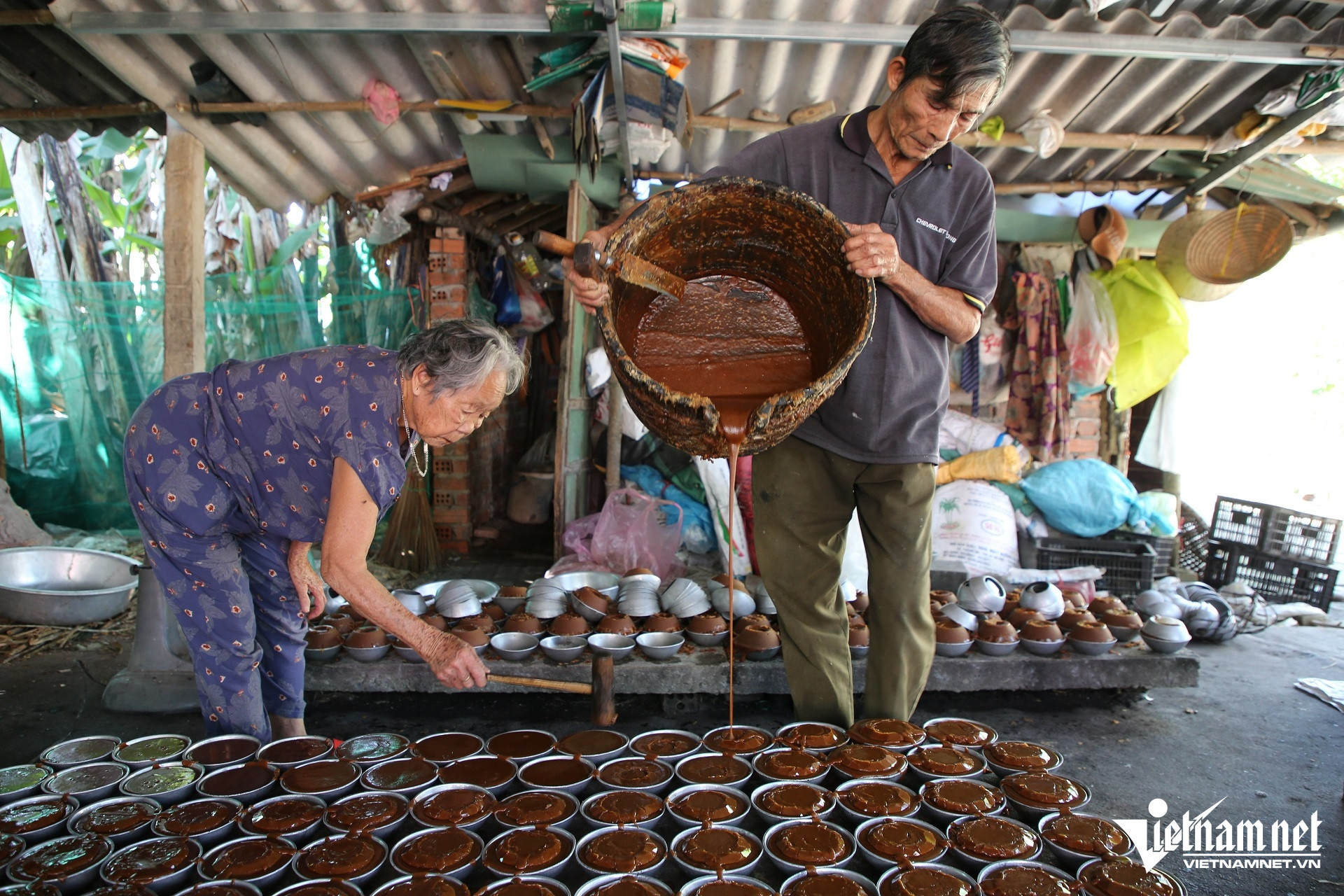
The traditional sugar kiln in Da Nang works at full capacity as Tet approaches. Photo: Ha Nam
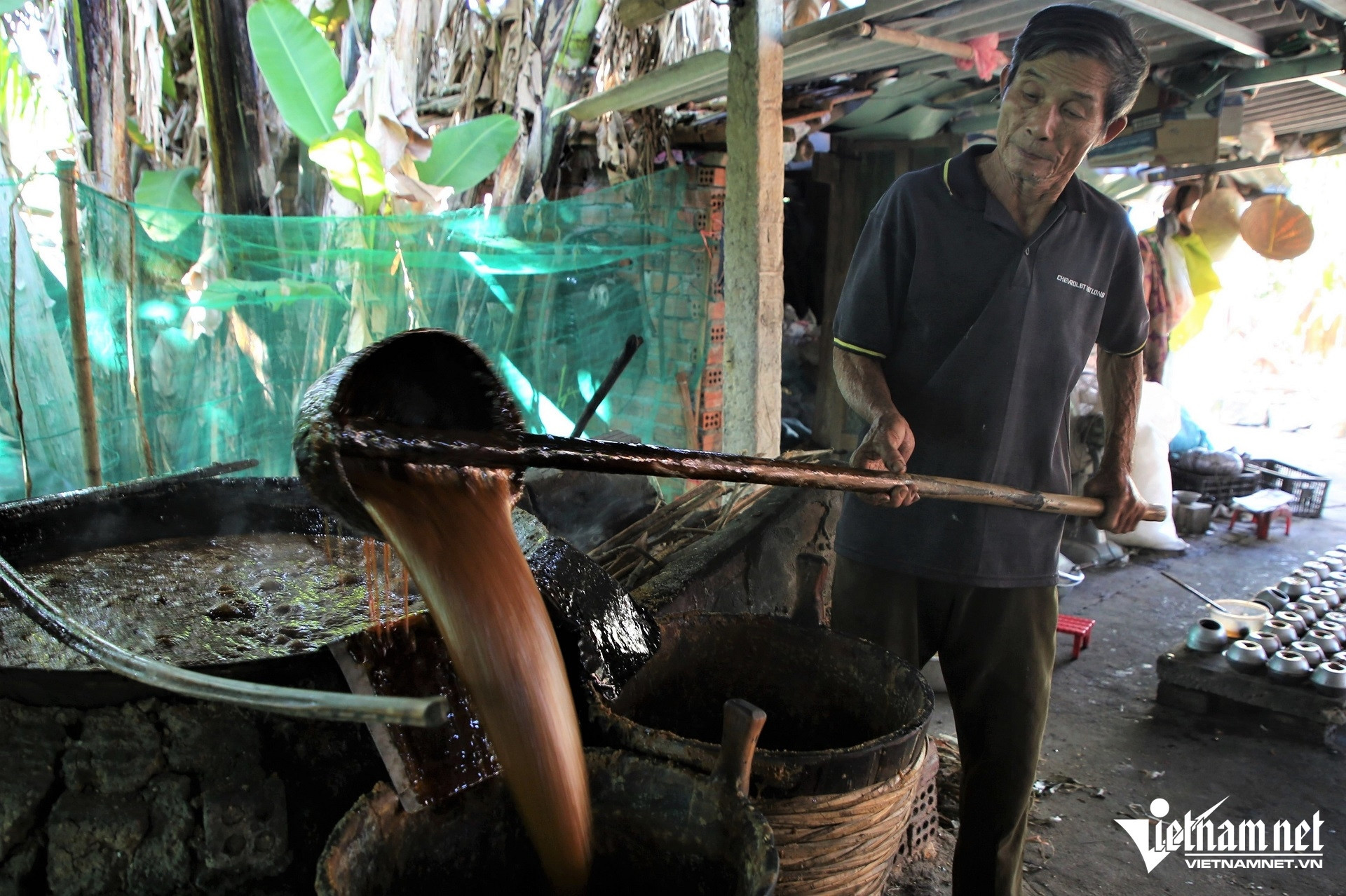
Cane juice is boiled in cast-iron pots for hours until it thickens into syrup. Photo: Ha Nam
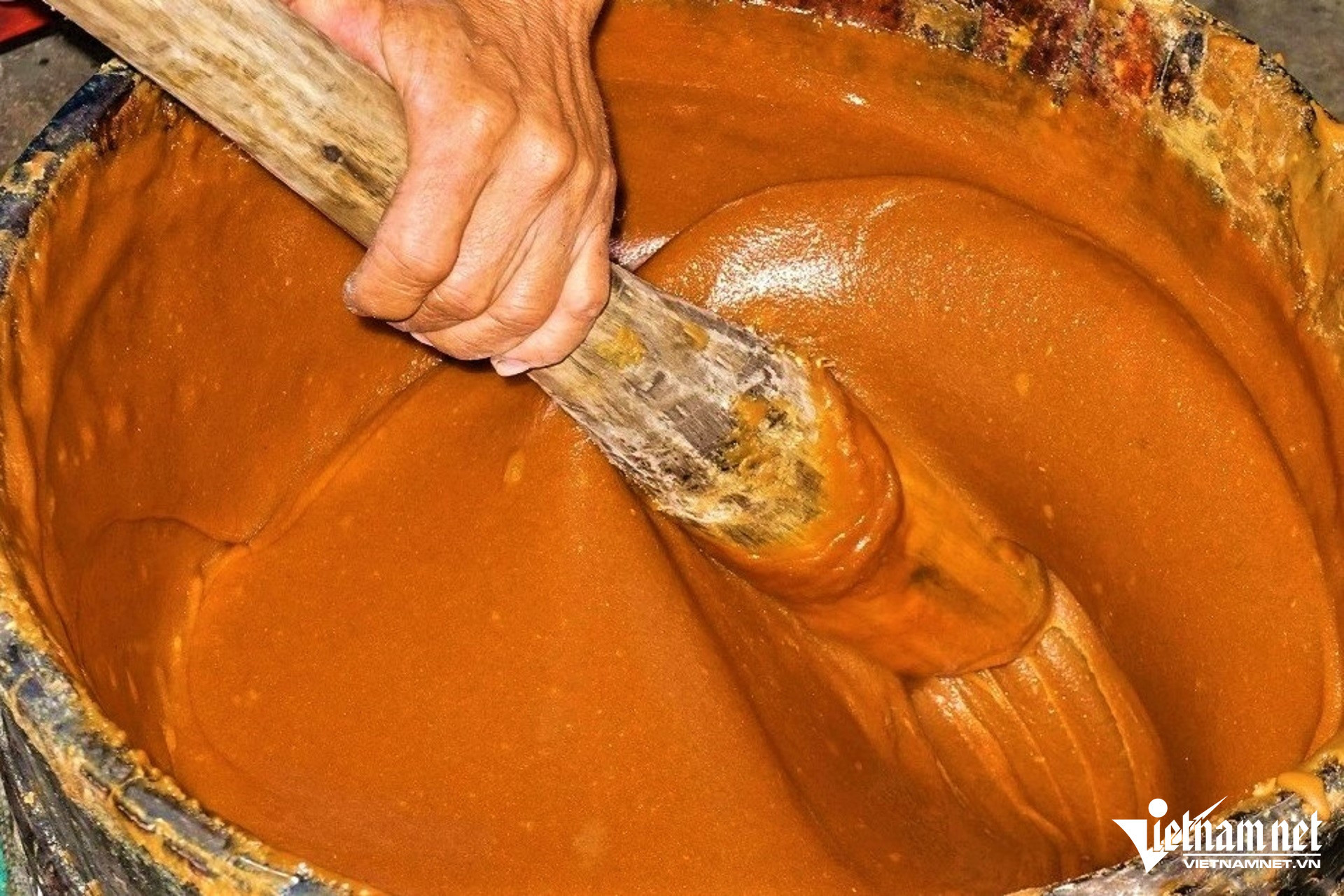
The thickened syrup is beaten continuously until it reaches the right consistency. Photo: Ha Nam
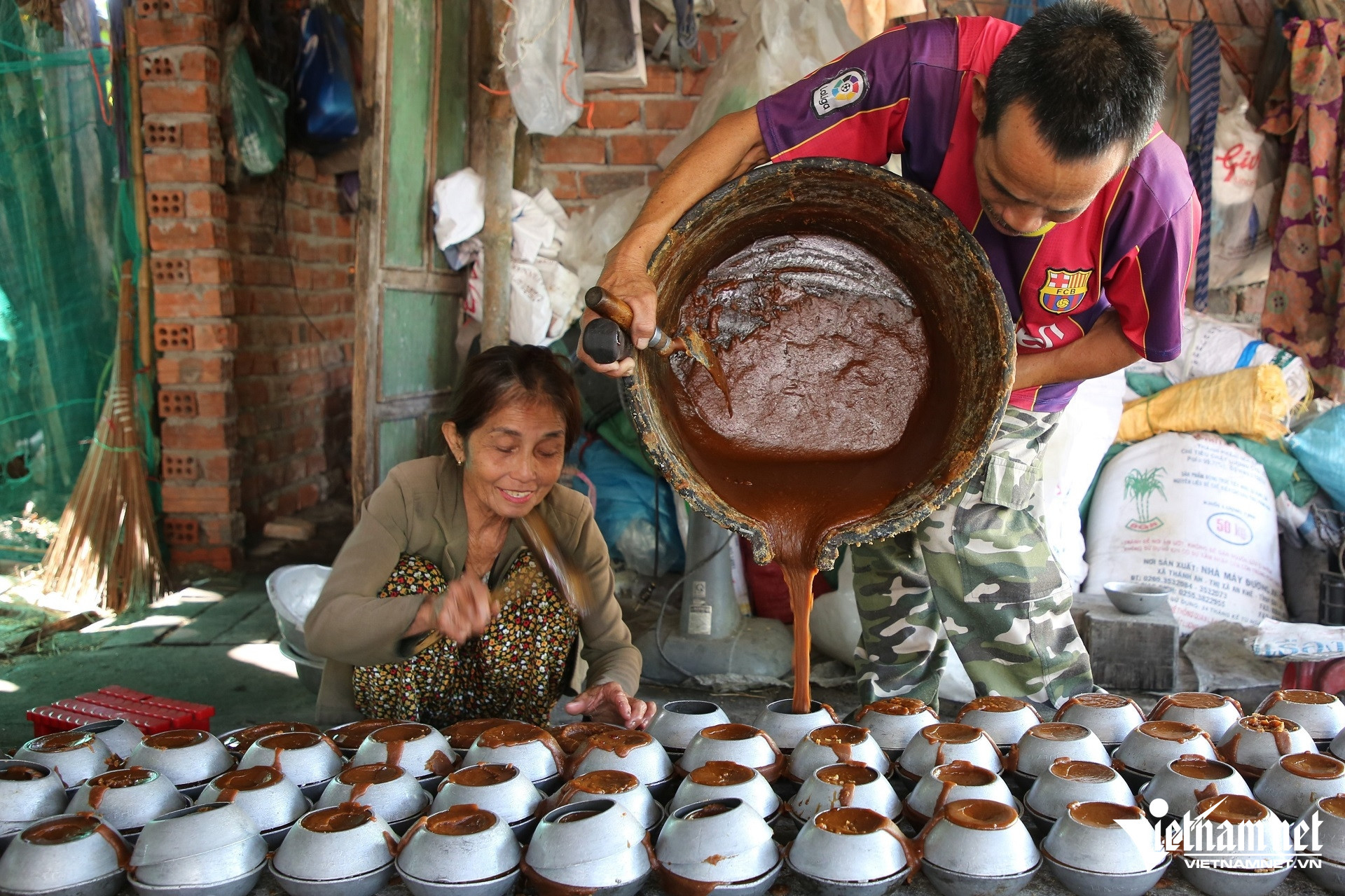
The dark sugar is poured into aluminum bowls, creating the signature Tet offering. Photo: Ha Nam
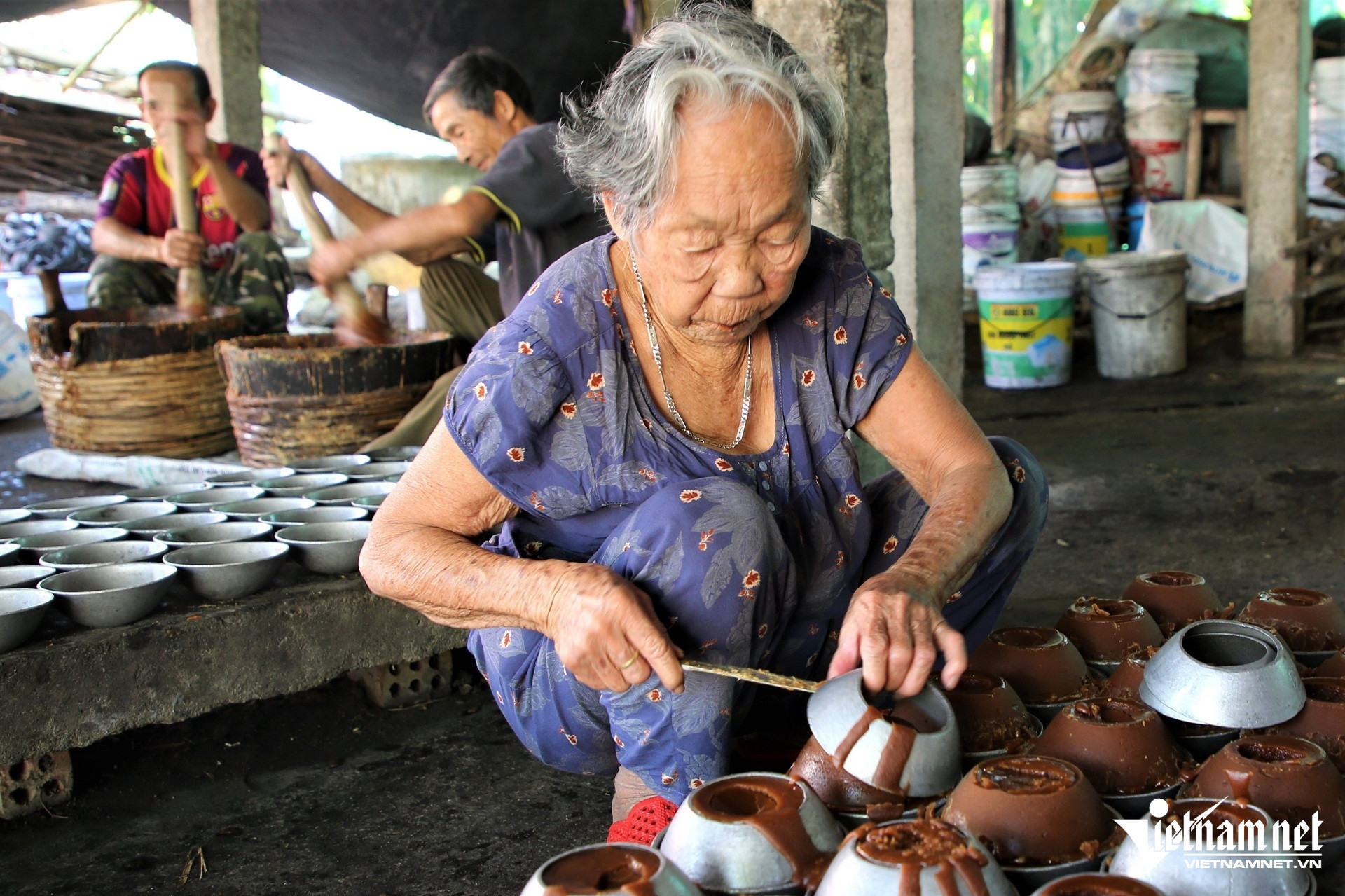
Workers then release the hardened sugar from the bowls using custom tools. Photo: Ha Nam
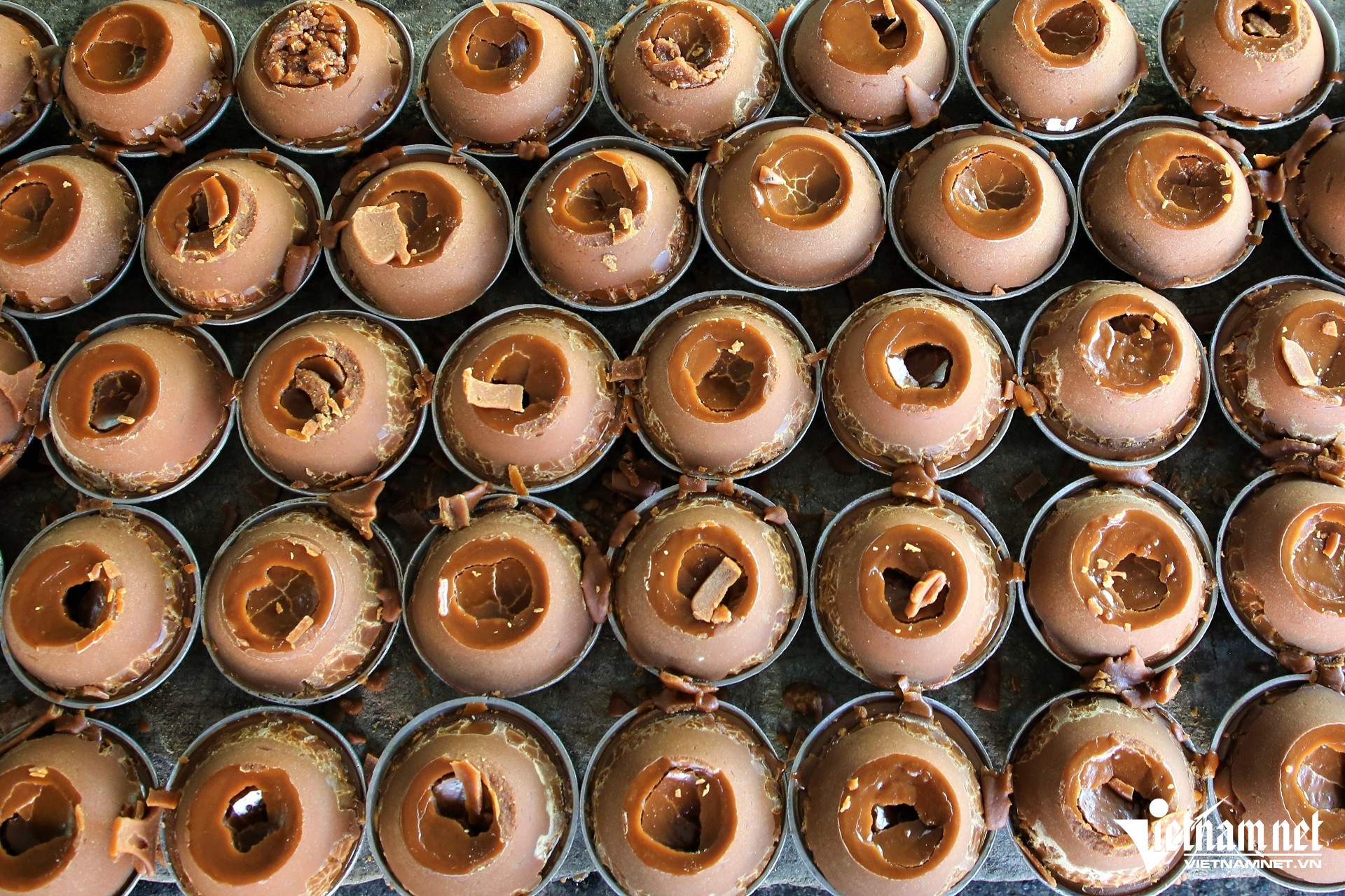
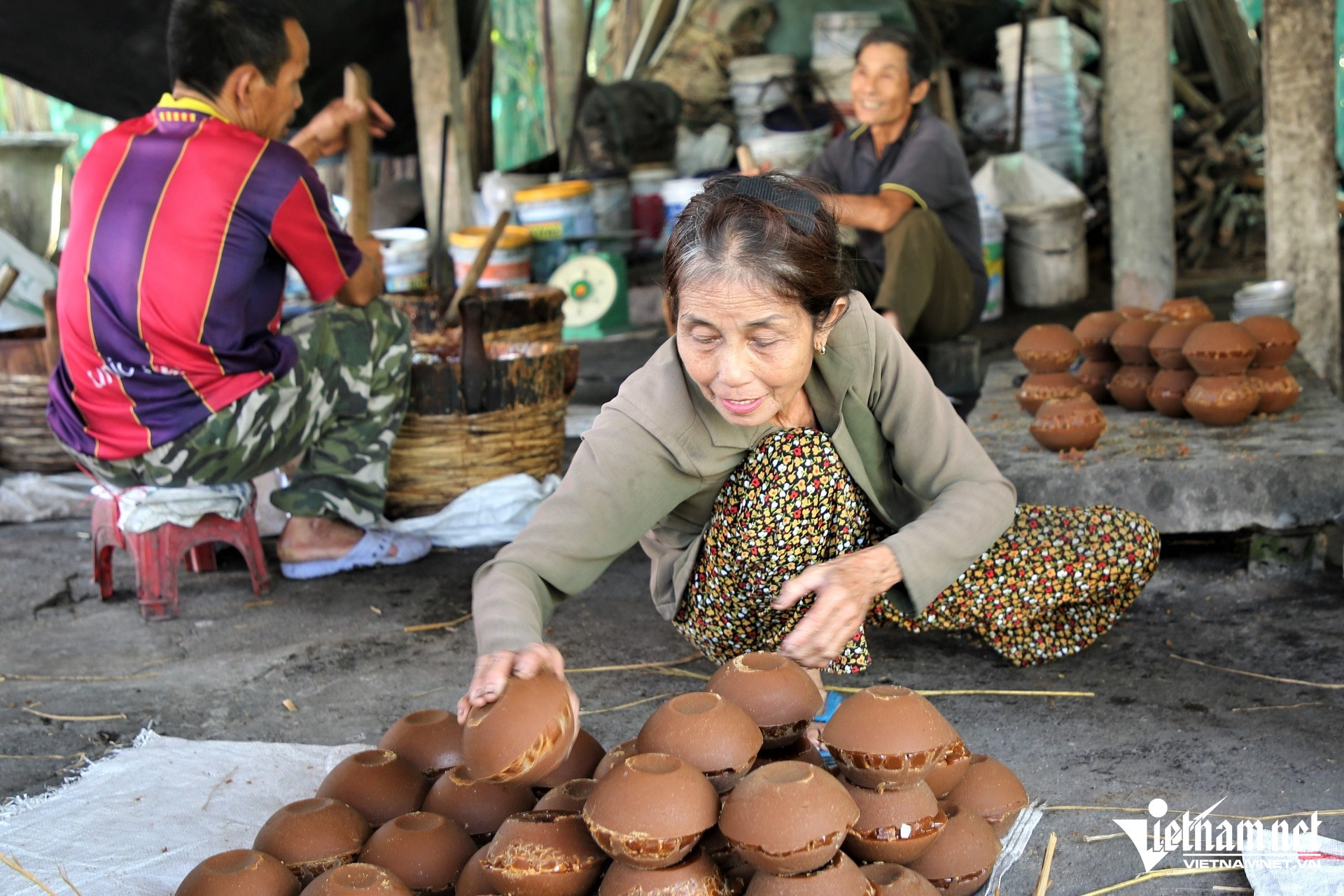
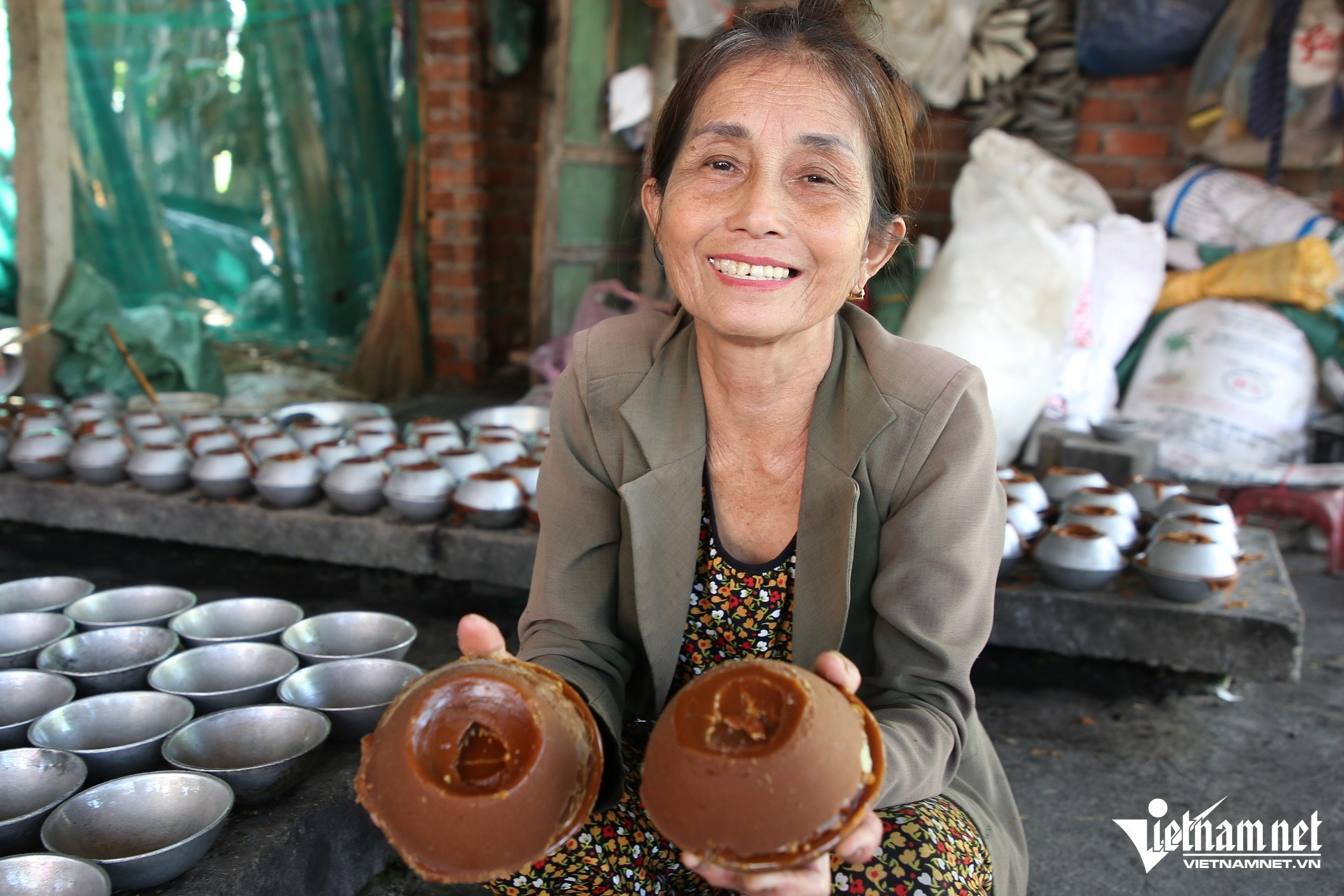
Ha Nam
.svg)
