 Vietnamnet.vn

 Podcast



A writing prompt in Vietnam’s 2026 high school graduation Literature examination has sparked widespread debate after asking students to address the question: “How can Vietnam have its own Steve Jobs?”
The prompt, which appeared in the social argument essay section worth two points, was introduced with a reference to Steve Jobs, Mark Zuckerberg and Elon Musk, describing them as figures whose technological innovations helped change the world. Students were then asked to discuss how Vietnam could nurture similar talents.
Since the exam concluded on the morning of June 11, the question has generated extensive discussion among educators, students and the public. While many praised it as a timely topic aligned with the country’s ambitions in science, technology and innovation, others questioned both the wording and the choice of role models in a national examination.
Questions of fairness and accessibility
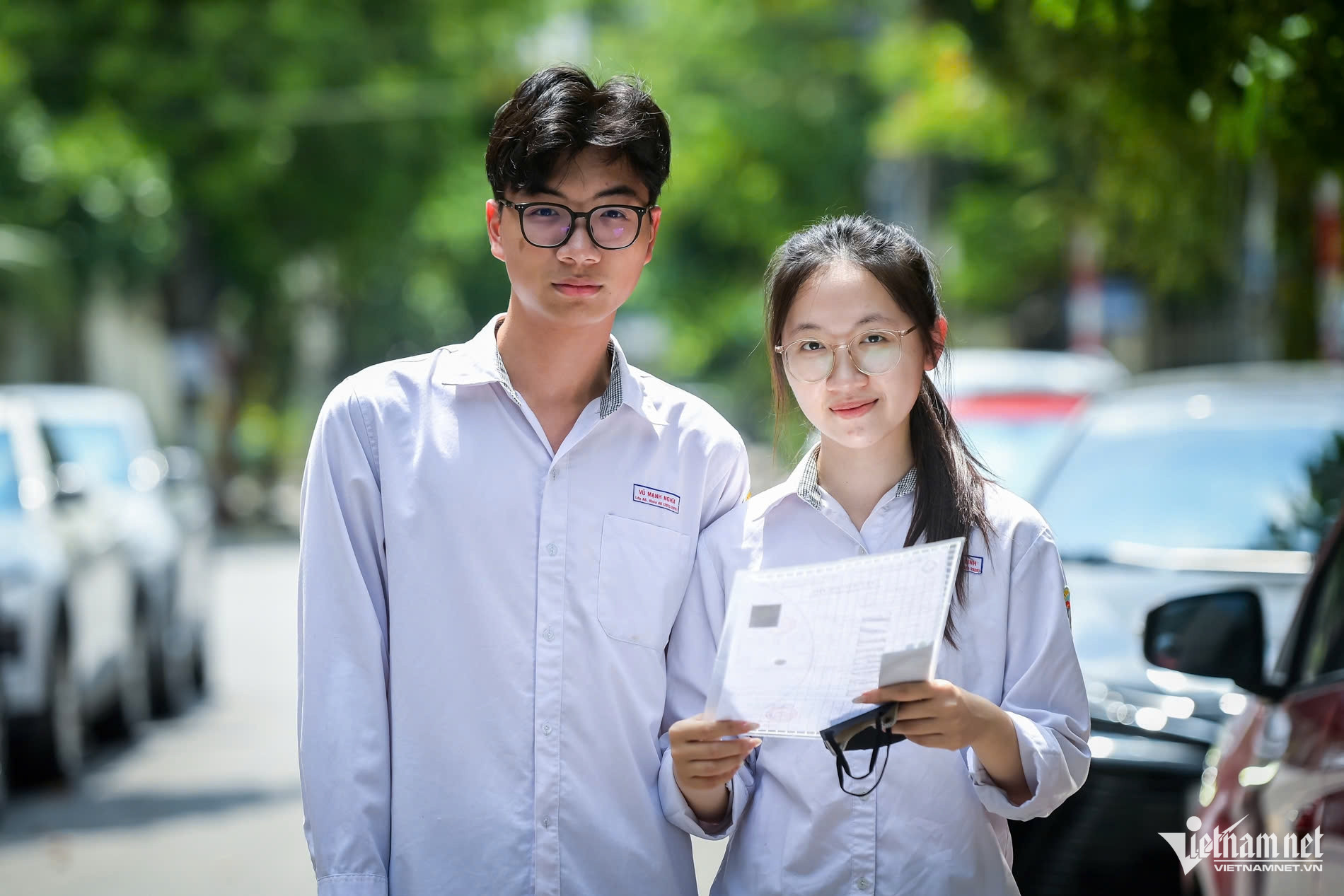
One of the most common concerns raised is whether the prompt may have disadvantaged some students.
Critics argue that not all candidates are equally familiar with Steve Jobs, Zuckerberg or Musk, particularly students from remote areas or those with limited exposure to global technology and business news. Others suggested that framing the issue around a figure such as Steve Jobs could unintentionally encourage celebrity worship or create the impression that success should be measured against a foreign icon.
Ho Tan Nguyen Minh, head of the Literature Department at Luong Van Chanh High School for the Gifted in Dak Lak Province, described the question as meaningful and thought-provoking. However, he argued that the prompt appeared to assume students possessed a certain level of background knowledge about the figures mentioned.
“Not every student taking the graduation examination knows who Steve Jobs is or understands his contributions,” Minh said. “When students are only given a brief description that these are people whose technological inventions changed the world, asking them to discuss how Vietnam can have its own Steve Jobs becomes a significant challenge.”
According to Minh, more contextual information about the individuals referenced could have helped students engage with the topic more effectively rather than relying on assumptions.
The use of internationally famous technology leaders has also generated debate because each of the figures mentioned, despite their achievements, has been associated with controversies involving personal conduct, public statements or business practices.
Nguyen Phuoc Bao Khoi, a lecturer at Ho Chi Minh City University of Education, said the prompt contained two elements likely to attract discussion: the use of specific personalities and the phrase “Vietnam’s Steve Jobs.”
“These are people who have made enormous contributions to technological development,” he said. “But they have also been associated with controversies. The phrase ‘Vietnam’s Steve Jobs’ may create the impression that the exam is encouraging students to idolize a particular individual or become a copy of a Western figure.”
Yet Khoi also believes the positive aspects of the question deserve equal attention.
In his view, the prompt reflects Vietnam’s growing emphasis on science, technology, innovation and digital transformation. The introductory passage highlighted the three entrepreneurs as individuals whose innovations changed the world, allowing students to focus on qualities such as creativity, entrepreneurial thinking, vision and determination rather than on the personalities themselves.
“We should be sympathetic to the examination committee,” Khoi said. “Designing a question for a national examination that affects millions of students is never easy. Before criticizing, we should recognize the positive message and the broader idea behind the prompt.”
The case for a broader interpretation
Other educators argue that concerns about background knowledge may be overstated.
Nguyen Trong Truong, head of the high school Literature department at Phenikaa School, said the key to answering the question was understanding its central issue rather than knowing details about Steve Jobs or other technology leaders.
“The exam did not ask students to recount Steve Jobs’ life or achievements,” Truong said. “These figures merely serve as examples of people capable of innovation and creating products with significant social impact.”
According to him, the true focus of the prompt is how Vietnam can identify, nurture and support talented young people capable of creating value for society. Students can therefore develop their arguments based on their own experiences and observations without extensive knowledge of the individuals named.
Truong noted that the purpose of the exercise is to assess reasoning, argumentation and the ability to express personal viewpoints. Whether a student knows a great deal about Steve Jobs is not necessarily decisive.
Nevertheless, he acknowledged that the criticism surrounding the wording is understandable.
“Steve Jobs, Mark Zuckerberg and Elon Musk have made enormous contributions to technology, but they are not flawless role models,” he said. “There are continuing debates surrounding leadership styles, social responsibility, privacy and the broader impacts of technology.”
He also argued that the phrase “Vietnam’s Steve Jobs” could inadvertently suggest that young Vietnamese should aspire to become versions of someone else rather than developing their own identities and strengths.
“Education should not aim to create copies of famous global figures,” Truong said. “It should nurture independent thinkers, creative minds and people capable of contributing to the country in ways that reflect Vietnam’s own needs and circumstances.”
A worthwhile idea, but imperfect wording
Le Anh Vinh, director of the Vietnam Institute of Educational Sciences, described the question as an important and valuable prompt.
“It raises a major issue: how Vietnam can nurture people capable of creating innovations with global impact,” Vinh said. “It encourages students to think about education, social environments, policy and a culture that supports creativity.”
At the same time, he agreed that a nationwide examination should be careful when referencing specific individuals.
“In a mass examination, a detail intended merely as an example can unintentionally benefit students who are familiar with those figures while confusing those who are not,” he said.
Vinh suggested that the same idea could have been expressed more neutrally by asking how Vietnam can cultivate creative individuals capable of generating influential ideas, products or innovations, without mentioning any particular person.
“I still consider it a good question,” he said. “It deserves praise for its ambition, while also leaving room for constructive feedback.”
A reflection of broader educational reform
The controversy has also reignited discussion about the ongoing transformation of Literature examinations in Vietnam.
Journalist Vinh Ha, who has covered education for more than two decades, argues that the debate should be viewed within the context of a broader shift away from rote learning and memorized model essays.
For many years, national Literature examinations relied heavily on a fixed list of textbook texts. Students often succeeded by memorizing prepared analyses rather than developing genuine reading, writing and critical-thinking skills.
According to Vinh Ha, a significant change occurred beginning in 2025, when examination materials were no longer restricted to texts included in the curriculum or textbooks. This shift forced both teachers and students to focus more on reading comprehension, argumentation and independent writing.
“Teachers can no longer repeatedly teach a small number of familiar texts,” he wrote. “Students must read more, write more and engage with a wider range of materials.”
The transition has not been easy. Teachers must identify suitable materials while ensuring they are appropriate, accurate and educationally valuable. At the same time, schools are adapting to a world in which artificial intelligence can generate essays within minutes.
Despite those challenges, supporters of the reform believe the changes are making Literature education more meaningful and relevant.
Many online commentators criticized the 2026 prompt for being insufficiently literary. Yet Vinh Ha argues that such criticism overlooks past complaints that Literature classes were often disconnected from real life and focused excessively on academic literary analysis.
Today, he said, the subject increasingly emphasizes practical communication skills, reasoning, critical thinking and the ability to express personal opinions.
As an example, Vinh Ha argued that even students unfamiliar with Steve Jobs could still respond effectively.
A student might write that they do not know who Steve Jobs is but understand from the prompt that he helped create significant technological achievements and is therefore someone worth learning from. Another might draw inspiration from a local inventor or farmer who improved a machine to benefit a community.
Such responses, he suggested, should be valued because they demonstrate genuine thinking rather than memorized content.
“Students should be allowed to say, ‘I do not know who Steve Jobs is,’ and still receive credit if they can thoughtfully discuss creativity and contribution,” he wrote.
For supporters of the reform, that is precisely the direction Literature education should take: encouraging students to think independently, write honestly and engage with real-world issues rather than reproducing pre-packaged answers.
As debate over the 2026 examination continues, one point has emerged clearly from both supporters and critics: the question has succeeded in prompting a national conversation about creativity, innovation and the purpose of education itself.
Students reveal mixed reactions
Beyond the debate among educators and experts, reactions from students who sat the examination suggest that familiarity with the technology figures varied widely, even in major urban centers.
Many candidates said the question initially caught them off guard, although several eventually found ways to develop their arguments without relying heavily on detailed knowledge of Steve Jobs.
Minh Triet, a candidate in Ho Chi Minh City, described the topic as closely connected to real life. In his essay, he used Steve Jobs, Mark Zuckerberg and Elon Musk as examples of people who overcame challenges and pursued innovation. He argued that the question encouraged young people to cultivate perseverance and ambition.
According to Triet, the open-ended format reflects a broader shift in assessment, requiring students to move beyond memorization and engage with current affairs and practical knowledge. He said much of his understanding came not only from school but also from following news and social media platforms.
Although initially surprised by the question, Triet ultimately found it manageable and predicted a score of between seven and eight points in Literature.
Not all students felt equally confident.
Le Quynh Chi, a candidate at Cau Giay High School in Hanoi, said the “Vietnam’s Steve Jobs” question was the most challenging part of the exam.
“I don't know much about Steve Jobs, so I chose to focus more on Mark Zuckerberg,” she said after completing the test.
Other students viewed the references as simple examples rather than expressions of admiration for foreign figures.
Truong Khai, a student at Trung Vuong High School in Ho Chi Minh City, said he saw Steve Jobs, Mark Zuckerberg and Elon Musk as innovators whose achievements could serve as useful points of comparison.
Drawing on differences between educational systems, Khai argued that Vietnam could learn from international models that emphasize practical training and individualized development while still nurturing homegrown talent.
He added that, given more time, he would have included examples of successful Vietnamese technology entrepreneurs to strengthen his argument.
The debate over background knowledge became particularly visible in comments from students who admitted uncertainty about the personalities mentioned in the prompt.
Nguyen Bao Khanh, a student at the A Chau International School in Ho Chi Minh City, said he would have preferred the use of prominent Vietnamese figures because they would have been more familiar and easier to relate to.
Khanh acknowledged that while the question itself was not especially difficult, constructing a persuasive response required appropriate examples.
“The figures in the prompt were quite unfamiliar to me,” he said. “I only vaguely remembered that Steve Jobs was the founder of a famous technology company and a billionaire. At first, I almost wrote that he was the founder of Google or Microsoft, but because I wasn't sure, I changed it to ‘an American founder and billionaire’ to avoid making a factual mistake.”
His comments have become one of the most widely discussed examples illustrating the concerns raised by critics of the question.
Similarly, Ngoc Nhi, a student at Luong The Vinh High School in Ho Chi Minh City, said she found the topic difficult because of its broad scope.
“I knew they were all successful billionaires, but I didn't know many details about them,” she said. “It took time to understand exactly what the question was asking before I could organize my ideas.”
Rather than focusing on the individuals themselves, Nhi chose to discuss qualities such as determination, self-improvement, effective time management and the ability to use technology productively in modern society.
The range of student responses appears to reinforce both sides of the debate. While some candidates were familiar enough with the figures to use them confidently as examples, others struggled with the references or possessed only limited knowledge. At the same time, many students demonstrated that the question could still be addressed through broader discussions about creativity, innovation and personal development, regardless of how much they knew about Steve Jobs himself.
Thuy Nga - Thanh Hung - Nguyen Hue
.svg)
