 Vietnamnet.vn

 Podcast



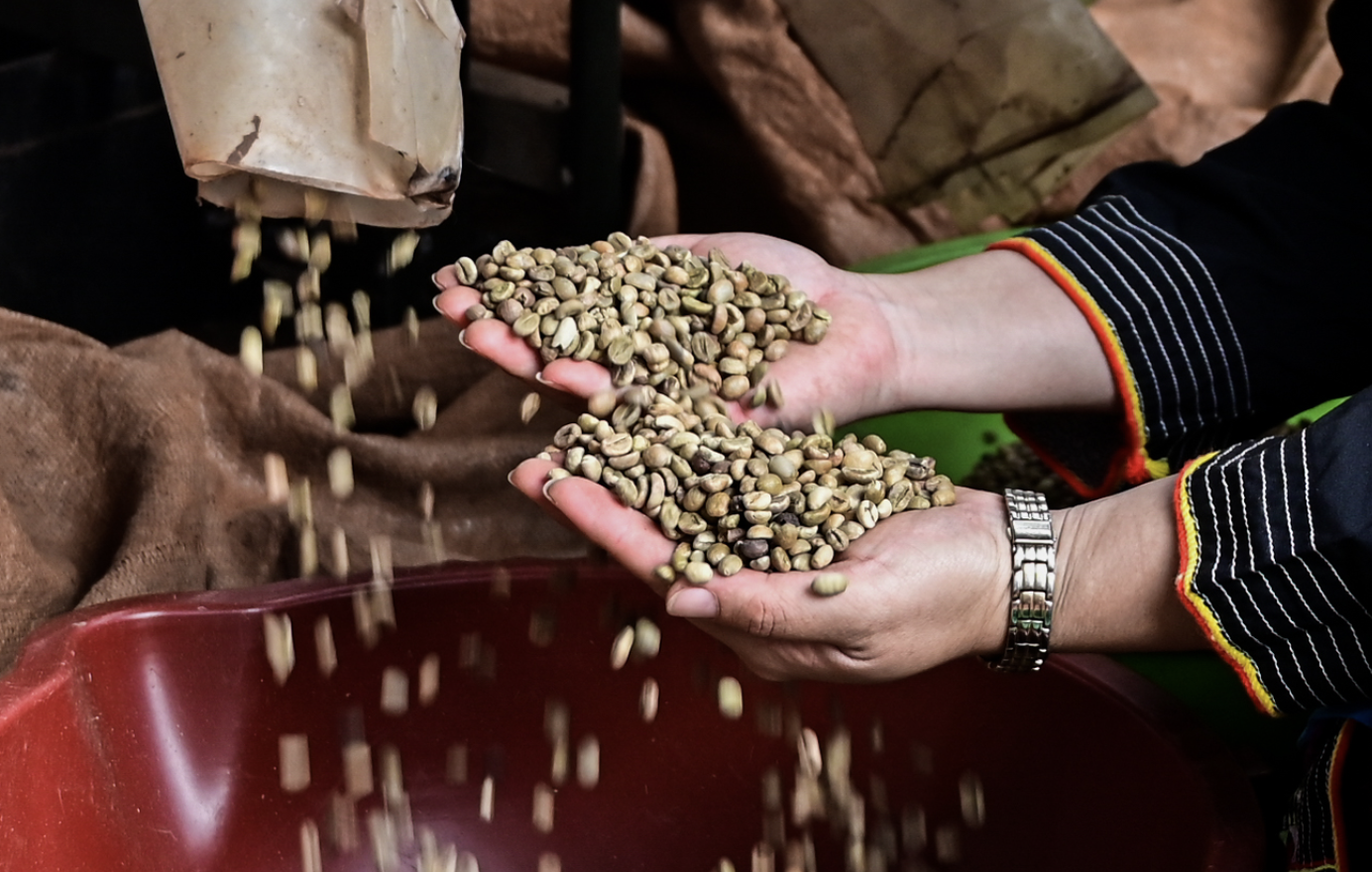
The average export price in January 2026 remained high at US$5,450 per ton.
Coffee ranked as the second highest export earner in the agricultural sector for the month and was among nine key product groups posting export revenues above US$1 billion.
In 2025, Vietnam exported nearly 1.6 million tons of coffee, generating US$8.92 billion - the highest level in history. Export volume rose 18.3 percent year on year, while value surged 58.8 percent compared to 2024.
The year is widely seen as a breakthrough for Vietnam’s coffee industry, with exports maintaining steady growth largely thanks to elevated global prices amid tight worldwide supply. Import demand from major markets remained stable, underpinning strong export turnover.
Beyond impressive gains in volume and value, the sector also made strides in restructuring its product mix, diversifying varieties and gradually reducing reliance on raw exports.
According to data from the Customs Department, Robusta remained the backbone of exports in 2025, bringing in US$6.59 billion, up 57.4 percent year on year and accounting for 73.8 percent of total coffee export value.
Vietnam continues to be the world’s largest exporter of Robusta, a variety increasingly favored by roasters for blending and instant coffee production.
Arabica exports also posted remarkable growth, earning nearly US$550 million, up 129.1 percent.
Notably, processed coffee exports reached US$1.78 billion - the highest level on record. Compared to 2024, export value for processed products climbed 50.4 percent, as companies ramped up investment in advanced processing technologies and expanded production of instant, roasted and other value-added coffee products.
Effective use of free trade agreements further enabled Vietnam’s processed coffee to benefit from tariff preferences, expand market access and enhance competitiveness globally.
Turning 1.7 million tons into a gold mine through deep processing
Vietnam’s coffee-growing area now spans about 710,000 hectares. Dak Lak, Lam Dong and Gia Lai form the core production belt, accounting for more than 92.4 percent of total area and 95 percent of national output.
In the 2024-2025 crop year, total production reached approximately 1.7 million tons, or about 29.5 million bags. For the 2025-2026 crop, output is estimated at 1.8 million tons, supported by favorable weather conditions and higher prices that encourage farmers to invest more in cultivation and yield improvement.
Phan Minh Thong, CEO of Phuc Sinh Group, told VietNamNet that agriculture - and coffee in particular - is a sustainable “gold mine.” The resource replenishes itself if businesses abandon the mindset of selling raw products and instead embrace deep processing while policy barriers are removed.
As one of the world’s largest Robusta producers, Vietnam generated nearly US$9 billion in coffee export revenue last year, fueled not only by output but also by the rise of deeply processed and specialty coffee products. According to Thong, Vietnamese coffee has gradually shed its image as a supplier of low-priced raw materials and gained acceptance at higher price points.
Phuc Sinh has invested heavily in high-value products, operating coffee processing plants in Binh Duong and Son La. Rather than settling for the role of low-cost raw supplier, the company proactively enhances value through deep processing.
Thong acknowledged that the move was initially risky, but over time it has helped reshape international perceptions of Vietnamese agricultural quality.
He cited the example of cascara tea, an herbal infusion made from dried coffee cherry husks. Previously discarded or used as organic fertilizer, the husks are now transformed into a product worth four times more than raw coffee beans. Drawing lessons from South America, the company developed cascara into a premium item.
The product is currently exported to the Netherlands, Italy and Germany, generating tens of thousands of US dollars annually. It allows the company to optimize its value chain while pursuing green processing and circular economy principles.
Doan Huu Tue, CEO of My Viet International Group, noted that Vietnam’s processed coffee lines are attracting growing attention from global markets.
“In the past, Vietnamese coffee was packed in sacks and exported raw at very low prices. Now companies invest in machinery and deep processing to sell products at many times higher value,” Tue said.
My Viet exports only processed coffee to 24 markets across Asia and Europe. Export values have risen strongly year after year. “At times, we even ran out of goods to sell,” he added.
Experts say that to reach the US$10 billion export target, Vietnam’s coffee industry must shift decisively from quantity to quality. With output already near its ceiling, future growth depends on deep processing, specialty products and a green, sustainable development path.
Tam An
.svg)
