 Vietnamnet.vn

 Podcast



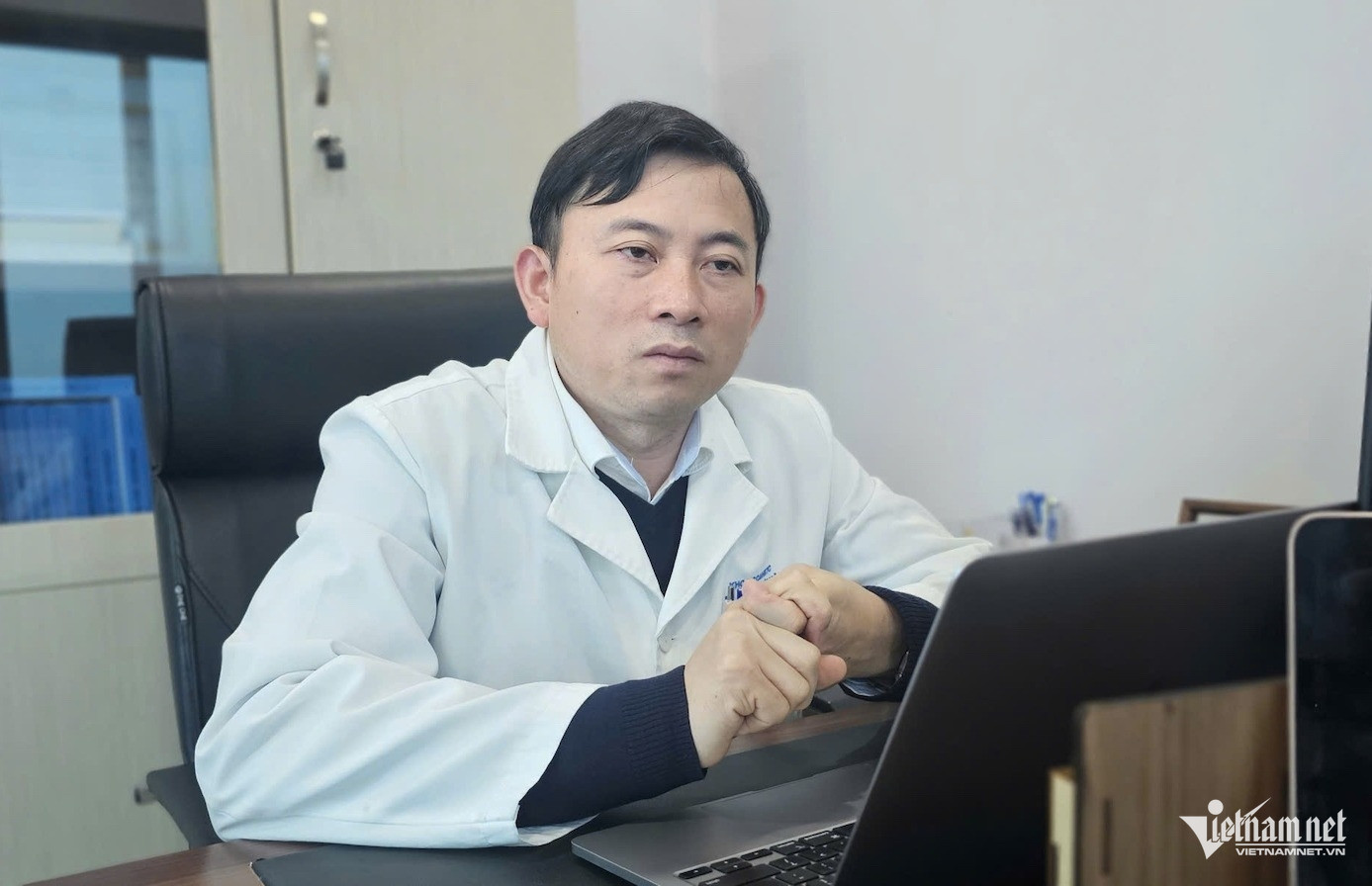
"I cannot forget that day, July 24, 2021," Doctor Hai began his story.
He received a phone call from Associate Professor Nguyen Lan Hieu, PhD, MD. The Director of Hanoi Medical University Hospital asked: "Are you ready for us to establish and operate a tertiary care hospital for Covid-19 treatment under the direction of senior leaders, to respond to the escalating pandemic situation in the southern provinces?"
Dr. Hai agreed almost immediately.
“We were ready,” he recalled.
Just one day later, on July 25, a meeting involving multiple parties was held both in person and online. Participants listened to colleagues from HCMC describe the ferocity of the pandemic unfolding around them. This raised the determination of leaders, sponsors, and contractors even higher.
The very next day, construction began on the Covid-19 treatment hospital on a 3.5-hectare site at Alley 587 Tam Trinh Street, Hoang Mai District. On September 1, the hospital equipped with 500 intensive care beds was officially inaugurated and put into operation.
The hospital was designed with more than 31 building blocks, each with an area of 400-500 square meters, divided into 3 zones: the green zone (administrative, safe non-infected area); the yellow zone (nutrition, rest, periodic testing, and supplies warehouse); and the red zone (infected area for patients and staff wearing protective gear to care for patients).
Hai said every design followed international pandemic prevention principles, with separate, non-intersecting entrances and exits. A clean air conditioning system was installed with a special mechanism: clean air enters from the head of the patient's bed, while dirty air is sucked out, disinfected with UV rays and filters before being discharged, minimizing cross-infection.
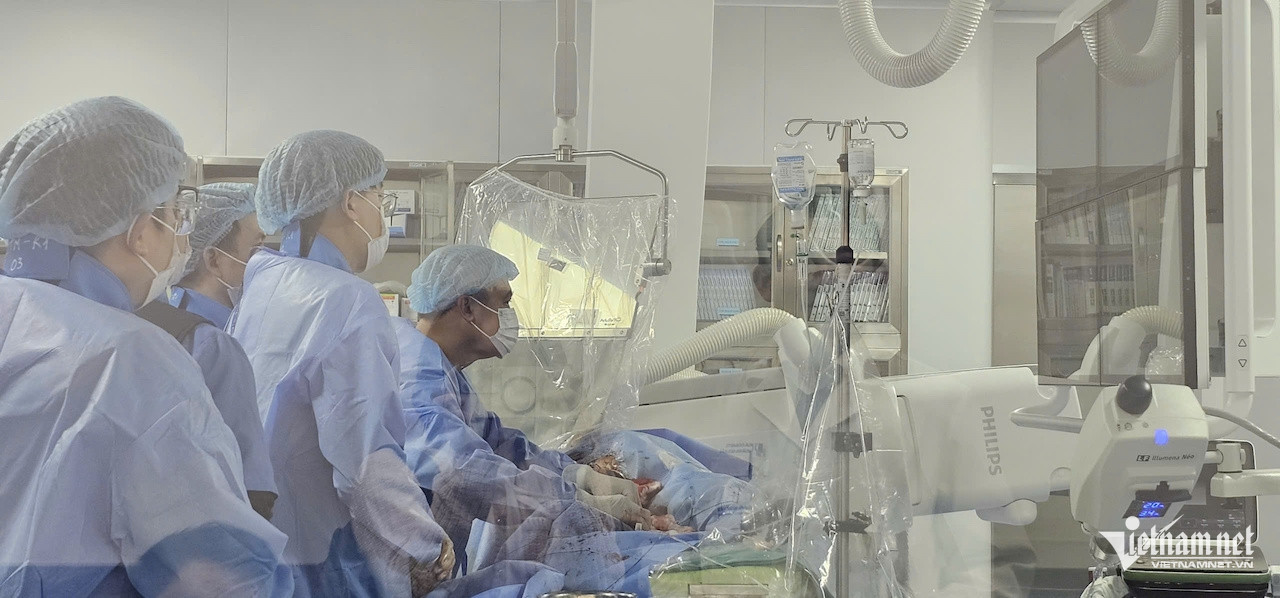
Hot air was drawn from the lower wall near the bed, passed through filters, and cooled air was supplied from above. This allowed medical staff in stifling protective suits to care for patients comfortably throughout their shifts.
Doctors worked directly with architects to arrange each room, corridor, and the placement of medical equipment to ensure optimal functionality.
To meet the urgent construction schedule while maintaining quality, contractors mobilized about 1,500 workers per day, operating in three continuous shifts, plus an overnight shift from 10 pm to 5 am.
Three hundred on-site accommodations were prepared for medical staff. However, instead of enforcing strict isolation, the hospital adopted a self-assessment mechanism at the end of each shift.
Each staff member evaluated their own safety, exposure risk, and the possibility of transmitting infection to family and the community. According to Dr. Hai, when responsibility was placed at such a high level, everyone assessed themselves very seriously.
Staff were allowed to return home to live with their families to reduce stress and prevent prolonged depression.
Still, returning home was not always easy. Some doctors waited until late at night, when neighbors were asleep, before daring to step inside their houses.
“Trying just a little bit more” philosophy
Born in a poor commune in the old Quang Xuong district, Thanh Hoa province, a place with nearly 200 heroes and martyrs, Hai grew up with stories of war and sacrifice.
Stories of comradeship and human love in the desperate circumstances of his father deeply influenced young Hoang Bui Hai.
"Thinking about wartime, when the elders were eager to go to battle, I felt somewhat cowardly when I had not yet entered the outbreak areas," Doctor Hai shared emotionally.
Hai's philosophy of life is simply called "trying just a little bit more."
Trying for 5 more minutes to have time to read diagnostic imaging results so a patient can catch the bus back to their hometown. Trying to pass on a little more knowledge so colleagues can avoid mistakes. Trying to perform more chest compressions when the pacemaker has not yet arrived to save a life.
There was a patient who required long-term cardioversion and electrical chest compressions. The pacemaker had not yet arrived, and Doctor Hai encouraged his colleagues: "I see there is still a chance, let's keep trying."
Ultimately, the patient was saved after 2 hours of continuous external chest compressions.
The first thing the patient asked us was why they had to pay VND3.5 million. Hearing that question, I burst out laughing with joy. It proved the patient had recovered and their brain was functioning very well," Hai shared happily.
Thanh Hue
.svg)
