 Vietnamnet.vn

 Podcast



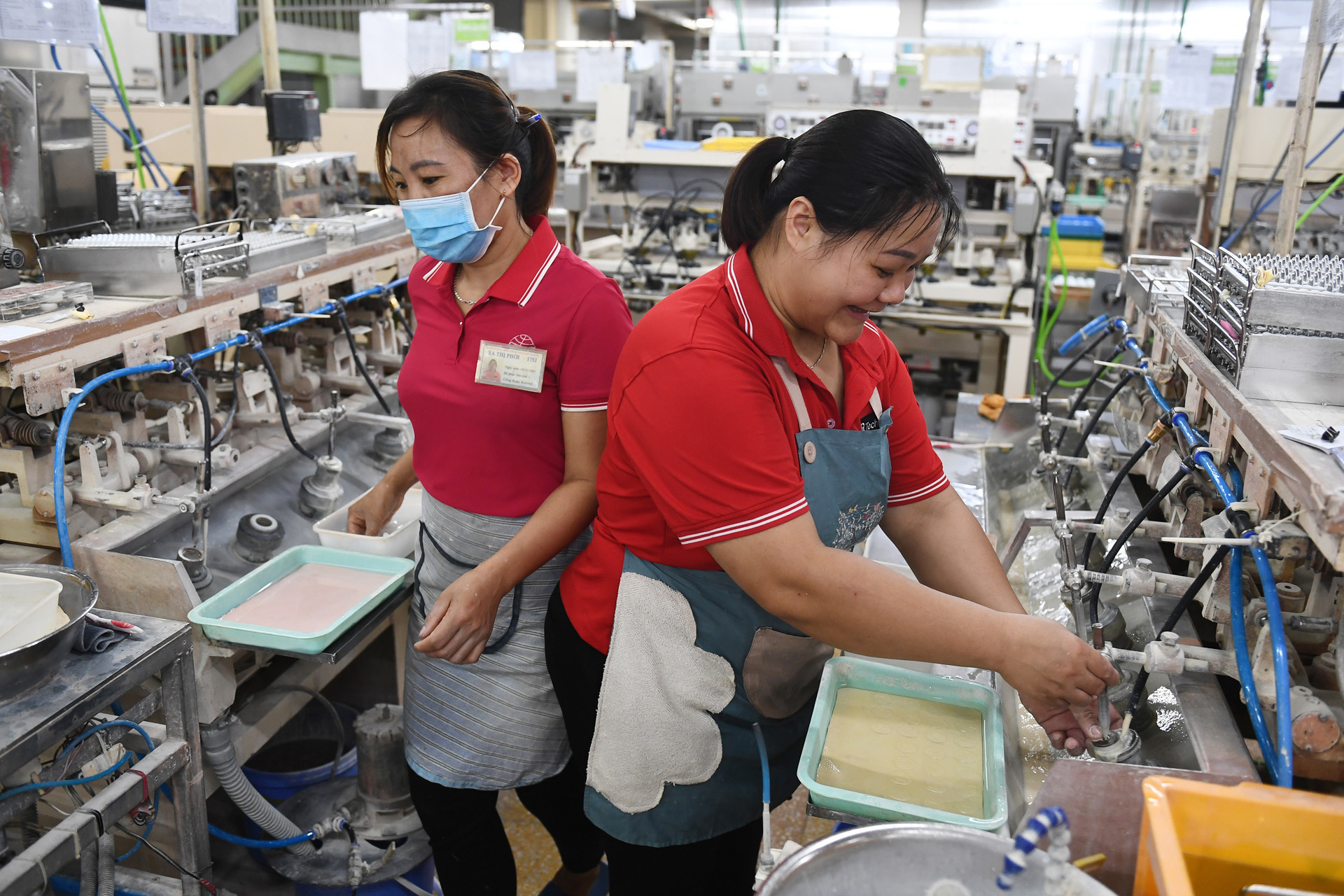
The good news is that the production engine has turned quite fast. The Industrial Production Index (IIP) increased by 10.4 percent over the same period, higher than the increase of the previous year. What is more noteworthy is that this increase appeared in all 34 localities, a sign that the recovery momentum is not only concentrated in a few large industrial centers but is spreading across the economy.
The main driving force still comes from the processing and manufacturing industry, a sector that increased by 11.5 percent and contributed the majority to the overall increase.
Foreign investment flows continue to pour in. According to the Statistics Office in the first two months of this year, realized FDI reached $3.21 billion, an increase of 8.8 percent and the highest level for the first two months in five years. Most of this capital flow continues to pour into processing and manufacturing plants, a sector accounting for more than 80 percent of the total realized FDI capital.
Over many years, Vietnam has become an important link in the global production chain, especially in the electronics, equipment, and processing industries. The figures at the beginning of the year show that this position is still being maintained.
Public investment has started earlier. The Statistics Office report stated that in the first two months, investment capital from the state budget reached VND83.5 trillion, equal to 9.4 percent of the annual plan and an increase of more than 11 percent over the same period. For an economy expecting a “leading” role from public investment in infrastructure and construction, the early operation of the disbursement machinery is a noteworthy sign.
Foreign trade also started with a fairly strong rhythm. The total import-export turnover reached $155.7 billion, an increase of more than 22 percent over the same period. Exports reached $76.36 billion, in which the electronics, machinery, and equipment groups continued to hold the leading role.
However, there are still grey parts of the picture.
First is the health of the corporate sector. In the first two months of this year, there were nearly 35,500 newly established enterprises, a fairly positive number. But the average registered capital of each enterprise was only about VND8.8 billion, a decrease of more than 20 percent compared to the same period last year. This shows that many enterprises are entering the market with a smaller scale and a more cautious mindset.
Meanwhile, nearly 58,500 enterprises temporarily suspended business, more than 10,600 enterprises suspended operations waiting for dissolution, and nearly 7,900 enterprises completed dissolution procedures. On average, every month, about 38,500 enterprises leave the market.
Total retail sales increased by 7.9 percent but this figure was lower than the 9.3 percent level of the same period last year. If the price factor was excluded, the real increase was only about 4.5 percent. This shows that people are still spending, but real purchasing power has not yet created a strong breakthrough.
In the field of foreign trade, the export structure continues to reflect a familiar reality: the FDI sector is still the locomotive. The Statistics Office reported that in the first two months, the foreign-invested sector accounted for more than 79 percent of the total export turnover, while the domestic enterprise sector only accounted for about 21 percent.
The trade balance also shifted to a trade deficit of nearly $3 billion, a contrast to the trade surplus of the same period last year. Most imports were machinery, equipment, and production raw materials, accounting for more than 94 percent of the total import turnover. This may reflect the need to prepare for a new production cycle but at the same time shows that the economy is still dependent on external input sources.
The average CPI for the two months increased by 2.94 percent, still within the controlled zone. However, core inflation increased by 3.47 percent, higher than the general CPI, a sign that price pressure in the service sector still exists.
Meanwhile, domestic gold prices increased sharply, reflecting the sentiment of seeking asset shelter in the context of increasing global uncertainty.
Those uncertainties do not only come from within the country. The conflict between the US, Israel, and Iran is increasing concerns about the global energy and transport markets. For an economy with high trade openness like Vietnam, such shocks can quickly spread to prices, production costs, and inflation.
Tu Giang
.svg)
