 Vietnamnet.vn

 Podcast



A diesel truck driver running the Hai Phong - Ha Noi route sighed in frustration: “If diesel rises above VND30,000 per liter (US$1.20), we are basically out of work. The more we drive, the more we lose.”
He explained that when fuel prices jump by more than 30%, the transport business leaves almost no room for profit.
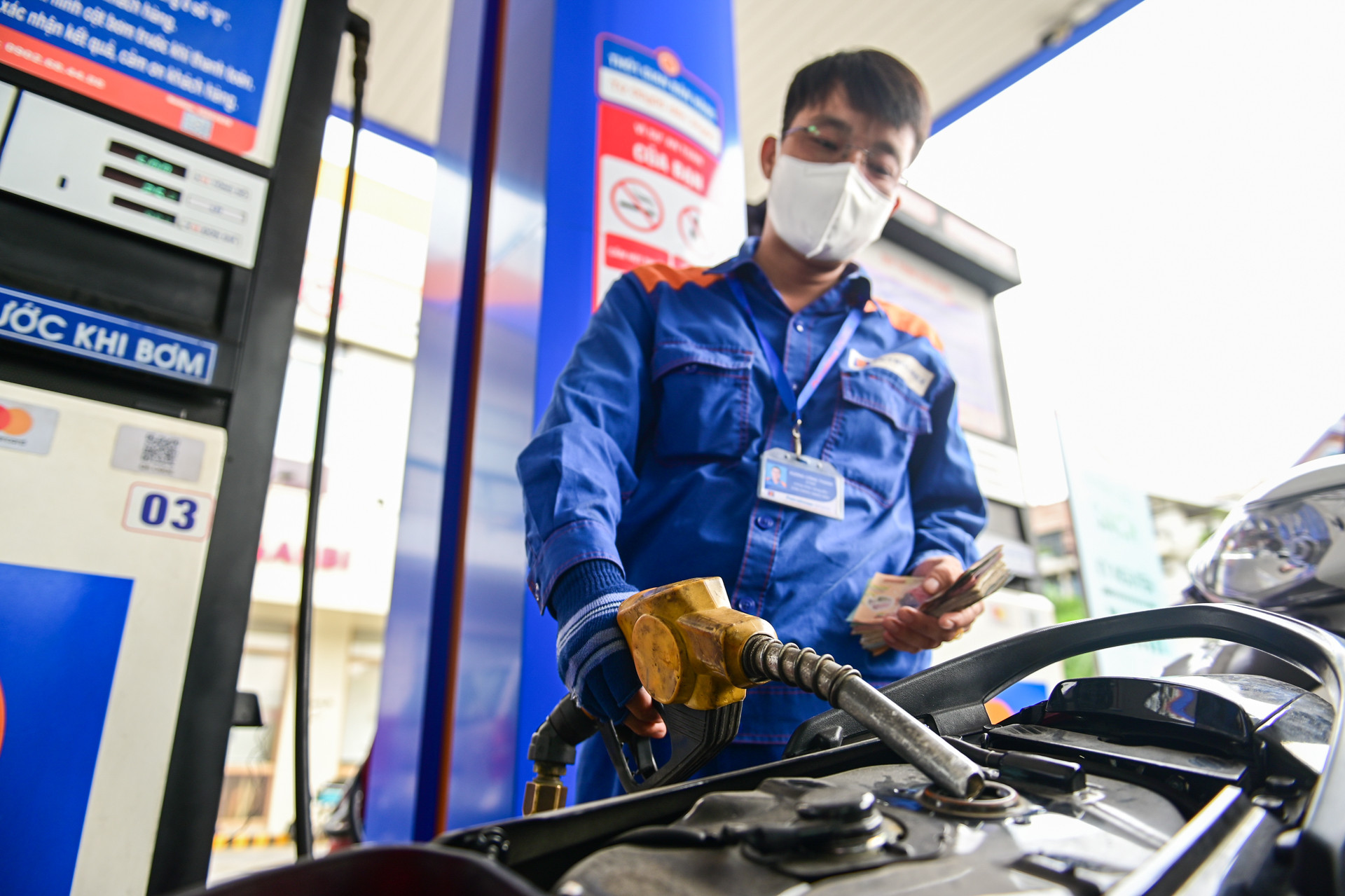
Alongside diesel, all other types of fuel surged sharply late last week. RON95 gasoline increased by more than VND4,700 per liter (US$0.19), climbing to above VND27,000 per liter (US$1.08). E5 gasoline exceeded VND25,000 (US$1.00).
Diesel - the primary fuel for transport and production - jumped by more than VND7,200 per liter (US$0.29), crossing the VND30,000 threshold for the first time. Kerosene rose even more sharply, exceeding VND35,000 per liter (US$1.40).
These figures represent the aftershock of an energy crisis spreading outward from the Middle East.
The chokepoint of global oil
At the center of the story lies the Strait of Hormuz, a narrow waterway between Iran and the Arabian Peninsula. About 20% of globally traded oil passes through this route every day.
As tensions between the US, Israel and Iran have turned the region increasingly dangerous, oil tankers have begun to face disruptions, production in some Middle Eastern countries has slowed and global energy markets have reacted almost instantly.
Brent crude prices have climbed above roughly US$90 per barrel, while US WTI crude is approaching the same level - the highest point in nearly two years.
For a highly open economy like Vietnam, shocks from the global oil market often move quickly into everyday life and production costs.
Looking at the current price surge, the scale of the shock is clearly significant. RON95 gasoline has increased by 21%, E5 gasoline by nearly 18%, while diesel and kerosene have risen by more than 30%.
If we take an average increase of about 25% across major fuels, the ripple effects on the economy could be considerable.
According to estimates by the General Statistics Office in 2022, when fuel prices spike sharply, every 10% increase in gasoline and oil prices can reduce GDP growth by about 0.5% while raising inflation by roughly 0.36 percentage points.
At current levels, if the increase persists, the fuel shock could shave more than one percentage point off economic growth while pushing consumer prices up by nearly one percentage point.
This is not a small number, especially as Vietnam’s GDP approaches US$500 billion and the economy is targeting growth of around 10% in 2026.
The ripple effect across the economy
Fuel is not only the cost of personal transportation. It is also a key input for logistics, agriculture, industry and services.
When fuel prices rise sharply, transport costs increase, which in turn drives up production expenses and retail prices. Inflationary pressure therefore spreads quickly through the economy.
In this round of price increases, diesel is the most important factor.
Diesel powers trucks, cargo ships, construction machinery and many industrial activities. When diesel rises by more than 30%, logistics costs and production input costs for businesses can climb much faster than household travel expenses.
In other words, an energy shock often passes through multiple layers of the economy before appearing in macroeconomic indicators.
Policy responses become critical
In this context, policy reactions become particularly important.
As tensions in the Middle East escalated, the government established a task force on energy security to closely monitor developments and coordinate response measures.
The Ministry of Industry and Trade was assigned as the standing agency, tasked with updating global energy market developments daily to support policy decisions.
At the same time, response scenarios have been activated. The strategy focuses on three pillars: ensuring fuel supply, monitoring the market to prevent speculation and stockpiling, and providing early warnings about supply chain risks.
Domestic supply is currently considered stable. Vietnam’s two major refineries, Dung Quat and Nghi Son, are operating normally, supplying around 70–80% of the country’s fuel demand.
Dung Quat refinery can even operate above its design capacity during this period.
The government has also allowed domestic crude oil to be redirected to local refineries instead of being exported as global supply risks increase. Major fuel distributors have been instructed to boost imports, diversify supply sources and maintain required inventory levels.
On the pricing side, the response mechanism has also been made more flexible. If the base fuel price increases by 7% or more, authorities can adjust prices immediately rather than waiting for the regular adjustment cycle.
Options involving import tax reductions and the use of national fuel reserves are also being prepared in case market volatility intensifies.
These measures are aimed at preventing an energy shock from spreading into a broader economic shock.
The long-term challenge
Even so, Vietnam still imports roughly 9–10 million tons of refined petroleum products and more than 14 million tons of crude oil each year to support production.
That reality means the domestic energy market remains significantly influenced by fluctuations in global oil prices.
Short-term responses such as increasing reserves, diversifying imports and adjusting prices flexibly are necessary. But the larger long-term challenge is making the economy less vulnerable to oil shocks.
This means expanding domestic refining capacity, building larger strategic energy reserves and accelerating the transition toward alternative energy sources such as gas, electricity and biofuels.
These steps cannot reduce gasoline prices overnight.
But they can help the economy remain more stable whenever the world enters a new energy crisis.
Watching the geopolitical signals
The energy market is not entirely without reassuring signals.
US President Donald Trump said the military campaign targeting Iran could last only a few weeks. Within the “America First” movement, influential voices in the MAGA camp have also warned that Washington should avoid becoming trapped in another prolonged and exhausting war like those in Iraq or Afghanistan.
Several US allies have also begun expressing concerns about the negative impacts of escalating tensions in the Middle East.
These political pressures mean that the scenario of a conflict lasting for years - the kind that triggered major oil shocks in history - is not yet certain.
Markets are therefore watching closely for signals from Washington, Tehran and the Gulf states to see whether tensions might ease in the coming weeks.
In an increasingly interconnected world, a geopolitical event thousands of kilometers away can quickly appear in every gasoline bill, every truck shipment and eventually in the macroeconomic indicators.
For the market, the most important question right now is not simply how much oil prices have risen.
It is how long this crisis will last.
Tu Giang
.svg)
