 Vietnamnet.vn

 Podcast


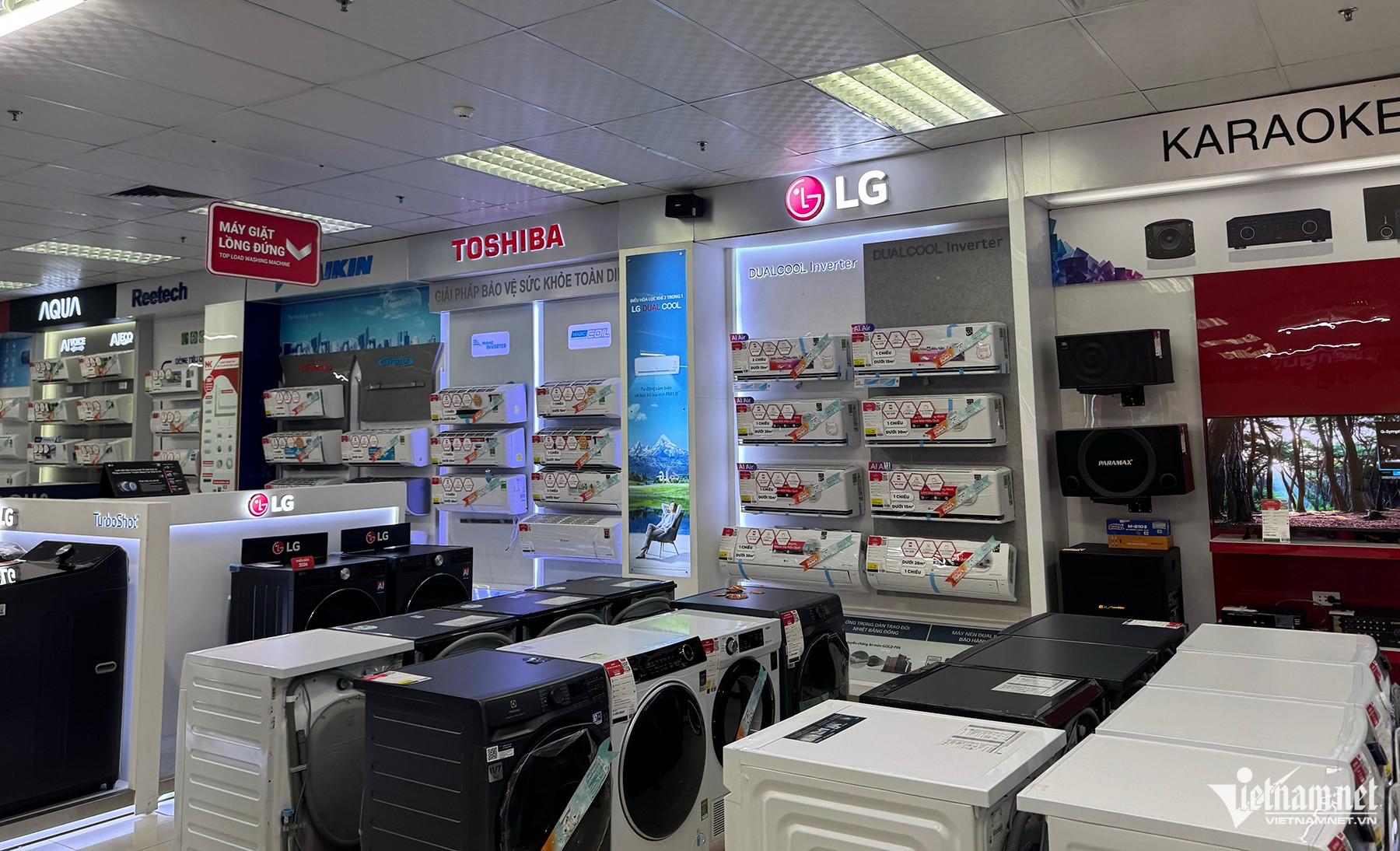
Physical stores become product showrooms
Outside an electronics store in Hanoi’s Dong Da area, prominent banners advertise discounts of 30-50%, zero-interest installment plans and free household appliances. Inside, however, business remains sluggish despite the extensive promotions.
Even on a weekend afternoon, only a handful of customers browse televisions, refrigerators and washing machines. Display areas spanning hundreds of square meters are almost deserted, with sales staff considerably outnumbering shoppers.
The rapid growth of e-commerce is significantly reshaping consumer purchasing habits in the electronics and home appliance market.
Hoang Nam, a 38-year-old office worker, said he visited an electronics store to check the actual dimensions and picture quality of a 65-inch television he was considering buying.
After comparing prices, however, he planned to place an order through an e-commerce platform, where the same model was nearly VND3 million cheaper thanks to discount vouchers.
Thu Ha, an employee at an electronics store, said sales had fallen by around 30% compared with previous years. While customers still visit stores to explore products, not all of them make purchases on-site.
Previously, consumers looking to buy televisions, refrigerators or washing machines typically visited electronics stores to compare models, features and prices.
Today, with just a smartphone, shoppers can compare prices for the same product across dozens of suppliers. E-commerce platforms also offer extensive discounts and free shipping.
As a result, some consumers visit physical stores to experience products and seek professional advice before searching for better deals online.
This practice, commonly known as showrooming, is putting additional pressure on traditional retailers, which must continue covering rental costs, staffing expenses and product display facilities.
Electronics chains restructure their retail networks
Around a decade ago, major electronics retailers such as Pico, MediaMart, HC, Nguyen Kim and Dien May Xanh were racing to expand their store networks.
Companies were willing to spend substantial sums renting premises spanning thousands of square meters, with large storefronts at busy traffic intersections.
Store size and brand visibility were once considered key competitive advantages in the battle for market share.
However, Vietnam’s electronics retail market is now undergoing significant changes in both operational scale and business models.
Rather than relying solely on large showrooms, some retailers are focusing on core product categories while integrating warehouse networks and online sales channels to optimize operating costs.
Several major brands have also adjusted their physical retail networks.
MediaMart has slowed its expansion and vacated several premises in central areas. Pico and HC have downsized their operations, prioritizing stores with stable customer traffic rather than pursuing widespread expansion.
Dien May Xanh has also closed its outlet on Le Dai Hanh Street.
As of November 2026, Dien May Xanh and The Gioi Di Dong operated a combined 117 outlets in Hanoi, followed by MediaMart with 50, HC with 11, Nguyen Kim with eight and Pico with three shopping centers.
Another significant development in the market is the transfer of the Nguyen Kim electronics retail chain.
In 2015, Thailand’s Central Group acquired a 49% stake in the company owning the chain. In June 2019, companies affiliated with the group acquired the remaining 51% stake in NKT, the owner of Nguyen Kim.
On December 23, 2025, Central Retail announced that it had signed an agreement to divest its entire direct and indirect investment in NKT to Pico Holdings.
The transaction had an enterprise value of US$36 million, equivalent to VND936 billion.
Changing consumer habits force retailers to adapt
As consumers tighten household spending, electronics and home appliances are no longer among the top shopping priorities for many families.
Products such as televisions, refrigerators, washing machines and air conditioners typically have lifespans of five to ten years.
Rather than purchasing new appliances or upgrading existing ones, many consumers are opting for repairs to extend their useful life and reduce household expenses.
Meanwhile, operating a retail outlet spanning thousands of square meters in Hanoi involves substantial expenses, including rent, staffing, utilities, inventory storage and showroom maintenance.
Electronics retailers must therefore find more effective ways to integrate physical stores with online sales channels.
Brick-and-mortar outlets can serve not only as points of sale but also as centers for product consultation, hands-on experiences, order fulfillment and after-sales support.
Retailers that fail to adapt to changing consumer behavior and control operating costs risk losing ground in an increasingly competitive market.
Duy Anh

