 Vietnamnet.vn

 Podcast



Short-form video addiction is spreading among young people in Vietnam, with users describing sleepless nights, declining concentration and an inability to stop scrolling. Experts warn the problem could become even more troubling as AI-generated videos flood social platforms and make attention-grabbing content easier and cheaper to produce.
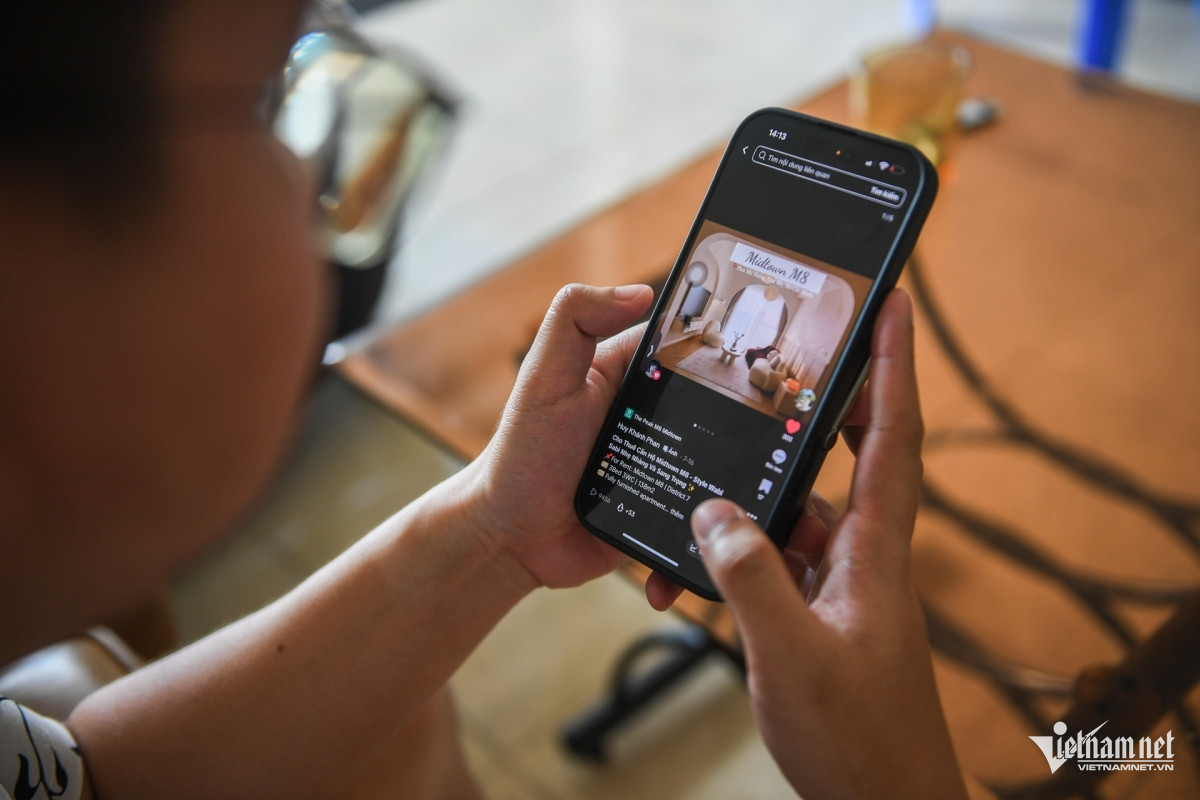
TikTok’s emergence in 2016 helped popularize vertical short-form videos, typically lasting 15-60 seconds. With a simple swipe of a finger, users can move effortlessly from one clip to the next.
TikTok’s rapid growth prompted other major platforms to follow, with Facebook launching Reels and YouTube introducing Shorts.
The result has been an endless stream of short videos attracting huge audiences, including in Vietnam.
According to the “Digital 2026 Vietnam” report, Vietnam has around 79 million social media users, equivalent to more than 77% of the population. Of these, 93.9% are exposed to short-form video and spend an average of seven hours and eight minutes a week watching it. Appota’s “Digital Entertainment Demand 2024-2025” report also found that Vietnamese users spend nearly 60 minutes a day on short videos.
The amount of time spent consuming short-form content, particularly among young people, is raising concerns about its effects on mental and physical health.
Nguyen Thi Thuy, an office worker in Ho Chi Minh City, said she usually spends her lunch break scrolling through TikTok rather than taking a nap. At first, she watched for only 15-20 minutes before returning to work in the afternoon.
Over time, however, she found herself increasingly absorbed in the videos. On some days, she even skipped lunch to watch “drama” clips and secretly viewed them during working hours, leading to warnings and even salary deductions.
“They’re so captivating that I feel like I can’t miss them. It’s almost as if they have some kind of magic - as soon as one ends, I want to watch the next, and I just can’t stop,” Thuy said. “There were times when I put my phone away in a cabinet, but before long I would take it out again because I kept thinking about finishing that video. In the end, I couldn’t concentrate on my work. I recently had to take time off to see a doctor for advice, because if this continues, I may have to quit my job.”
Nguyen Van Dat, a university student in Ho Chi Minh City, has experienced something similar with TikTok.
As soon as he wakes up, Dat reaches for his phone and begins scrolling continuously. At times, he has fallen asleep while watching and once even forgot to attend an exam.
His academic performance has steadily declined. Dat said he often struggles to concentrate during lectures and had to retake several subjects over the past academic year because he spent too much time watching short videos.
Le Minh, who works for a media company in Ho Chi Minh City, developed a similar habit with Facebook Reels.
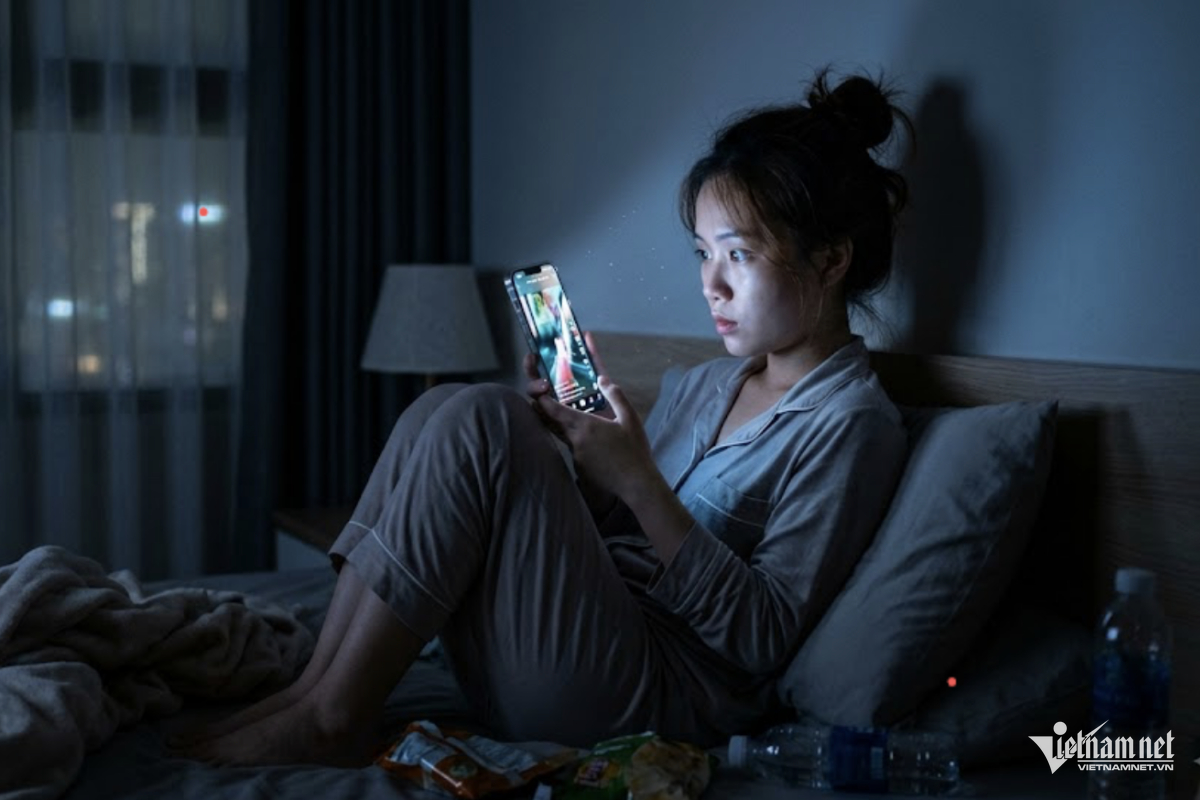
He initially intended to watch for just 15-20 minutes before bed. Instead, he found himself drawn night after night into short dramas featuring wealthy CEOs, time travel, reincarnation and other familiar themes, often staying awake until 3am or 4am.
“You may not believe me, but I’ve watched thousands of short dramas of all kinds on Facebook,” Minh said. “Even though the plots are often very similar, I don’t understand why I keep getting pulled from one series into another. Now my head is full of those stories and it feels almost frozen. At work, I keep forgetting things, and I’m constantly tired and sleepy.”
The problem is not limited to young adults. Children are also becoming increasingly attached to short videos on social media, particularly YouTube and TikTok.
Parents often hand children smartphones or tablets and play short videos on TikTok or YouTube to keep them calm while eating or when they cry. As a result, some children begin showing signs of dependency: crying when they cannot use a phone, refusing to eat without it or grabbing their parents’ devices to continue watching. More worryingly, some repeat inappropriate or nonsensical phrases picked up from videos on these platforms.
One mother, identified as T.L., eventually had to send her 12-year-old child to a center for help with excessive smartphone use. She said the child would not look away from TikTok videos, refused to communicate with others or attend school, and reacted with tantrums and even threatened to hit her when she took the phone away.
When endless scrolling becomes ‘brain rot’
Vo Quoc Hung, Growth Director at Tonkin Agency, said concerns over short-video addiction have been examined in scientific research since TikTok’s explosive growth, with studies appearing from around 2021-2022 in international neuroscience publications including NeuroImage.
In 2021, researchers at Zhejiang University used functional magnetic resonance imaging, or fMRI, to monitor users’ brain activity while they watched algorithmically recommended videos.
The research suggested that personalized short videos can strongly engage the brain’s reward system. Hung compared the experience to gambling: every upward swipe becomes another chance to open a “mystery box,” encouraging users to keep scrolling in anticipation of the next rewarding piece of content.
Hung also pointed to the concept of operant conditioning, developed by psychologist B.F. Skinner and later applied to technology design by Nir Eyal. Research published in Frontiers in Human Neuroscience in 2022, he said, showed how features such as infinite scrolling combined with variable rewards can weaken behavioral inhibition and contribute to mindless scrolling.
According to Hung, the combination of biological reward mechanisms and platform design makes 15-60-second videos particularly compelling. Their fast-paced content repeatedly gives the brain the sensation of receiving a reward.
Infinite scrolling adds another layer. Users never know what the next video will bring, keeping them curious and encouraging them to continue almost automatically, often losing track of time.
Hung described this as a form of behavioral manipulation that can make it increasingly difficult for users to control their viewing habits.
Modern recommendation algorithms further intensify the effect. Platforms use AI to analyze extremely small details of user behavior - how long someone pauses on a video, whether they like or share it, leave a comment or interact in other ways.
Algorithms can then continuously refine recommendations, creating a highly personalized stream of content that closely matches individual preferences and becomes increasingly difficult to leave.
Hung said habitual consumption of short videos can condition the brain to expect information in quick, condensed bursts, potentially making longer and more in-depth material harder to engage with.
Users may also become increasingly reluctant to perform complex mental tasks, while their ability to concentrate and remain patient can decline. Hung linked these concerns to what has popularly become known as “brain rot.”
Physical and mental well-being may also suffer. Watching highly stimulating short videos before bedtime can keep the nervous system activated, disrupting sleep and potentially contributing to anxiety and depression, he said.
AI-generated videos raise new concerns
The rapid spread of AI-generated short videos is adding another dimension to the problem.
Platforms including TikTok, Facebook Reels and YouTube Shorts are now filled with AI-generated clips, many of which, according to Hung, originate from China.
Users scrolling through these platforms can encounter AI-generated content after every one or two videos, with the overall volume becoming difficult to quantify.
Nhan Nguyen, a digital marketing specialist in Ho Chi Minh City, said that if conventional short videos already pose risks, AI-generated content could make them considerably greater.
From a content creator’s perspective, he explained, AI removes many of the traditional constraints involved in filming and production.
Creators who understand video production and audience metrics can identify scenes or situations likely to work as an effective “hook.” AI then allows them to generate dozens of variations designed to capture viewers’ attention without the production costs previously required.
When users decide to keep watching a short video, Nhan said, it is often because something has caught their attention within the first second.
With AI, creators can test and assess the potential effectiveness of these hooks before completing production, while rapidly generating multiple storylines with different characters, settings and narrative directions to keep viewers immersed.
Nhan said it is difficult to place responsibility entirely on the platforms because AI is advancing so rapidly that their detection and filtering systems can struggle to keep pace - much like the gap that can emerge between legal regulations and developments in society.
Hung shares the concern, describing AI-generated short videos as a genuine threat to young people, particularly because they are inexpensive and easy to make and can therefore produce a “storm” of content across social platforms.
AI-generated short videos are often designed to maximize sensationalism, capitalize quickly on trends and continually stimulate viewers through a familiar formula: a shocking opening within the first three seconds, rapid pacing and highly stimulating sound.
AI-generated imagery can add another layer of attraction. Although the visuals may appear unreal or obviously artificial, their novelty can make them particularly eye-catching, while fictional characters and bizarre scenarios play directly into young viewers’ curiosity.
As short-video platforms become increasingly sophisticated at predicting what keeps individual users watching - and generative AI makes it possible to produce attention-grabbing content at unprecedented speed and scale - concerns over compulsive scrolling are no longer simply about how much time people spend on their phones. They increasingly extend to how the content itself is engineered to make stopping more difficult.
Le My
.svg)
