 Vietnamnet.vn

 Podcast



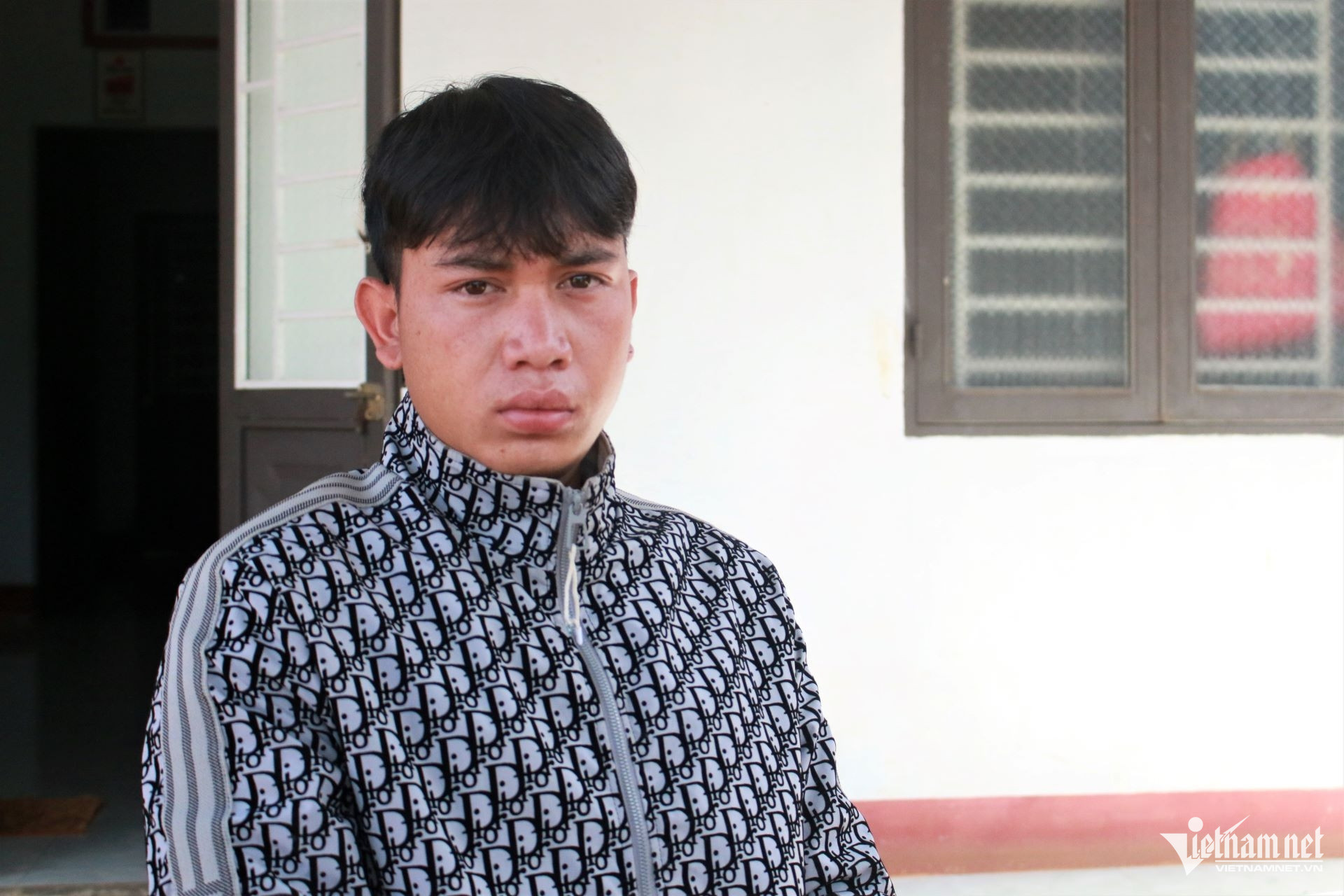
In the dry sunshine of the highland forests, the road leading to A Kun's house at the end of Dak Na village winds through hillsides with the green of rice and coffee fields.
Sitting on the porch, A Kun is no longer shy as he was more than one year ago when I met him - the time he had just escaped from a scam den in Cambodia returning to his family. He is now more bold when recounting the days of "hell on earth".
In August 2024, A Kun left his hometown for Binh Duong province to work, hoping to have a stable income to help his parents. Two months later, he was invited by a roommate, and someone introduced him to a job with salary of $1,000 a month.
A Kun followed his friend to MocBai border gate in Tay Ninh province to do paperwork and then was tricked by subjects into being taken to Cambodia.
When he arrived in Cambodia, A Kun had his phone confiscated and was detained in a room to do online scam jobs.
Every day, A Kun was assigned by groups to work. His group had four people working in a small room. The job was to call Vietnam to scam people to deposit money into prize-winning programs and game programs. They worked under the strict supervision of foreign managers, from morning to midnight.
Due to poor IT skills, language, and the characteristic accent of local people, A Kun could not meet the targets assigned by managing subjects.
"Each person must scam at least one customer to deposit money into the app they prepared. If someone cannot scam, they will be starved, beaten, electric shocked; someone once died. At times, seeing dead people I felt very scared, but did not know what to do," A Kun said with sad eyes.
Living in “hell on earth” and enduring countless beatings, A Kun and his friends were determined to find a way to escape.
On February 20, 2025, he and two others managed to flee. Local people in Cambodia helped report the case to Vietnamese authorities, who assisted in bringing them back to their hometown on February 24, 2025.
When he arrived home and saw his parents and the familiar surroundings of his house, A Kun was overwhelmed with happiness. Only then did he truly believe that he was still alive.
Sitting beside his son, A Soi said: “I have lived in the village all my life and never traveled far, so I didn't know how to find my son. Fortunately, the police helped bring him home. When he returned, my wife and I hugged him and cried. We couldn't say anything. We had thought he might have died in a foreign land,” A Soi recalled emotionally.
Finding peace
In the early days after returning home, A Kun suffered severe psychological trauma. The sound of a door slamming, a loud noise or even the gaze of a stranger could make him flinch in fear.
Recognizing the deep trauma he had suffered, local authorities and his family stayed by his side, offering care and encouragement to help him regain his emotional stability and return to everyday life.
“When he first came home, he was very frightened and barely spoke. The family kept encouraging him, and gradually he became more stable. Now, besides doing seasonal factory work, he also helps his parents with household chores,” A Soi said of his son's recovery.
Nguyen Thanh Thuy, deputy chair of the Dak Sao Commune People's Committee, said three local residents who had previously been rescued and brought home had received continued support from the local authorities to help them reintegrate into the community.
“A Kun's life is now stable. We are very pleased to see him working hard and helping his family improve their livelihood. The local authorities are always ready to accompany and support him so that he can build an increasingly better life,” Thuy added.
Peace has truly returned to A Kun's life under his parents' roof in the highland village. But for him, the dark days across the border will remain a painful lesson, reminding him to stay alert and cautious in the face of temptations on the internet.
Ngoc Chi
.svg)
