 Vietnamnet.vn

 Podcast



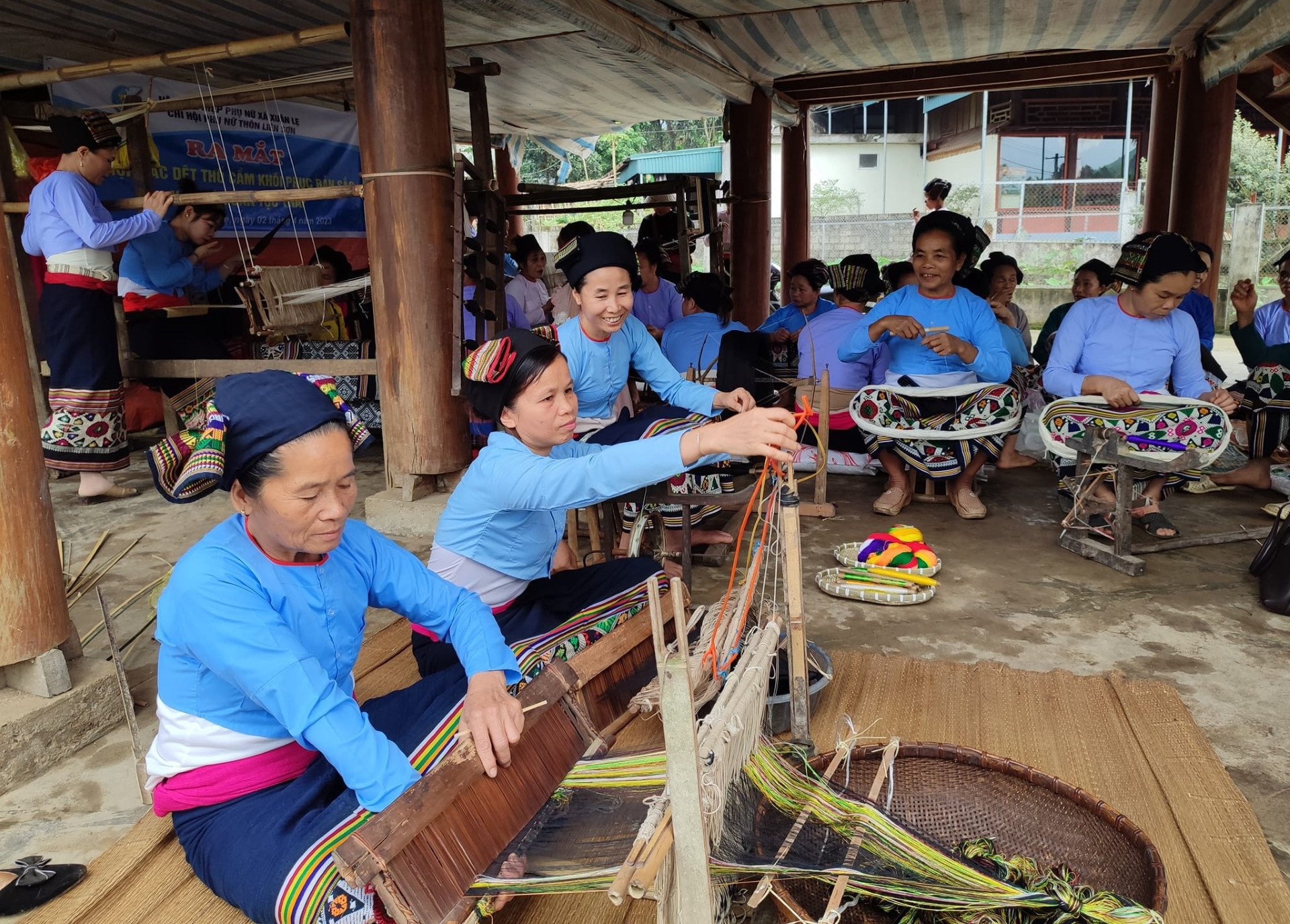
Born into a Thai ethnic family, Vi Thi Luyen’s childhood was closely tied to the scent of cotton threads, the rhythm of the shuttle, and vividly colored brocade fabrics. According to tradition, every Thai bride must bring a dowry of skirts, scarves, blankets, and pillows woven by her mother.
However, in modern times, industrially made clothing has gradually replaced handwoven garments. Looms in many households were left unused, and traditional patterns faced the risk of surviving only in the memories of the elderly.
After graduating in Agriculture and Forestry from Hong Duc University, Luyen was elected Vice Chairwoman of the commune Farmers’ Association in 2007.
In 2022, from simple conversations by the fire, she began mobilizing local women to revive brocade weaving. Initially, only 19 people joined, but through persistence and dedication, the movement gradually expanded.
In April 2023, the Tay Do brocade weaving group was officially established with 26 members and nearly 30 looms, marking the beginning of a journey to “awaken” the old craft.
To date, the group has grown to about 50 members. The once-silent looms are now replaced by a lively working atmosphere.
Beyond restoration, Luyen, 40, sought to integrate brocade into modern life. Traditional fabrics have been redesigned into handbags, seat cushions, blankets, and pillows, retaining distinctive patterns while meeting market demand.
As a result, Tay Do brocade products are not only sold domestically but also exported to Laos, Thailand, and even France, where Thai communities reside.
“In 2025, the group’s revenue reached about VND400 million. This is not a large figure, but for a mountainous village, it is an encouraging result, opening a sustainable livelihood for local women,” Luyen said.
Continuing to explore new directions, she has developed Tay Do herbal pillows, a combination of local medicinal herbs, natural essential oils, and traditional brocade patterns. The product is currently being prepared for participation in the provincial 3-star OCOP program, promising to enhance the value of traditional weaving.
In many localities in Dien Bien province, the Hmong ethnic community continues to quietly and persistently preserve the craft of embroidery and traditional costume making.
For the Hmong people, traditional clothing is a clear marker of community identity. From pleated skirts, front-slit shirts, aprons, and belts to intricate hand-embroidered patterns, each detail carries meaning, reflecting views on the universe, nature, and spiritual life.
In Pung Pa Kha village, Na Bung commune, Dien Bien province, a traditional Hmong costume sewing and embroidery group with about 40 members has been established. Most members are women who use their free time after farming to sew skirts, shirts, and aprons for both local and external markets.
Mua Thi My in Pung Pa Kha hamlet, head of the embroidery group, said: “By joining the group, we receive technical guidance and sewing machine support, so we work faster and more consistently. Our products have buyers, so everyone feels secure continuing the craft.”
Working in groups not only improves skills and ensures product quality but also creates opportunities for knowledge exchange and passing the craft to younger generations, helping maintain cultural continuity within the community.
Nguyen Van Tiep, Chair of Na Bung Commune People’s Committee, said that preserving traditional costumes is identified as a key task in cultural and social work.
“We see preserving traditional costumes not only as protecting culture but also as creating livelihoods. The commune has coordinated to develop craft groups, provide equipment, offer technical training, and connect product consumption channels for residents.”
Thanks to this support, many traditional Hmong costume products have found stable markets, selling for VND900,000 to VND1.5 million per item, generating significant income for participating households. On average, members earn more than VND3 million per month, helping many families escape poverty.
Amid the changes of modern life, the image of Hmong women diligently embroidering, colorful threads gradually forming patterns on fabric remains a vivid testament to the enduring vitality of traditional culture.
Preserving traditional costumes is not only the responsibility of the Hmong community, but also requires the joint efforts of authorities and society. As long as traditional skirts are maintained and younger generations proudly wear their ethnic attire, cultural identity will continue to be preserved, spread, and promoted in contemporary life.
Hoang Quy
.svg)
