 Vietnamnet.vn

 Podcast



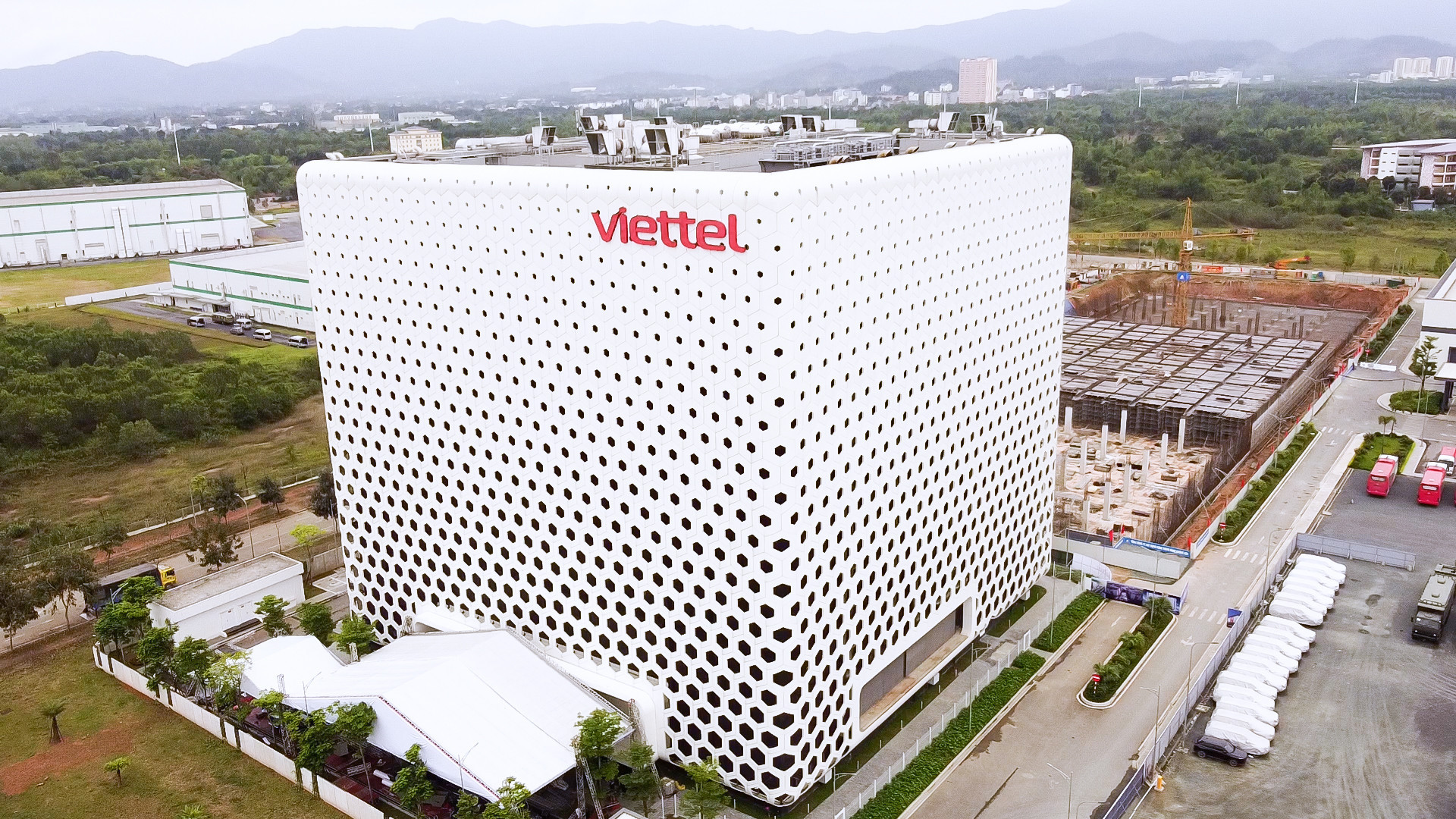
Under the ministry’s guidance, data centers will be classified under production electricity pricing due to the nature of their operations.
The directive refers to Circular No. 60/2025/TT-BCT and incorporates feedback from the Ministry of Science and Technology dated February 13, 2026. EVN has been asked to instruct its power corporations to implement electricity pricing for data centers properly.
Earlier, on March 19, 2026, the Electricity Authority under the ministry held a meeting with stakeholders, including telecom operators, the Vietnam Internet Association, EVN and its subsidiaries, to discuss electricity pricing for data centers.
Subsequently, on April 9, 2026, the Ministry of Science and Technology submitted its position, noting that under the 2023 Telecommunications Law and the 2025 Law on Digital Technology Industry, the technical systems of data centers directly generate and sustain service capacity. This aligns them with production activities, while business service operations should follow commercial electricity pricing.
The Ministry of Industry and Trade emphasized that electricity pricing must be determined based on usage purposes, as stipulated in Circular 60. Buyers are responsible for declaring their usage accurately.
In cases where electricity usage cannot be clearly divided between purposes, production tariffs will apply to the technical systems of data centers, in line with the Ministry of Science and Technology’s recommendation.
Given the practical difficulty of separating electricity usage within data centers, the directive effectively places them under production electricity pricing.
Data centers recognized as critical digital infrastructure
Previously, major firms including Viettel, VNPT, FPT Telecom, CMC and VNG Data Center had urged the ministry to revise how electricity pricing is applied under Circular 60, issued on December 2, 2025.
Under that framework, some power authorities had classified data center operations as “centralized data processing, storage and management services,” applying commercial electricity tariffs instead of production rates, which had historically been used.
Since early December 2025, several privately operated data centers, including those run by CMC, reported that electricity costs rose by more than 50% over three billing cycles after the new pricing was applied. Electricity accounts for the largest share of data center operating costs.
This sharp increase has significantly affected financial planning, service pricing structures and the ability to maintain stable operations and expand investments, raising concerns about impacts on national digital infrastructure.
The Ministry of Science and Technology stressed that data centers are a core component of digital infrastructure, directly enabling computing, storage and data processing at an industrial scale. They form the foundation for developing and operating artificial intelligence systems.
In essence, data center operations constitute production activities rather than commercial or consumer services.
Electricity serves as a key input for generating computing capacity, similar to its role in industrial manufacturing facilities.
Additionally, under Clause 21, Article 3 of the Telecommunications Law, data centers are classified as telecommunications facilities, akin to switching stations and mobile base stations, which are already subject to production electricity pricing.
Therefore, the proposal to apply production tariffs to data centers is supported by both practical considerations and legal grounds.
At the time, Nguyen Trung Chinh, Chairman of CMC, outlined plans to invest in data centers with a total capacity of 120–150MW over the next five years. He noted that Vietnam’s competitiveness in attracting major clients from markets such as the US, Japan and South Korea depends heavily on electricity costs, the largest component in data center operations.
He also expressed concern that classifying data centers under commercial electricity pricing could significantly raise costs and weaken Vietnam’s appeal in the global market.
According to him, data centers should be treated as foundational infrastructure of the digital economy, requiring stable and reasonable electricity pricing to support long-term contracts and sustainable growth.
Thai Khang
.svg)
