 Vietnamnet.vn

 Podcast



Vietnam is projected to officially enter the aged population phase within the next decade, while its target of becoming a high-income country is set for 2045. The narrow gap between the two milestones is raising concerns that the country could “grow old before growing rich.”
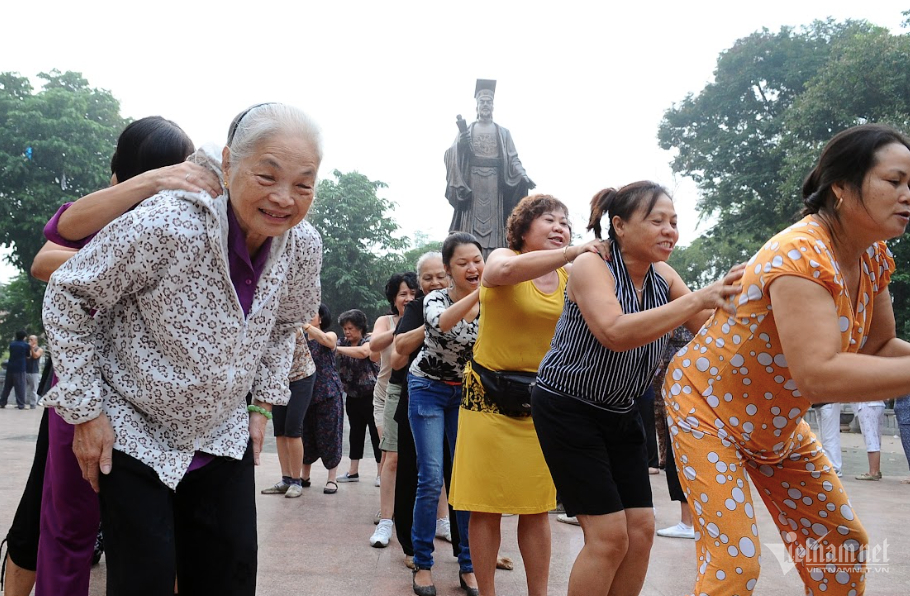
Vietnam currently has around 14.2 million people aged 60 and above. Photo: Hoang Ha
The warning was highlighted by experts at a conference on consulting and connecting elderly care models to help ensure non-traditional security, organised by the Institute for Non-Traditional Security under the School of Governance and Business at Vietnam National University, Hanoi.
According to data from the General Statistics Office, Vietnam entered the population ageing phase in 2011, and the process has been accelerating rapidly. The country currently has around 14.2 million people aged 60 and above, an increase of 2.8 million compared to 2019 and 4.7 million compared to 2014.
By 2030, Vietnam is expected to have around 18 million elderly people, nearly 4 million more than today. Notably, by 2034, the country will officially enter the aged population phase, with older adults accounting for more than 20% of the population, while the goal of becoming a high-income nation is set for 2045. The little more than 10-year gap between these milestones has sparked fears of Vietnam “growing old before growing rich.”
International experience shows that developing an effective “silver economy” requires three key pillars: a sustainable social welfare system, long-term care services, and age-friendly living environments. Experts said this is the direction Vietnam needs to follow to adapt to its rapidly ageing population.
Vietnam’s “silver economy” has started to take shape through healthcare services, rehabilitation, nursing care and technology applications in elderly care. However, the overall service system remains limited.
Need for a comprehensive elderly care ecosystem

Prof. Nguyen Xuan Yem said elderly care is no longer simply a welfare issue but is directly linked to ensuring human security. Photo: Organising Committee
Delegates at the conference said Vietnam’s current elderly care system has yet to meet demand. The country has only around 300 elderly care facilities, many of which lack synchronisation and offer inconsistent service quality, while professionally trained personnel remain in short supply.
They also noted that policies related to older adults are still incomplete and have yet to fully tap into the role of the elderly in socio-economic development. Coordination among healthcare facilities, businesses, care providers and social organisations also remains fragmented.
Prof. Hoang Dinh Phi, rector of the School of Governance and Business, said caring for and empowering older adults requires stronger coordination among state agencies, businesses, nursing homes, social organisations and local communities.
At the conference, delegates discussed the reality and trends of rapid population ageing in Vietnam from a non-traditional security perspective, while proposing cooperation models for elderly care that are comprehensive, humane and sustainable, closely linked to the development of the silver economy.
Prof. Nguyen Xuan Yem, director of the Institute for Non-Traditional Security, stressed that ensuring healthcare for more than 14 million elderly Vietnamese - many of whom do not receive pensions and rely only on limited social allowances - is both a humanitarian issue and a key factor in safeguarding social welfare and human security.
Experts said Vietnam needs to build a coordinated elderly care ecosystem involving the state, businesses and older adults themselves. Priorities include promoting healthy ageing, developing long-term care services, improving social welfare policies and expanding the use of technology in healthcare management and elderly care.
Dr. Nguyen Minh Phong, member of the Economic Advisory Council under the Central Committee of the Vietnam Fatherland Front, proposed expanding cooperation among universities, research institutes and businesses in developing integrated elderly care models.
According to him, these models should follow a “state - market - society” approach, combining tourism and resort services with healthcare, while balancing profit, non-profit activities and social responsibility, targeting domestic residents, overseas Vietnamese and foreigners alike.
Vo Thu
.svg)
