 Vietnamnet.vn

 Podcast



Buddhist temples in Vietnam's Truong Sa Special Zone are more than sacred places of worship. They have become enduring sources of spiritual strength, offering comfort and stability to those living and working amid the vast expanse of the sea.
Editorial note: Amid the winds and waves surrounding the Truong Sa (Spratly) Islands, the graceful roofs of Buddhist temples are more than peaceful sanctuaries. Over the years, they have become spiritual landmarks that embody Vietnam's cultural heritage while standing as enduring symbols of the nation's presence on its remote islands.
This VietNamNet series takes readers on an emotional journey - from the inner peace found by soldiers and fishermen to the quiet sacrifices made to safeguard the country's distant maritime frontiers. It also highlights the Vietnamese Buddhist ideal of protecting the nation while serving its people, as temple bells continue to carry messages of peace and hope across the sea.
The close partnership among the Vietnam Buddhist Sangha, the armed forces and island communities has helped preserve and care for these temples, transforming them into spiritual sanctuaries on Vietnam's remote maritime frontier.
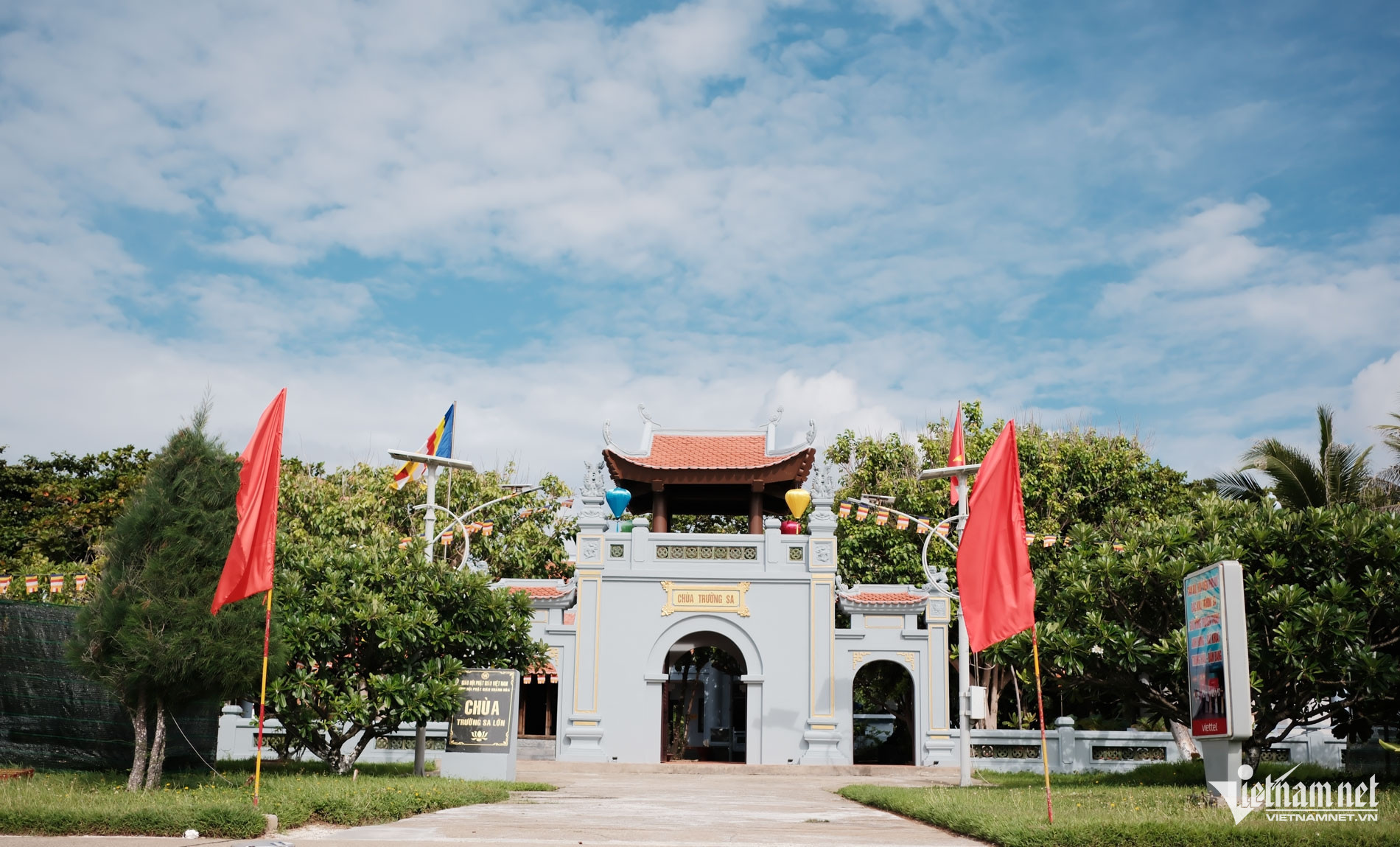
Our delegation, Mission No. 19, began visiting temples across the Truong Sa Special Zone during the spiritually significant days of July. Carrying heartfelt emotions from the mainland, we endured rough seas before setting foot on the islands, where every trace of fatigue seemed to disappear, replaced by a profound sense of love for the homeland.
As the patrol vessel KN 491 sounded its long horn before docking, we were greeted not only by the salty sea breeze but also by a sound that stirred the soul - the resonant ringing of a temple bell rising above the crashing waves.
Stepping onto the island, a peaceful spiritual landscape unfolded. Against the brilliant blue sky stood an elegant pagoda with sweeping tiled roofs, rising proudly amid fierce winds and storms. Beside it, Vietnam's national flag fluttered vividly in the sea breeze, symbolizing the nation's enduring commitment to safeguarding its maritime sovereignty.
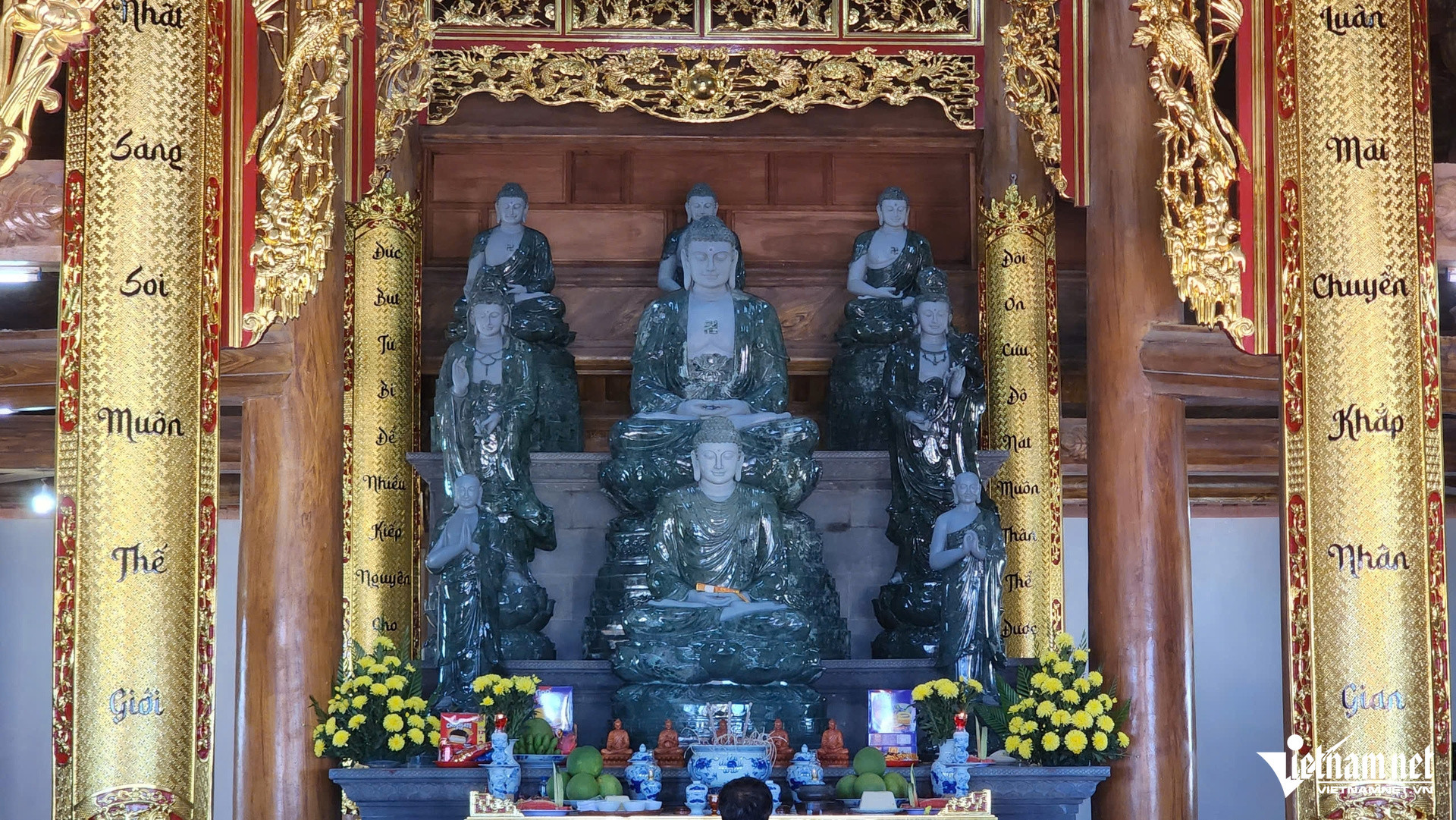
Inside the main hall, serene Buddha statues were arranged with solemn dignity, each facing toward Hanoi, the nation's capital, in a gesture filled with compassion and symbolic meaning.
Moved by the experience, Venerable Thich Thanh Phu, Standing Member of the Executive Board of the Vietnam Buddhist Sangha in Ninh Binh Province, Head of its Communications Committee and abbot of Quang Son Pagoda, shared his reflections.
"Seeing a pagoda standing proudly beneath the vast sky and sea awakens the sacred spirit of our homeland. It is not only a place where fishermen, soldiers and local residents pray for peace and safety, but also an enduring symbol of Vietnam's sacred sovereignty," he said.
Lighting incense beneath the open sky, the monk expressed deep admiration for the dedication of naval personnel and fishermen. From a Buddhist perspective, he said, their determination to remain at sea and protect the islands reflects the Bodhisattva ideal of compassionate action in service to society.
Moments of peace beneath the temple roof
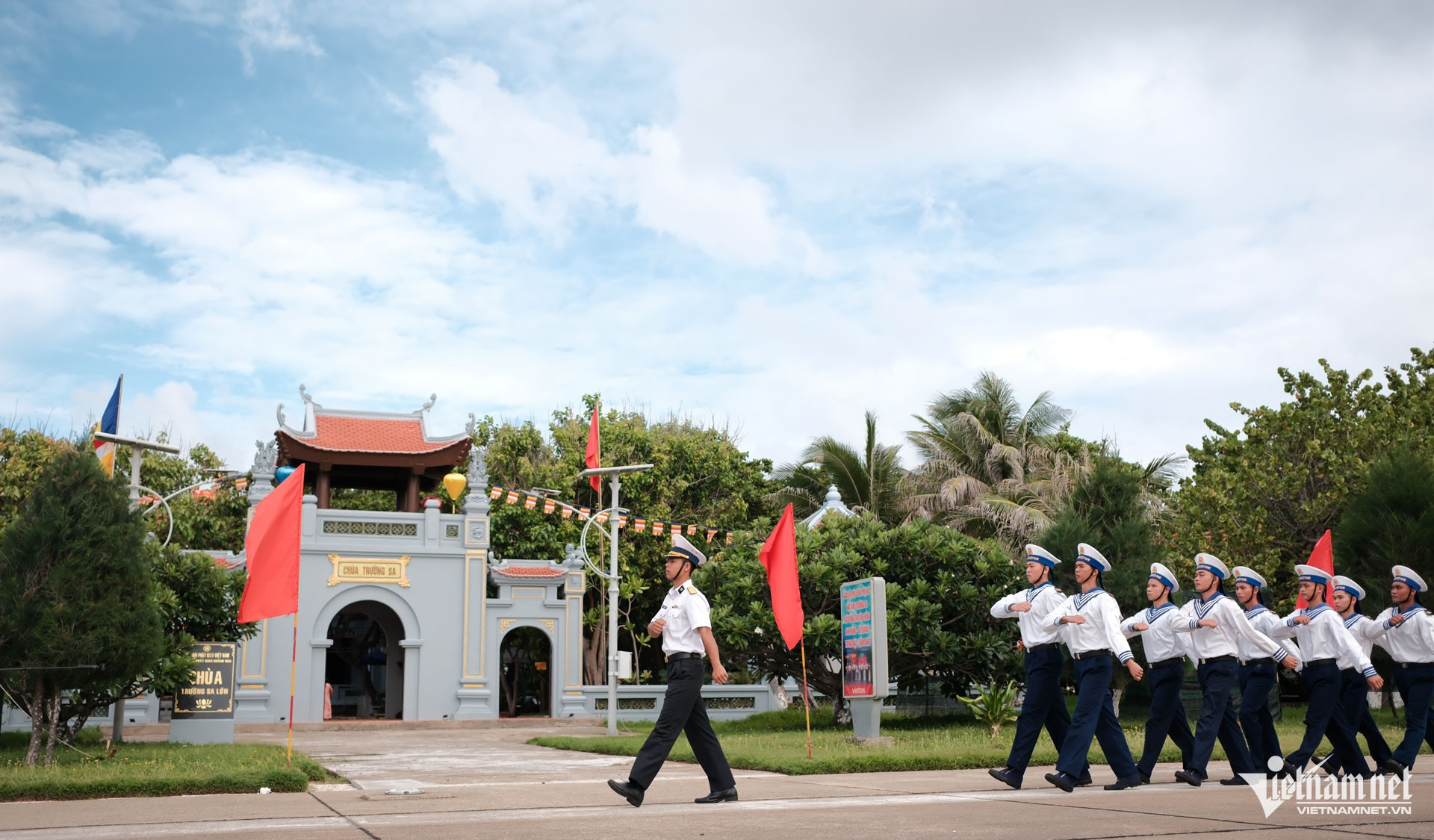
Born in 2006, Private First Class Nguyen Truong Thi, from Ninh Binh Province, set aside his personal dreams to wear the uniform of the Vietnam People's Navy.
After arriving on the island in July last year, Thi spent a year adapting to life in Truong Sa. Contrary to his initial expectations of an isolated island marked only by scorching sun, salty winds and harsh conditions, he discovered a place that brought him unexpected inner peace.
As the months passed, the greatest challenge for such young servicemen became homesickness. During his first Lunar New Year away from home, although separated from his family, Thi never felt alone. After spending time with his comrades, he often walked quietly to the pagoda to offer incense.
"Whenever I come here, it feels like I'm back home," he said, his voice filled with emotion.
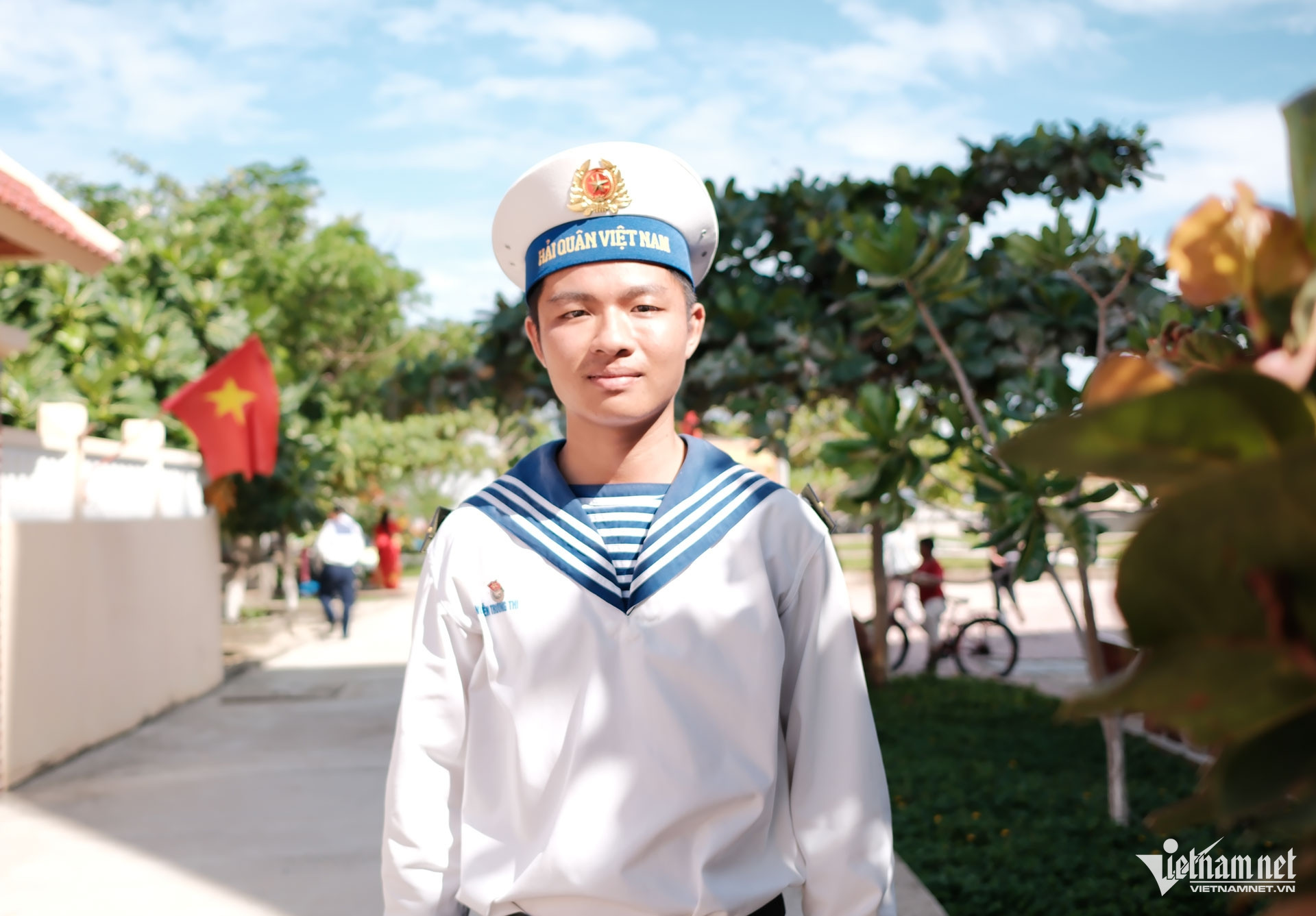
He recalled childhood memories of accompanying his mother to the pagoda, attending Buddhist ceremonies and sharing simple vegetarian meals with his family. Those experiences, he said, nurtured the values that now give him the strength to face the challenges of serving far from home.
During his free time, Thi frequently visits the pagoda to enjoy the peaceful surroundings and speak with the resident monk. Over time, he has noticed himself becoming calmer and more mature.
For island soldiers, homesickness is rarely expressed loudly. Instead, it lingers quietly during lonely night shifts and family holidays such as Lunar New Year and Vu Lan, the traditional Buddhist festival honoring parents and ancestors.
Senior Lieutenant Ta Hong Phu said that alongside his military gear, he also brought with him the religious traditions passed down through generations of his family.
Back home, his family visits the pagoda on every full moon and first day of the lunar month to pray for peace and well-being. In Truong Sa, he continues that tradition as an important part of his spiritual life.
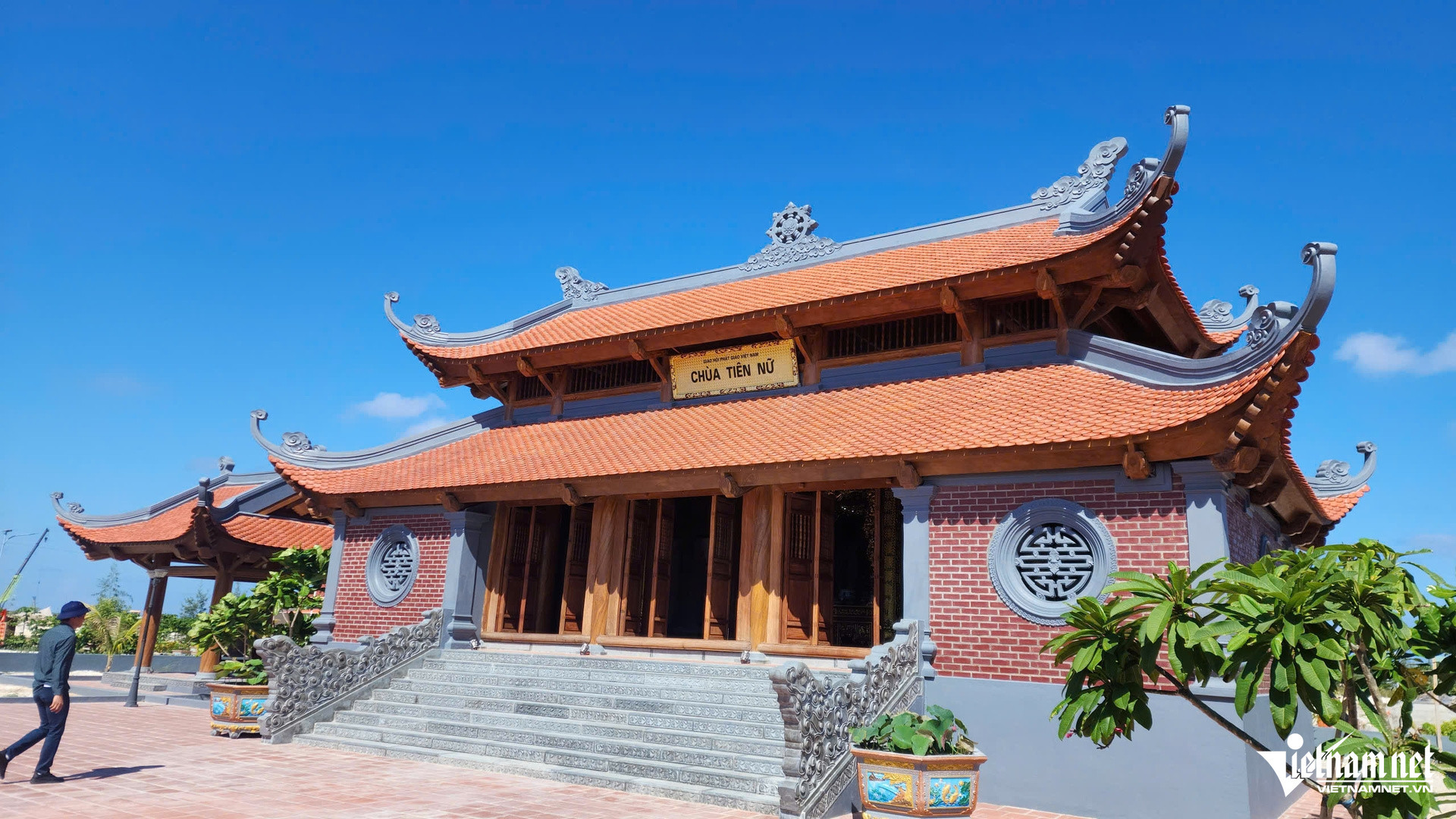
Since the archipelago's religious sites have been renovated, Phu has found a familiar place where he can reconnect with his faith.
"As soon as I walk through the temple gate, the peaceful atmosphere and the sound of the bell make me feel as though I'm back on the mainland," he said.
He often spends time speaking with the monks about Buddhist teachings, including the Four Noble Truths and the Noble Eightfold Path.
"After listening to the monks, I feel an incredible sense of calm. Many of my worries simply fade away," he said.
Meeting Nguyen Tien, originally from Gia Lai Province, who has spent decades making his living at sea, offers another perspective on the significance of temple bells across the ocean.
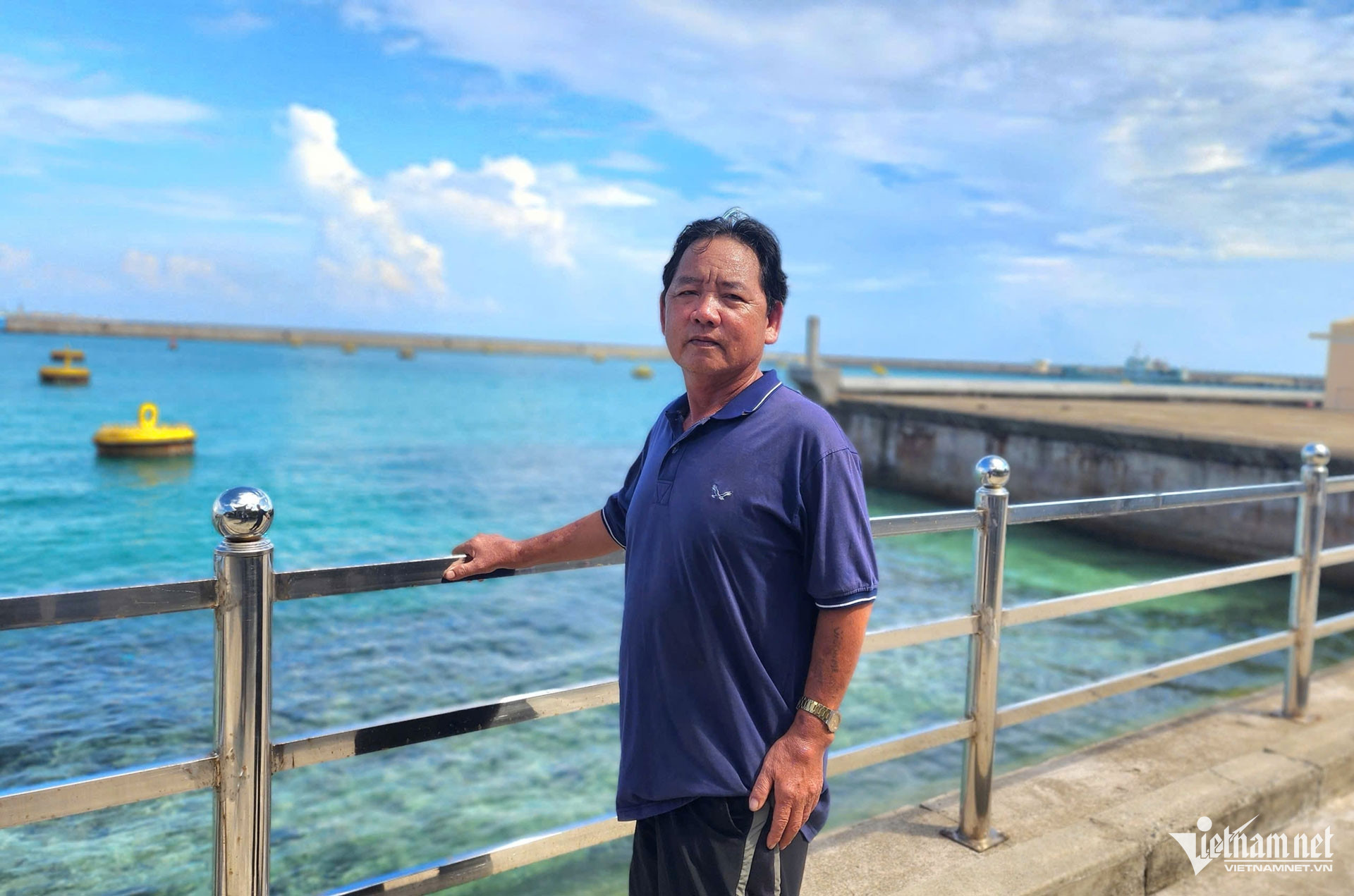
Every voyage exposes him to towering waves, violent storms and unpredictable weather. Amid the vastness of the sea, he says, people feel remarkably small. Alongside generations of maritime experience, spiritual faith remains an invaluable source of strength.
Whenever his fishing boat passes islands where temple roofs rise above the horizon, he experiences an overwhelming sense of peace.
Sometimes rough seas prevent him from coming ashore. On those occasions, he simply stands on deck, folds his hands in prayer and looks toward the island. When conditions allow him to enter the island harbor with assistance from naval personnel, he visits the temple to light incense and pray for safe journeys for himself and his crew.
He believes that amid the relentless roar of the ocean, there is another familiar sound capable of calming every storm - the ringing of the temple bell.
When resting aboard his vessel, hearing the distant bell allows him to close his eyes and experience a rare feeling of serenity, as if the burdens of daily life have drifted away.
For Nguyen Thanh Long, a resident of Da Tay A Island, the temple also represents continuity between generations.
"My children were born on this island, and they go to the pagoda with us," he said.
His simple words reflect something profound. Children born amid the sea, growing up with the sound of temple bells, are inheriting the enduring cultural and spiritual traditions that have shaped Vietnamese society for generations.
A monk's mission on Vietnam's maritime frontier
The enduring presence of the temples across Truong Sa owes much to the monks who quietly devote themselves to nurturing compassion and bringing peace to those living far from the mainland.
Among them is Venerable Thich Quy Nghia, born in 1983 and belonging to the Vietnam Buddhist Sangha in Khanh Hoa Province. He volunteered to become abbot of Truong Sa Dong Pagoda and has served on the island continuously for the past five years.
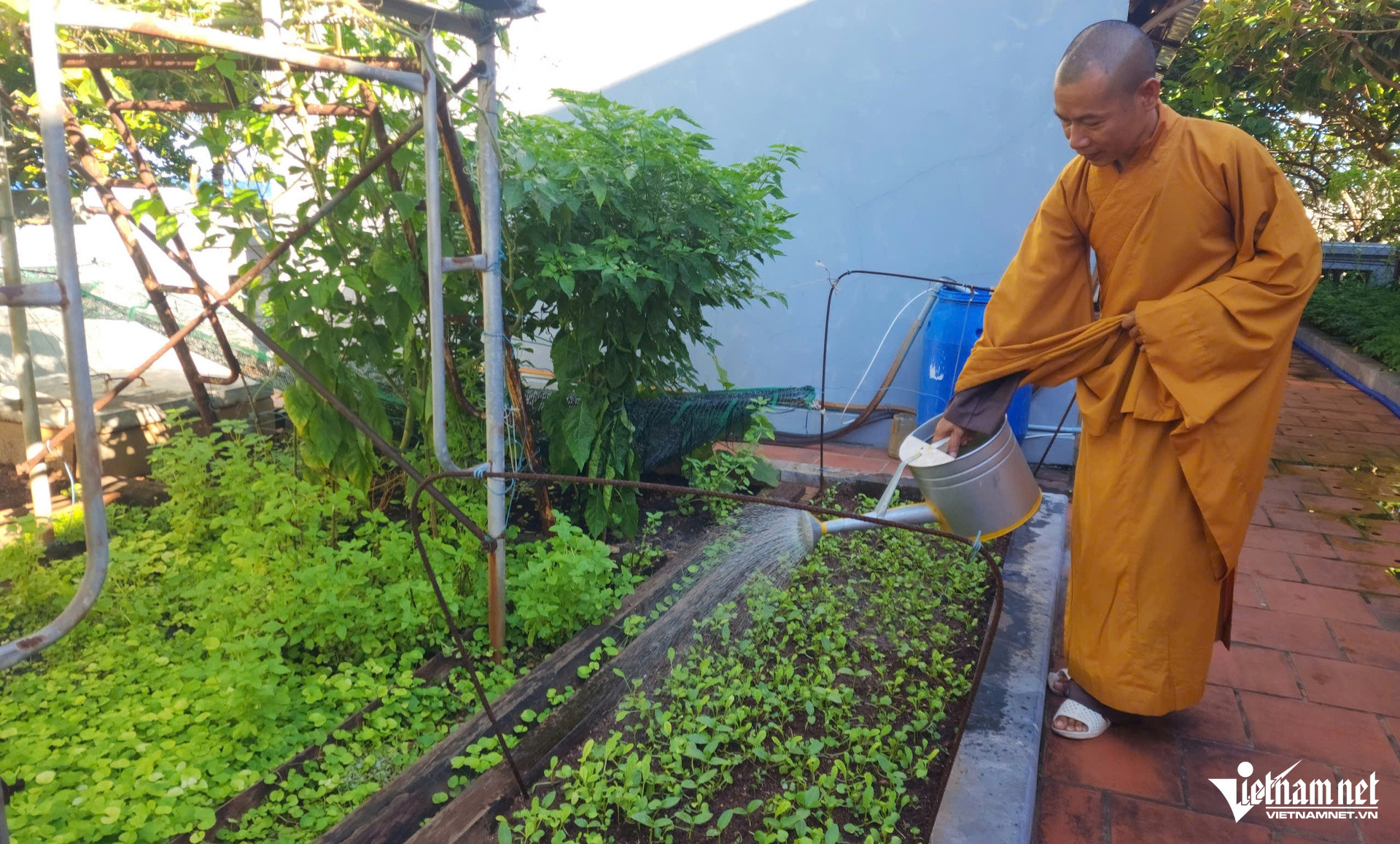
Practicing Buddhism on the mainland is demanding enough, he says, but maintaining daily religious practice in Truong Sa presents far greater challenges. Strong winds, heavy rain and salt-laden air make even simple tasks - growing plants, caring for trees or sweeping the temple grounds - far more difficult.
Yet what has inspired him to remain on the island is a central Buddhist principle: "Thiểu dục tri túc" (To desire little and be content with what one has) - to desire little and to be content with what one has.
When people stop pursuing excessive material desires and learn to appreciate what is already before them, he believes, even the fiercest storms lose much of their power. He compares spiritual practice in Truong Sa to a lotus flower blooming amid salty seas - remaining pure and fragrant despite the harsh environment.
Venerable Thich Quy Nghia said that amid the vast ocean, the pagoda serves not only as a place of worship where residents, soldiers and officials seek peace, but also as a steadfast refuge for the human spirit.
Tinh Le
.svg)
