 Vietnamnet.vn

 Podcast



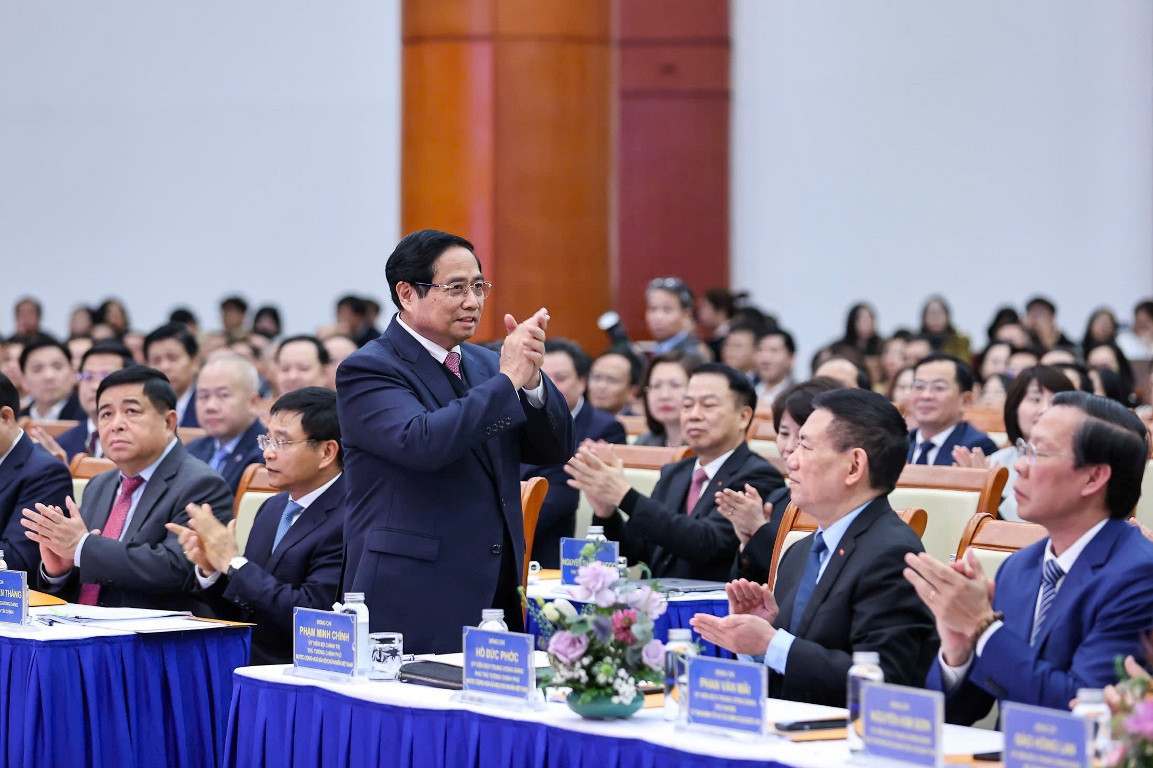
At the national conference reviewing 2025 performance and rolling out tasks for 2026 on January 6, MOF said GDP growth had a five-year average of 6.3 percent (excluding 2021, when growth reached only 2.55 percent due to the Covid-19 pandemic; average growth in the 2022–2025 period was 7.13 percent, exceeding the target of 6.5–7 percent).
GDP per capita in 2025 was estimated at more than $5,000, 1.4 times higher than in 2020 ($3,552), placing Vietnam in the upper-middle-income group.
Annual inflation was maintained below 4 percent, lower than the target, of which 2025 was about 3.3 percent.
According to the MOF’s report, state budget revenue as of December 31, 2025, reached VND2.65 quadrillion, exceeding the estimate by 34.74 percent and increasing by 30.3 percent over the same period, completing the set goal. State budget expenditure was estimated at more than VND2.4 quadrillion, equal to 94.1 percent of the estimate, an increase of 31.5 percent compared to the same period in 2024.
In addition, the Ministry has advised and directed solutions to remove obstacles for 5,203 projects and land areas. Of these, 3,289 projects and land areas with a total investment of about VND1.67 quadrillion, covering 70,000 hectares, have had their obstacles removed.
Speaking at the conference, Minister of Finance Nguyen Van Thang assessed 2025 as a year with major difficulties and challenges, especially the very uncertain and unpredictable fluctuations in the global financial and trade markets; also, natural disasters, floods, and climate change caused heavy damage.
At the same time, the MOF implemented an unprecedented large-scale reorganization of the apparatus from the Central to local levels, reducing 37 percent of focal units, posing many challenges for the entire sector.
However, the Ministry still could focus on drafting the largest number of legal documents and policies ever, associated with innovating thinking and methods to proactively remove "bottlenecks," promoting decentralization and delegation of power, and promptly meeting new development requirements.
The Ministry advised the Government and the Prime Minister on scenarios and management solutions to achieve the economic growth target of 8 percent or higher and control inflation at the lowest possible level.
Notably, fiscal policy management was conducted effectively, and with clear priorities. Measures included tax and fee reductions and extensions to support production and business, improving revenue management through digital transformation, saving recurrent expenditures to increase spending on investment and social security, and strengthening national defense and security.
Administrative procedures and business conditions were further streamlined, and the investment and business environment improved, contributing to boosting social investment and the development of economic sectors.
Challenges
Minister Nguyen Van Thang also pointed out several shortcomings and challenges, particularly pressure on financial policy management to promote total investment of the society to around 40 percent of GDP in the coming period to achieve double-digit growth targets while maintaining macroeconomic stability.
Regarding performance in 2026, Thang stressed that this is a year of special importance, the first year implementing the Resolution of the 14th National Party Congress.
While external conditions remain unfavorable, the Party, National Assembly, Government, and the Prime Minister still have set a target of economic growth of 10 percent or higher, alongside maintaining macroeconomic stability, controlling inflation at around 4.5 percent, ensuring major balances, social security, and sustainable development.
To achieve this goal, the minister called on the Ministry of Finance and the entire sector to continue comprehensively renewing thinking and methods across all areas of work, closely coordinating with ministries, sectors, and localities to promptly realize the guidelines and directives of the Party and the Government.
The Prime Minister, who attended the event, emphasized that the double-digit growth target in 2026 is a “high mountain” that must be conquered. To do this, there must be strong determination, great effort, and decisive action.
Meanwhile, a number of shortcomings remain, such as disbursement of public investment capital, which continues to be a persistent “bottleneck” that needs to be addressed. The development of the private sector and small and medium-sized enterprises still faces difficulties; state-owned enterprises have gradually improved efficiency, but many have yet to operate truly effectively. Fiscal expansion policies have focused priorities, but implementation has not been truly effective.
Nguyen Le
.svg)
