 Vietnamnet.vn

 Podcast



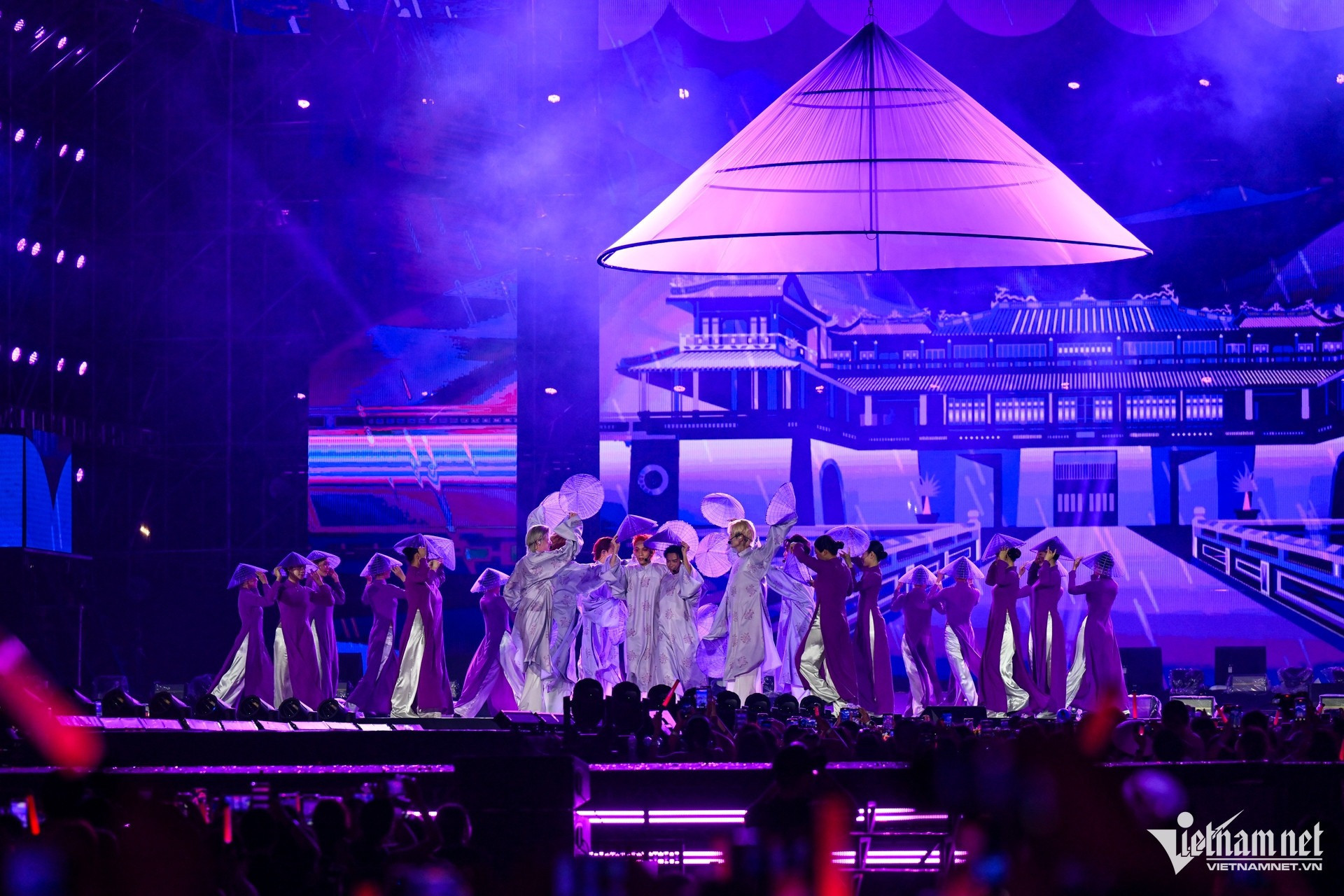
Since the 13th National Party Congress, Vietnam’s cultural industries have undergone a pivotal shift. Once seen mainly as a means of spiritual enrichment, culture is now being recognized as a major economic sector capable of generating high value, broad influence, and tangible contributions to the country’s sustainable development.
The numbers speak for themselves. According to the Ministry of Culture, Sports and Tourism, Vietnam’s cultural industries produced an average annual value of approximately VND 1.059 quadrillion (around USD 44 billion). Between 2021 and 2025, the number of cultural businesses grew at about 7.2% annually, while the cultural workforce expanded at 7.4%-indicators of a dynamic, youth-driven market for creativity.
This breakthrough has been powered by major policy shifts and strategic development plans that have unlocked creative potential, expanded the cultural marketplace, and steadily shaped a full-fledged cultural industry ecosystem.
A turning point in policy
At the 2021 National Cultural Conference, the late General Secretary Nguyen Phu Trong emphasized the need to “urgently develop cultural industries and build a healthy cultural market.” The 13th Party Congress documents echoed this mandate, calling for a focused push to develop cultural industries and services by harnessing Vietnam’s cultural soft power.
This spirit was concretized through key decisions. On December 22, 2023, Prime Minister Pham Minh Chinh chaired the first National Conference on Cultural Industries-a “Dien Hong” moment that signaled strong political will from central to local levels.
Following that, Directive No. 30/CT-TTg, issued on August 29, 2024, highlighted the need for fresh thinking, decisive action, diversification, professionalism, identity, and sustainability. It called for building a national cultural brand and deeper integration into global value chains.
One especially significant milestone was Resolution No. 162/2024/QH15, passed by the National Assembly, which approved the National Target Program for Cultural Development 2025–2035. The resolution set clear goals: by 2030, cultural industries should contribute around 7% of GDP, with 100% of cultural institutions applying digital technology, and Vietnam participating officially in at least five international cultural events each year. By 2035, that contribution is expected to rise to 8% of GDP, with more frequent international presence.
The core breakthrough is this: culture is no longer a peripheral domain-it is now interwoven with economics, technology, tourism, and creative urban development.
Concert booms and the rise of a new market
Within this broader picture, the explosion of live concerts in Hanoi and Ho Chi Minh City offers vivid proof of Vietnam’s cultural industry awakening.
Between 2023 and 2025, never before had Vietnam’s live music scene been so electric. Major concerts like Anh trai say hi and Anh trai vượt ngàn chông gai, each drawing tens of thousands of fans, were professionally staged and frequently sold out-becoming social phenomena. Pop music is no longer just art performance; it now runs like a modern industry.
Ho Chi Minh City has emerged as the most vibrant hub. With its youthful population, high purchasing power, and well-developed service-media-entertainment ecosystem, the city has created complete value chains: ticket sales, advertising, sponsorships, content licensing, tourism, accommodation, food and beverage, and support services. A single successful concert can directly generate tens or even hundreds of billions of dong in revenue, while creating ripple effects across multiple sectors.
According to Tran The Thuan, Director of the city’s Department of Culture and Sports, cultural programs and festivals not only meet public demand but also stimulate commerce and tourism, making real contributions to Ho Chi Minh City’s economic growth. The city’s Water Festival, first held in 2023, transformed the Saigon River into a live-action stage and created a distinctive cultural-tourism product for Vietnam’s “water urban” identity.
The Ho Chi Minh City International Film Festival (HIFF), launched in 2024, placed the city on the global cinema map and helped realize its goal of becoming a “Film City.” In 2025, Ho Chi Minh City was officially recognized as a member of UNESCO’s Creative Cities Network. The Hò Dô International Music Festival has also become a major event, featuring domestic and global artists and offering high-quality, free cultural experiences for the public.
Meanwhile, Hanoi-known for its heritage, cultural spaces, and art-loving audiences-has also seen a marked rise in large-scale, genre-diverse performances. Healthy competition between the two cities is raising the bar for organization, technical quality, and audience experience-the hallmarks of a modern performance industry.
The synchronized rise of many creative sectors
Music and live performance are just one facet of Vietnam’s broader cultural industry transformation from 2021 to 2025.
Cinema has staged a strong comeback, with high-grossing domestic films like Mưa đỏ (Red Rain), Mai, Lật mặt 7: Một điều ước (Face Off 7: One Wish), Nhà bà Nữ (The House of No Man), and Bố già (Dad, I'm Sorry) winning over local audiences and showcasing a new generation of talented filmmakers.
Internationally, Vietnamese cinema has made notable strides. Glorious Ashes by Bui Thac Chuyen won Best Film in the New Currents section at the 2022 Busan International Film Festival and was distributed across Asia and Europe. Inside the Yellow Cocoon Shell by Pham Thien An won the Caméra d’Or at the 2023 Cannes Film Festival-placing Vietnam at the heart of global art cinema.
Other creative sectors-including cultural tourism, design, advertising, gaming, and digital content-have also flourished, leveraging digital platforms and the digital economy. Many Vietnamese cultural products are crossing borders, promoting national identity through fresh creative languages.
By quantifying culture’s economic value, cultural industries have become more than abstract concepts. They are now measured by GDP contribution, revenue, business volume, job creation, and investment appeal.
The concert boom in Hanoi and Ho Chi Minh City proves that with enabling institutions, culture can generate very real economic value. Each successful cultural product is a fusion of creativity, management, technology, media, and market dynamics-true to the logic of the modern cultural industry.
Achievements since the 13th National Party Congress show that Vietnam’s strategy for cultural industry development is well founded.
Challenges remain: completing legal frameworks, developing high-quality human resources, and balancing commercialization with cultural preservation. But one thing is clear: breakthroughs in institutional reform have ushered in a new era for Vietnam’s cultural industries.
Culture is no longer just a tool to uplift the spirit. It is becoming a powerful, comprehensive economic force-driving growth, fostering innovation, and building national soft power.
Tinh Le
.svg)
