 Vietnamnet.vn

 Podcast



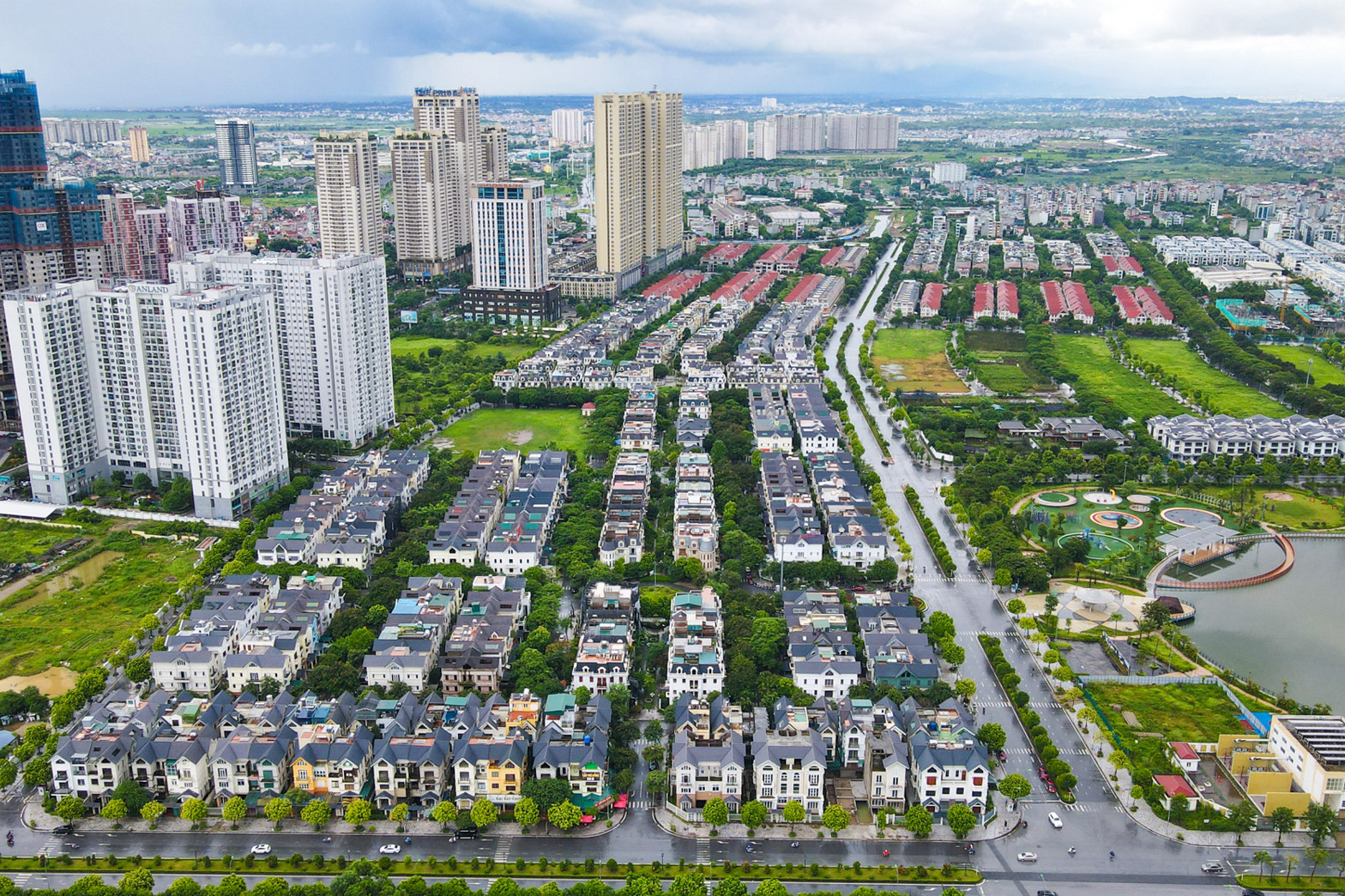
Hanoi now has a very large rental housing market. According to city leaders, nearly 2 million people may be living in rentals, equal to about one-quarter of the capital’s population. They are workers, students, migrant laborers, young office staff, and families who cannot yet afford to buy a home.
They form a huge "rental city" that exists alongside new urban areas where prices reach hundreds of millions of VND per square meter.
Those two worlds coexist in one city, but access to housing is very different.
The rental housing market has existed for a very long time, shaped primarily by the citizens themselves, ranging from rows of workers' boarding rooms on the city outskirts and subdivided houses for students to tens of thousands of mini-apartments mushrooming within residential neighborhoods.
In other words, a vast portion of Hanoi’s housing puzzle for low- and middle-income demographics has, for years, been solved by "social resources," or essentially the principle of "people providing rented rooms to people."
As housing prices continue to rise faster than incomes and social housing programs fall short of expectations, another question is beginning to emerge: Must people own a home in order to live a stable life in the city?
Vietnam does not lack housing; it lacks housing accessibility. According to the Ministry of Construction, nearly 6 million housing units are in real estate projects nationwide, with a total investment capital of quadrillions of VND. This suggests that Vietnam's challenge is not necessarily a lack of supply.
The real issue is accessibility.
Today, a typical apartment in Hanoi often costs around VND7-8 billion, while many workers earn little more than VND10 million per month. The gap between market prices and people's purchasing power is becoming increasingly difficult to bridge.
In other words, Vietnam may not lack housing in a physical sense, but it lacks homes that ordinary workers can afford with their income.
That is also why millions people still rent, even as more new real estate projects keep being built around them.
How will a city of 15 million operate? The capital’s population is currently about 8.5 million. But the capital’s plan aims for 14–15 million by 2035 and 15–16 million by 2045.
That means the city must accommodate about 6 million more people in just the next decade.
At that scale, the question is no longer simply how everyone can buy a home, but how millions can live in the city. A city aiming for 15–16 million people almost cannot function if it relies on the idea that everyone must own a home.
Housing is no longer just real estate
In that context, Prime Minister Le Minh Hung’s request to develop rental housing as a strategic, long-term segment can be seen as a sign that Vietnam’s housing mindset is starting to change.
What’s notable is that rental housing is placed within the problem of labor, productivity, and urban competitiveness.
A worker living near their workplace, a young engineer who can stay in the city, or a new teacher who doesn’t have to spend decades in debt to buy a home - that’s not just a housing story. It’s a development story.
In other words, this is a story about people. So, rental housing is no longer just a social welfare policy. It is becoming a development tool.
It is because the ability to retain workers is sometimes as important as attracting investment. A city struggles to compete if the people who work there cannot afford to live there.
From home buyer to home user
For years, Vietnam’s housing policy mainly aimed to help people own homes. However, that approach faces growing challenges as home prices in cities rise much faster than incomes, while housing demand from the labor force keeps increasing with urbanization.
Not everyone needs to own a home right away, but everyone needs a stable, safe place to live that matches their ability to pay. It sounds like a small difference, but it’s actually two completely different urban development philosophies.
For many years to come, most young people in Hanoi will probably still want to own their own home. But a city aiming for 15–16 million people likely cannot be built on the assumption that everyone must buy a home to live with peace of mind.
In the end, what gives a city its vitality is not the value of its buildings, but the ability for ordinary people to still live, work, and build their future there.
Tu Giang
.svg)
