 Vietnamnet.vn

 Podcast



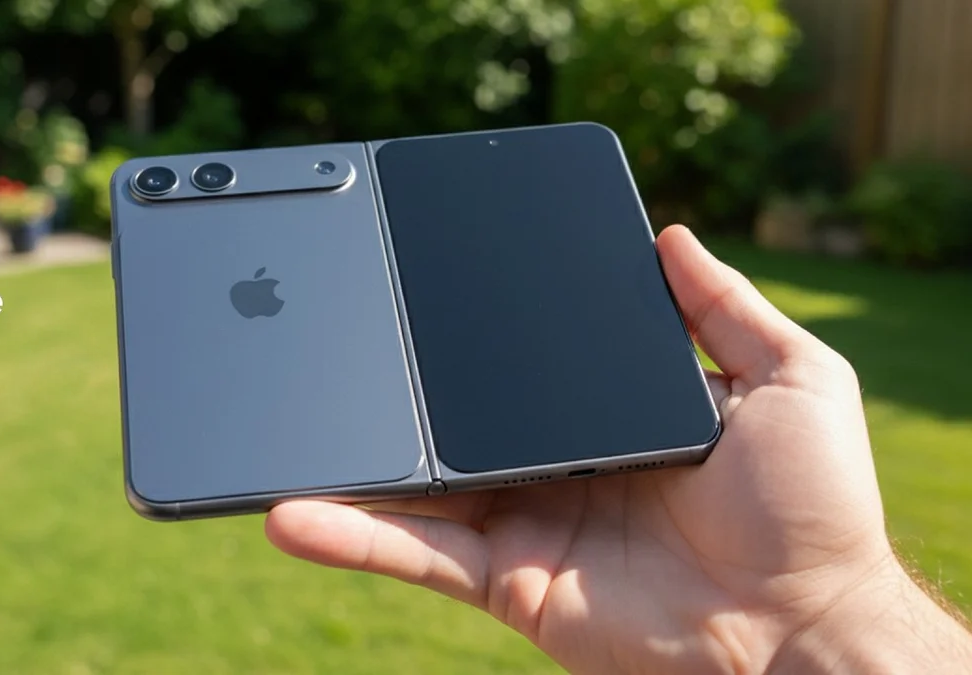
While Apple has yet to officially unveil its foldable phone, Android manufacturers have been advancing at full speed.
Samsung is reportedly preparing up to four foldable models, including both book-style and clamshell designs. Meanwhile, Honor has pushed boundaries with the Magic V6, featuring a 7,150 mAh battery in its China version - an unusually large capacity for foldable devices.
Among the most notable challengers is Oppo with its Find N6. The device introduces a nearly crease-free inner display, addressing one of the most persistent limitations of foldable phones. The company also highlights a “self-healing” screen capability, where visible creases diminish over time after repeated folding.
These advances suggest that by the time Apple enters the market, some of the features once expected to define its advantage may already be standard among competitors.
The crease problem may no longer be decisive
Earlier speculation suggested Apple’s foldable device could feature a near-invisible crease, potentially priced around US$2,000. At the time, such expectations seemed ambitious given the limitations of display technology.
However, the industry has progressed quickly. Each generation of foldable devices has reduced crease visibility and improved durability. With Oppo and others already showcasing near crease-free designs, Apple may no longer be seen as a pioneer in this aspect, but rather as a fast follower.
Display ratio: a possible differentiator
One area where Apple could still stand out is display ratio. Rumors indicate the iPhone Fold may adopt a wider design compared to the near-square format common among current book-style foldables.
Existing designs prioritize transforming a standard smartphone into a larger screen when unfolded, often resulting in unused space when viewing video content. This limitation becomes more noticeable as video consumption dominates smartphone usage, from long-form content on YouTube to vertical formats on TikTok.
A wider aspect ratio could improve viewing efficiency. Yet even this advantage may be short-lived, as Samsung is rumored to be developing a wider foldable model of its own.
Apple’s enduring advantage: ecosystem and brand
In terms of hardware innovation, Android manufacturers are moving aggressively across multiple fronts - from display engineering to battery capacity and form factors. This makes it increasingly difficult for Apple to deliver a breakthrough based solely on specifications.
Instead, Apple’s strongest advantage may lie in its ecosystem and brand power. The company has consistently demonstrated its ability to attract users through seamless integration, refined software experiences and strong customer loyalty.
Even in cases where competitors lead in raw specifications, Apple often succeeds by delivering a cohesive product experience. The foldable segment may prove no different.
A new phase of competition
The emergence of devices like the Oppo Find N6 signals a shift in the foldable market. Android manufacturers are no longer waiting for Apple to define the category. Instead, they are actively shaping its evolution.
As Apple prepares to launch its first foldable iPhone, the competition is expected to intensify further. The result could be the most dynamic and fiercely contested chapter yet for foldable smartphones - one where innovation, timing and ecosystem strength all play decisive roles.
Hai Phong
.svg)
