 Vietnamnet.vn

 Podcast



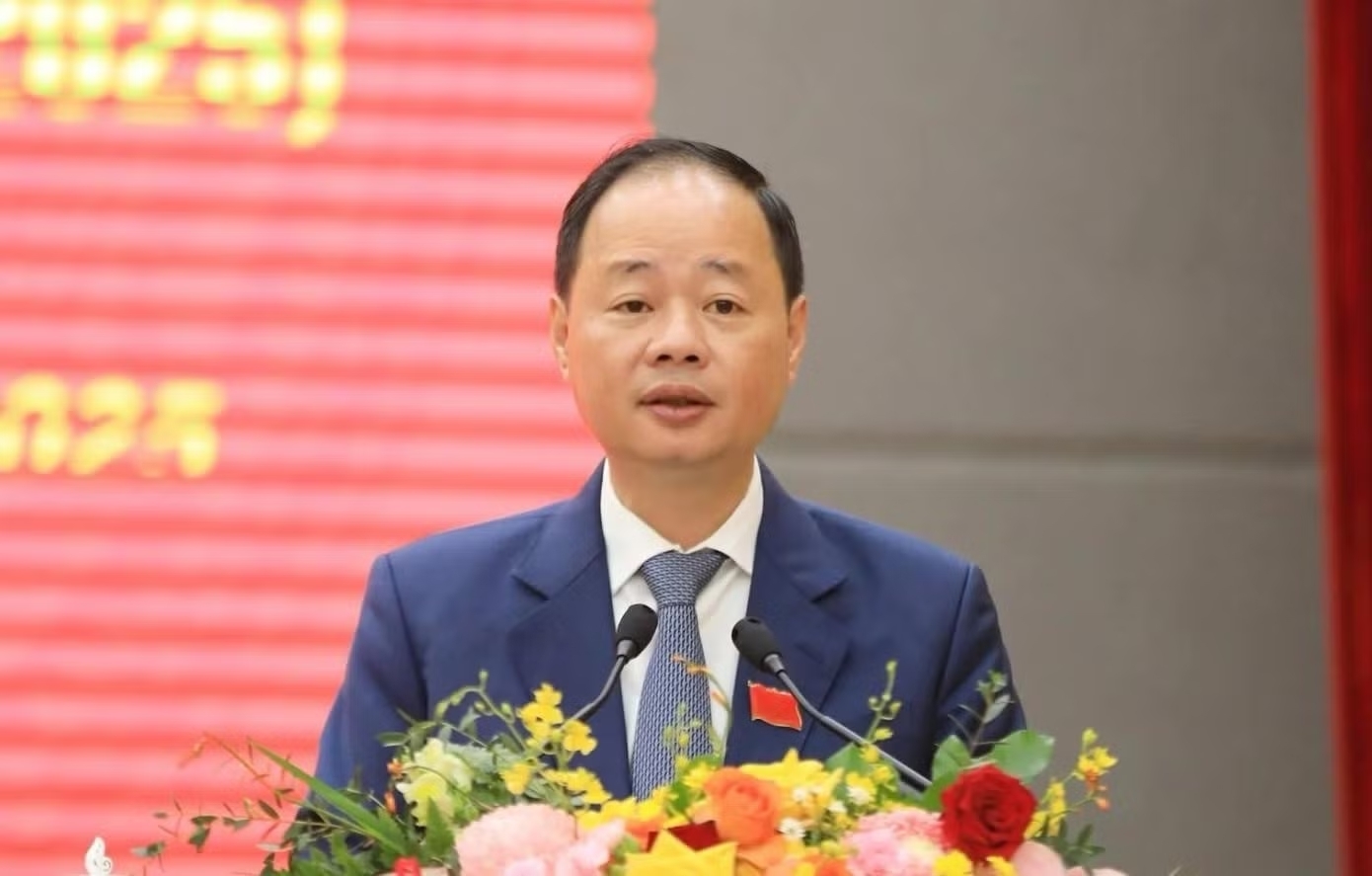
Vietnam must begin investing in quantum technology now rather than waiting for the field to mature, as delaying action would significantly reduce the country's ability to participate in one of the world's next strategic industries, according to Tran Hong Thai, President of the Vietnam Academy of Science and Technology (VAST).
In May 2026, the Prime Minister approved Vietnam's lists of strategic technologies and strategic technology products to concentrate national resources on developing core technologies and products with major implications for economic growth and national security.
Among the designated strategic technologies are quantum communications, quantum computing and quantum sensing, identified as foundational technologies capable of driving future economic growth while strengthening national security and technological self-reliance.
Politburo Resolution No. 57 also explicitly identifies quantum technology as one of Vietnam's strategic technologies, placing it alongside artificial intelligence, semiconductors, 5G/6G and blockchain as areas the country aims to master.
Speaking at the recent scientific conference "Quantum Technology in a New Era: International Trends, Opportunities and Requirements for Vietnam," Tran Hong Thai said policy vision only becomes meaningful when translated into practical mechanisms, implementation and tangible capabilities.
"The question today is not simply what quantum technology is," he said. "More importantly, why should Vietnam focus on it now, and if we choose this path, what is the most appropriate strategy?"
Vietnam cannot wait until quantum technology is fully mature
According to Tran Hong Thai, quantum technology is among today's most technically demanding fields, spanning scientific research, engineering, infrastructure development, talent cultivation and institutional organization.
Many research directions worldwide remain in experimental stages, with commercial products, mature markets and mass applications still years away.
Nevertheless, he argued that this uncertainty is precisely why Vietnam must engage early.
Some technologies can be adopted after products have reached commercial maturity, he said. However, strategic technologies such as quantum technology are fundamentally different.
"If Vietnam waits until technical standards are established, markets have matured and global supply chains are already controlled by leading countries, opportunities for meaningful participation will become extremely limited," he said.
Tran Hong Thai noted that many countries have already made quantum technology a strategic national priority.
Not every area of quantum research has reached maturity, and not every expectation will ultimately become reality. Even so, the overall direction is becoming increasingly clear.
Quantum principles are gradually being integrated into computing, communications, cybersecurity, sensing, precision measurement, advanced materials, photonics, devices and numerous enabling technologies.
Four reasons Vietnam should invest now
According to Tran Hong Thai, Vietnam should prioritize quantum technology for four key reasons.
First, quantum technology is rapidly emerging as a strategic global technology. Countries investing early will shape technical standards, industrial ecosystems and future supply chains.
Second, quantum computing presents significant cybersecurity challenges.
Once sufficiently powerful quantum computers become available, several encryption methods widely used today could become vulnerable. Sensitive information collected today could be stored and decrypted years later when adequate quantum computing capabilities become available.
Third, quantum technology will create entirely new capabilities in sensing, precision measurement, simulation, advanced computing and materials science.
These capabilities extend beyond basic scientific research and could benefit defense, national security, telecommunications, finance, healthcare, energy, natural resources, environmental monitoring and high-tech manufacturing.
Fourth, developing quantum technology requires long-term investment in human capital.
Specialists in this field cannot be trained within a few months or through short-term professional courses. Quantum technology demands interdisciplinary expertise spanning physics, mathematics, computer science, cryptography, photonics, materials science, electronics, control engineering, precision measurement, software engineering and data science.
Given these realities, Tran Hong Thai believes Vietnam must adopt a pragmatic development strategy.
"We must be proactive without becoming impatient," he said. "We do not need to compete comprehensively with the world's technological powers, but neither should we remain passive observers. Vietnam should move early in awareness, build solid foundations and focus on areas capable of creating genuine technological capacity that matches our national conditions."
Although Vietnam's financial resources, research infrastructure and scientific workforce remain fragmented, he believes they can generate significant collective strength if properly coordinated.
This will require building leading research groups, shared laboratories, expert networks, national computing platforms and common research databases.
Building Vietnam's quantum ecosystemTran
Hong Thai said VAST has already begun coordinating with numerous domestic institutions to establish a national quantum technology ecosystem.
These partners include the Ho Chi Minh National Academy of Politics, the Party Central Committee's Commission for Policies and Strategies, the Central Commission for Information, Education and Mass Mobilization, the Government Cipher Committee, the Ministries of National Defence, Public Security, Foreign Affairs and Industry and Trade, the Vietnam Institute for Advanced Study in Mathematics, Vietnam National University, Hanoi, Vietnam National University Ho Chi Minh City, Hanoi University of Science and Technology, VinUniversity, Phenikaa University, the International Centre for Interdisciplinary Science and Education, together with many other research institutes and universities.
According to him, quantum technology extends far beyond quantum physics alone.
It is closely connected with information security, cryptography, defense, national security, advanced manufacturing, higher education, science diplomacy, innovation, technology enterprises and many emerging industrial applications.
For that reason, strong domestic collaboration is essential to building an interdisciplinary, cross-sector approach that links scientific research with practical national needs.
At the same time, VAST has expanded cooperation with international partners from Russia, the United States, the United Kingdom, Japan and South Korea, as well as international organizations, foreign experts and Vietnamese scientists working overseas.
These partnerships, Thai said, enable Vietnam to monitor global technological developments, better understand technical limitations, evaluate practical implementation opportunities and identify development pathways that best match the country's capabilities.
Thai Khang
.svg)
