 Vietnamnet.vn

 Podcast



No longer confined to the laboratory
At the conference, scientists and policy experts agreed that quantum technology has moved beyond the realm of pure research.
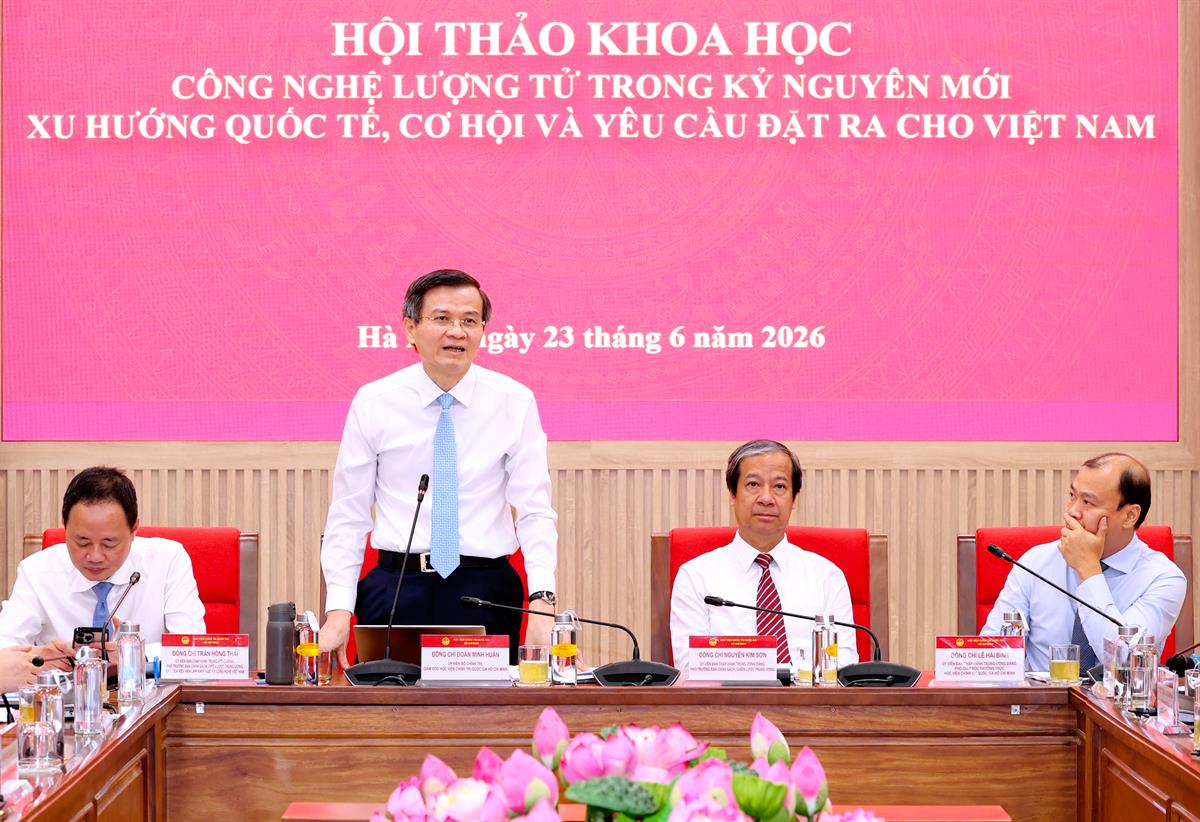
Opening the event, Associate Professor Dr. Doan Minh Huan, Politburo member and Director of the Ho Chi Minh National Academy of Politics, said quantum technology could have far-reaching impacts on development models, national competitiveness, workforce quality, technological self-reliance and national standing.
According to him, the key challenge for Vietnam is to correctly assess the nature of the technology, understand global trends and anticipate its potential impacts while avoiding both complacency and a rush to follow trends without adequate preparation.
"The conference serves as a forum for frank and substantive discussion focused on four major issues. First, understanding global quantum technology trends and their implications for Vietnam. Second, identifying the foundations Vietnam already possesses, the conditions it still lacks and the issues that require early attention. Third, determining an approach that aligns with Vietnam's realities while gradually building long-term capabilities. Fourth, examining the implications for political theory, strategic policymaking and governance of quantum technology development, particularly breakthrough solutions for investment, application and safeguarding national interests, security and strategic autonomy," Doan Minh Huan said.
At the same event, Tran Hong Thai, President of the Vietnam Academy of Science and Technology, stressed that quantum technology remains a highly complex field, with many areas worldwide still in the stages of research, experimentation and validation.
"Talking about quantum technology does not mean products, markets or mass applications will appear tomorrow," he said.
However, he warned that failing to monitor developments and prepare early could leave Vietnam in a passive position once standards, supply chains and markets are established.
Applications based on quantum principles are becoming increasingly visible across computing, communications, cybersecurity, sensing, precision measurement, advanced materials, photonics and related technologies.
One area receiving particular attention is data security. Experts warned that once sufficiently powerful quantum computers emerge, many encryption systems currently in widespread use could become vulnerable. Data collected today could potentially be stored and decrypted in the future when technical capabilities allow.
Quantum technologies are also expected to create new capabilities in simulation, computing, sensing and materials science, with applications extending beyond fundamental research into defense, security, telecommunications, finance, healthcare, energy, environmental management and high-tech industries.
A global race intensifies
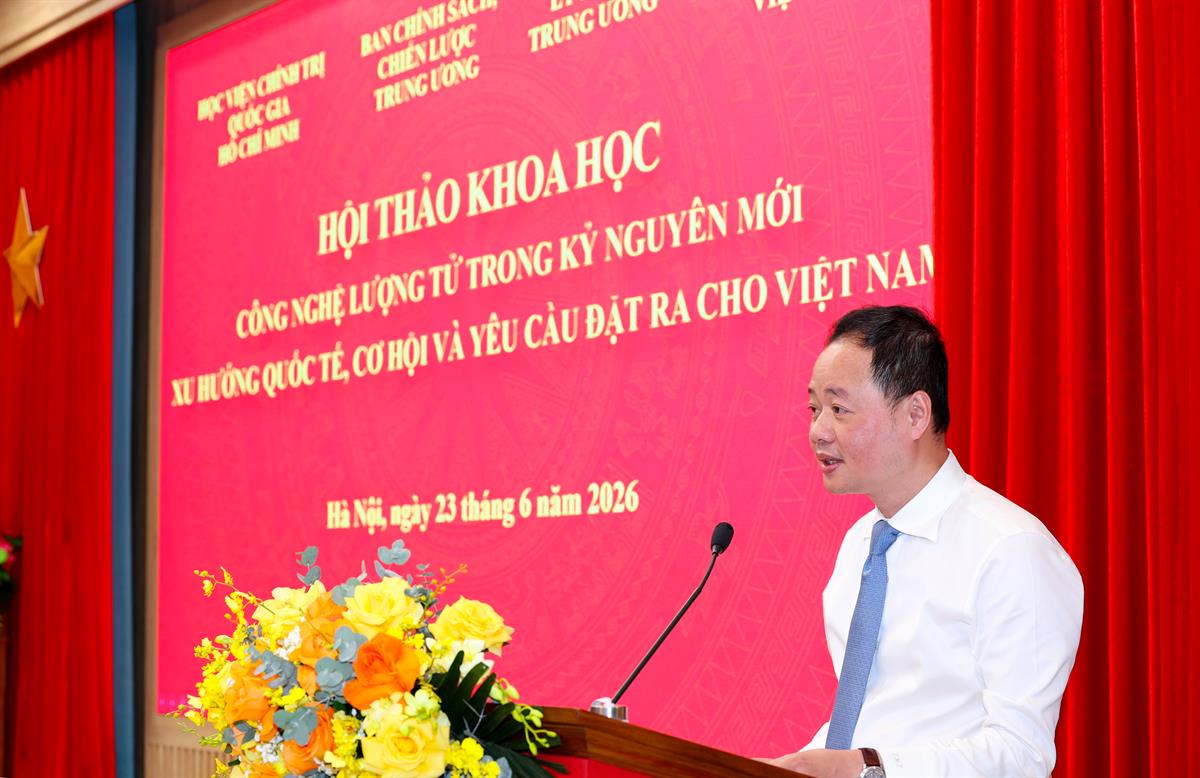
According to Nguyen Hoang Duong, Deputy Head of the Science and Technology Department at the Vietnam Academy of Science and Technology, global commitments to quantum technology investment reached approximately USD 50 billion in 2025.
Countries increasingly view quantum technology not only as a driver of economic performance but also as a tool for strengthening digital sovereignty, national security and future competitiveness.
While only around 20 quantum startups emerged annually during 2019-2020, the figure has now surpassed 100 companies each year.
Alongside investment, many countries have tightened export controls on quantum-related equipment, materials and software, expanded trusted partnership networks and intensified competition for talent.
The United States is widely regarded as the global leader, following a model in which government provides strategic direction while businesses drive development. The country enacted the National Quantum Initiative Act in 2018 and invests around USD 700 million annually through research organizations affiliated with the Department of Defense.
China has adopted a state-led model, investing more than USD 15 billion, building a quantum communications network stretching over 2,000 kilometers between Beijing and Shanghai, and launching the world's first quantum satellite.
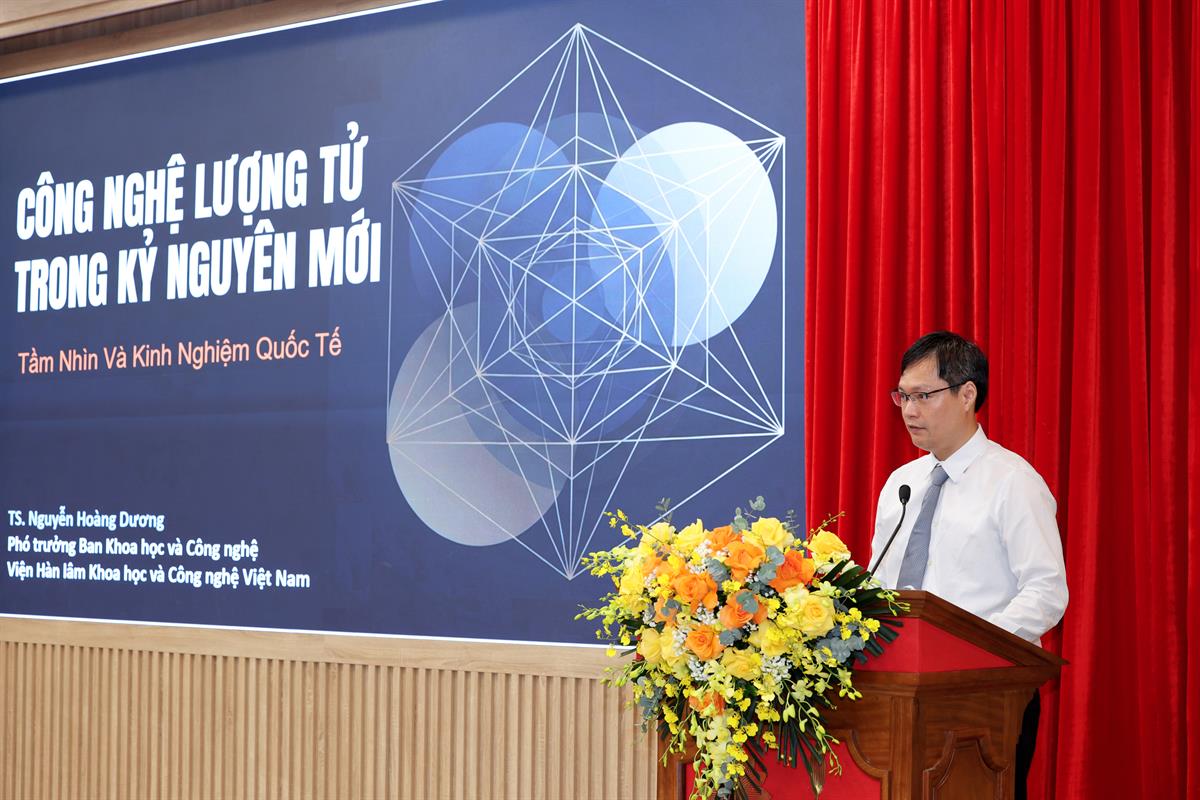
Russia has focused on fundamental research, coordinating efforts through state-owned corporations and investing approximately USD 800 million over the past five years in areas offering direct strategic advantages.
Meanwhile, the European Union has prioritized commercialization of research outcomes, while Japan and South Korea have pursued high-level coordination strategies that leverage their strengths in electronics and semiconductors.
Drawing lessons from international experience, experts suggested Vietnam should establish a comprehensive national coordination mechanism with a long-term vision, prioritize advanced talent development, invest in key laboratories and shared research infrastructure, and actively participate in global value chains.
Political commitment exists, but national coordination remains absent
Dr. Nguyen Quoc Hung, Director of the Institute of Quantum Technology at Vietnam National University, Hanoi, said Vietnam currently lacks a national policy framework and a comprehensive program dedicated to quantum technology development.
Although quantum physics has been taught for many years at major universities and research institutes, academic programs have yet to be modernized to reflect contemporary quantum technologies. Technical infrastructure remains limited, and business participation is still minimal.
According to Hung, several specialized units have begun to emerge following the issuance of Resolution 57, including initiatives at Vietnam National University, Hanoi and a number of technology companies.
However, Vietnam still lacks a national coordination architecture, a development roadmap and clearly defined responsibilities. As a result, resources remain fragmented and research and development activities continue to operate in parallel rather than generating collective momentum.
Additional challenges include limited core capabilities, a gap between research and practical application, shortages of highly specialized talent, the absence of structured training programs and regulatory mechanisms that are not yet suited to technologies characterized by high risk and long investment cycles.
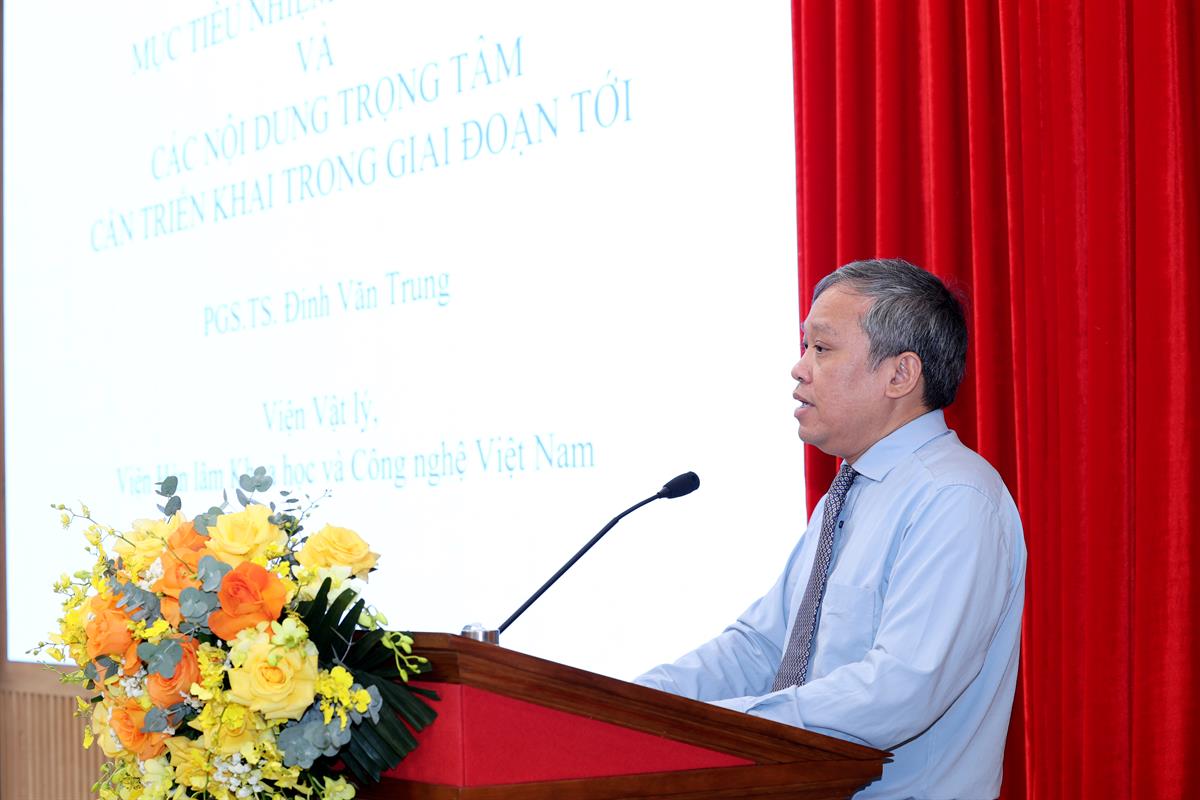
Speaking at the conference, Dinh Van Trung, Director of the Institute of Physics at the Vietnam Academy of Science and Technology, emphasized that quantum technology development should be viewed as a national strategic priority rather than solely a scientific research issue.
He said Vietnam should focus on protecting information security, digital sovereignty and critical information infrastructure while gradually integrating into value chains in areas such as post-quantum cybersecurity, quantum computing and simulation, quantum sensing, quantum materials and quantum cloud services.
Experts concluded that Vietnam should approach quantum technology through an ecosystem-based strategy that simultaneously develops knowledge, human capital, research infrastructure and governance mechanisms.
"We must be proactive without being impatient; we should not attempt to compete comprehensively with major powers, but neither should we remain on the sidelines. We need to move early in awareness, build solid foundations and focus on areas that create real capabilities suited to Vietnam's conditions," Tran Hong Thai said.
Thai Khang
.svg)
