 Vietnamnet.vn

 Podcast



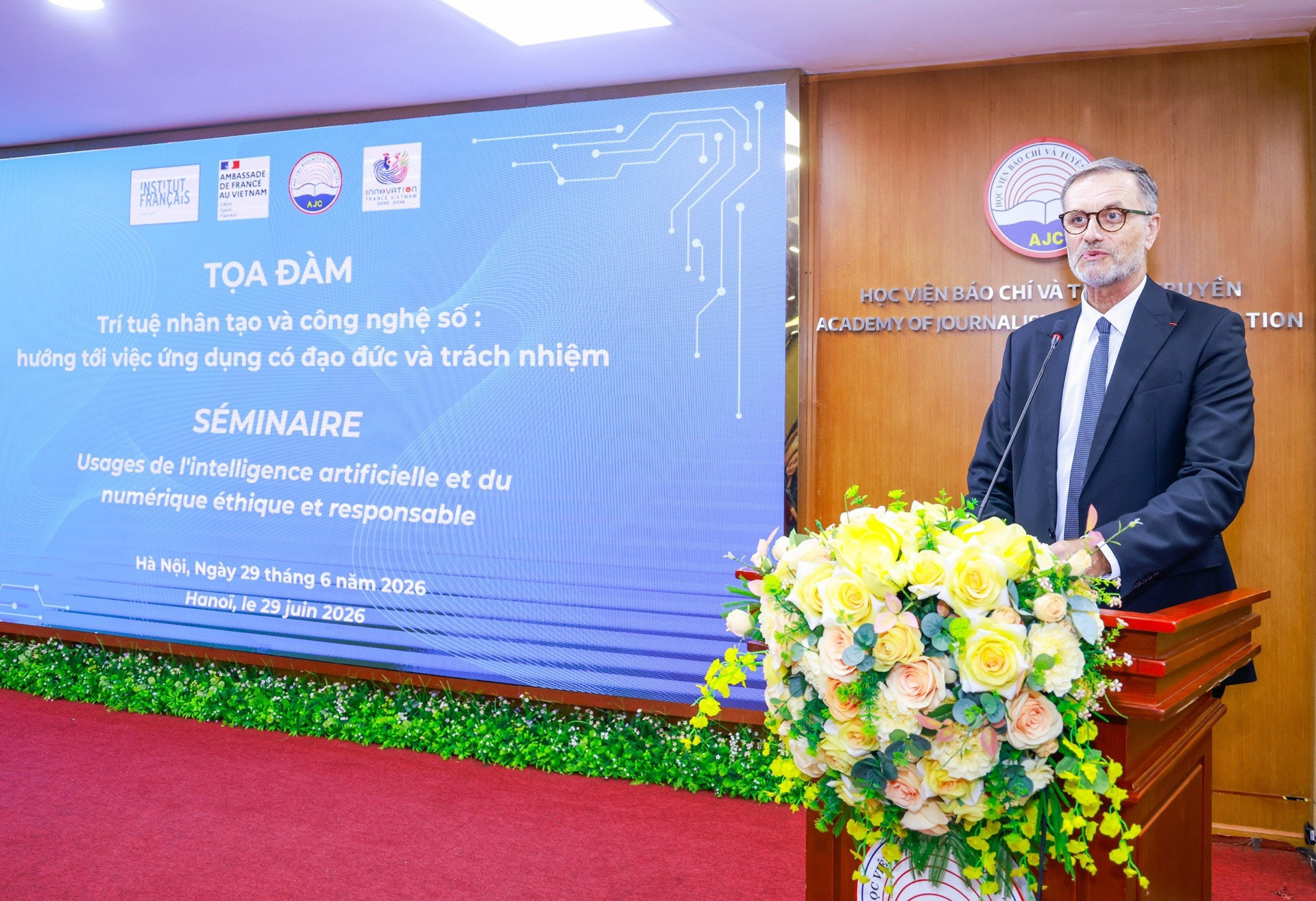
"Artificial intelligence can never replace human qualities. Critical thinking, creativity and sensitivity are fundamental strengths that AI will never be able to replicate."
That was the message delivered by Olivier Brochet, Ambassador of France to Vietnam, at the seminar titled Artificial Intelligence and Digital Technologies: Towards Ethical and Responsible Applications, held on June 29.
According to the ambassador, as AI continues to advance at a rapid pace, the priority should not be competing with technology but strengthening the capabilities that are uniquely human.
The seminar was jointly organized by the Academy of Journalism and Communication and the Embassy of France in Vietnam. It brought together French experts in digital transformation, data governance and AI law to discuss the opportunities, challenges and principles for using artificial intelligence in a safe, transparent and responsible manner.
Earlier, Eric Soulier, Counsellor for Cooperation and Cultural Affairs at the Embassy of France in Vietnam, said AI is no longer a technology of the future but has already become part of everyday life.
"AI is no longer a technology of the future. It has become a reality in our daily lives. It opens up tremendous opportunities for innovation, productivity and access to knowledge, while also raising important questions about ethics, data protection, information reliability and the responsibilities of both governments and users," he said.
According to Soulier, as misinformation and information manipulation become increasingly complex around the world, countries need to develop new governance capacities to harness AI effectively while safeguarding ethical standards and digital security.
AI creates opportunities but cannot replace people
Expanding on that message, Ambassador Olivier Brochet said AI is driving a fundamental transformation that is reshaping the way people learn, work, produce, communicate and make decisions.
"This is a profound revolution. These changes create both legitimate concerns and tremendous opportunities," he said.
According to the ambassador, AI can improve administrative efficiency, expand access to public services, foster innovation, support education and contribute to economic growth. However, technology cannot replace the central role of human beings.
"The ability to analyze, break down complex issues, place information in context, communicate accurately and exercise sound judgment are skills that must continue to be developed. This is not only an ethical requirement but also a responsibility to society," he added.
He also noted that AI brings new challenges related to personal data protection, cybersecurity, combating misinformation and ensuring algorithmic transparency. These issues require international cooperation to build a safe and trustworthy digital environment.
Ambassador Brochet added that France and Vietnam have worked together for many years on digital transformation, sharing experience in modernizing public administration and improving the quality of public services.
Students should develop critical thinking instead of relying on technology
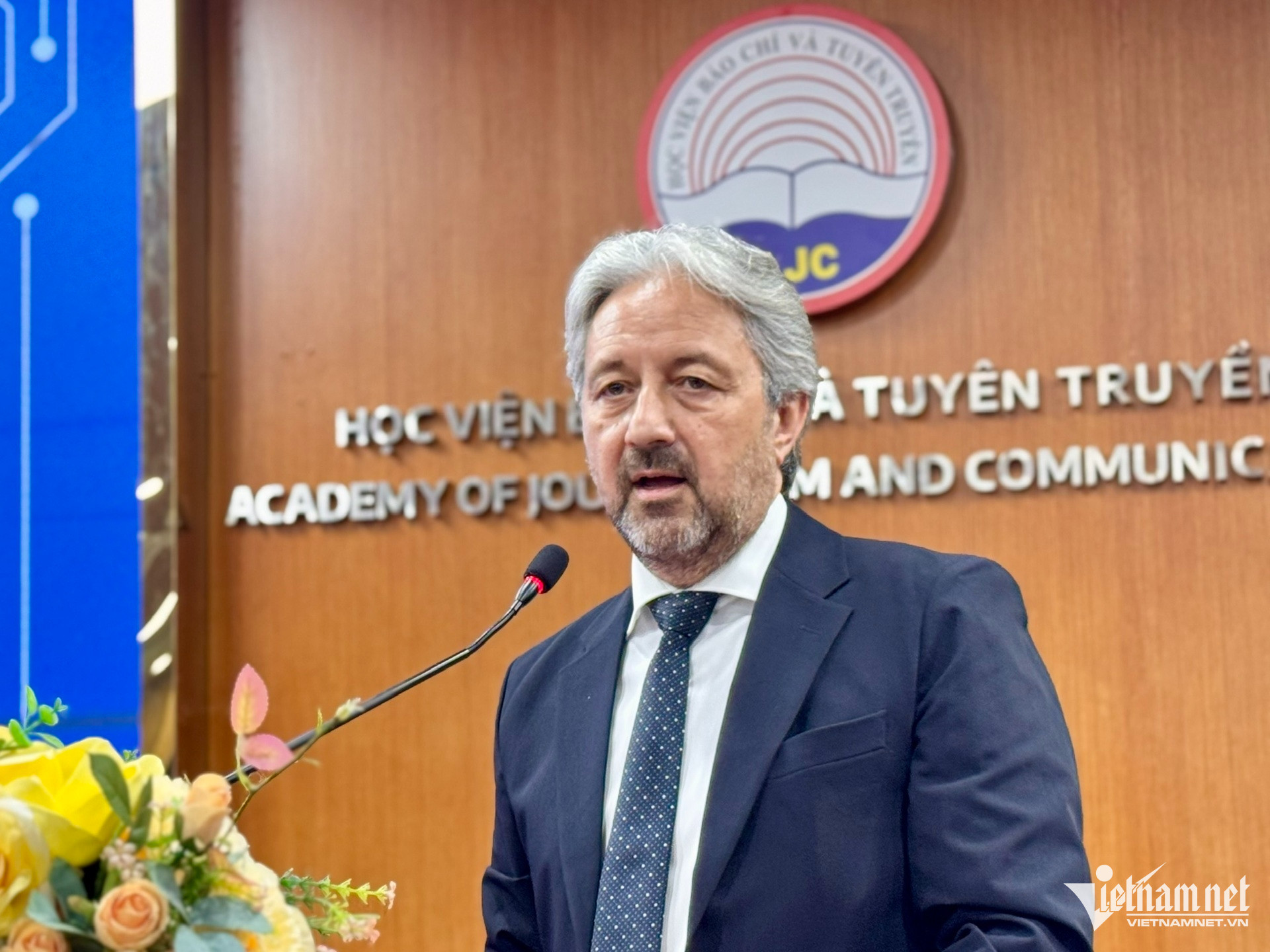
According to Eric Soulier, AI is now present in nearly every sector, from education and vocational training to journalism, communications and public administration. Therefore, it is not enough simply to know how to use AI tools; people must also develop the skills needed to adapt to a changing workplace.
He said the seminar is part of a France-Vietnam digital transformation cooperation project launched in 2018. Emphasizing the role of young people, Soulier said students will be a decisive force in the success of Vietnam's digital transformation. Alongside mastering technology, they also need to understand both the opportunities and the risks that AI presents.
"Don't stop at using ChatGPT or Gemini for everyday tasks. Use AI to create new breakthroughs in your studies and future careers," he told students attending the event.
During the seminar, French and Vietnamese experts discussed AI's impact on education, the labor market and public governance.
The discussions extended beyond technological applications to emphasize the need for AI to be used in a transparent, ethical and responsible manner.
Citing data from UNDP, AIEI and LinkedIn, the organizers noted that Vietnam ranks among the countries with the highest rates of AI use among young people, while also facing the risk of "cognitive laziness" if users become overly dependent on AI-powered tools.
While AI can process information rapidly, the ability to ask questions, analyze, verify and evaluate results remains a distinctly human advantage.
Experts said these will become the most important skills for students in the digital era, together with the ability to collaborate effectively with AI systems rather than becoming dependent on them.
In his closing remarks, Associate Professor Luu Van Quang, Deputy Director of the Academy of Journalism and Communication, said AI is not merely a technological trend but also raises new demands for governance, ethics, professional responsibility and the adaptability of educational institutions.
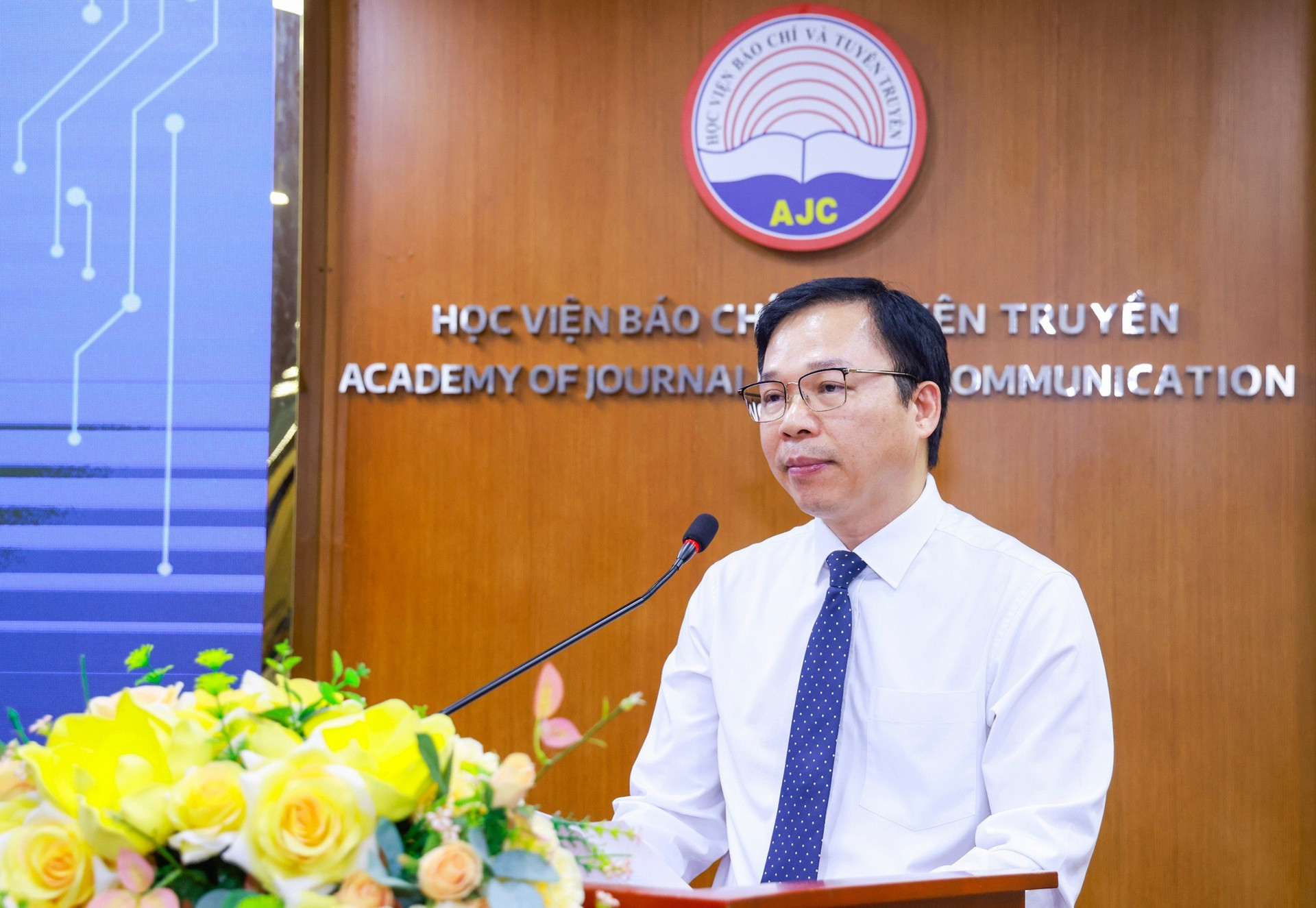
He stressed that people must remain at the center of AI adoption.
"Technology must be supported by creativity, critical thinking and social responsibility. It cannot replace the central role of human beings in understanding and shaping values," he said.
According to Quang, in journalism and communications in particular, AI should always be used alongside rigorous fact-checking processes to ensure accuracy, transparency and public trust.
He also urged individuals to approach new technologies with caution, professionalism, humanity and a strong sense of responsibility.
Du Lam
.svg)
