 Vietnamnet.vn

 Podcast



At 26, Nguyen Nguyen Xuan Vu is pursuing a doctoral degree at EPFL in Switzerland, an institution ranked 22nd globally in the QS 2026 rankings. Having begun his PhD in October 2025, he now looks back on a pivotal decision made nearly four years ago - a decision to step away from chemistry and embrace artificial intelligence.
Turning away to find direction
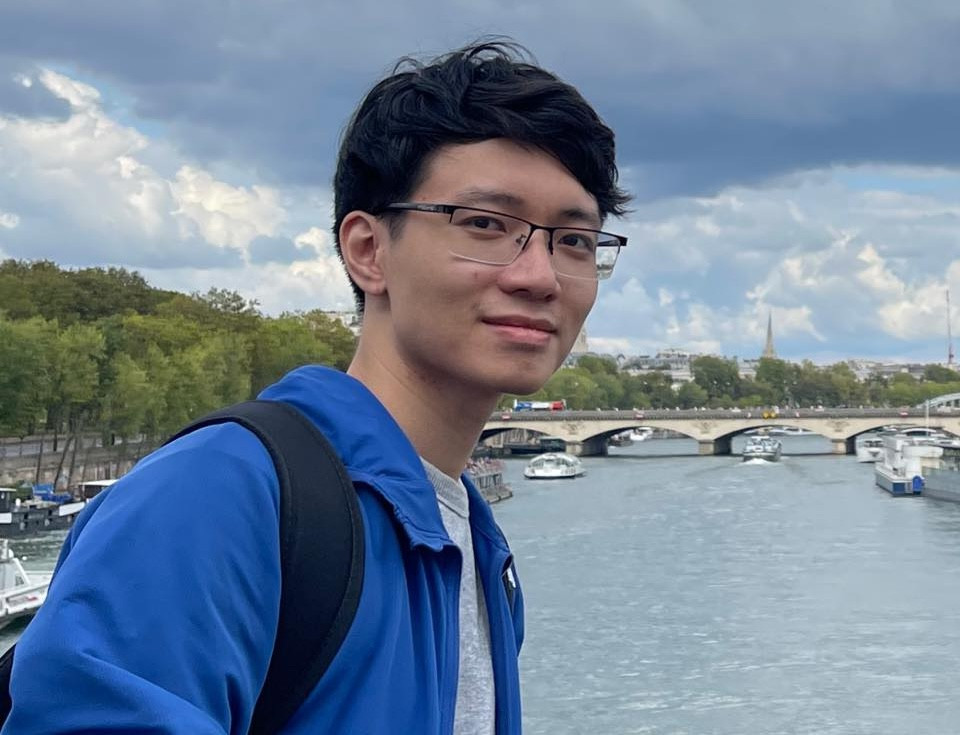
Vu was once a top student in chemistry at Nguyen Trai High School for the Gifted in Hai Phong. After winning second prize in the national excellent student competition, he was directly admitted to study chemistry at the University of Science and Technology of Hanoi.
Despite following a path aligned with his strengths, he found little fulfillment in experimental lab work.
With only basic programming knowledge, Vu took a leap of faith and applied to join a machine learning lab at Phenikaa University. While he managed to solve some initial problems, he quickly realized his biggest limitation lay in coding skills.
Graduating during the COVID-19 pandemic, Vu spent six months at home intensively learning programming before joining an AI startup.
“At that point, I was still quite uncertain about my direction,” he recalled. “But after about a year working, I began to catch up with the pace of the field and felt more confident in my choice.”
Even with a stable job, however, he felt something was missing.
“Instead of working on assigned tasks, I wanted the freedom to pursue my own ideas,” Vu said. That desire eventually led him back to academia.
Finding the intersection of two worlds
While searching for study opportunities abroad, Vu discovered the Erasmus Mundus master’s scholarship in Chemoinformatics+. The field combines chemistry with artificial intelligence to accelerate the discovery of new drugs and materials.
His background in both disciplines gave him a competitive edge. He was awarded the scholarship and spent two years studying across Europe, moving through Strasbourg, Milan, and Paris before undertaking an internship at EPFL.
“These multicultural academic experiences changed me profoundly,” Vu said. “Wherever I studied, critical thinking and proactiveness were always emphasized.”
After completing his internship, Vu expressed his desire to continue at EPFL. Recognizing his research potential, his supervising professor supported his application, allowing him to stay on for a four-year doctoral program starting in October 2025.
Advancing AI for chemistry
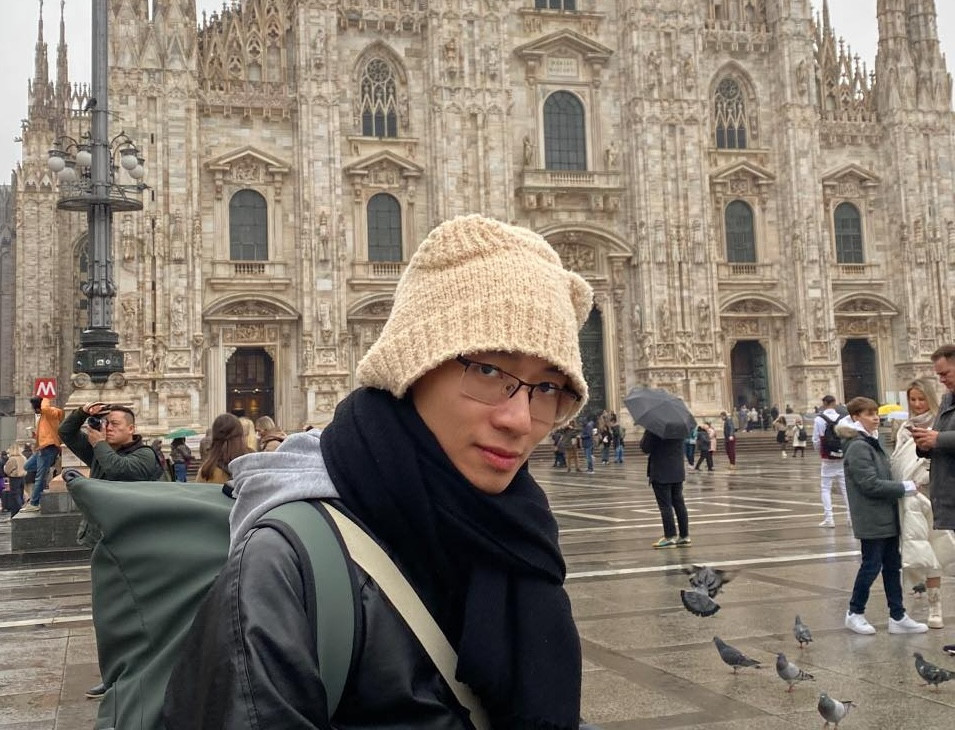
Vu’s current research focuses on AI for chemistry - applying data science and machine learning to solve complex chemical problems.
Rather than relying solely on costly and error-prone experiments, AI can learn chemical patterns to predict and design processes more efficiently.
One of his notable projects involves a system for “retrosynthesis” - designing pathways to create a target molecule from available materials.
The system operates in two stages. First, AI acts as an expert, proposing synthesis strategies in natural language. Then, it cross-references real-world reaction databases to identify the most feasible pathway, ensuring that required inputs are commercially accessible.
In testing, the system has produced results that are both accurate and more aligned with chemists’ expectations than traditional automated methods. It significantly reduces trial-and-error time in laboratories, with promising implications for drug and material development.
His research paper on the project received a best paper award at an international conference on AI in chemistry held in Denmark.
Balancing speed and belief
For Vu, one of the greatest pressures in AI research is speed.
“You can’t hold onto an idea for too long,” he said. “You have to move quickly from concept to initial results.”
Yet he also reflects on science with a broader perspective.
“Human knowledge is like an island, and scientists stand at its edge, expanding it outward,” he said. “To go far, you need belief, persistence, and the ability to connect.”
Looking ahead, Vu plans to complete his PhD with two additional years of research at Pfizer in Germany. He hopes to continue exploring how AI can make the development of pharmaceuticals and new materials faster, more efficient, and less costly.
“Switching to AI was a risky decision,” he said. “But if you don’t try, you’ll never know how far you can go.”
Khanh Linh - Trong Nghia
.svg)
