 Vietnamnet.vn

 Podcast



Mu Cang Chai commune in Lao Cai province has long been a land of hardship. With 90 percent of the population Hmong, life here is tied to towering mountains and a harsh climate.
For generations, residents of Den Thang village remained stuck with corn and rice fields. Outdated farming practices, total dependence on nature, and lingering customs kept hunger and poverty clinging to every household.
Amid this gloomy picture, Ho A Sung early realized a simple truth: if he continued following the old path of his ancestors, relying only on a few crops on depleted land, life would remain trapped in deprivation.
The desire to escape poverty pushed the young man to find a different path. Sung understood that changing his life required not just hard labor but clear thinking, daring ideas, and decisive action.
VND10 million for start-up
What sets Ho A Sung different from many other young people in his village is his sensitivity to technology. While a smartphone is merely a form of entertainment for many people, it opened a door to a world of knowledge for Sung.
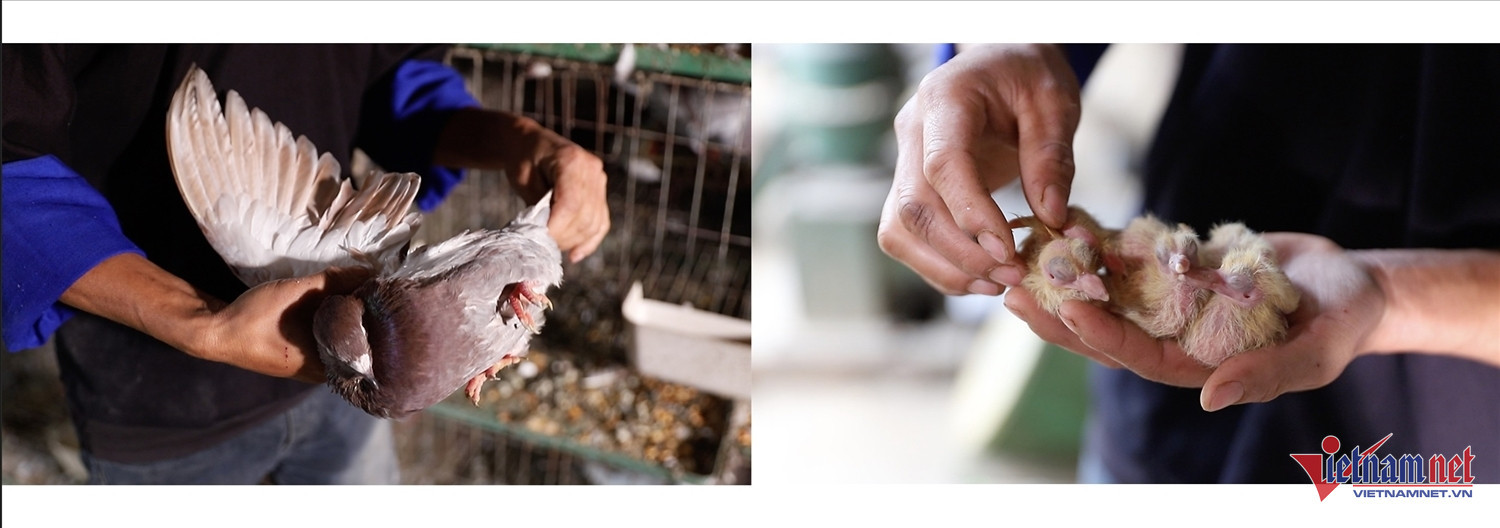
Four years ago, Sung began his startup journey by experimentally raising a few pairs of breeding pigeons. He carefully observed and recorded their growth characteristics. When he saw that the birds developed well despite the cold highland climate, he decided to invest all his savings, about VND10 million, to expand the model.
In the early days, he faced countless difficulties: limited capital, almost no livestock experience, and no local examples to learn from. Sung had to figure things out on his own, learning through trial and error.
The greatest threat was the lack of market output. When his birds reached maturity, local buyers were unfamiliar with the product. At times, the situation seemed hopeless, but Sung did not give up.
Instead of waiting for customers, he sought buyers online. He took photos of his pigeon flock, recorded videos of the clean breeding process, and posted them on social media groups and personal pages. Small orders were gradually secured, and deliveries made in all weather conditions helped him connect with the market.
His smartphone enabled him to bring highland pigeons to restaurants and eateries in neighboring communes. Sharp thinking helped him turn difficulties into advantages and open a sustainable path forward.
Harvesting success
Once stable market access was secured, Sung borrowed VND90 million from the Vietnam Bank for Social Policies through a youth startup support program. With capital in hand, he invested in solid, well-organized barns and expanded his flock to 100 breeding birds.
After deducting all costs, Sung now earns a monthly profit of about VND15 million. This income not only stabilizes his family’s life and ensures his children can attend school, but also serves as vivid proof that building wealth in one’s hometown is entirely possible.
Beyond improving his own family’s livelihood, Ho A Sung actively supports nearby households in developing their economies. From guiding them on selecting breeds, caring for chicks, checking eggs, to mixing feed such as ground corn and breeding feed to reduce costs, he willingly shares his experience.
He also helps guarantee product output for participating households, giving them confidence to produce. He hopes authorities will continue supporting land access so he can further expand production and create livelihoods for more families.
Sharing a simple but meaningful message with young people in highland areas, Sung said: “Young people need to boldly change their mindset, make use of technology and the digital era. You cannot rely forever on fields and hills if you want to take control of your own life.”
Ho A Sung’s livestock model has now become an economic bright spot in Mu Cang Chai, lighting up hope and aspirations to escape poverty for ethnic communities in the region.
Tuan Ninh
.svg)
