 Vietnamnet.vn

 Podcast



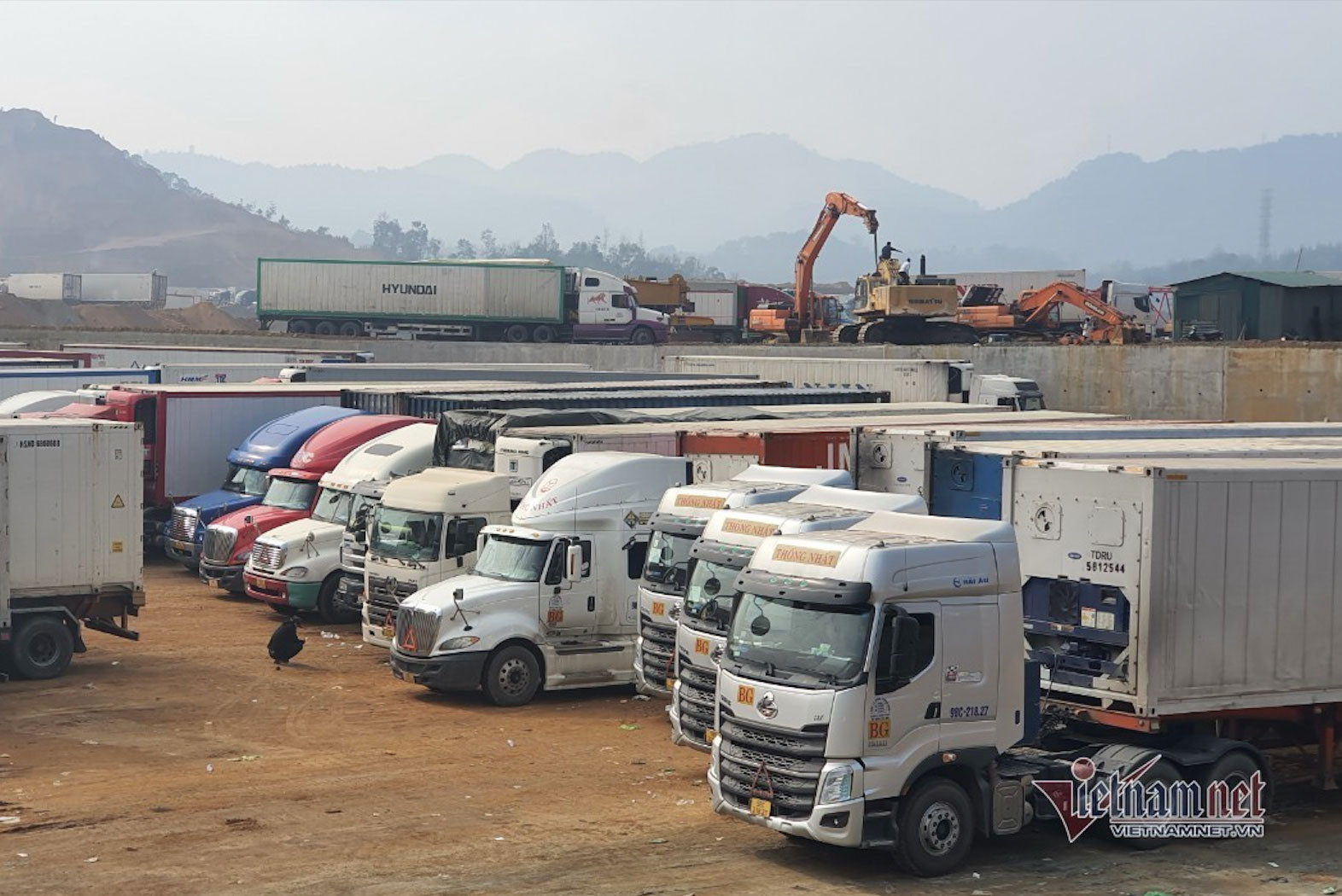
The shipment arrived on the morning of January 27 and was expected to get customs clearance within two days to be transported to Hanoi for processing and packaging for the Lunar New Year sale season. However, everything came to a halt because procedures related to imported food were suspended pending guidance for implementing Decree 46.
The enterprise's documents were not accepted, certificates were not issued, and the business could only watch the shipment sit idly behind the seaport fence, while bank interest, storage fees, and delivery pressure increased every day.
According to the Department of Customs, on January 30, around 300 trucks of agricultural products at Kim Thanh border gate, 251 trucks at Hoa Lu, along with hundreds of vehicles and boats at Lao Bao, Tinh Bien, Dong Thap and An Giang were congested due to pending food-safety inspection results.
This was the result of Decree 46 which was designed based on the principle of pre-inspection, or tightening control right from the start, to avoid later risks. The scope of specialized inspection was expanded from food to packaging, materials with direct contact with food, and containers. Consequently, goods were stalled at ports, contracts were delayed, cash flows were blocked, and bank interest continued to run daily.
When expanding mass pre-inspection to even packaging, containers, and common raw materials, the question is whether the management benefits gained are greater than the social costs incurred.
Waste, therefore, lies not only in delayed public investment projects or abandoned works but in cargo containers held at ports, missed contracts, and businesses that dare not grow for fear of procedures.
Eventually, the Government had to suspend Decree 46 and return to applying Decree 15. A decree that was just issued had to be adjusted to better fit reality. This is the clearest answer to whether that policy was truly a reform.
It is here that the value of Decree 15 of 2018 becomes clear. Under the legal document, most products bear the self-declaration and self-responsibility mechanism. Businesses were entitled to bring goods to market first and take responsibility for product quality, while the State moved to post-inspection.
This marked a shift in management thinking from pre-inspection to post-inspection. The results were clear: more than 90 percent of administrative procedures were cut, saving around 10 million working days and VND3.7 trillion annually for businesses and the economy, according to estimates by the Central Institute for Economic Management.
If Decree 15 aimed to return resources to businesses through post-inspection and create an open business environment, Decree 46 reflected a pre-inspection mindset.
This difference is not just between two legal documents, but between two fundamentally different views on businesses and economic growth.
In this context, Prime Minister Le Minh Hung’s requirement that ministries submit plans to cut administrative procedures and business conditions represents a major effort to implement post-inspection mechanisms, as he has directed.
Reducing 30 percent of conditional business sectors, eliminating 100 percent of unnecessary business conditions, cutting at least 50 percent of processing time and compliance costs are substantial institutional reforms.
As Vietnam targets GDP growth of over 10 percent in the 2026–2030 period, the economy cannot continue operating with thousands of “permits” or “sub-licenses” as it does now.
For the company with three containers stuck at the port, it needs not an interest subsidy package, but timely customs clearance.
The Prime Minister has not only called for reducing business conditions but has also assigned the Ministry of Justice and the Government Office to act as “gatekeepers” of administrative procedures.
Laws may open doors, but decrees, circulars and guiding documents at lower levels often create new barriers, slowing reform at the implementation stage.
Thus, the story of Decree 46 is not merely about procedural bottlenecks, but a clear lesson in governance thinking in a new development phase.
The experience with Decree 46 further highlights the value of Decree 15: shifting decisively from pre-inspection to post-inspection and empowering businesses while holding them accountable for their products.
An economy aiming for high growth must unleash domestic resources, based on the principle that people and businesses can do anything not prohibited by law.
The State should stand behind to supervise, strictly handle violations, and protect those who comply. This is the spirit of a facilitating government and the shortest path to reducing waste, unlocking resources, and building market confidence.
Lan Anh
.svg)
